


APEX TECH 2026: LEO Connectivity Reshapes Airline Strategy and Passenger Expectations

Share
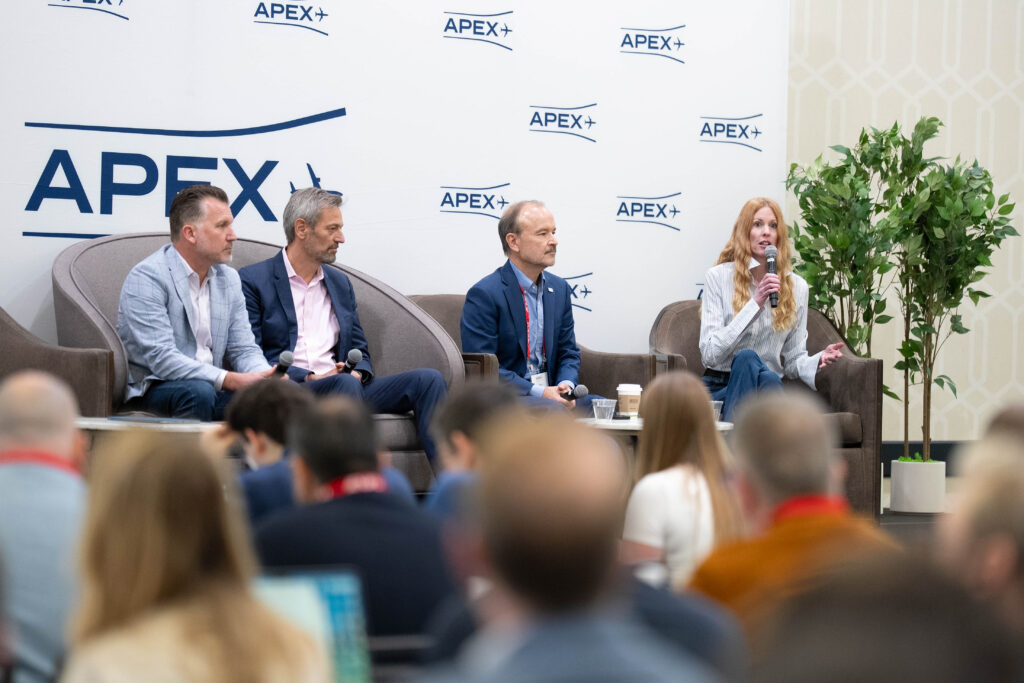
At APEX TECH 2026, in-flight connectivity (IFC) took center stage. Tuesday’s panel, moderated by Runway Girl Network Founder, Editor, and Publisher Mary Kirby, brought together three leaders with distinct perspectives across the connectivity ecosystem: Viasat VP of Global Aviation Partners & Service Delivery Brian Simone; Telesat Vice President, Aviation Philippe Schleret; and ThinKom Chairman and CTO Bill Milroy.
Together, they explored how low Earth orbit (LEO) connectivity is resetting passenger expectations, reshaping airline buying behavior, and accelerating the shift toward multi-orbit and multi-network architectures. The discussion highlighted both the momentum behind LEO and the practical challenges airlines still have to solve around resilience, regulation, and long-term flexibility.
An Open and Competitive IFC Landscape
Kirby opened by acknowledging how quickly the LEO narrative has accelerated. “Is LEO going to eat everybody’s lunch?” she asked, pointing to the growing perception that recent airline wins have shifted the balance of power in connectivity.
Still, she emphasized that the market remains fluid. Contracts today look different, with “shorter contracts,” the “ability potentially to renegotiate in a few years,” and “more rip and replace than perhaps we’ve ever seen.” Airlines are making decisions in an environment where technology, pricing, and passenger expectations continue to evolve.
Kirby reminded the audience that significant opportunity remains. “There are still business to be won,” she said, including “a ton of aircraft tails that have not been connected yet,” along with airlines that have “never, ever had in-flight connectivity before.” While LEO has raised expectations, the competitive landscape remains open.
Telesat’s View: LEO Designed for Enterprise Performance
Schleret outlined Telesat Lightspeed’s roadmap, describing how the constellation aims to deliver aviation-grade reliability at scale. “We’ll be doing our first launch in December of this year,” he said, with Pathfinder satellites leading toward broader deployment in 2027. Airlines looking for aviation-grade service can expect connectivity “for 2027,” with in-flight connectivity being supported “from day one.”
Schleret emphasized that the airline priority remains consistent regardless of orbit. “The priority for airlines in terms of IFC is really to provide that superior passenger experience,” he said. While LEO has proven its value, he argued that airlines may pursue different strategies depending on network design. “It can be a LEO only. It can be a multi-network, a multi-LEO or multi-orbit.”
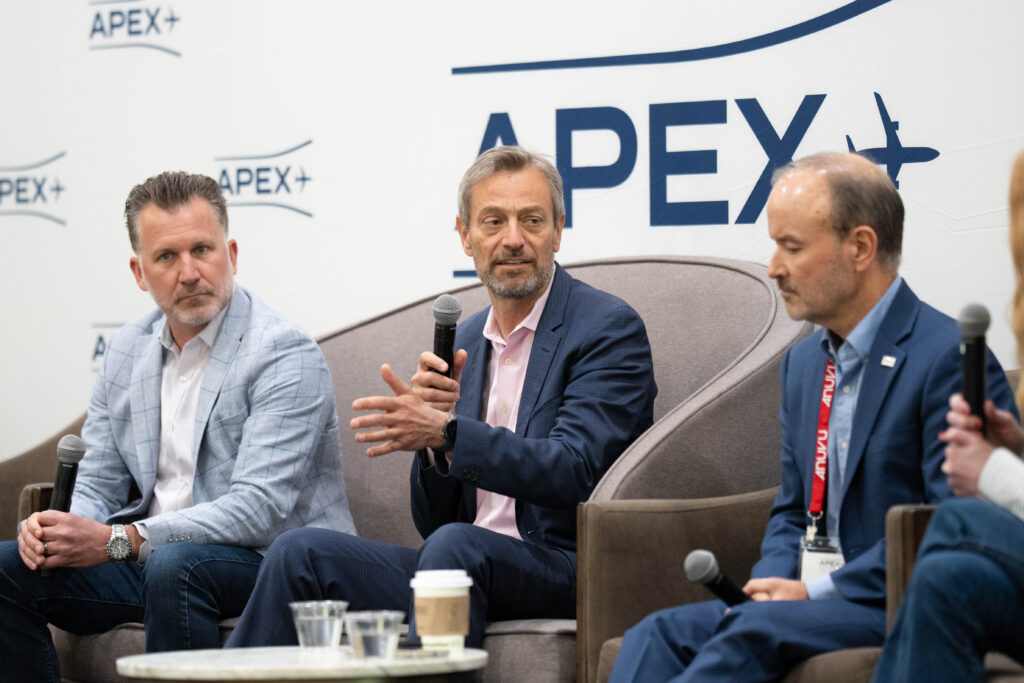
He added that airlines ultimately care less about orbit labels and more about outcomes. That experience can come from LEO alone or from a mix of networks that improve resilience.
Schleret highlighted consistency as a major differentiator. While early deployments can look impressive, performance may shift as networks scale. Telesat designed Lightspeed “to bring that very consistent, superior user experience throughout the flight,” including the ability to concentrate capacity around busy airport hubs. He also emphasized compatibility with existing antennas, allowing airlines to transition gradually. “You have existing field-proven antennas that are compatible with Lightspeed,” he said, making adoption less disruptive.
Viasat’s Perspective: Multi-Orbit as a Performance Strategy
Simone focused on how Viasat continues to refine its approach following earlier satellite challenges. He described how engineers leveraged existing satellite assets “even with the anomaly” to test core capabilities, confirming that “the technology works.”
Passenger perception remains a critical metric, he argued, and often matters more than speed tests. Viasat conducted “double blind studies” where “almost no one could tell the difference” between services from different providers. He shared an example of a passenger who assumed the service must be Starlink because it allowed them to “work, stream, do all the stuff,” only to learn “it was Viasat.”
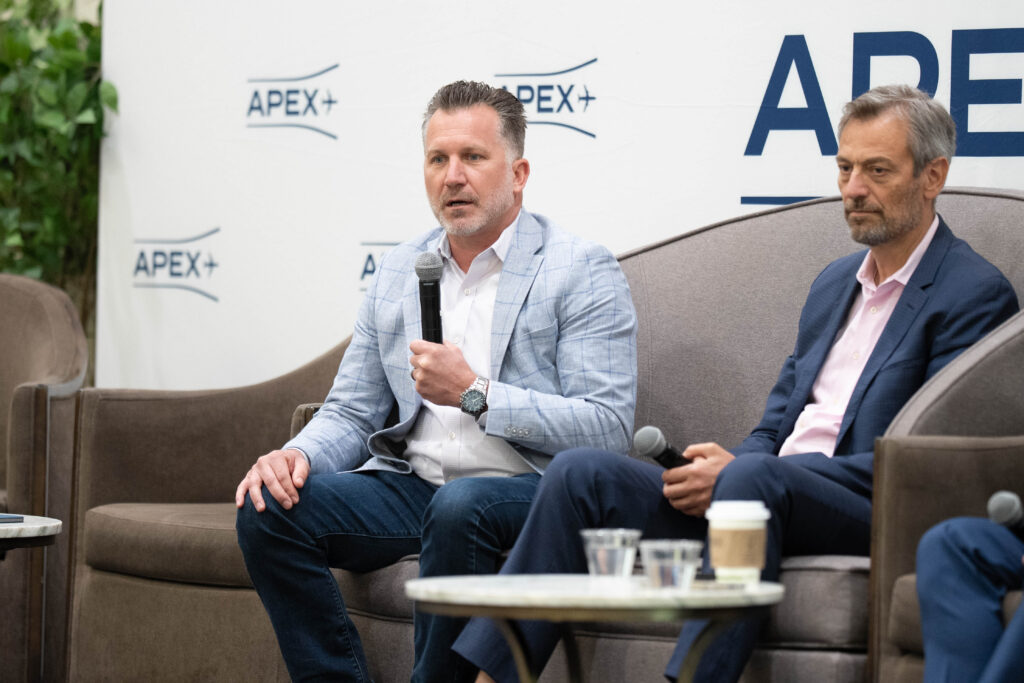
For Simone, multi-orbit architecture supports reliability and flexibility. “There’s still a lot of value in multi-orbit,” he explained, noting that combining geostationary (GEO) and LEO satellite capacity allows providers to “route traffic intelligently” and reduce service interruptions. The goal is simplicity for passengers. “We want to not be selling our customers a LEO service or a GEO service,” he said. “We want to sell the passenger experience that they’re after.” When systems work well, complexity disappears and connectivity simply functions.
Antenna View: Optionality Versus Complexity
Milroy offered a pragmatic reminder that flexibility only works if it remains manageable. “One of the key drawbacks of that optionality is complexity,” he said. Airlines want choices, but not at the cost of operational strain.
From an antenna manufacturer’s perspective, ThinKom focuses on enabling compatibility across networks while minimizing disruption. Milroy argued airlines value flexibility for both resilience and leverage. “Would you like to have fewer options or more options?” he asked. “That’s an easy one” when negotiating costs and maintaining credible alternatives.
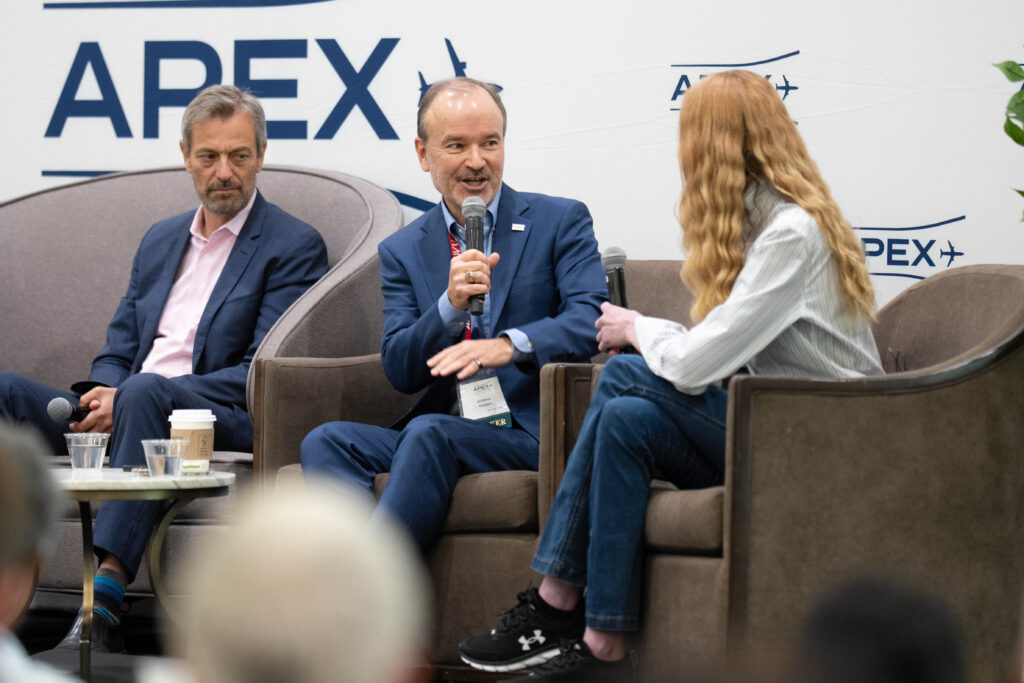
Milroy also defended GEO’s continued role. Traffic patterns concentrate in specific regions, and networks must adapt. GEO allows providers to “focus both in time and space” to meet demand efficiently.
He also pushed back on the idea that LEO is a uniform solution. Not all data needs ultra-low latency. “A very small amount of the packets are really latency sensitive,” he said. Streaming, for example, does not demand the same performance. By routing traffic intelligently, airlines can stretch capacity while maintaining passenger satisfaction. He also emphasized that “not all LEOs are the same,” citing differences in coverage, outages, and cyber risks. Declaring one approach the universal winner, he concluded, is “a fool’s errand.”
Congestion Regulation and the Next Phase of Airline Connectivity Decisions
As the session moved into audience questions, the conversation turned towards congestion, sovereignty, and long-term control. Simone argued multi-orbit architectures offer practical relief when one network becomes congested. With both LEO and GEO available, “we’ll have the best of both,” he said.
Schleret added that Lightspeed’s design was built with hub concentration in mind, using techniques like “beam hopping” to focus capacity where traffic surges, especially around major metro areas where “hundreds of aircraft” can converge. Over busy hubs like New York or Atlanta, multiple satellites can deliver additional bandwidth to support hundreds of aircraft simultaneously.
Milroy expanded the discussion to include regulatory considerations. In markets with tighter controls, airlines “might have less selections” than they would in major US airports. Conditions can shift quickly, making adaptability essential.
Kirby closed the panel, by returning to the central question. LEO has redefined expectations for speed and performance, but connectivity strategies must hold up beyond the first contract cycle. Pricing, congestion, and regulatory shifts may reshape decisions. Optionality, resilience, and adaptability will guide the next phase.
LEO is redefining the baseline for in-flight connectivity, but it is not the end of the story. Success will depend on networks that maintain performance at scale, systems that hide complexity from airlines and passengers, and partnerships that continue to evolve alongside industry needs.