


APEX FTE EXPO 2026: Viasat Expands APAC Connectivity With ViaSat-3 and Multi-Orbit Plans

Share

Viasat will head to APEX FTE EXPO in Singapore with ViaSat-3 F3 now in service across Asia-Pacific. When it entered service, the satellite more than doubled the bandwidth available from Viasat’s existing satellite fleet. The added capacity comes as passengers increasingly expect fast, reliable, and often free Wi-Fi that can support streaming, messaging, work, and social media in the air. Viasat President of Aviation Don Buchman said the company will highlight its expanding network, digital services, and coming multi-orbit solution at the show.
Expanding Capacity Across Asia-Pacific
“The failure mode for in-flight connectivity is running out of capacity,” Buchman explained. ViaSat-3 combines high capacity with beam-following technology that can direct resources toward aircraft as demand changes.
That matters across Asia-Pacific, where traffic can concentrate along specific corridors and markets across a vast geographic area. The network can direct bandwidth where airlines need it most.
More than 20 airline customers across APAC use Viasat, including Singapore Airlines, ANA, China Airlines, STARLUX, and Malaysia Airlines. The company is approaching 10 years with Qantas, its largest and longest-serving customer in the region.

In many APAC markets, travelers carry several connected devices and move between work, streaming, social media, and entertainment throughout the flight. Buchman noted that fast Wi-Fi increasingly forms a basic part of the journey rather than an extra perk.
“For passengers, the goal is simple: in-flight internet that works the way it does at home so they can do whatever it is they’d like to do while in the air,” Buchman said. That gives airlines another way to build loyalty and stand out through the onboard experience.
ViaSat-3 F2 has now entered service across the Americas, joining F1 and F3 and making the next-generation ViaSat-3 constellation fully deployed. According to Buchman, that creates a stronger platform as airlines respond to changing passenger digital habits and growing expectations around always-on connectivity.
Meeting the Demand Behind Free Wi-Fi
Removing the Wi-Fi paywall can quickly increase the number of passengers and devices using the network. Keeping the service dependable becomes especially important when usage peaks.
“Free or sponsored Wi-Fi changes the scale of demand,” Buchman explained. “Once the paywall disappears, many more passengers connect, often on several devices, so airlines need far more capacity.”
Viasat expected free Wi-Fi to become more common and planned around that shift. Buchman noted that passengers expect consistent performance across devices and throughout the flight, even when much of the cabin goes online.
Advanced beamforming helps direct bandwidth toward high-demand flight routes and geographic areas. That technology helps maintain performance where airlines need it most.

Streaming adds another challenge. Viasat research shows that 71% of travelers prioritize access to their own streaming services, highlighting how important choice and personalization have become onboard.
At APEX FTE EXPO, the company plans to update airline partners on the next stage of its network. Its coming multi-orbit solution will include LEO capacity from Telesat Lightspeed.
“Our philosophy is to support customers in a way that empowers them to own the connected passenger experience to suit their brand, their goals, knowing all-the-while they are backed by resilient connectivity,” Buchman explained. That approach gives carriers room to shape services around their own passengers and brands.
Taking Connectivity Beyond Wi-Fi
The larger opportunity goes beyond internet access alone. Airlines can use that connection across entertainment, loyalty, shopping, destination services, and other parts of the journey.
“The biggest opportunity is to make the connected cabin feel like a natural extension of the digital world passengers already live in,” Buchman noted. Travelers already receive personalized content and services on the ground, and Viasat expects that same level of relevance in the air.
Airlines could tailor entertainment, recognize loyalty members, offer retail, connect passengers with destination services, and present more relevant offers. Those tools create more ways to make the digital experience reflect each carrier’s brand.
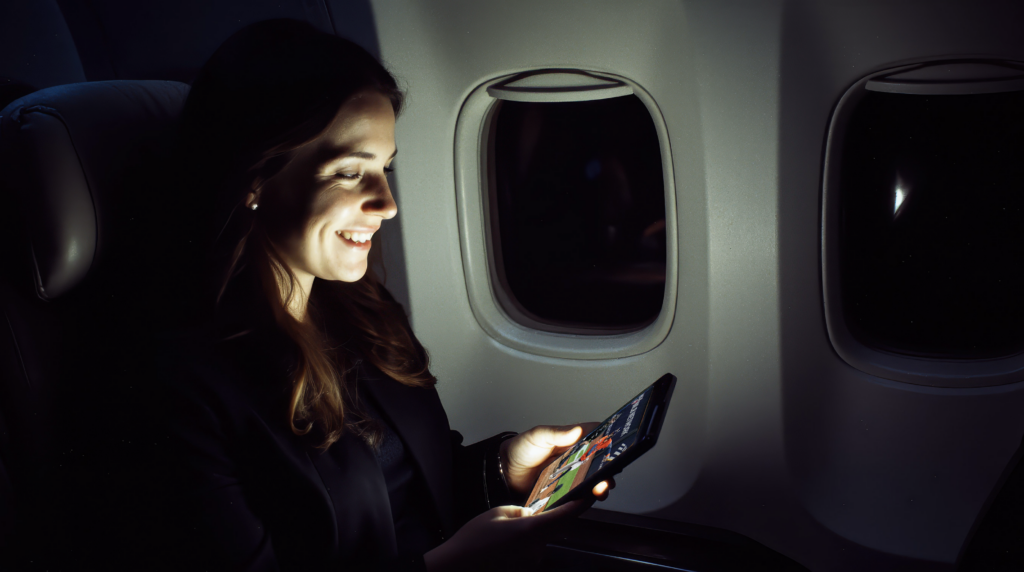
Digital products can shape what passengers see and do onboard. They can give airlines new opportunities to engage travelers and build stronger relationships beyond simply providing internet access.
That experience could eventually extend beyond the aircraft. With passenger permission, digital services could link the flight with lounge access, onward transportation, hotels, airport retail, and destination services.
Under that model, the flight becomes one part of a larger connected journey. The goal is to remove friction, give passengers more control, and provide relevant support at different points in the trip.
“It’s clear that the APAC region is entering a new phase of connected aviation,” Buchman explained. With ViaSat-3 F3 now in service and Viasat preparing its multi-orbit solution, the company will use APEX FTE EXPO in Singapore to show where it sees that connected journey heading next.
Viasat will showcase its expanded APAC connectivity capabilities, digital services, and coming multi-orbit solution at booth 105 during APEX FTE EXPO.