


APEX EXPO 2025: Lounges Emerge as Strategic Battleground for Airline Brands

Share

At the 2025 APEX Global EXPO, the evolution of airport lounges took center stage during a panel moderated by LOUNGE by YATES+ CEO Janis Tse. The session brought together three airline leaders with distinct perspectives: All Nippon Airways (ANA) VP Product and Services Toshiya Shimada, KLM Future Customer Journey Manager Jordie Knoppers, and Saudia Chief Customer Experience Officer Rossen Dimitrov.
Together, they examined how airlines are transforming lounges from simple waiting areas into essential extensions of their brand while balancing customer expectations and operational costs. The discussion underscored both the opportunities and challenges facing airlines as they redefine the pre-flight experience in an era of rising demand, limited airport space, and growing pressure for sustainability.
Lounges: the Start of the Travel Journey
Tse opened the panel by noting that lounges have evolved into the true beginning of the passenger journey. “The journey should start from the ground,” she said. “In the past five to eight years, airlines have taken a step back and realized it begins before departure.” Dimitrov agreed, adding that Saudia now extends the premium experience all the way to check-in. “We have an enhanced check-in area with a dedicated lounge, and the experience starts there.”
For ANA, this concept has long been central to its philosophy. Shimada explained how lounges transitioned from functional spaces into brand showcases. “In the 1980s and 1990s, lounges only had coffee, water, cookies, and maybe pretzels,” he said. “Now, airlines must deliver restaurant-level service. The lounge is not just a waiting space, it’s part of the overall journey.”
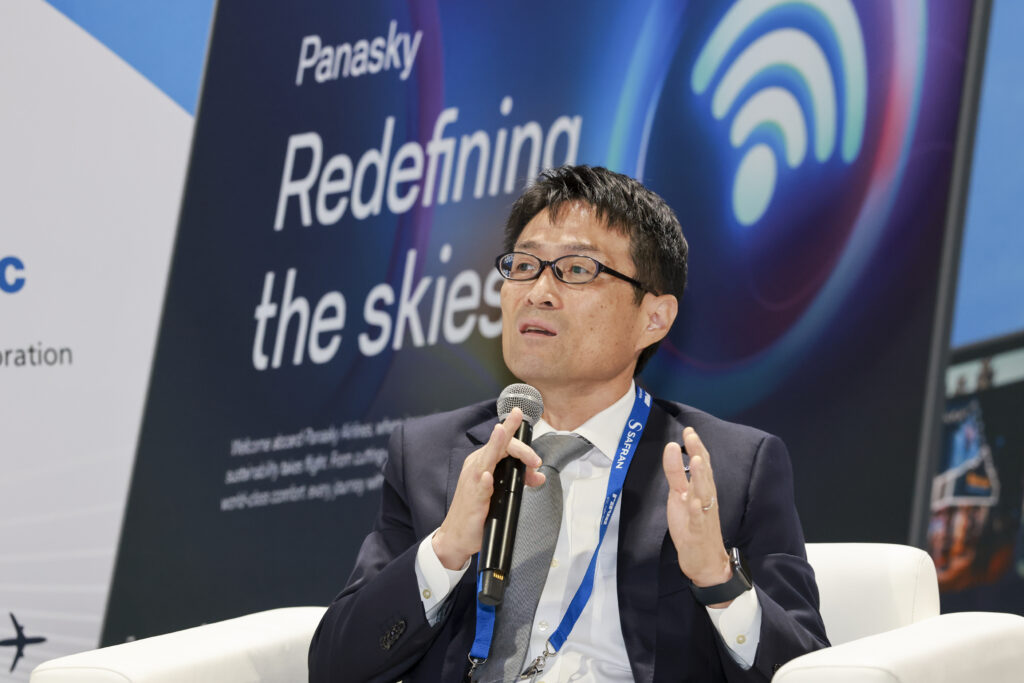
Dimitrov added that design and culture are key to creating the right atmosphere. “You need to know your customer and what their expectations of service are,” he said. “Design becomes critical, how you represent your brand, train your people, and perform within the constraints of the space you’re given.”
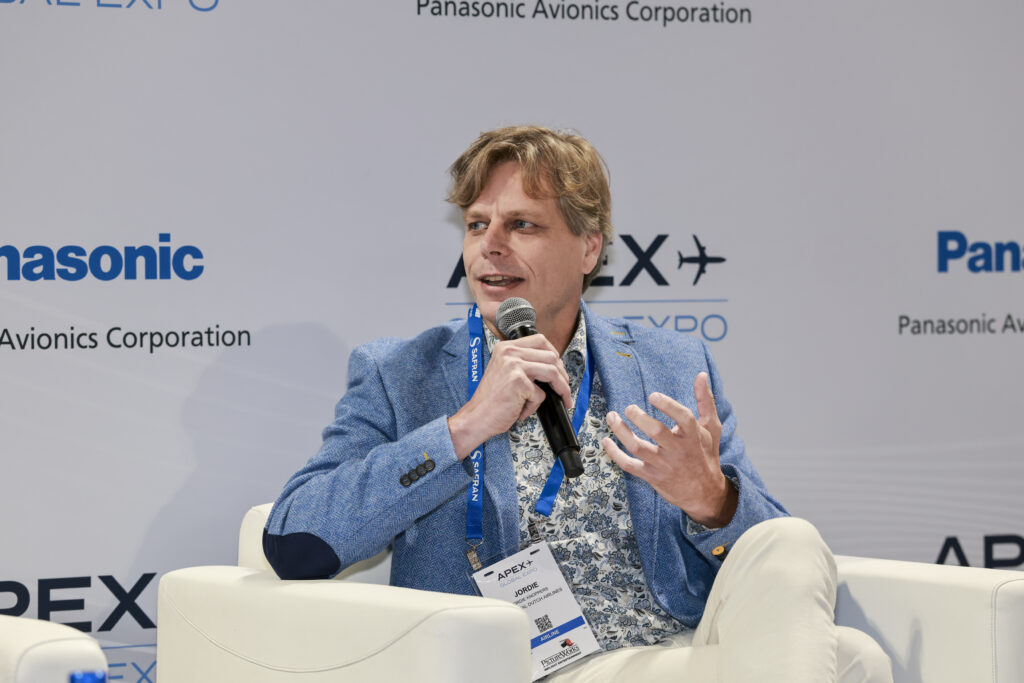
On that note, Knoppers emphasized that lounges must deliver on the brand promise. “We make a lot of commercial advertising,” he said. “But if you fail to deliver the promise, you can lose business. Our lounges must show what the brand stands for.” He used KLM’s renovated Crown Lounge in Amsterdam as an example of how thoughtful design can represent the brand and meet passenger needs.
“We have an enhanced check-in area with a dedicated lounge, and the experience starts there.”
– Rossen Dimitrov, Saudia
Elevating Service and Culinary Experience
Over the past few decades, food and beverage programs have become the centerpiece of modern lounge design. “Ninety-nine per cent of guests come expecting to eat and drink,” Tse said. Shimada explained ANA’s shift from self-service buffets to restaurant-quality dining. “Some airlines now target Michelin-level restaurant service,” he said. “We must partner with catering professionals, because airlines don’t have restaurant expertise. And with global passengers, we must offer Japanese, continental, and vegetarian options, and it’s very challenging.”
Dimitrov praised ANA’s hospitality, explaining that during a recent visit, “I was really impressed by how your staff handled a rowdy group professionally and calmly,” he said. “It showed how well-trained and accommodating they were.”

Tse shifted the conversation toward premium segmentation, asking how first- and business-class lounges differ. Dimitrov explained that consistency across the journey is vital. “First-class expectations extend from the lounge to the cabin,” he said. “You must coordinate service so it feels seamless. Many first-class passengers dine in the lounge and then rest onboard, so we pass that information to the crew; it’s one continuous service.”
Shimada explained, “First class requires a more personalized and luxurious approach. We have to design every step, from reservation to check-in to boarding, as one flow.”
“We introduced a light fare for business class that excludes lounge access to manage crowding.”
– Jordie Knoppers, KLM
Managing Space, Partnerships, and Profitability
Space limitations remain one of the most significant challenges. “Space is costly, so we have to think creatively,” Knoppers said. “We introduced a light fare for business class that excludes lounge access to manage crowding. We also use self-assist kiosks and location-based services for smoother flow.”
Shimada added that even within smaller lounge footprints, airlines can create privacy through thoughtful design. “Even in small lounges, positioning chairs and partitions carefully can create private zones,” he said.
Dimitrov agreed that design is critical. “I’ve seen large lounges that feel like cafeterias,” he said. “It’s not about size, it’s about the experience you create within it.” He noted the importance of collaboration with airports. “Airports look at their bottom line,” he said. “Sometimes lounges are before security, and passengers don’t use them because of the time needed to reach the gate. We have to educate airport authorities and take them on the journey with us.”
Tse replied by pointing to growing partnerships between airlines and airports, particularly at secondary hubs. “Shared spaces and joint investments balance customer needs and commercial realities,” she said. But Shimada warned that partnerships can weaken brand identity. “If you share with other airlines, you lose some control over your brand,” he said. “It’s a balance between cost savings and maintaining your own identity.” Dimitrov agreed, noting that partner inconsistency can harm perception. “Your customer doesn’t care if it’s your partner’s lounge; they think it’s yours,” he said.
Profitability has also become central to lounge strategy. Knoppers said, “It’s always a balancing act-meeting customer needs while keeping lounges profitable. Transparency and managing expectations are key.” He added that KLM now offers premium upgrades like spa treatments and curated menus. Dimitrov explained Saudia’s model: “Lounges can’t be cost centers anymore. We collaborate with banks, loyalty programs, and hospitality companies. But managing multiple lounges, domestic and international, is expensive, so we tailor services to each market.”
“If you share with other airlines, you lose some control over your brand. It’s a balance between cost savings and maintaining your own identity.”
– Toshiya Shimada, ANA
Designing for the Future
The panel concluded on the topic of growth and sustainability. “When you build a lounge, you plan for the next five years,” Dimitrov said. “Then the network grows faster than expected, and suddenly it’s overcrowded.” Knoppers added that maintaining brand consistency across global lounges can be even more complex than managing one flagship. “You need a consistent brand experience worldwide,” he said.

Regarding the topic of sustainability in lounges, everyone agreed it is now a core design principle. “Sustainability is part of our life now,” Dimitrov said. “We need to educate customers too, because we still see unnecessary waste,” added Shimada. “We must move toward lighter materials and less plastic,” he said. Knoppers added that KLM incorporates sustainability at every level: “It’s built into our design principles, from furniture to ventilation systems. If you scale it correctly, sustainability makes sense and creates efficiency.”
As Tse concluded the panel, each speaker agreed lounges have become much more than a pre-flight waiting area. “They represent the brand, connect with customer well-being, and must deliver profitability,” she said. The discussion made clear that the lounge of the future is about strategy, not just space or service. From premium dining and digital access to shared partnerships and sustainable design, airlines are redefining the experience on the ground as the first chapter of the passenger experience.