


APEX EXPO 2025: Airlines Need a Holistic IFE Experience Across Seatback Screens, PEDs

Share

At the 2025 APEX Global Expo, the future of in-flight entertainment (IFE) took the spotlight during a panel moderated by PaxEx.Aero founder Seth Miller, which brought together three leaders with very different perspectives: Aeromexico Director for IFEC and Technology On Board Dolores de Iturbe Vera; ANA Director of Cabin Products and Services Planning Katsunori Maki; and Panasonic Avionics SVP Product Management and Strategy Andy Masson.
Together, they explored how the intersection between personal electronic devices (PEDs) and seatback screens is re-shaping IFE. The discussion highlighted both opportunities and challenges as airlines seek to ensure flexibility, personalization, and affordability in the connected cabin of the future.
PEDs Bring About Rising Passenger Expectations
The panel session opened with Miller asking how consumer behavior on the ground has shaped in-flight expectations. Panelists agreed that passengers’ expectations have changed dramatically as a result of widespread use of streaming platforms and increased multi-screening.
Masson pointed to research conducted by Panasonic with passenger groups around the world. “The expectation of the passenger has gone up significantly, very much driven by personal devices: iPhones, iPads, Samsung phones. The integration between social media and streaming is much heavier. Short-form media has become more used, and multi-screen use has become much higher,” he explained.

He described how younger generations can easily switch between multiple devices, for example watching television while texting on phones and playing games on tablets. This multi-screen environment, he argued, has become the new normal and is reshaping how travelers view the in-flight experience.
For airlines, this means in-flight systems must provide more personalization. “Now it is much more of a get on board and ‘Welcome Mr. Smith, here are your loyalty points and your curated experience.’ That expectation is being driven from the consumer space,” Masson said.
The Enduring Value of the Seatback Screen
Despite the growth of personal device usage and the increasing reliability of in-flight Wi-Fi, de Iturbe Vera stressed that the seatback screen continues to hold value for many travelers. She described it as both practical and symbolic.
“Passengers expect Wi-Fi on board to work just as well as at home, and it is getting there, but I personally do not think it is there yet,” she said. “At the same time, there is a very romantic kind of person who gets into the airplane, sees the screens, and says ‘wow, this experience is going to be amazing.’ They love not being connected for 12 hours because it is the only place where you can disconnect.”
“We cannot remove [seatback screens], because they give choice.”
– Katsunori Maki, ANA
The curated nature of seatback content also plays a role. “Yes, Hollywood blockbusters are the most watched, but there is space for niche content,” de Iturbe Vera added. “The airplane is a perfect moment to watch something you would not normally do at home. Later passengers tell me, ‘I had no idea I could watch this documentary.’”
Maki reiterated this, pointing out that seatback monitors are also communication tools. “We cannot remove them, because they give choice. They are also the last touchpoint with the passenger,” he said. He pointed out that seatback screens are useful for more than just entertainment, as they can help with safety and create opportunities to sell extra products or services.
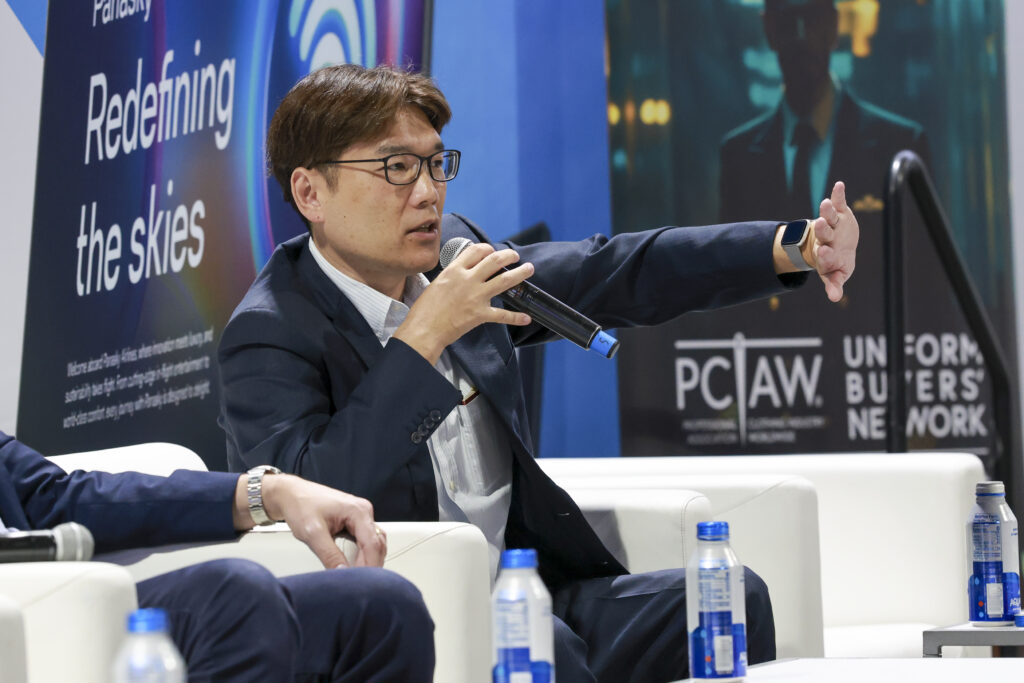
“Since COVID, we removed the paper duty-free catalog. The seatback monitor may help as one communication tool with passengers. For some carriers, it is also a good tool for ancillary services like duty-free shopping. That is why the seatback monitor is still required.”
He added that generational differences influence how passengers interact with content. “Some younger generations are more comfortable checking out with their devices, but other generations still prefer paper or seatback options. We believe both need to coexist during this transition.”
Connectivity and the Challenge of Maintaining Engagement
While in-flight Wi-Fi offers freedom, it can also draw passengers away from airline platforms altogether. “What we are finding is that when people go onto Wi-Fi, they are not in the airline’s digital ecosystem anymore. If they want duty-free, they are more likely to go onto Amazon or eBay than to the airline,” Masson said.
This dynamic has led suppliers and airlines to focus on building interfaces that hold attention and encourage interaction with airline-branded services. “It is more about creating the environment you want, with integration and exploration of that interface,” he explained.
De Iturbe Vera agreed, pointing to Aeromexico efforts to expand in-flight engagement. “How can we take the in-flight experience to the next level? How can we keep you in this sphere, letting you know more about the airline, where we fly, and what we offer?” she asked.
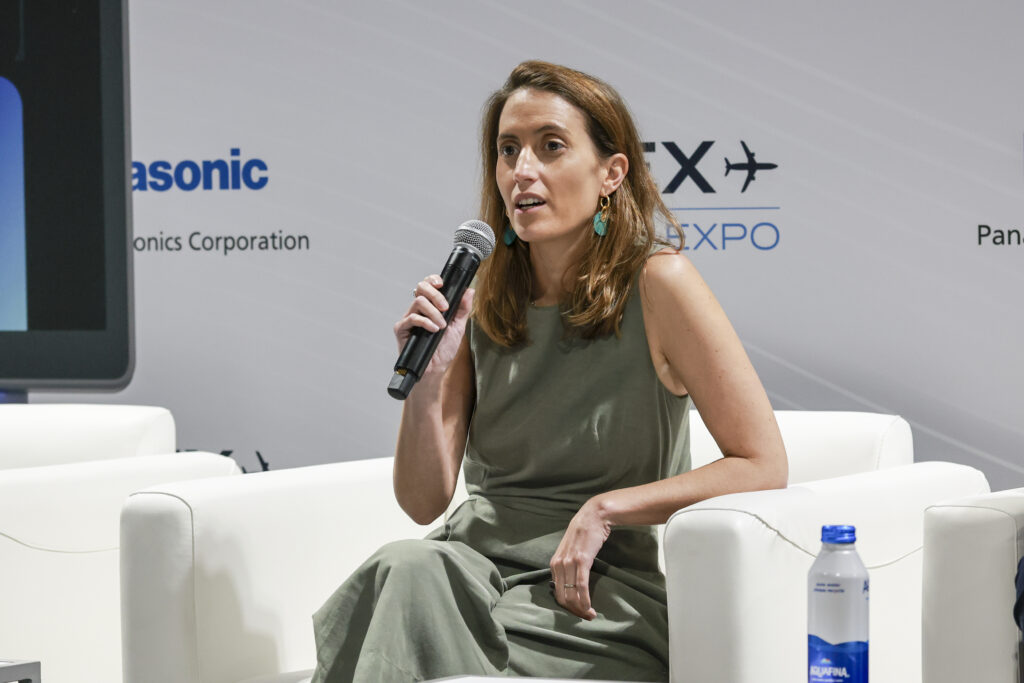
Both Aeromexico and ANA are also grappling with the challenge of tailoring content for global audiences. “Originally the majority of ANA passengers were Japanese, around 60 per cent. But recently our network has expanded, and now on some flights foreign passengers are more than 60 per cent,” Maki said. “We are trying to increase choice in languages and content for non-Japanese customers.”
Aeromexico is facing similar shifts. “We started putting a lot more Japanese content in front of passengers that we did not have before, while also expanding our Mexican library. Latin America is very influenced by Hollywood, but we also want to highlight our own culture,” de Iturbe Vera said.
When [in-flight Wi-Fi] is free, usage goes up to 40 per cent. When it is paid, it stays in the teens.”
– Andy Masson, Panasonic Avionics
Flexibility, Cost, and the Push for Free Wi-Fi
The discussion then turned to future-proofing investments in a fast-moving tech landscape. Airlines cannot replace systems as quickly as consumer electronics, but passengers still expect regular upgrades.
De Iturbe Vera pointed out that innovation cycles in aviation are slow and expensive. “I was surprised by how little competition there is for vendors in both connectivity and IFE. That makes it difficult for airlines to demand bigger changes. Outside the aircraft, technology is moving so fast. Inside, changes take far longer and cost far more,” she said.
Masson responded by outlining Panasonic’s efforts to design upgradeable systems. “We adjusted the architecture [of our IFE solution] so it can be upgraded physically and through software. For example, if USB-C becomes USB-D, it can be upgraded. Now we move microprocessors out of the screen and into areas where they can be changed more easily. That allows us to deliver consumer-level innovation onboard.”
Another recurring theme was connectivity, especially the question of whether Wi-Fi will eventually be free across all airlines.

“Passengers want free Wi-Fi all the time, everywhere. The airplane is not the exception. Probably eventually we will get there,” de Iturbe Vera said. She suggested creative approaches like advertising could help subsidize costs.
Maki agreed that the trend is moving toward free connectivity. “Generally speaking, the industry is trying to open free Wi-Fi. United, Air France, and many others have announced free streaming-capable Wi-Fi. The passenger demand is getting higher, so at least we want to open the door to allow them to use their content on the seatback screen,” he said.
Masson cautioned that the economics vary by airline. “Some carriers are happy to pay US$20,000 a month to a provider and let every passenger use it. Others are not. It becomes a decision based on strategy. But we see when it is free, usage goes up to 40 per cent. When it is paid, it stays in the teens,” he explained.
“The airplane is a perfect moment to watch something you would not normally do at home.”
– Dolores de Iturbe Vera, Aeromexico
Looking Ahead
As the panel closed, the panelists acknowledged that predicting the future is difficult, but all agreed on a few constants: the need for personalization, flexibility, and a balance between seatbacks and PEDs.
Maki summarized ANA’s vision: “From a customer point of view, the simple expectation is that the experience in the air should be the same as on the ground. That means high-bandwidth Wi-Fi and streaming capable systems are required. At the same time, seatback monitors remain important because they give choice across generations and nationalities.”
De Iturbe Vera emphasized the passenger’s perspective: “At the end of the day, what captivates the customer is either useful or interesting content that keeps them engaged with the airline, not just their own device.”
Masson pointed to the supplier’s role in enabling that balance. “Much of what we do is making sure the system is upgradeable, so airlines can keep pace with consumer technology. That way, the in-flight experience does not fall behind what passengers have at home.”