


APEX FTE EXPO 2026: Thales Continues to Evolve the Inflight Experience With FlytEDGE

Share
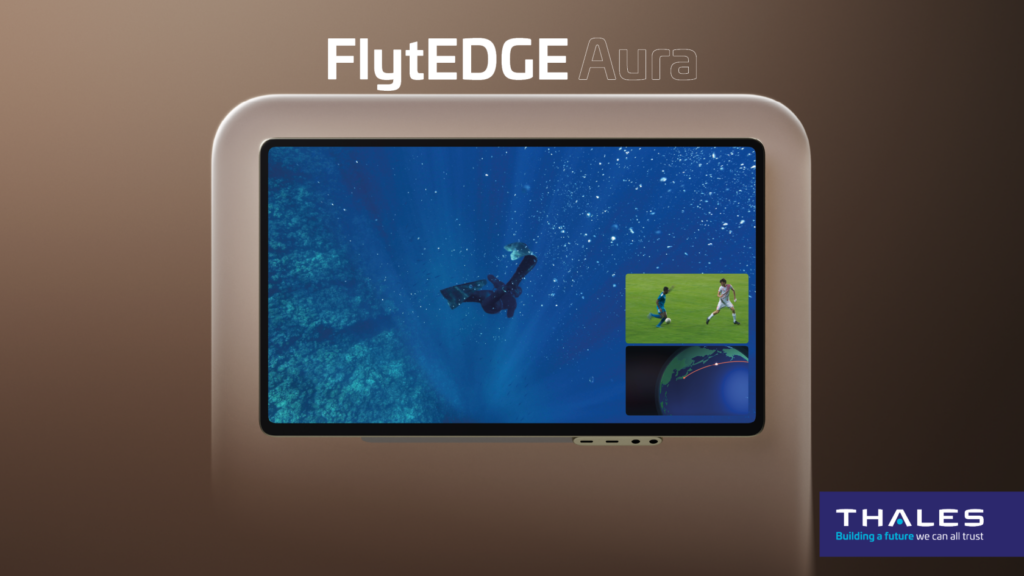
Thales is continuing to evolve the inflight experience with FlytEDGE as the cloud-native platform prepares to enter service with Qatar Airways and Delta Air Lines. The company designed FlytEDGE to bring more of the digital services passengers use on the ground into the aircraft. Ahead of APEX FTE EXPO in Singapore, Thales is highlighting how FlytEDGE can create a more connected passenger journey while giving airlines flexibility to add new capabilities over time.
Bringing More of the Digital Experience Onboard
Thales developed FlytEDGE to bridge the disconnect between the digital experience passengers have on the ground and what they can access once they board an aircraft. That gap can include the content and technology available onboard, the user experience, and the digital services and applications passengers can access through the seatback screen.
“One of the key principles behind FlytEDGE was recognizing that the aircraft should not be a digital dead end,” Thales InFlyt Experience VP, Marketing & Communications Vanessa Dayde explained. Thales designed the system to reduce that disconnect across the passenger journey.
Instead of using a traditional closed IFE model, FlytEDGE uses modern web technologies and an open architecture. Airlines can integrate consumer web apps, streaming services, multiplayer games, e-commerce, and other connected services more quickly and seamlessly than before.
“Our goal is to make the onboard experience feel less like a separate environment and more like a natural extension of a passenger’s connected lifestyle,” Dayde said. That changes what airlines can do through the seatback screen.
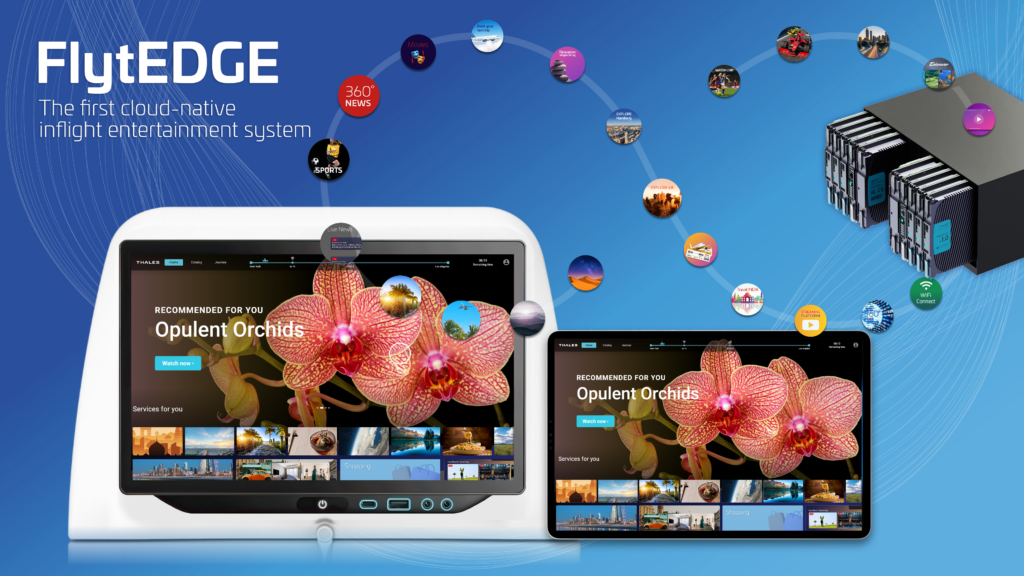
Rather than focus mainly on movies and television, Thales sees the screen becoming a passenger engagement platform and a digital extension of the airline’s brand. Carriers can use it to strengthen customer relationships, build loyalty, and create ancillary revenue opportunities during the flight.
Personalization plays another role in that shift. Thales believes airlines can enhance the passenger experience by making choices more relevant at every stage of the journey.
“The future isn’t about giving passengers more choices. It’s about giving them the right choice at the right moment,” Dayde said. Passenger needs can shift throughout a flight, from work and entertainment to rest, socialization, and preparing for arrival.
Using passenger, flight, and operational data, airlines can surface information that better matches those needs. That could include tailored recommendations, destination services, rebooking options during disruptions, or relevant arrival information.
Thales is working with Spideo to take those recommendations beyond movies and television. The partnership can support tailored recommendations across games, e-commerce, and destination services.
“Ultimately, successful personalization isn’t about adding complexity. It’s about reducing friction and helping passengers get to what matters most, faster and more seamlessly,” Dayde explained. For Thales, the focus is on making the inflight journey more useful without making it more complicated.
FlytEDGE is now preparing to enter service with Qatar Airways and Delta Air Lines as it continues to gain momentum across the airline industry. That progress will be one of the areas Thales highlights around APEX FTE EXPO in Singapore.
Continuing to Build on FlytEDGE
Thales designed FlytEDGE so airlines can add new capabilities as their needs change. Hardware and software updates, along with new partnerships, give the company ways to keep developing the system over time.
“Airlines are looking for technology investments that can evolve alongside their business, and that’s exactly how FlytEDGE was designed from day one,” Dayde said. Thales sees that approach supporting passenger satisfaction and loyalty while helping airlines improve operational efficiency.
The company has applied the same thinking to FlytEDGE Aura, with the in-cabin system it introduced earlier this year at Aircraft Interiors Expo (AIX). FlytEDGE Aura builds on FlytEDGE with 4K Tandem OLED displays, a Qualcomm processor, and the latest Bluetooth and Wi-Fi standards.
The processor can support AI-based capabilities, while the wireless standards support seamless pairing and higher-quality audio. FlytEDGE Aura uses a modular architecture that separates the display, port, and processing components.
That design can make upgrades, repairs, and future enhancements faster and simpler while reducing maintenance time and total cost of ownership. Airlines can update individual parts of the system as technology and their needs change.
Thales says FlytEDGE Aura has drawn strong interest since its introduction earlier this year. The company plans to discuss that interest in Singapore as it continues developing the broader FlytEDGE offering.
“Airlines shouldn’t have to choose between meeting today’s needs and preparing for tomorrow’s opportunities,” Dayde explained. “By combining a cloud-native software platform, an open ecosystem, and modular hardware, Thales’ FlytEDGE gives airlines a future-ready foundation that can continuously evolve as passenger expectations, technologies, and business priorities change.”
Thales will co-sponsor the APEX Awards Ceremony at Swissôtel The Stamford to close out APEX FTE EXPO. To register, click here.