


APEX FTE EXPO 2026: West Entertainment Expands Into AI With WestDigital

Share
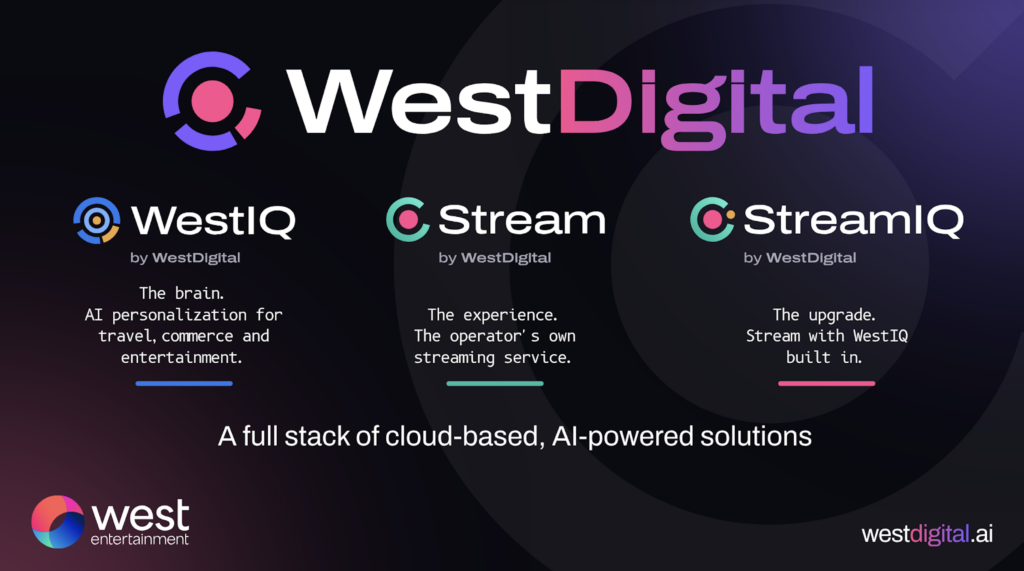
West Entertainment has launched WestDigital, a new software and artificial intelligence division centered on WestIQ, its passenger intelligence and orchestration platform. WestIQ works across existing in-flight entertainment and connectivity (IFEC) and digital platforms to help airlines better understand passenger behavior, personalize the experience, and create new commercial opportunities. At APEX FTE EXPO in Singapore, West Entertainment plans to showcase WestIQ, StreamIQ, and other WestDigital products through live demonstrations that will let airlines and industry partners try the technology themselves.
Building WestDigital Around Passenger Intelligence
The new division builds on West Entertainment’s experience working with airlines, original equipment manufacturers (OEMs), studios, and technology partners. West Entertainment Vice President of AI and Digital Strategy Paul Barton described the move into software and AI as a natural next step for the company. “We tend to move quickly and build big,” Barton said.
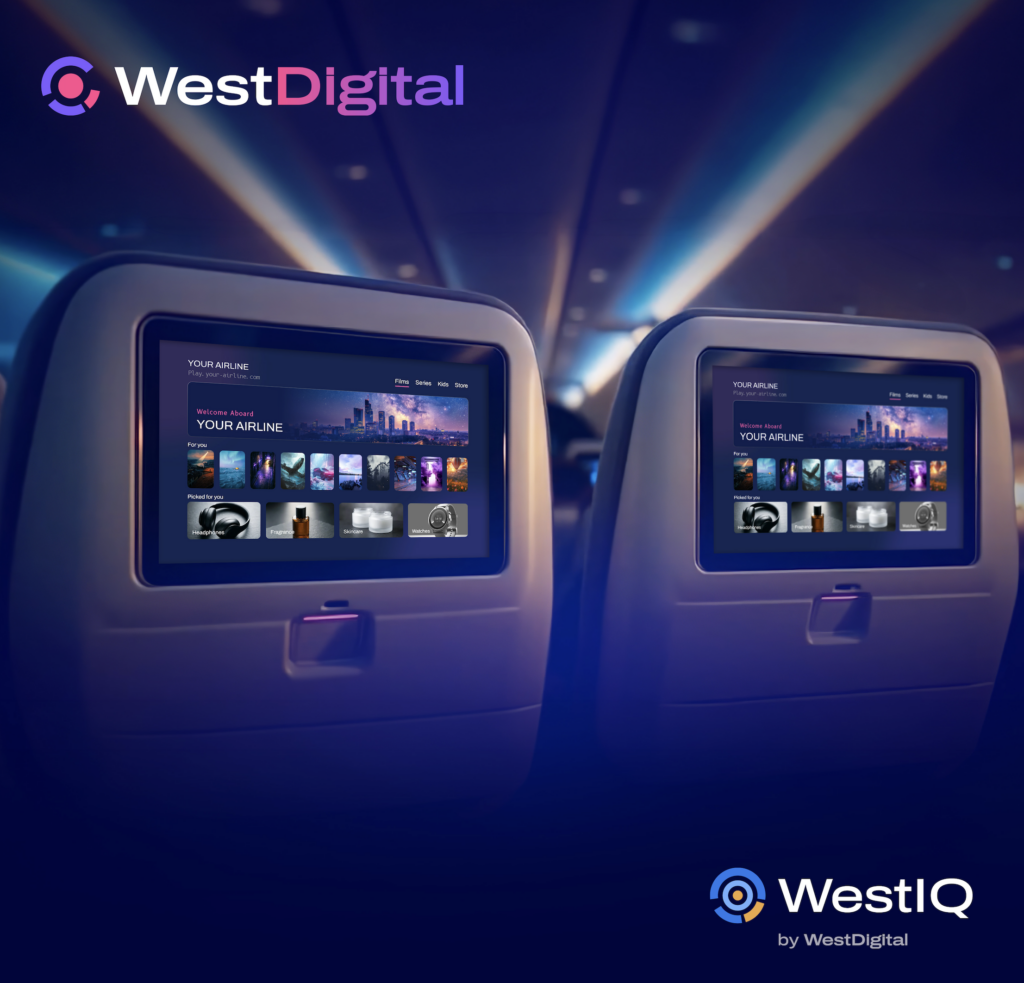
WestIQ sits at the center of that strategy. The technology currently uses 50 passenger signals, including searches, browsing, skips, pauses, scroll time, favorites, trailer viewing, and interactions with products or advertisements, to understand how someone uses the system at a particular moment.
Instead of relying only on past viewing history to recommend another movie, WestIQ looks at how a passenger interacts with the system throughout the session. Barton explained that those signals help it understand more than a passenger’s general interests. “What those 50 signals allow us to do is really determine in that finite moment what you’re feeling, what your mood is, and then orchestrate an entire experience around that,” he said.
That information can shape more than movies and television. Depending on how someone uses the system, WestIQ could surface podcasts, audio, destination information, products, advertisements, or other services that fit that point in the journey.
West Entertainment President Kate Groth noted that airlines already invest heavily in content, connectivity, loyalty, retail, and other parts of the passenger journey, but in-flight entertainment (IFE) can still look the same from one seat to another. Improved connectivity now gives airlines more opportunities to personalize what each passenger sees. “We can really make that experience dynamic and personalized to the seat,” Groth said.
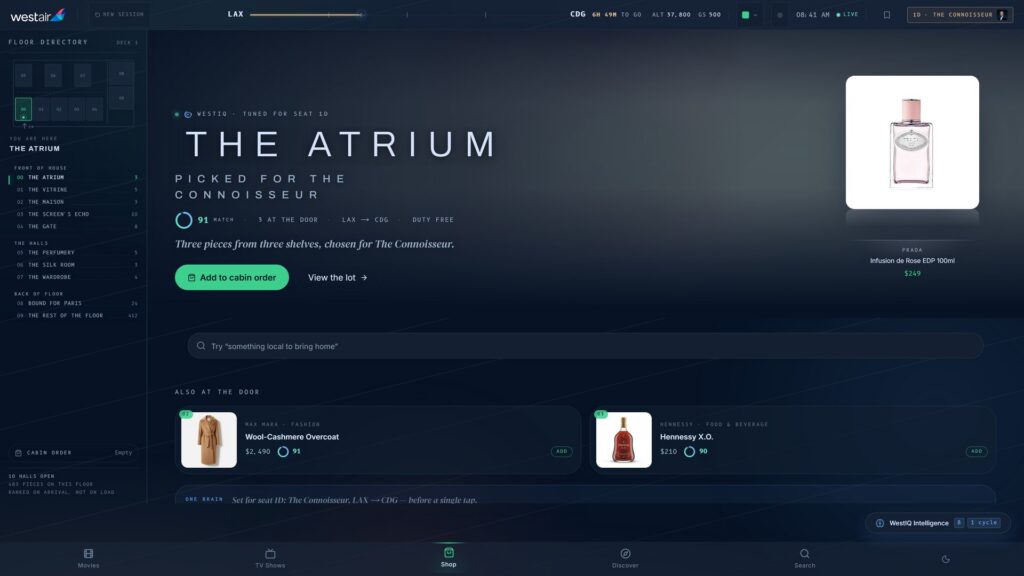
Airlines do not need to replace their existing IFEC system or passenger interface to use WestIQ. The technology works behind existing systems, allowing airlines and OEMs to add its capabilities while keeping control over how the passenger-facing interface looks and works. Barton emphasized the importance of making that integration easy: “We need to make this as easy and as frictionless as possible.”
Connecting Personalization With Commerce
WestIQ comes in three packages: Insights, Personalize, and Monetize. Insights analyzes passenger engagement and other available data, Personalize uses that information to shape recommendations and discovery, and Monetize connects passenger intent with advertising, shopping, destination services, and other commercial opportunities.
Barton initially expected the strongest interest to focus on Insights, but airlines, OEMs, and other partners have shown interest across all three areas. That response supports West Entertainment’s goal of making digital interactions more relevant while helping airlines get more value from their IFEC systems.

Monetization does not mean putting more advertisements in front of passengers. WestIQ considers relevance, timing, frequency, and passenger behavior before deciding whether an offer should appear. Barton summed up the approach: “The system or the offer has to earn its moment in the interface.”
For example, a passenger starting a movie around dinner time could receive a relevant food or beverage offer. Someone traveling to a particular destination could instead see activities, products, or information connected to where they are going.
Groth framed the opportunity as broader than ancillary revenue alone. More relevant recommendations and offers could help airlines strengthen loyalty by making the journey feel more tailored to each passenger. “It’s to say we see you, we understand you,” she said.
West Entertainment calls that connection Content-to-Commerce, or C2C. The approach uses what passengers watch, search for, or interact with to better understand what they may want and connect them with relevant content, services, advertisements, or commercial offers.

WestDigital extends the same capabilities into its streaming products. Stream by WestDigital, formerly WeFly OTT, provides a connectivity-enabled streaming platform, while StreamIQ brings WestIQ directly into that environment.
Together, the products give airlines another way to create a more consistent digital experience across seatback screens and passengers’ personal electronic devices, particularly on fleets with different aircraft and IFEC systems. Barton explained that airlines can customize the streaming interface to match their existing IFE experience while using WestIQ across both.
Groth sees streaming as another way for airlines to offer more timely content. Traditional IFE content cycles can take weeks or months, while a connected streaming platform can help airlines respond more quickly to current events or changing passenger interests when licensing allows.
WestIQ personalizes from what a passenger does during the session. Each airline’s data stays in its own walled environment, encrypted with its own keys, and is never used to train models for other airlines. Airlines can connect loyalty or customer data through their own systems when passengers opt in.
Bringing WestDigital to Singapore
At APEX FTE EXPO, West Entertainment plans to showcase the full WestDigital portfolio, including WestIQ, Stream by WestDigital, StreamIQ, and TOM. Rather than relying on fixed presentations, the company plans to let airlines and industry partners use the technology and see how the different products work together.
“Everything we’ll show in Singapore is running today,” Barton said. “We’re built on proof, not promises. Airlines and OEMs don’t have to wait for APEX to see it.”
StreamIQ will give attendees a live look at WestIQ integrated directly into WestDigital’s streaming platform. Users can browse the graphical user interface (GUI) and watch WestIQ change what appears based on their actions. “You’ll be able to actually use our StreamIQ interface with WestIQ fully integrated,” Barton said.
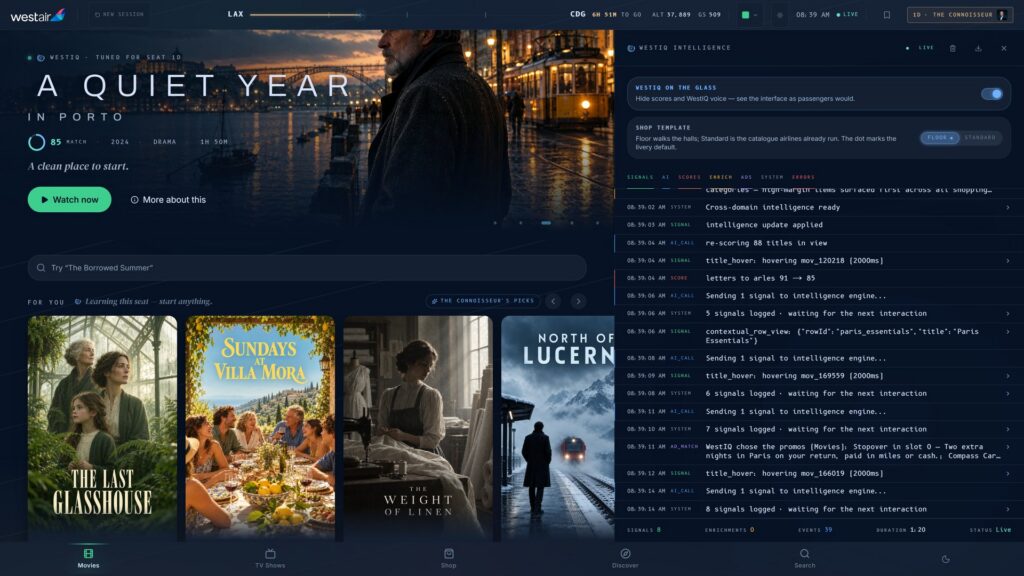
WestIQ can track actions including scrolling, hover time, browsing behavior, and content selections. As those signals change, the system can adjust entertainment recommendations, reorganize parts of the interface, surface products and offers, and create destination information based on what it learns during the session.
Natural-language search gives passengers another way to use WestIQ. Someone could ask for something funny to watch before the flight ends or search for products within a certain price range, with the system using that request and other signals from the session to shape the results.
West Entertainment will showcase TOM (Temporal Observation Model), its proprietary AI platform, in Singapore as well. TOM can review films against airline-specific content guidelines while identifying brands, products, locations, and the context of individual scenes.
TOM also passes scene-level detail, such as the brands, products and locations on screen, into WestIQ, so recommendations and offers can match what a passenger is watching.
West Entertainment will showcase WestIQ, StreamIQ, and TOM at booth 307 during APEX FTE EXPO, with live demonstrations that will let attendees interact directly with its new WestDigital products.