


APEX in Profile: Boris Veksler

Share
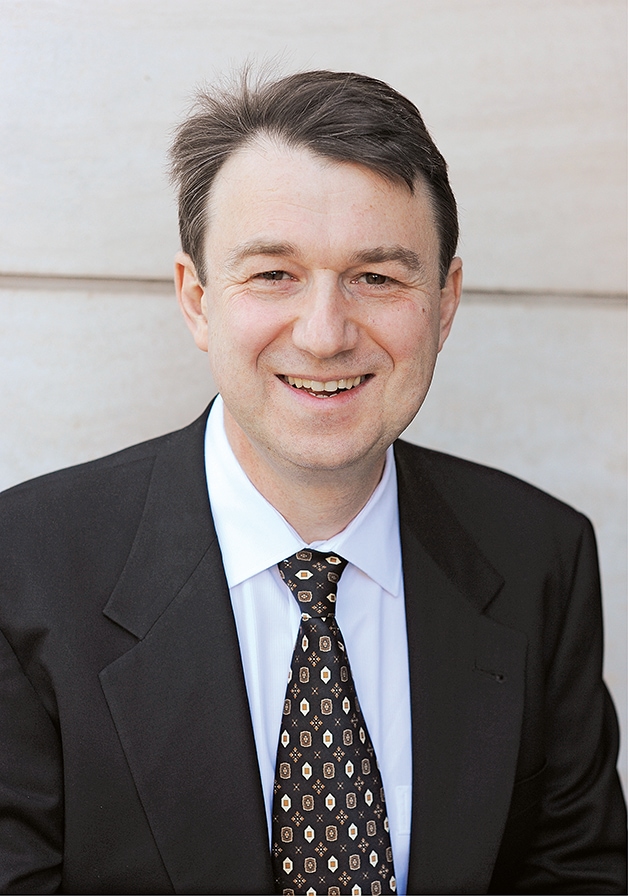
Boris Veksler
President
Betria Interactive, LCC
Boris has over 20 years of experience developing technologies and applications used by millions of people in the Internet, mobile and in-flight entertainment (IFE) industries. His recently launched flagship product, FlightPath3D, is considered the future of interactive mapping applications and is gaining formidable traction in the market.
What are the challenges with being a supplier to airlines? What are some of the highlights?
The speed of innovation and increasing customer expectations is always challenging but, as Heraclitus says, “The only thing that is constant is change.” So, we embrace this and look beyond today’s needs by developing efficient systems with a high degree of quality and [design] them to adapt quickly to future changes. What is immensely satisfying is seeing your vision and the investment in your products deliver in-flight, and command high levels of passenger engagement.
When it comes to in-flight connectivity, what should airlines consider in planning for the future?
Airlines’ choices should be informed by their vendors’ technical and operational ability to scale to a higher bandwidth over time and to provide very refined management of that expensive bandwidth. The increasing demands from passengers and the in-flight applications will drive this need. At the same time, there must be a willingness on the part of the airline and their vendors and partners to find ways to offer that same access for as close to free as possible. It is a dichotomy, but connectivity is part of our digital life and is … increasingly becoming an expected part of the standard IFE offering, much like the handout headset became.
Something that never ceases to amaze you in your industry?
Our company initially serviced the fast-paced consumer Internet and mobile world. What first surprised me in the IFE industry was the slow speed of technical change, long support life and heavy dependence on large integrators as channels to the market. The industry is so used to long ATP cycles and is hypersensitive to risk, that the ability to innovate and quickly refine product quality is limited. This was certainly understandable with software bundled together with hardware certification cycles. However, the connected-aircraft revolution brings with it an irreversible separation from this model for software and content. Newer companies like ours will help accelerate this by bringing leading-edge software solutions, high degrees of technical skill and efficient development and delivery processes. This will significantly increase the speed of innovation and help the industry deliver passenger experiences more compatible with and closer to the expectations they bring onboard with them.
What’s the one item you can’t travel without?
That one is easy: information. Like everyone in my generation and those generations following us, we have become addicted to real-time access to information. I am always concerned about what is transpiring in the industries I work in, in my business and in my personal life. We all establish channels that we depend upon to keep on top of things so we can manage issues, build closer relationships and stay informed.
A few years ago, that “go to” information-access medium was my laptop, today it is my smartphone, and I expect in the future it will be just credentials that I carry with me.
My digital credentials would give me access to my personal digital world through any digital medium available wherever I am in my travels: From clouds to the cloud, so to speak.
The career path you considered but never followed?
I have always loved math and had seriously considering pursuing a PhD, but I found that, as Ghandi put it, “I wanted to be the change I wanted to see in the world,” and decided to pursue my MBA to combine business acumen with technical innovation. I have also always had a secret passion for geography and exploring the world, which I only expected to satisfy with the occasional vacation. Looking at FlightPath3D and where it is now, I think it may have been born out of these two unrealized passions. Introducing this moving map product has allowed me to virtually travel the world and, at the same time, work with an incredibly talented team to design complex 3-D modeling algorithms that deliver the state-of-the-art performance as the core of the product. So, maybe you could say that my path-not-taken kind of caught up with me.
Talent you wish you possessed?
There are a few, but I think the number-one ability I wish I had is to reshape time and create the 26-hour day. I’ve always been a fan of Baron Munchausen and always believed that May 32nd is possible. Until then, I will just have to squeeze in those extra couple of hours between work, family and sleep.
Biggest challenge you’ve ever overcome at work?
Developing an expertise in sales has been incredibly challenging. In fact, I think I will revise my answer about talents I wish I had. I am an engineer and a business manager by training, and perform like a consultant in the way I approach problem solving. These are well within my wheelhouse. Becoming a CEO of a company took me out of my comfort zone and refocused me outwardly as an evangelist for our company vision. Don’t get me wrong, I really enjoy demonstrating our product (it is fun and a little like showing off), but managing the “art of the deal” can be tough, as every engagement is different in some material way. We have done well, but I am still developing my CEO skill set.
First travel memory?
I was five years old and I was with my parents on a six-person plane heading to one of the Baltic Sea resorts. One of the passengers on the plane was Alexandr Yakovlev, the head of the famous A.S.Yakovlev Design Bureau responsible for building over 70,000 aircraft for both Soviet military and air-transport industries. It is possible that, subconsciously, the brief encounter influenced my future “flight” path.
One thing you wished people cared more about?
The difference between good and great is just that extra 20 percent of effort needed to move something from “working” to reliable, efficient and maximum-performance level. That difference is summed up in a single word: quality. It is a little disappointing to me that it is truly the exception when I meet a person or a company where this principle is an ingrained part of their DNA. It is especially important in the IFE industry where a product that enters service is hard to update and has a long operating cycle where millions of passengers will see that quality manifest in their experience.
Luckiest moment of your life?
There is only one option there: the day I met my wife. In life you have to find that partner who can complement and support you in all that you do. Bringing a new product to market, like we are, is very time-consuming and would be impossible without the support of my wife (and family, of course).
Describe your next holiday.
I am guessing that my next holiday will be similar to many in this industry: staying home with the family and enjoying ourselves there, maybe hitting the beach. Probably not so PC for the industry, but Southern California is a beautiful place, sunny and warm, and occasionally you have to sit back, relax and enjoy your life without any planes, trains or automobiles… or Internet.