


APEX TECH 2026: Delta at Full Power and the Evolution of Cabin Technology

Share
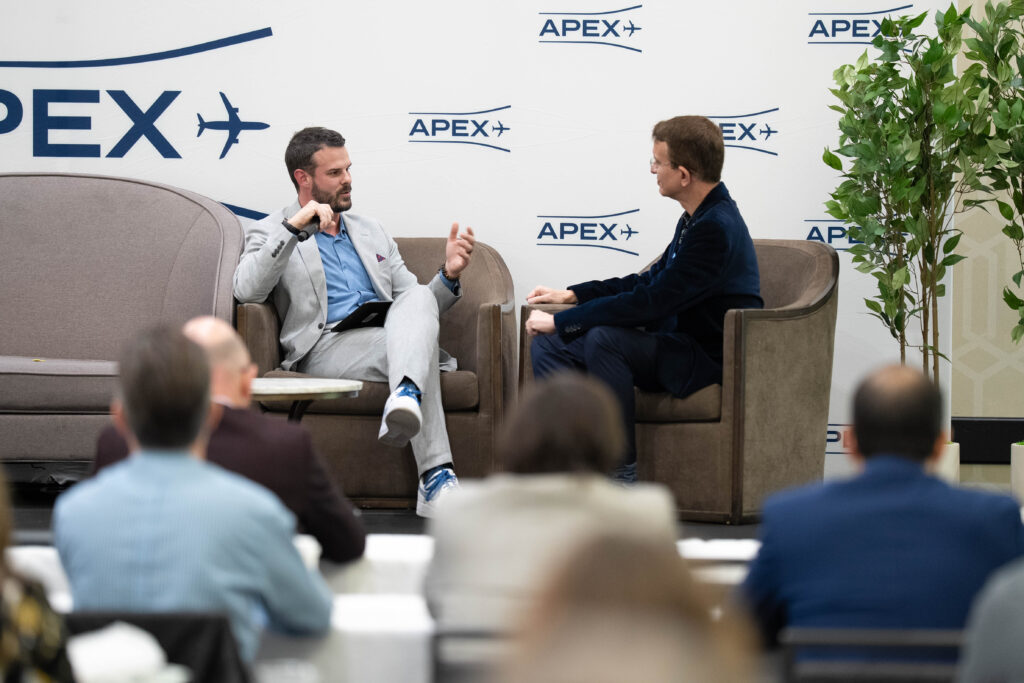
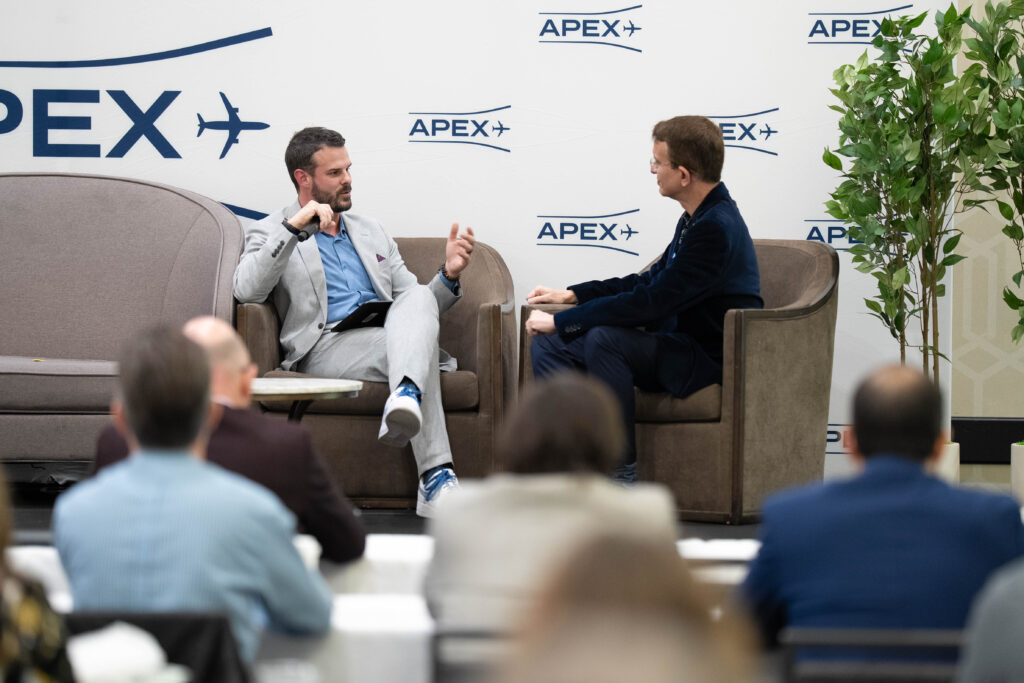
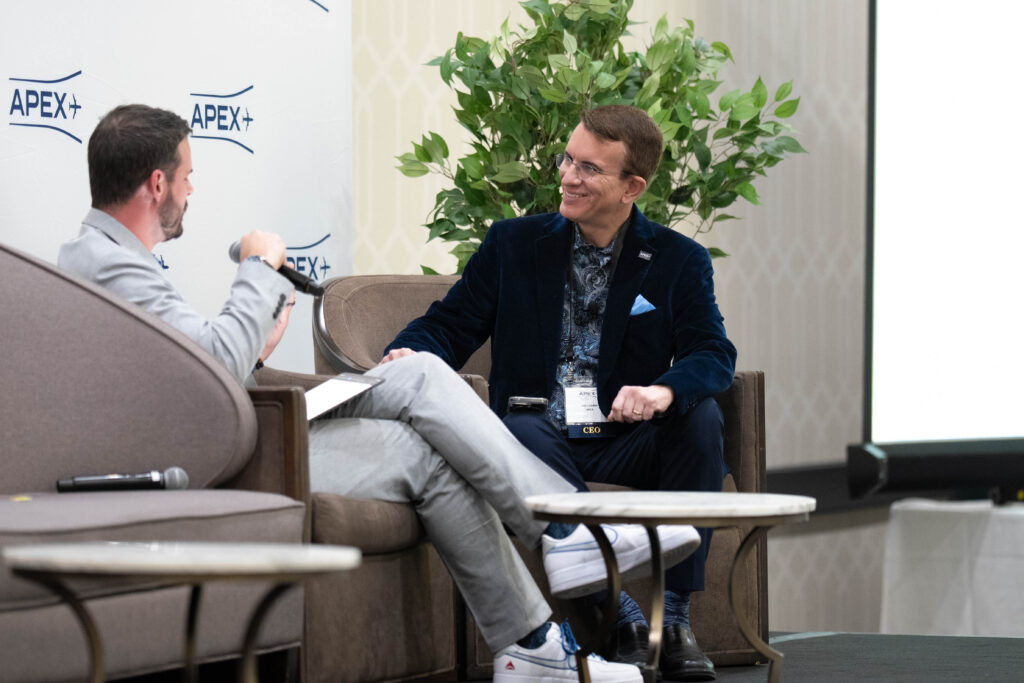
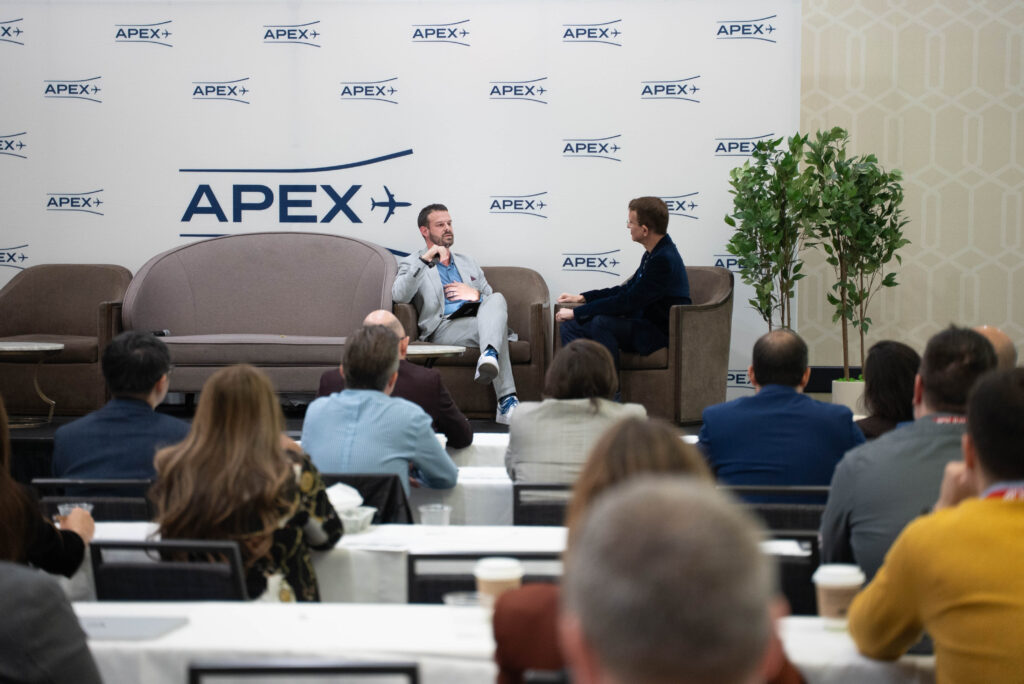
During Tuesday’s keynote session at APEX TECH 2026, Delta Air Lines made a clear case that in-flight connectivity (IFC) and cabin technology are no longer supporting features. They are central to how the airline operates, competes, and grows. In a keynote conversation with APEX CEO Dr. Joe Leader, Delta Director of Cabin and IFEC Programs Joseph Eddy outlined how the airline has deliberately built connectivity, in-flight entertainment (IFE), loyalty, and data into a single platform designed to scale.
“Delta at full power is every part of our flywheel working in unison,” Eddy said. “That’s our people, our aircraft, our technology, our customers, our shareholders, and our communities.”
Rather than treating in-flight entertainment and connectivity as standalone features, Delta has positioned them as core infrastructure that connects the entire customer experience. That mindset has shaped how the airline approaches free high-speed Wi-Fi, Delta Sync, and the role of cabin technology in both experience and economics.
Building a Unified Platform Around the Customer
Eddy opened by describing Delta’s strategy as people-centric, with technology serving as an enabler rather than the focal point. “Technology is a big accelerator,” he said. “But it’s still about enabling great experiences delivered with the human element.”
At the center of that approach is Delta Sync, the airline’s connected platform that links the Delta app, seatback screens, onboard Wi-Fi, loyalty, and personalization into one continuous experience. Whether a passenger is booking a flight, boarding, or streaming content in-flight, Delta wants to create a seamless experience for passengers from start to finish.
“We really believe these platforms are core to how we deliver an experience,” Eddy said. “They are part of our infrastructure, part of how all the pieces interconnect.”
Removing Friction to Drive Engagement at Scale
A major focus of the session was how Delta reduces friction to increase engagement. Eddy explained that even small barriers can discourage passengers from using onboard platforms, especially those who are less tech savvy.
“Barriers to entry like complicated logins prevent engagement,” he said.
Delta Sync’s simplified login process illustrates that philosophy. Instead of scanning QR codes or entering full account credentials, passengers can log in by entering the month and day of their birthday. Delta already has the underlying data from the booking and boarding process, so the system simply connects the dots.
“We know you’re on the airplane because you boarded,” Eddy said. “We know your seat. We know your birthday. The mission was how do we take all that information and create an experience that’s as simple and unintrusive as possible.”
The impact has been significant. Take rates for Delta Sync on seatback screens have reached about 37 percent, up nearly 28 points year over year. “That’s a huge increase in engagement by removing those barriers,” Eddy said.
Those improvements also enable more personal moments. Delta has introduced birthday acknowledgments and recognition for milestones such as million-mile status or loyalty tier changes.
“It’s little things like that,” Eddy said, “that create an extra touch and reinforce engagement.”
IFE, Connectivity, and the Misconception of Tradeoffs
The conversation then turned to whether personal devices would replace seatback screens. Eddy pushed back on that idea, noting that Delta’s data shows passengers increasingly use both.
“Our seatback product is one of the most engaged products we have,” Eddy said. “Almost 90 percent of our customers use it.”
Even with free Wi-Fi widely available, seatback engagement has remained strong. Delta’s Wi-Fi take rate is approaching 47 percent, IFE usage remains near 90 percent, and the average passenger uses more than one device in-flight.
“We haven’t seen an either-or decision,” Eddy said. “Customers are using all of it.”
This behavior reinforces Delta’s belief that IFE and connectivity should complement one another. Rather than forcing passengers into a single channel, the airline designs the cabin to reflect how people naturally engage across multiple screens.
That integration also supports Delta’s business model. Eddy noted that a significant portion of Delta’s revenue comes from diversified streams beyond ticket sales, including loyalty and partnerships.
Since launching Delta Sync in 2023, nearly four million passengers have signed up for SkyMiles onboard through the platform. That figure includes only inflight signups, not customers who enroll ahead of time. “That’s a huge difference in how our loyalty program works,” Eddy said.
Free Wi-Fi serves as a key entry point. “Free Wi-Fi is a great value proposition,” Eddy said. “It creates an opportunity for people to seek value in the loyalty program.”
From there, customers progress through SkyMiles tiers, unlocking additional benefits and deepening their relationship with the airline. Delta’s strategy focuses on making that journey feel natural rather than forced.
“If we make the experience worth seeking out,” Eddy said, “people will sign up.”
Applied Innovation and the Long-Term View
Delta’s reputation for operational discipline extends to how it deploys new technology. Eddy emphasized that safety always comes first, followed by rigorous testing.
“We are never going to deploy anything that puts our customers, crews, or aircraft at risk,” he said.
Delta operates a full aircraft IFEC and connectivity lab in Atlanta, complete with real hardware, real satellite links, and real software environments. This allows teams to test features under conditions that closely mirror live operations. “We test and we test and we test,” Eddy said.
New capabilities are introduced gradually through phased rollouts and A/B testing. If a feature introduces friction or operational risk, Delta pulls it back. “We stop, we roll back, and we go back,” Eddy said.
Looking ahead, Eddy argued that the most meaningful innovation over the next decade will come less from physical technology and more from platforms, data, and software. “I don’t think the big innovations over the next five to ten years are going to be physical technology,” he said. “They’re going to come from platforms, data, personalization, and software.”
For Delta, cabin technology is ultimately about building a unified platform that supports customers, employees, and partners while reinforcing loyalty and margins. “We’re using connectivity to enhance medical response, maintenance, fuel efficiency, and more,” Eddy said. “It’s all part of one connected system.”
“Nothing against advertising,” Eddy said. “But Delta has been exceptional at finding ways to monetize in an elegant, premium way.”
At APEX TECH, Eddy’s message was clear. Delta’s success in cabin technology comes from treating IFE and connectivity as core business infrastructure, removing friction wherever possible, and building platforms designed to scale.
As he summed it up, “It’s about creating one connected experience that works, every time.”