


Diehl Aviation’s AURS Concept Aims to Increase Accessibility for Passengers with Sensory Impairments

Share
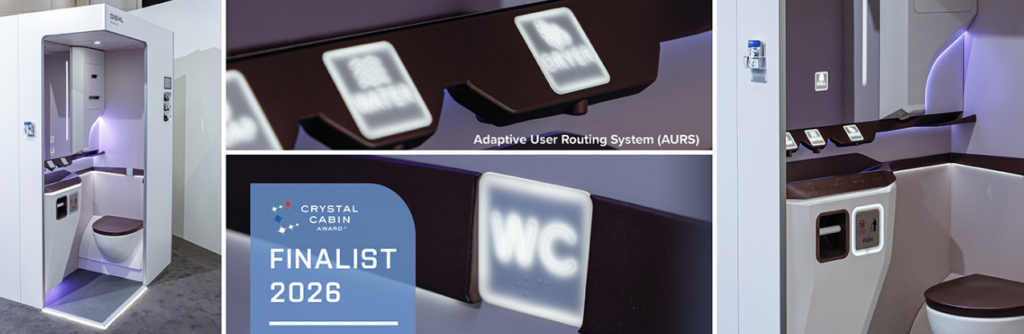
Diehl Aviation has been named a finalist for the 2026 Crystal Cabin Award in the Accessibility category for its Adaptive User Routing System (AURS), a concept designed to help passengers with sensory impairments better navigate the aircraft cabin. The system rethinks the lavatory as a more intuitive, multi-sensory space using accessible design, tactile features, and simple digital guidance. By focusing on real passenger needs, Diehl shows how inclusive design can improve both accessibility and overall comfort.
Transforming a Challenging Space Onboard
Diehl Aviation’s AURS system focuses on one of the most difficult areas of the aircraft cabin for passengers with additional needs. While using the lavatory is routine for most passengers, it can feel confusing and stressful for those who are blind or deaf due to limited space, unclear cues, and reliance on audio instructions.
“With AURS, accessibility is not an add-on, it is an integral part of the cabin experience.”
– Carsten Laufs, Diehl Aviation
The company addressed this by reworking the environment to make it easier these travelers to understand and move through. The concept was developed with direct input from travelers with sensory impairments, who helped shape both the physical layout and the digital features, ensuring the system reflects real needs rather than assumptions.
Inside the lavatory, several design elements improve orientation. High-contrast surfaces help distinguish different areas and fixtures. Tactile guidance and Braille provide clear physical reference points, allowing passengers to navigate through touch. Controls use distinct shapes so users can identify functions without relying on sight.
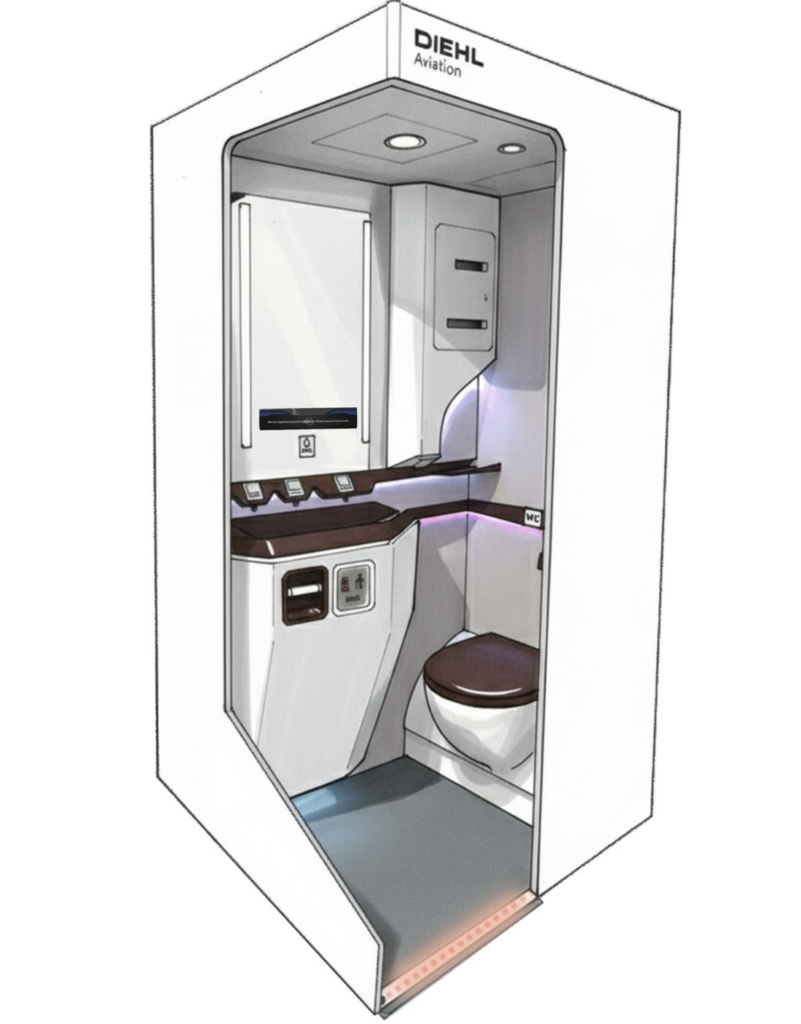
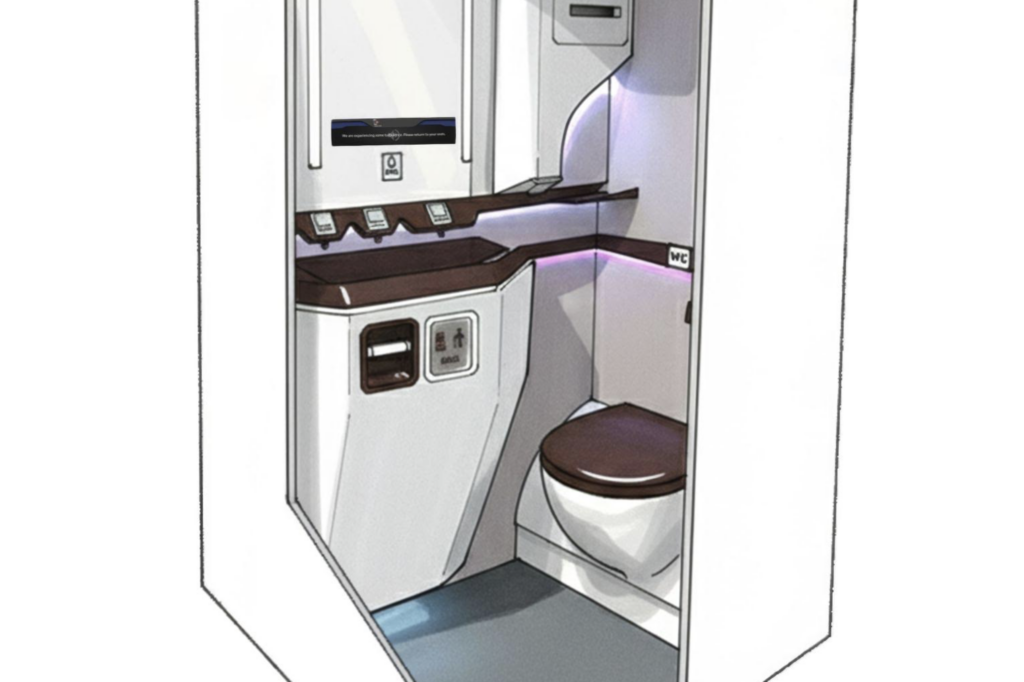
AURS also addresses a key gap in onboard communication. Safety announcements, which are often delivered through audio, appear visually on an integrated mirror screen. This ensures passengers who are deaf or hard of hearing can still access important information. It also reinforces messages for all passengers by presenting them in multiple formats.
Furthermore, lighting plays an important role. Adaptive lighting highlights key areas such as the sink, waste bin, and call button, helping passengers quickly understand the layout. For those with low vision, this added clarity improves usability. Optional audio cues add another layer of guidance.
Together, these features create a more intuitive environment. Instead of relying on trial and error, passengers can move through the space with greater confidence, independence and comfort.
A Connected Cabin Solution Ready for Deployment
AURS is built on Diehl Aviation’s connected cabin technology, which allows it to adapt to each passenger in real time. A key feature is its ability to automatically activate personalized settings through a Bluetooth beacon or an airline app. This removes the need for a manual setup in a confined space.
Once activated, the system adjusts lighting, visual displays, and audio cues based on passenger preferences. This helps ensure each user interacts with the space in a way that works best for them. It also reflects a broader shift toward more responsive, passenger-focused cabin environments.
The system is fully certifiable and ready for airline deployment, making it a practical solution for current and future aircraft. Diehl Aviation is already using AURS as a technology demonstrator in trials with accessibility groups, gathering feedback to further refine the experience.
“Being named a finalist again is a strong endorsement of our commitment to inclusive innovation,” said Diehl Aviation SVP Product Innovation and Digitalization Carsten Laufs. “With AURS, accessibility is not an add-on, it is an integral part of the cabin experience. We are very proud of the team behind this innovation, and we are looking forward to the final round of the Crystal Cabin Award.”
As passenger expectations evolve, carriers face growing pressure to deliver experiences that are not only comfortable and connected, but also inclusive. Solutions like AURS offer a clear path forward while strengthening brand perception and expanding accessibility across the travel journey.