


Innovation Hubs Give Aviation Startups Their Big Break
Share

APEX Insight: Airlines and aircraft manufacturers have caught onto startup culture, setting up labs, hubs and accelerators to hone local tech talent for aviation and passenger experience solutions. For Airbus, El Al and Lufthansa, it’s an opportunity to draw perspectives outside of aviation; for startups, it’s a chance to tackle real-world challenges and see their ideas, and possibly a business, take off.
AirbusBizLab
Launched in Toulouse, France, in March, BizLab is Airbus’ accelerator that fosters aerospace innovation into viable businesses. Select early-stage startups are invited from around the world to participate in an intensive six-month program where they have access to Airbus’ community of experts and mentors, prototyping and test facilities, with an opportunity to demonstrate their product to venture capitalists. BizLab recently opened its second location in Hamburg, Germany and has plans to expand to India and beyond.

Butterfly is a convertible seating concept by Hong Kong startup Paperclip Design that earned its wings at BizLab. It transforms a business-class flatbed suite into a premium-economy seat, helping to solve the problem of fixed cabin configurations that fail to match the fluctuating needs of airlines. Butterfly has already scored an IATA Passenger Innovation Award, a Crystal Cabin Award and was a finalist for the Checkerboard Seat Concept Award. Another BizLab startup is OBUU, from Spain, who developed a software to manage the stock of spares and specific tools used in aircraft maintenance (an example of which is outlined in this Q&A with Lufthansa Technik), reducing airline expenses, downtime and ROS (risk of shortage) of aircraft parts.

El Al Cockpit
El Al launched Cockpit, its innovations incubator with Microsoft Ventures to tap into the startup culture growing in Tel Aviv. It helped BidFlyer, an airline ticket bidding concept that aims to fill empty airline seats while scoring the best prices for travelers, become a success story – the startup recently received $1 million of seed funding from entrepreneur Moshe Hogeg. And in an ambitious plan, Asaf Gendler, BidFlyer’s CEO, hopes to launch on multiple airlines by the end of next year.
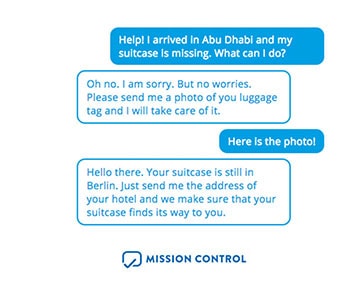
Lufthansa Innovation Hub GmbH
When Lufthansa set up its Innovation Hub in Berlin, it wanted to do more than just provide startups with money and mentorship, so they added passenger data to the mix. The hub employs about 15 individuals – half from Lufthansa, half from the local startup community, and focuses on solutions for: inside the airplane, travel assistance, door-to-door services, research-discovery and virtual reality.
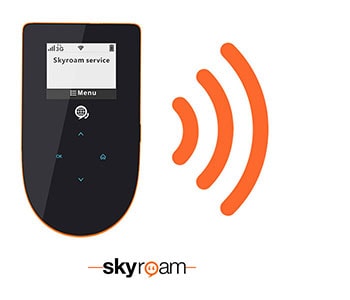
Two products that came out of the program are Skyroam, a global mobile hotspot that allows travelers to roam at a cheaper rate than their local carrier would charge, and Mission Control, a concierge messaging system that helps travelers with all their flight booking, accommodation and transportation needs.
Starburst Accelerator
As the largest aerospace innovations incubator, Starburst is an aviation startup’s dream. The accelerator, backed by Airbus, Eutelsat Communications, Panasonic, Safran Aerospace, Thales, Boeing, Panasonic and others, provides startups with their own office in Paris or, Los Angeles where it recently expanded its offices. Startups receive an average of $893K from venture capitalists and business angels to finance their project. To date, Starburst has accelerated 103 startups (98 of which are active), and created 807 jobs.