


Istanbul Airport Attack and Airline Food FAQs: APEX Daily Experience Week in Review

Share
Here are the most-read stories from this week’s APEX Daily Experience newsletters. To receive breaking passenger experience industry news in your inbox on a daily basis, subscribe here.
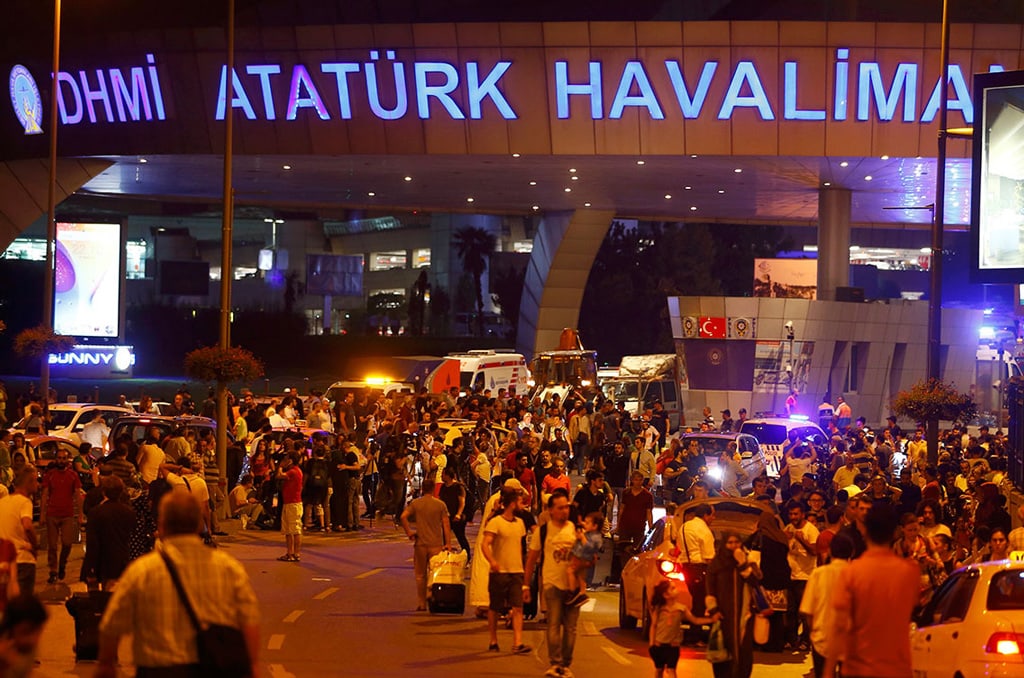
Istanbul Atatürk Airport Attack Leaves 41 Dead
THE GUARDIAN | JUNE 29, 2016
A triple suicide bombing at Istanbul Atatürk Airport on Tuesday night has left 41 dead and more than 239 wounded in what Turkish officials suspect was an attack by ISIL militants. The bombers were armed with AK-47 rifles and fired at security and police near the airport’s x-ray checkpoint, before detonating explosive vests in the arrivals hall of Europe’s third busiest airport. Prime Minister Binali Yıldırım said in a press conference yesterday, “No matter where the terror comes from, our country is strong enough to fight against this terror. I call on every citizen to act in unity and stand by each other.”
Everything You’ve Ever Wondered About Airline Food
APEX MEDIA | JUNE 29, 2016
When it comes to airline food, so much remains a mystery to the average passenger. How is airline food made? Who decides the menu? And, most importantly, why does airline food taste so bland? APEX Media toured LSG Sky Chefs’ Frankfurt facility €” which employs 2,075 people, produces 85,500 meals per day and caters to multiple airlines €” to identify and answer the most frequently asked questions about where airline food comes from and how it’s made.
Boeing Considers Supersizing 777 to Rival Airbus A380
BLOOMBERG | JUNE 30, 2016
Boeing is considering enlarging its largest 777 model to create a twin-engine aircraft that competes with Airbus’ A380, according to Bloomberg’s private sources. The US aircraft manufacturer has allegedly approached Emirates – the world’s largest operator of Boeing’s 777 and Airbus’ superjumbo jets – about the new model, which is expected to carry 450 passengers. “We are always evaluating technologies, airplane configurations and market needs,” said Doug Alder, Media Relations and North America Sales Communications, Boeing. “While no decisions have been made, we will continue to study 777X derivatives and seek customer input to develop products that provide the most value for customers.”
First China-Built Passenger Jet Makes Maiden Flight With Chengdu Airlines
REUTERS | JUNE 29, 2016
The first passenger jet built in China, the Comac ARJ21, made its maiden flight on Tuesday with launch customer Chengdu Airlines. Flight EU6679 carried 70 passengers on a two-hour journey from Chengdu to Shanghai, which the aircraft manufacturer called “an important milestone in the development of civil aviation in China.” The 90-seat ARJ21 was granted permission to fly domestically by China’s civil aviation regulators at the end of last year, but has not yet received certification from the US Federal Aviation Administration. Chengdu Airlines has 30 ARJ21s on order and is expected to introduce the second aircraft in August and three more by the end of the year.
Passengers Ready to Dish Out More for Personalized Travel
BUSINESS TRAVELLER | JUNE 28, 2016
A survey conducted by Sabre reveals that UK travelers are willing to spend more money on ancillary fees to further personalize their in-flight travel experience. According to the study, 69 percent of the 2,000 people surveyed believe it is important to receive recommendations tailored to personal taste and history of preferences. Findings show that travelers are prepared to spend an average of $81 on add-ons, with women more likely than men to spend on personalization. “The travel industry is leaving money on the table by not making their ancillary services more widely available, wherever and whenever the traveler wants them,” says Eric Hallerberg, Sabre’s managing director of the UK and Ireland.
Lufthansa Secures Certification to Install Ka-Band Antennae on A320 Family
LUFTHANSA GROUP | JUNE 27, 2016
Lufthansa Technik has been given the green light from the European Aviation Safety Agency (EASA) to install Ka-band antennae on A320 family aircraft. EASA’s awarding of the Supplemental Type Certificate (STC) makes Lufthansa Technik the first MRO in Europe to have received the specific certification, and enables the company to move forward with installation on Lufthansa Airlines’ short- and medium-haul aircraft in October of this year. The airline’s entire Airbus A320 fleet is expected to be equipped with the technology by mid 2018, which will offer passengers access to Wi-Fi on their mobile devices, powered by Inmarsat’s Global Xpress service.
