


Moment Study Finds IFC is Emerging as a Strategic Driver in Asia-Pacific Region

Share
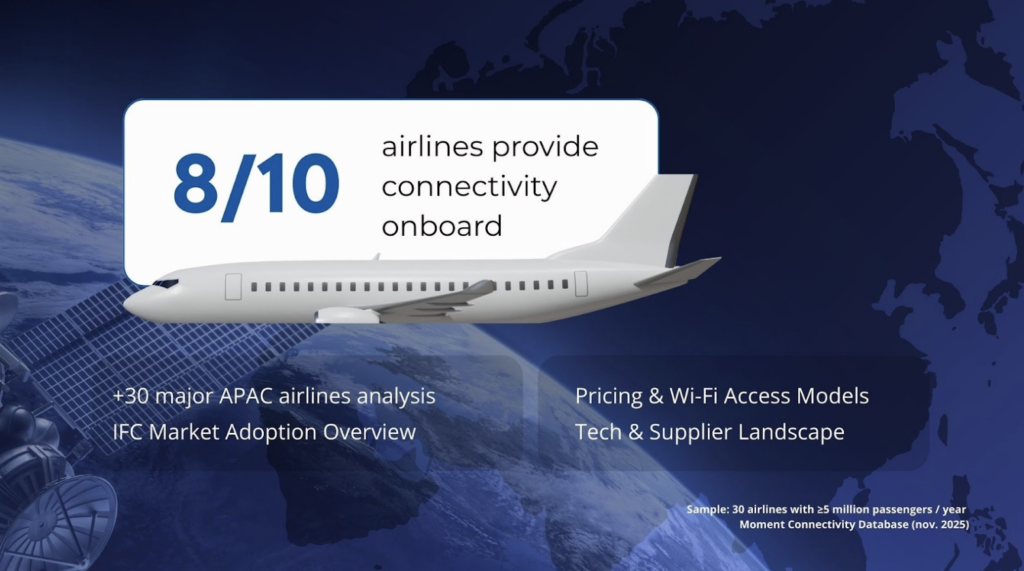
Moment has released new findings that highlight how in-flight connectivity (IFC) is evolving into a core strategic driver for airlines across the Asia-Pacific (APAC) region. The study examines adoption levels, pricing approaches, and the growing role of onboard internet in shaping passenger engagement, loyalty, and revenue performance. As digital expectations continue to rise, the report suggests that connectivity is no longer viewed as an optional amenity but as a foundational component of the modern in-flight experience in the region.
Legacy Carriers Lead a Rapidly Maturing Connectivity Market
Moment’s analysis of 30 Asia-Pacific airlines, drawn from a global panel of 106 carriers, shows that eight out of 10 airlines in the region now offer IFC. This high penetration rate positions Asia-Pacific as one of the fastest-maturing connectivity markets worldwide, with traditional network carriers setting the pace for adoption and service innovation. According to the report, 95 per cent of full-service and long-haul fleets in the region are now fully or partially equipped with onboard Wi-Fi, surpassing the global average of 89 per cent.
“Legacy carriers are setting a very high benchmark, with connectivity increasingly embedded into loyalty ecosystems and premium value propositions.”
– Tanguy Morel, Moment
This high level of deployment signals that connectivity in Asia-Pacific has moved beyond a premium differentiator and is increasingly considered as part of the core product offering. Airlines are now building onboard internet into their overall passenger experience strategy, making sure digital access matches their brand image and stays consistent throughout the travel journey.
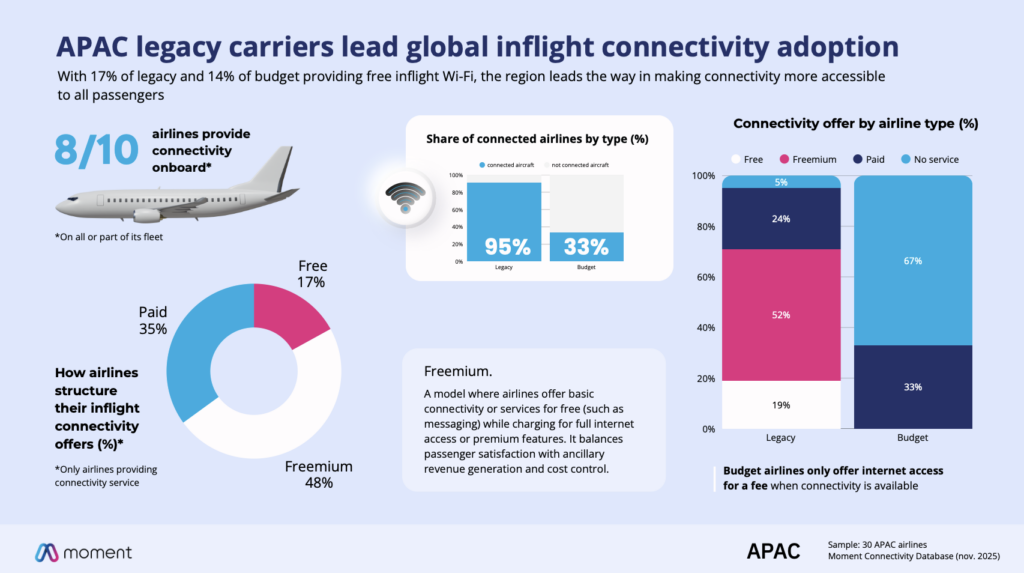
By comparison, low-cost airlines in the region are adopting connectivity at a much slower pace. Only around one third of budget airline fleets currently provide onboard internet access, leaving segments of the short- and medium-haul market relatively under-penetrated. This disparity shows there is still room for growth, especially on short- and medium-haul routes where airlines are continuing to weigh the costs and operational impact of rolling out connectivity on a larger scale. The uneven pace of adoption suggests that while connectivity is advancing quickly overall, progress still varies depending on each airline’s business model.
Beyond installation rates, the report identifies a clear trend toward positioning connectivity as a driver of passenger engagement and revenue optimization. Moment notes that airlines are increasingly linking digital access into loyalty ecosystems, premium cabin value propositions, and ancillary service strategies. By connecting Wi-Fi with customer retention efforts and targeted commercial offers, airlines are turning it from a simple onboard feature into a more strategic way to interact with customers.
Free Access Models and Hybrid Pricing Strategies Gain Momentum
The study also highlights Asia-Pacific’s growing momentum in adopting free connectivity options compared with global trends. While freemium pricing structures remain the dominant model worldwide, the region is showing stronger movement toward fully complimentary access. Approximately 19 per cent of legacy carriers in the APAC region now provide free in-flight Wi-Fi, compared with 13 per cent globally. In addition, 35 per cent of connected airlines in the region offer free messaging services, slightly ahead of the global average of 31 per cent.
These developments reflect a shift in how airlines are using connectivity to enhance passenger loyalty and strengthen brand relationships. Complimentary messaging tiers and internet access linked to loyalty status are becoming more common, helping airlines offer digital engagement without taking on all the connectivity costs. Premium cabin passengers and frequent flyer members are often given full-flight internet as part of added service benefits, highlighting how connectivity is now used to differentiate different levels of the travel experience.

Hybrid pricing models are also emerging as a defining characteristic of the APAC connectivity landscape. Airlines are blending duration-based, usage-based, and data-based pricing approaches to create options that appeal to different types of travelers. Typical Surf and Stream packages in the region are priced at approximately US$10 to US$12 per hour or between US$22 and US$25 for a full flight. This layered pricing approach helps airlines generate revenue while still offering lower-cost entry options, such as basic messaging plans.
The move toward more structured pricing shows that the connectivity market is becoming more mature, with airlines trying to balance passenger satisfaction and long-term financial performance. Connectivity services are increasingly integrated into broader digital engagement strategies that include onboard ecommerce, real-time service personalization, and post-flight marketing initiatives. By using connectivity as a channel to interact with customers, airlines are finding new ways to create value while improving the overall travel experience.
Moment’s survey frames these findings within a wider commercial outlook. As Moment CEO and Co-Founder Tanguy Morel explained, “The Asia-Pacific market is one of the most advanced connectivity ecosystems globally, with airlines demonstrating different stages of digital maturity. Legacy carriers are setting a very high benchmark, with connectivity increasingly embedded into loyalty ecosystems and premium value propositions, whereas regional airlines are leveraging connectivity to strengthen their brand promise and commercial strategy.”