


Pet Robots Tame Anxious Flyers
Share

This article originally appeared in The Technology Issue of APEX Experience.
Meet Paro, a therapeutic robot that looks like a fuzzy baby harp seal. When you pet Paro it coos with glee, gently shaking and changing its expression as you stroke its soft fur. When you stop, Paro asks for more. This highly evolved therapeutic tool was designed by Takanori Shibata at the Japan National Institute of Advanced Industrial Science and Technology for use in hospitals and elder-care facilities.
Christine Hsu, general manager of Paro Robotics US, says, “At first, [people] think it’s a toy, but actually it’s a very intelligent interactive robot. There are sensors all over its body, which react to touch, to sound and to light.” When running out of power, the robot recharges through a pink pacifier.
What you see today is the ninth generation of Paro, a design that’s been built upon since 1993. Its artificial intelligence allows it to get to know you, responding to your voice and affections. The Guinness Book of World Records certified Paro as “the world’s most soothing robot” in 2002 – perhaps an esoteric field at the time, but one full of therapeutic promise.
According to Hsu, “A lot of [seniors] use it as a companion, when they cannot take care of a live pet.” Aside from assisting those struggling with dementia, Hsu adds that Paro plays well with autistic children “and helps them develop social skills.” A 2012 study conducted at the Brigham Young University Comprehensive Clinic found this to be true as well.
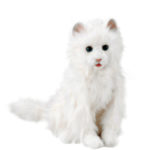

Emotional support animals are growing more common onboard, but their training is not as strict as that of service animals. Live animals can cause unintended disruptions, which are not easily tolerated by fellow passengers or flight crew. Furthermore, tales are emerging of passengers gaming the system to bring their regular pets aboard – pets which may be barely housebroken, let alone trained to behave in public. However, a realistic enough robot can provide comparable affection without the behavioral or allergic disruptions.
This is an aspect of in-flight entertainment and communications still to be widely explored, and passenger experience designers are free to let their imaginations off the leash. When envisioning robotic flight companions, there’s no reason to stick with real-life animals. Your kid could cuddle up with a seal, dog or cat during bouts of turbulence, or could just as easily snuggle with a dragon, yeti or unicorn. Costing upwards of $6,000 each, robot seals have yet to become budget friendly, but today’s new technology tends to get cheaper tomorrow. In the meantime, imagine the soothing coos of robot harp seal pups permeating the cabin on your next flight.