


Printed Palate
Share
This article originally appeared in The Technology Issue of APEX Experience.
You’re two hours into a flight from New York to Sydney when you suddenly get a craving that just won’t quit. You stare longingly at the flight attendant, hoping that the nice juicy hamburger you’re dreaming of is on the dinner cart. With the limitations airlines face vis-Ã -vis food preparation, especially for economy passengers, chances are you won’t be biting into that burger until after you land. But a group of design students from the Indian Institute of Technology Guwahati is hoping its 3-D food-printing prototype will one day change all that.
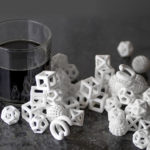
Dubbed the “Sky Kitchen,” it’s an interactive menu that would work with the seatback screen. With a few taps, passengers could customize their dish down to the smallest detail. Want that burger to be star-shaped, on a gluten-free bun and topped with one pickle, mayo, Dijon mustard and frisée? No problem. Once completed (and paid for), your order would be sent off to the airplane’s on-board 3-D printer and made fresh, just for you. Currently, there’s no printer that can meet the demands of the Sky Kitchen proposal; the promise of 3-D printed food is more novelty than reality at the moment. Yet, several companies are dabbling in the possibilities: The Culinary Institute of America has teamed up with technology company 3D Systems to explore what’s possible. Hershey is also working with 3D Systems to develop CocoJet, a 3-D printer that can turn liquid chocolate into architectural sculptures almost too beautiful to eat. Further hoping to leverage the interest in 3-D-printed food is pasta giant Barilla, which is collaborating with TNO’s High Tech Campus Eindhoven in the Netherlands to get a pasta printer into restaurant kitchens. Barilla would sell the cartridges of the raw material that the printer would turn into a tasty plate of “design your own shape” pasta.
Not surprisingly, NASA has also thrown its weight behind 3-D food printing, providing a $125,000 grant to Texas-based Systems & Materials Research Corporation (SMRC) to develop a machine that could print food for astronauts on long space missions. SMRC’s synthesizer would use cartridges filled with powders and oils that contain sugars, complex carbohydrates and proteins to create the meals. These cartridges would have a very long shelf life – perfect for, say, a trip to Mars. For now, the corporation’s printer can make pizza – albeit one only an astronaut floating around in zero gravity would likely appreciate. To make the pie, the printer starts by spitting out the dough, which gets cooked on a heated plate, then layers on the sauce made from tomato powder, water and oil, followed by the (cream) cheese topping.
Hmm, maybe we’ll stick to airplane food after all – at least for now.