


RetailConnect and the Evolution of Low-Cost Network Expansion

Share
Low-cost carriers (LCCs) have traditionally built their networks around point-to-point flying, avoiding the operational and commercial complexity that comes with traditional interline agreements. But as competition increases and digital retailing becomes more advanced, airlines are looking for ways to grow their network reach without changing their core model. That’s where Dohop’s RetailConnect comes in. It gives airlines a way to expand without major upfront investment. By using technology that dynamically combines separate flights into one branded itinerary, airlines like Wizz Air can open up thousands of new origin and destination combinations while still keeping full control over pricing, distribution, and ancillary revenue.
Building Connections Without Traditional Interline
Dohop is not new to airline connectivity. The Icelandic travel technology company began in the metasearch space nearly two decades ago before pivoting toward virtual interlining in 2017.
“Dohop is about 20 years old, an Icelandic based travel tech company,” says Dohop Chief Operating Officer Hugh Aitken. “In around 2017 we pivoted to virtual interline, particularly working with airlines that don’t traditionally interline or even connect their own flights.”
That shift positioned Dohop at the center of a structural change in airline retail. Rather than negotiating bilateral interline agreements that can take months or years to finalize, RetailConnect uses schedule data and connection logic to pair flights that were never designed to work together.
“We build the technology, we look at flight schedules, and we build the connections between unrelated flights,” Aitken explains. “We’ve got tech that picks up on schedules, minimum connect times, and other factors, and builds that extended network for the airline.”
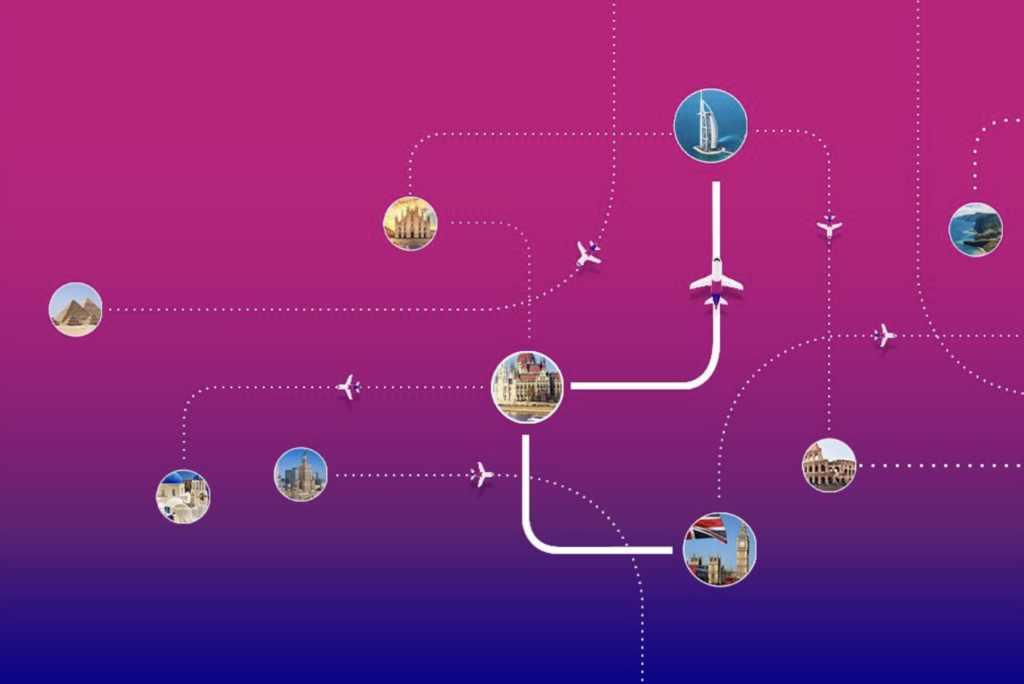
For Wizz Air, this has translated into a significant network expansion without adding aircraft or signing traditional interline deals. “The platform has opened up around 8,000 new route options for travelers,” Aitken notes. Those routes are not new aircraft deployments, but newly enabled combinations across Wizz Air’s existing network.
Traditional interlining often involves single passenger name records (PNRs) spanning multiple carriers, complex fare proration, and lengthy commercial negotiations. RetailConnect instead creates two separate bookings that appear as one cohesive journey to the traveler.
“Effectively what happens is two PNRs are issued, so two unrelated journeys,” Aitken says. “But it’s booked and searched and offered in one place. It’s a lot easier for the traveler.”
Behind the scenes, pricing remains straightforward. “It’d be the first flight plus the second flight and any other products the traveler puts into the basket,” Aitken says. Rather than building consolidated fares across carriers, the model simply reflects the price of each individual sector combined into a single booking flow. There is no need for revenue settlement between airlines when the connection remains within the same carrier, as in Wizz Air’s case.
A Seamless Booking Experience Without Added Complexity
From a passenger perspective, the experience mirrors a traditional single itinerary. Whether the traveler begins on Google Flights, Skyscanner, or Wizzair.com, the journey appears cohesive.
“The traveler comes into our environment. It’s branded. It feels and looks like Wizz Air as much as possible,” Aitken says. “The search and booking experience emulates what Wizzair.com looks like.”
This white label structure allows airlines to preserve brand control and maintain ownership of the customer relationship. “Wizz Air remains the merchant. They issue the PNR,” Aitken explains. “We’re not an online travel agency in that sense. The customer relationship is very much owned by the airline.”
That distinction is critical for low-cost carriers that prioritize operational simplicity. “What low-cost airlines traditionally don’t like is complexity in their operation,” Aitken notes. RetailConnect avoids adding technological burden to an airline’s core systems by operating as a connectivity layer rather than restructuring its reservation stack.

Deployment speed reinforces that appeal. “The technology build is typically about four to six weeks,” Aitken says. While there is quality assurance and branding alignment involved, the heavy lift is handled by Dohop. Integration with metasearch partners and airline sites follows shortly after.
Beyond booking, Dohop shares connection data with airline partners to inform network planning. “We provide them with data and insights that we’re seeing on where travelers are flowing and what the potential might be,” Aitken says. Over time, this intelligence can influence route scheduling and deepen partnerships across the Dohop network.
“If you think about Dohop as a network of airlines, we’ve got a whole bunch of airlines feeding content into our network,” he explains. “We help facilitate those connections and build value for both sides.”
Beyond Wizz Air, Dohop also works with a range of other carriers. Its partners include easyJet, as well as long-haul airlines like Norse Atlantic Airways, French bee, and Air Transat. By connecting these airlines through its platform, Dohop helps them reach new customers and expand network reach without altering their operating model.
Managing Disruption in a Virtual Interline Model
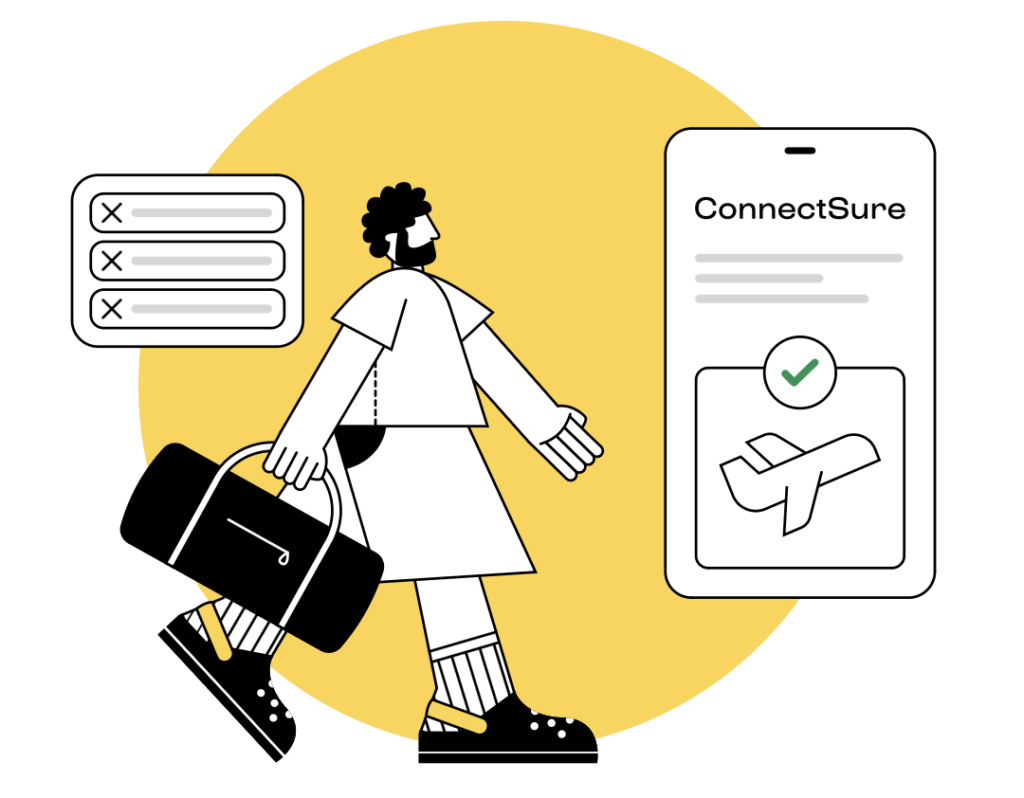
One of the primary questions surrounding virtual interlining concerns disruption. In a traditional interline agreement, a missed connection may be handled automatically under a single ticket. With separate PNRs, responsibility must be clearly defined. Dohop addresses this through an ancillary protection product called ConnectSure.
“In true LCC style, we have an ancillary add-on called ConnectSure that provides the traveler with protection in case there’s disruption and they miss one of the flights,” Aitken says.
The service combines automation with human support. “We’ll proactively reach out if there’s a risk of a missed flight and provide options,” he explains. “We also have call centers and agents in various parts of the world who manually help support passengers during disruption.”
Rebooking flexibility distinguishes the model. “We will book the traveler on the next available flight irrespective of the airline,” Aitken says. “If there’s another airline that gets that traveler to the destination sooner, we’ll put them on that flight.”
That broader servicing approach can, in some cases, exceed traditional single carrier rebooking logic, which typically prioritizes the next available flight on the same airline.
Connection times are carefully calibrated. “Minimum and maximum connection times differ. They’re based on conversations with the airline and the airport infrastructure,” Aitken explains. Airports not designed for transfers require longer buffers, particularly when baggage is involved.
Currently, checked luggage is not automatically transferred in most virtual interline scenarios. “Traditionally, virtual interline doesn’t connect the bag,” Aitken says. Travelers collect and recheck luggage at the connecting airport. However, Dohop is developing a capability called BagConnect to facilitate through checked baggage at select airports with appropriate infrastructure.
A Strategic Shift in Airline Distribution
RetailConnect sits at the intersection of changing airline economics and evolving distribution technology. As legacy interline and codeshare models adapt to new retail standards such as offer and order and NDC frameworks, low-cost carriers are exploring alternatives that preserve cost discipline.
“Typically we’re low-cost focused because of their legacy of not providing connectivity,” Aitken says. “But that is evolving as the whole model of interline and codeshare is evolving alongside offer and order.”
“We’re very clear that the airline prices the flights and we do some of sectors,” Aitken explains. There is no dynamic pricing overlay within RetailConnect. The combined itinerary simply reflects the sum of its parts.
“Piecing together two itineraries is something online travel agencies have done for years,” Aitken notes. “What we’re doing is using the same principles but working directly with the airline.”
RetailConnect does not change flight schedules or cost structures. It changes how those schedules are presented, combined, and sold. As airlines refine digital distribution strategies, platforms that create new revenue opportunities without adding operational burden will play an increasingly central role. Dohop’s model shows that connectivity no longer depends on traditional interline agreements. It depends on the right technology layer.