


Space Age: Reshaping the Aircraft Cabin Interior

Share

APEX Insight: There is an expectation that airlines use cabin space to improve the passenger experience. From maximizing personal space to opening up the cabin using straighter walls and re-thinking economy seating, the aviation industry is seeking to meet this expectation.
“Passenger expectations are changing faster than we are.” This statement appeared in the opening video of the fifth annual Passenger Experience Conference, which took place today in Hamburg. One of these expectations is that airlines use cabin space to improve the passenger experience. BMW Group Designworks’ Garen Moreno, Bombardier Aeropace’s Christine De Gagné and Acumen’s Anthony Harcup discussed how the aviation industry is attempting to meet this expectation.
Getting Personal Space
In his keynote on the aging traveler, Garen Moreno, BMW Group Designworks’ Strategic Partnering director, discussed the importance of keeping the baby boomer demographic in mind during aircraft cabin interior design. “Experienced travelers won’t settle for anything less than a premium experience,” he said.
Personal space is an aspect of the premium experience that’s expected by this demographic. In order to optimize personal space and create a more calm experience, Moreno presented a “less pod-like, more open” cabin design that maintains horizontal lines and includes moveable partitions. “The airline passenger’s environment isn’t built around immediate utility; it’s built around how they can create their personal space.”
Designing From the Inside Out
Christine De Gagné, Bombardier Aerospace’s Product Marketing manager, explained that maximizing space was the priority in designing the C Series. The design team “put the passenger at the center, designing from the inside out for true wide-body comfort,” which resulted in the following wish list: wider seats (at least two inches more than its competitors), a wide aisle and extra carry-on capacity.
The [C Series] design team “put the passenger at the center, designing from the inside out for true wide-body comfort.” €” Christine De Gagné, Bombardier Aerospace’s Product Marketing manager
In order to fulfill these wishes, Bombardier focused on the cross section and opened up the cabin by straightening the walls. It also pushed the limits so that Rob Dewar, the 6’2″ C Series VP and general manager, was able to stand up straight in the lavatory.
De Gagné ended her presentation with a video of passenger actors evacuating a SWISS Bombardier C Series aircraft in record time, indicating that an effective use of space contributes to passenger safety.
Disrupting Economy Seating
According to Acumen associate Anthony Harcup, a breakthrough seating product that revolutionizes economy passengers’ experience will occur within the next 10 years. “In design, we’re either disrupting or we’re perfecting. We need to reach the point where passengers get off their flight feeling more relaxed than when they got on.”
“In design, we’re either disrupting or we’re perfecting. We need to reach the point where passengers get off their flight feeling more relaxed than when they got on.” €” Acumen’s Anthony Harcup
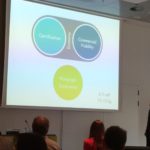
Harcup explained that aircraft interior designers face the challenge of satisfying three criteria: commercial viability, certification and passenger experience. The less space there is, the more challenging it is to fulfill all three, meaning that in economy class, the passenger experience is often left out of the equation. Harcup identified seven compromises that economy passengers have to make:
- No ownership of shoulder space
- Who gets the armrest?
- Unpredictable meal table space
- Lack of head support
- Half of the cabin has no aisle access
- Seat pitch
- Sense of privacy and personal space

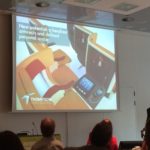
“It’s our responsibility to provide a viable, affordable and enjoyable passenger experience in economy €” it’s not if it’s going to happen, it’s when,” said Harcup as he presented various solutions to increase the economy passenger’s perceived space, including Zodiac Aerospace’s forward-aft facing seating concept and CozySuite, the world’s first staggered economy seating offer by Thompson Aero Seating.
Why aren’t we seeing these concepts in-flight? Just as British Airways spearheaded the world’s first commercial flat-bed, Harcup suggests that the economy seat revolution must “come from within,” meaning that it will require a shift in mindset by the airlines.