


United Airlines Named Crystal Cabin Award Finalist for Connected Omni-Channel Experience

Share
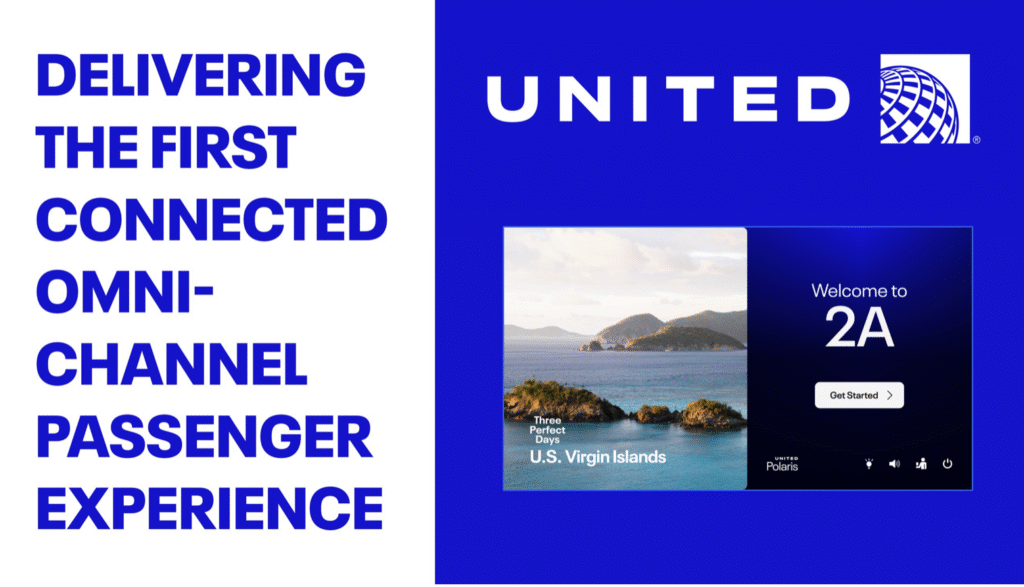
United Airlines has been named a finalist for the 2026 Crystal Cabin Award for its connected omni-channel passenger experience, a program designed to unify in-flight entertainment (IFE), connectivity, and personal digital ecosystems. The airline’s concept centers on delivering a seamless platform that works across seatback screens and personal devices, powered by high-speed connectivity and cloud-based infrastructure.
The onboard digital experience involved collaboration across several partners, including Panasonic, Flightpath3D, Starlink, Axinom, Anuvu, and Spotify. The initiative represents a shift toward treating the cabin as a fully integrated digital environment rather than a collection of separate systems.
Building the First Omni-Channel Cabin Platform
United’s finalist entry focuses on solving a long-standing passenger expectation: consistency. Travelers move between devices constantly on the ground, yet the cabin has traditionally functioned as a separate technological world. United’s approach reframes the inflight experience as an extension of the passenger’s digital life rather than a break from it.
“Our new solution is designed around our customers and by their expectations. We have created a thoughtful and innovative onboard digital experience for the infight environment but our overall philosophy is to design an experience that reflects how customers choose to connect and engage with technology and content in the rest of their lives,” said United Airlines Managing Director of Identity, Product, and Loyalty, Mark Muren.
A key enabler for the new solution is Starlink’s high-speed, low-latency connectivity, “the fastest, most reliable high-speed Wi-Fi in the sky”. Instead of treating connectivity as an add-on, United treats broadband as core cabin infrastructure that powers everything else. With reliable bandwidth available gate-to-gate, the airline can run connectivity-based applications that complement dedicated onboard services.
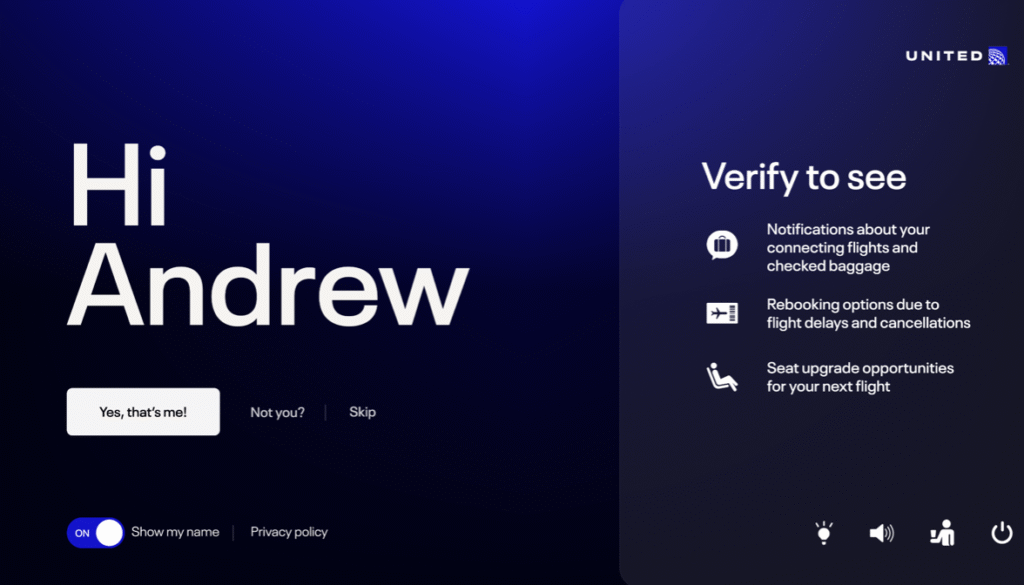
The omni-channel design brings the seatback screens and personal devices together into a consistent and intuitive customer experience. Passengers no longer need to switch between disconnected environments – they can move seamlessly from device-to-device just as they would on the ground. This is enabled by a connected digital platform that represents a clear evolution from traditional in-flight entertainment to an ecosystem enabled anywhere.
United describes the system as a path into an “always on” digital cabin where updates to content offerings become continuous instead of periodic and software updates happen seamlessly. Personalization becomes possible at scale because the platform recognizes passengers across devices instead of isolating each screen as its own environment.
The airline’s evolving partnership with Spotify illustrates how that integration works in practice. Passengers will soon be able to log into their personal Spotify accounts directly from the seatback, turning the aircraft into an extension of their own entertainment ecosystem. Instead of browsing a generic playlist, travelers access the same music and video content they consume on the ground and can even build playlists in flight to listen to upon arrival at their destination. That continuity reduces friction and reinforces the idea that flying does not disrupt passengers’ usual digital habits.
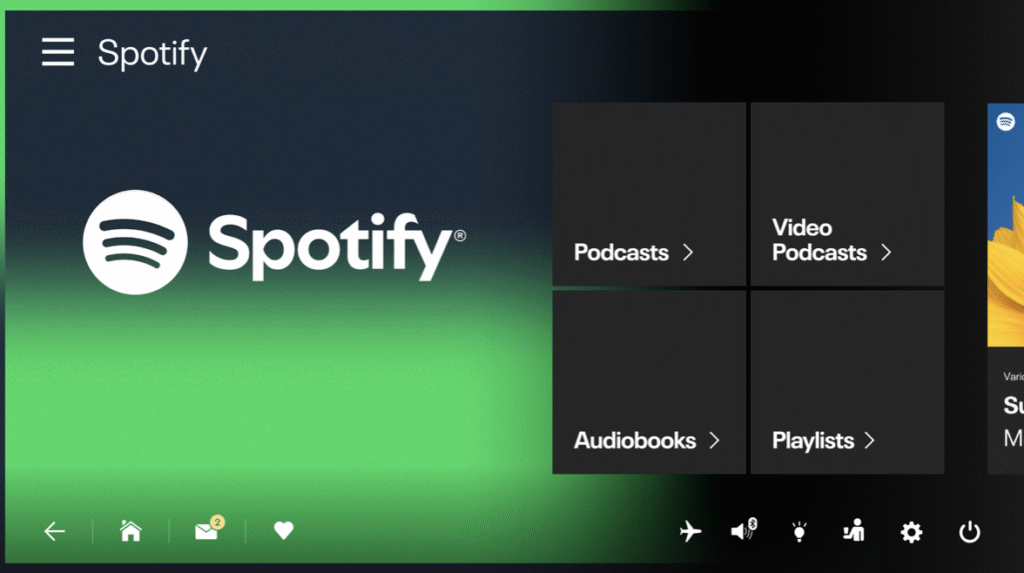
“Fully integrating streaming services into the seatback provides subscribers with a fantastic innovation and true “at home” experience on the biggest, best screen available in the sky, gate-to-gate,” said United Airlines, Director In-Flight Entertainment Dominic Green. “Our content strategy doesn’t stop there though – we are focused on providing choice and a full range of premium content to all customers pre-loaded on the seatback, whether or not they are a subscriber and choose to log in to their own account.”
United frames the project as an investment in long-term passenger loyalty. If travelers commit their time and travel to an airline, the airline must match that commitment with technology and solutions that keep pace with everyday expectations. The company says a premium experience comes from consistency, not just novelty.
Redefining a Passenger Experience Enabled by Connectivity
The 2026 Crystal Cabin Award nomination recognizes more than a technical upgrade. It signals a broader shift in how airlines think about in-flight ecosystems. United’s system treats the cabin as a larger, connected digital network rather than a standalone space that resets with every flight.
Adopting some cloud-based services is a part of that shift. Whilst some applications and content still sit on the aircraft, United can now toggle between airside and cloud-based serving of capabilities, deciding what and when to provide on a more dynamic basis. Features and content will evolve continuously, mirroring how consumer apps update on the ground – the cabin feels dynamic instead of frozen in place.
The omni-channel framework also expands the meaning of personalization during the flight. A consistent platform allows United to tailor content, interface behavior, and services around passenger preferences. Instead of a one-size-fits-all experience, the system supports customization while maintaining operational reliability.
“To enhance the customer experience, we developed the infrastructure to target messaging and promotions to our customers on a more one-to-one basis. By bringing them customized notifications about their journey or personalized offers that are contextually relevant and tailored to their individual needs, we are able to maintain a consistent – yet personal – experience from flight to flight on whichever device or screen type the customer chooses,” said Green.
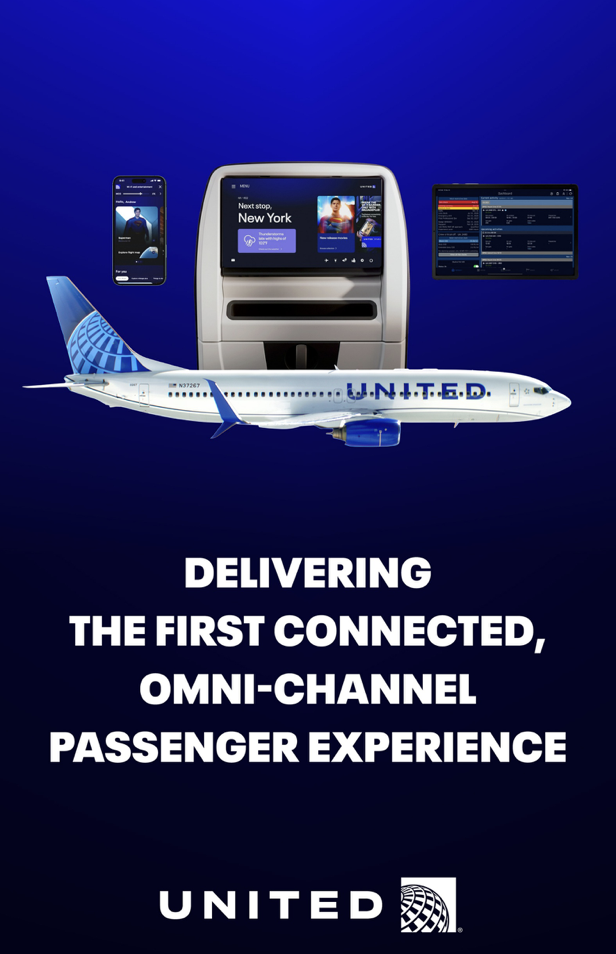
The new approach also lightens the maintenance burden associated with traditional platforms. High-speed connectivity and use of cloud-based services support faster – even real-time – troubleshooting. As a result, reliability improves, and that positively impacts how passengers judge the experience. When entertainment works without friction, passengers barely notice it, which is the clearest sign the infrastructure is doing its job.
United views the program as a starting point rather than a finished product. Once the foundation is in place, new partnerships and applications can plug into the ecosystem. The airline sees the platform as expandable, capable of supporting future entertainment formats, commerce tools, and digital services that have not yet entered the cabin.
The Crystal Cabin Award entry earned recognition for its focus on delivering a connected passenger journey across every touchpoint. By doing this, United moves toward an experience that matches the digital continuity passengers expect in everyday life.
The nomination reflects a wider industry shift. Connectivity and entertainment no longer operate as separate categories. Together, they form a single digital ecosystem that shapes how travelers experience time in the air and how they engage with the airline. United’s concept shows that when the cabin aligns with modern digital habits, the journey feels smoother, faster, and more personal.