


Well Spoken
Share
This article originally appeared in The Culture Issue of APEX Experience.
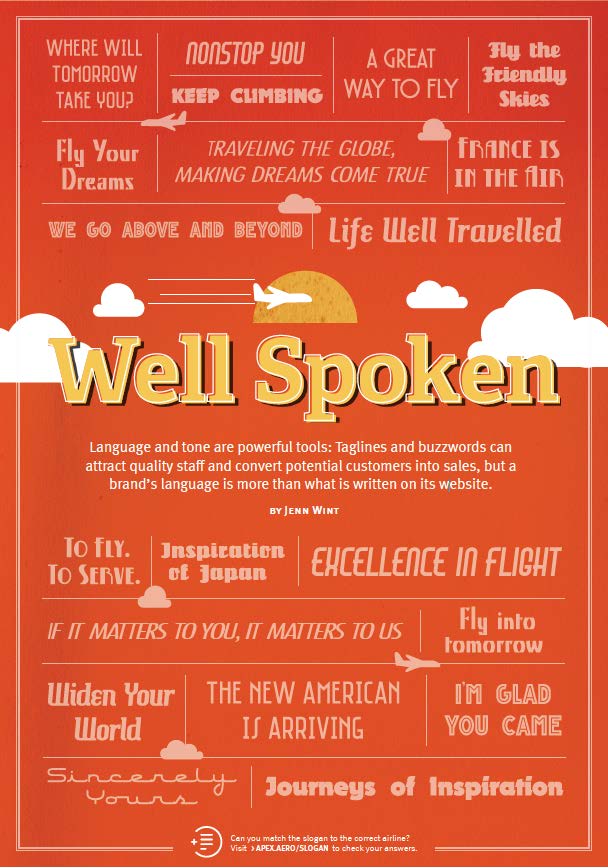
So often it’s not just the words we choose that affect how we’re perceived by the world, but how we use them. Tonal or contextual elements are woven into a brand’s culture and influence more than marketing material. Language can determine how employees – or “team members” – interact with customers – or “guests.” Language is used to create, inform and sustain company culture. Airlines use it to attract customers and staff, and to solidify their brands within a competitive industry.
Shining Personalities
“Words matter, especially as we see new generations of employees and managers enter the workforce and older generations begin to retire,” explains Henry Harteveldt, travel industry analyst and founder of Atmosphere Research Group. “Our society in general, at least in most western cultures, has become more casual and less hierarchical. Employees, especially Millennials and Generation Y, prefer a more casual tone of voice. Often, employees are not only allowed but encouraged to let their real personalities shine through.”
“I am a big believer in the power of language to change the world. The way we communicate, whether verbally, digitally or physically, has a massive effect on how we work, live and learn.”
– Richard Branson
In 2013, Air Canada introduced its leisure airline Air Canada Rouge, a wholly owned Air Canada subsidiary. Rouge tells passengers, “Your trip begins the moment you board.” The airline presents a holiday vibe, fun flights with smiley, hat-clad staff to the destination of your choice, at an affordable price. This differs from the traditional Air Canada brand, marketed toward the frequent-flyer or business traveler. The two brands offer essentially the same service, but passengers looking for a relaxed, holiday atmosphere may opt for the laid-back vibe of Rouge over the buttoned-up traditional airline whose emphasis is on efficiency. This allows Air Canada to market across different genres of travelers, tailoring to their specific tastes while retaining high quality across the brands.
“There is a difference between informal and casual versus professional and unprofessional,” says Harteveldt. “Interactions [on a light-hearted carrier] may be more casual, but that doesn’t mean they are less professional.”
Consistent Messaging
Shashank Nigam, founder and CEO of SimpliFlying, believes language consistency plays an important role in the strength of an airline’s brand. “Language comes across in every brand touch point,” he says. “When an airline makes a disruption announcement, it must do so in the language its brand has created.”
Many brands create their own language for staff and passengers, to showcase its unique personality. Initiation for JetBlue trainees, or “Baby Blues,” focuses on developing their “Jettitude.” Training points include being thankful, as well as engaging and personal. Taking time to educate staff on the business and mandate of the brand solidifies the team mentality from the get-go. According to Harteveldt, the new generation of leader wants to work for a company where there is direct communication and where interactions are more open. “Culture has become more transparent,” he adds. The inclusive culture that staff are initiated into filters quickly through to passengers. Using language exclusive to their airline creates a sense of community, encouraging passengers to align themselves with the quirky attitude of JetBlue.
Buzz Words
In 2014, Southwest Airlines rebranded to include a heart in its logo. Its press announcement stated, “Our collective heartbeat is stronger and healthier than ever,” going on to highlight warmth, compassion and smiles. This language suggests attitude and culture are favored over fast flights and cheap tickets. The airline’s buzzword is “luv,” and it spreads it to employees through recognition programs and directly to passengers through the vibe on Southwest flights. Its marketing emphasizes soft language; words like “warmth,” “friendly” and “spirit” convey to passengers the experience they can expect onboard.
This cheery language doesn’t suit all airlines, and fun isn’t what all are looking to achieve. Many passengers favor a traditional, business-like approach on an established airline. Legacy airlines, the older generation that were have been developing their brands for a long time, have opted to retain their corporate tone and attract customers who prefer a more formal approach.
As a preferred airline for business travelers, Virgin Atlantic believes the experience of getting there is just as important as the destination. The quality of service remains high, and the airline’s language suggests a premium experience – with a focus on the customer making the experience their own. Legacy airline British Airways prides itself on full and efficient service. Its history and established brand indicates reliability; therefore, the airline’s trademark behaviors include “doing things properly” and “keeping promises.”
Speaking My Language
Language elicits passion. “Keywords bring a sense of community and an emotional bond with the brand which resonates with staff and with customers,” says Nigam. “Loyalty is dead; the end goal is affinity. Language cues go a long way to building affinity and keeping brands top of mind. Passengers remember how a flight made them feel.” Whether flying features in a holiday or is functioning as a mobile office, it’s the emotional response to tone and culture that will stick and inspire future bookings.