


Immfly Brings Modern Payments to 30,000 Feet

Share
In-flight payments have long lagged behind the rest of the travel experience, constrained by inconsistent connectivity, legacy systems, and fraud exposure. Leading onboard digital solutions provider, Immfly, is helping close that gap by modernizing how payments work in the cabin, making checkout faster and more secure while reducing friction for travelers. The result is an in-flight payment experience that increasingly mirrors what passengers expect when tapping a card or phone on the ground.
Modernizing the In-flight Payment Experience
Immfly has spent more than a decade working in in-flight technology, with payments consistently playing a central role in its onboard retail strategy. Immfly President and COO Fernando Guinea, said that the challenge has never been about whether passengers want to spend onboard. It has been about whether the systems could support the demand at scale.
“Immfly is a company that has been operating in the market since 2013, and we’ve been very focused on providing solutions inside the cabin,” Guinea explains. “One of those solutions is everything around point of sale, and being able to manage what we do today, which is over 50 million transactions a year, managing over 4,000 devices and serving around 400 million passengers.”
For years, legacy in-flight payment systems have struggled with unreliable connectivity, fragmented data flows, and high fraud rates. Those limitations directly affected service speed and passenger trust. Guinea notes that as airlines rapidly scale onboard ancillary offerings, payments have become a critical bottleneck.
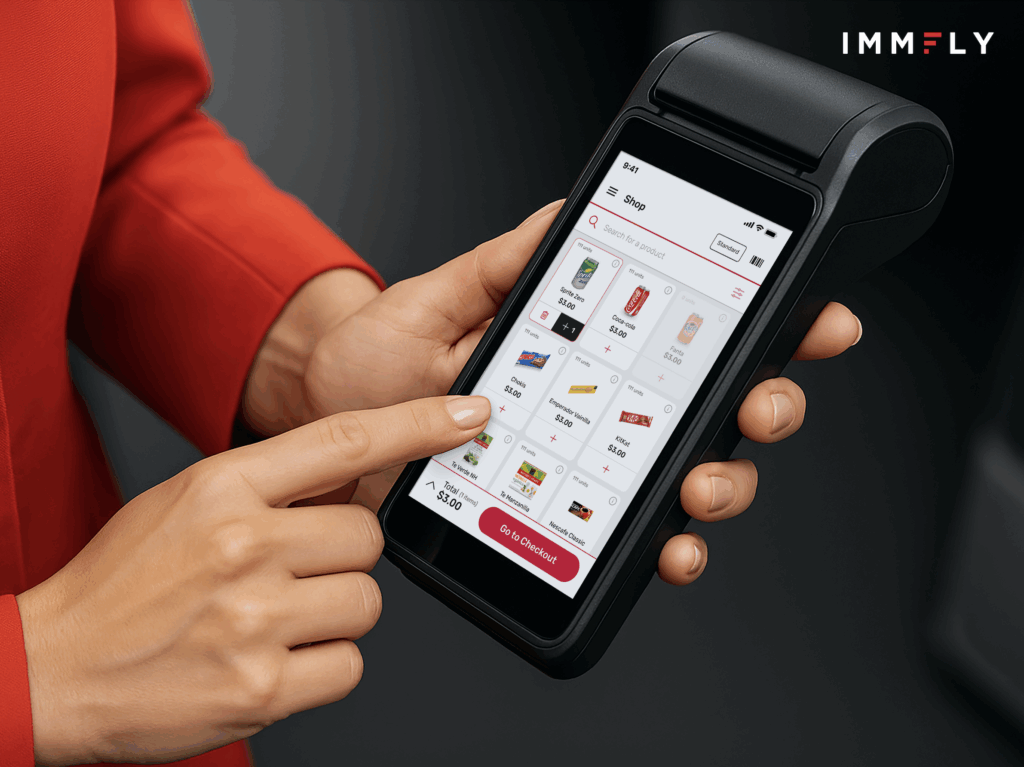
“Airlines are scaling onboard ancillaries really fast, and payments, because of the offline environment and how consumers are getting accustomed to immediate transactions, have to happen fast, safe, and reliably,” he says. “Issues with connectivity, high fraud, and fragmented flows have been blocking growth for many years.”
Through partnerships with various payment service providers (PSP), including Adyen, Immfly has addressed many of those long-standing constraints. Its payment architecture is designed to function reliably in both online and offline environments, allowing transactions to remain consistent even when connectivity drops. Average checkout times have fallen by roughly five seconds as a result.
As newer capabilities such as tap-to-pay roll out, performance gains are becoming more visible. Checkout speed has improved by five to ten percent, particularly for multi-item purchases. “If you think about the experience inside an aircraft, especially on a narrowbody, the aisle is critical,” Guinea says. “When you improve checkout speed by five to ten percent, you’re reducing time in the aisle tremendously. That creates better service overall and allows airlines to continue to capitalize on ancillary opportunities.”
Reducing Fraud and Building Trust Onboard
Speed alone does not define a successful payment experience. Trust remains foundational, particularly in the confined environment of an aircraft cabin. Immfly has focused heavily on data and AI-driven fraud controls to address that challenge. “At the end, reliability also comes from trust,” Guinea explains. “When passengers trust payments, they’re more willing to purchase. And in the end, that benefits every part of the retail ecosystem onboard.”
Immfly says AI-based controls have reduced fraudulent card attempts by about four percent. Guinea notes that the impact extends well beyond individual transactions. “Fraud reduction protects far more than the ticket value,” he says. “It reduces chargebacks and operational costs. There is a huge amount of operating expense tied to retries and failed chargebacks that people tend to forget.”
One advantage airlines have over traditional retail environments is access to contextual flight data, including seat numbers and passenger manifests. As airlines digitize crew tools and in-flight operations, Immfly is increasingly able to connect payment activity with verified passenger information.
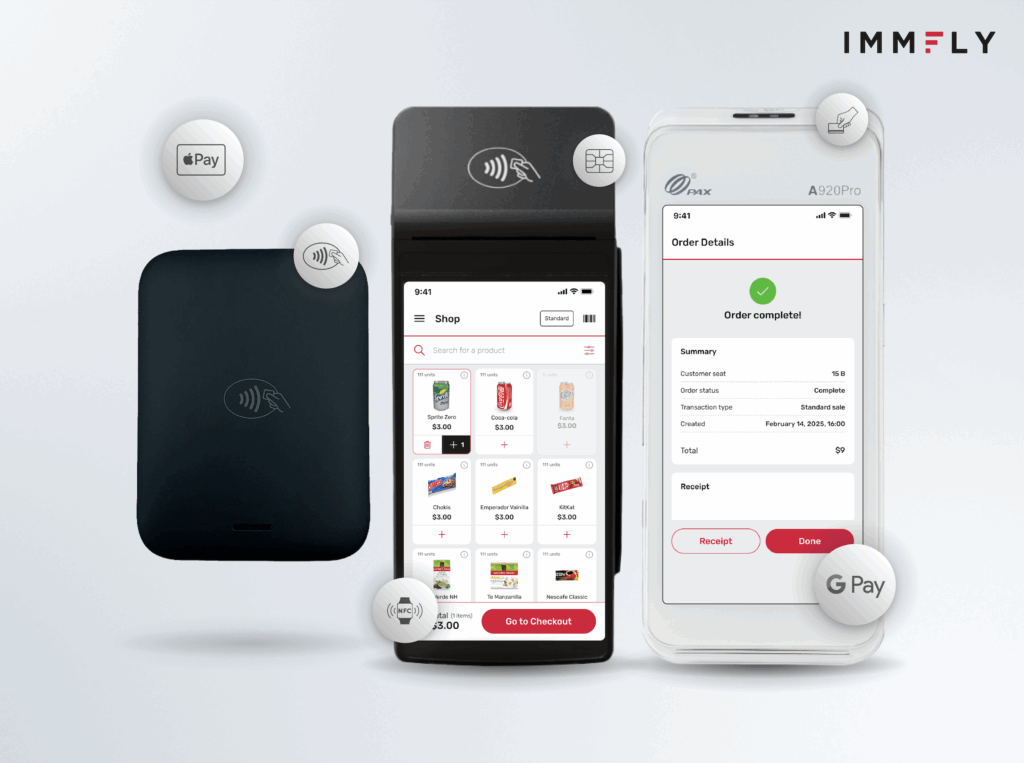
“We’re interconnecting with airline systems and crew apps,” Guinea says. “Because of the seat number and other elements, we can start finding synergies to ensure that Joshua is Joshua, and the credit card being used is Joshua’s.”
That intelligence builds over time. Immfly processes data across hundreds of millions of passenger journeys each year, enabling blacklisting and fraud prevention across multiple airlines. AI also plays a role in identifying false declines. “With intelligence behind it, we can increase approval rates and avoid that frustration of a payment being declined when it shouldn’t be,” Guinea says.
Expanding Payment Options and Unlocking New Onboard Commerce
As connectivity improves through new satellite constellations and onboard networks, expectations around in-flight payments continue to rise. Travelers increasingly expect the same flexibility they experience on the ground, whether that means tapping a phone, using digital wallets, or accessing alternative payment methods.
“People are getting accustomed to just putting their card or phone on a point of sale inside an aluminum tube and expecting everything to work perfectly,” Guinea says. “That expectation also includes refunds, preorders, and post-flight confidence that everything was processed correctly.”
Immfly’s approach balances those expectations with operational realities. Offline capability remains the default. “Offline always has to happen,” Guinea says. “If connectivity fails, service cannot stop.” Transactions continue even when network connections drop, keeping service consistent and predictable.
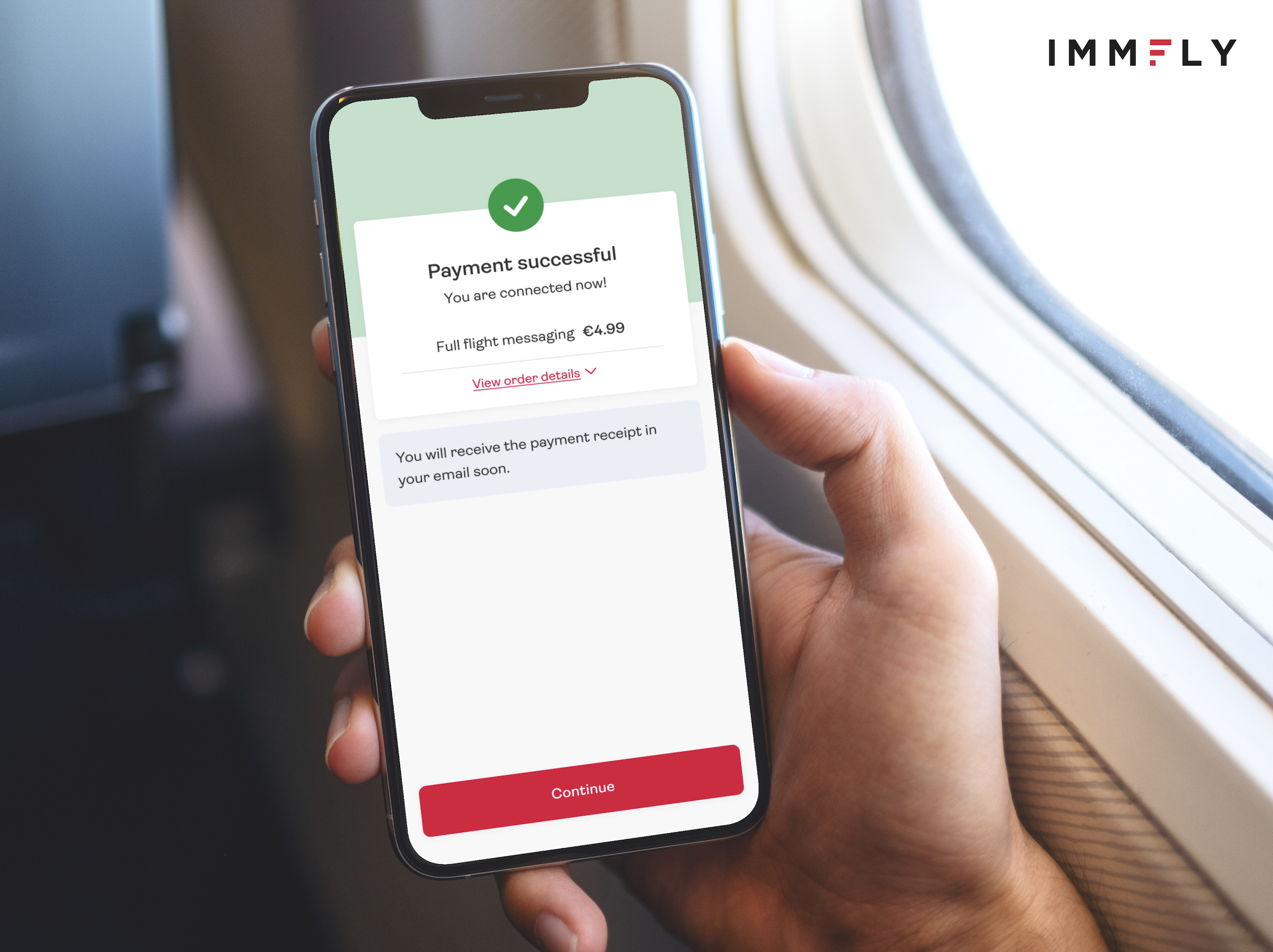
At the same time, Immfly supports online payments when connectivity allows, enabling more advanced use cases. “Reliability opens higher value items,” Guinea explains. “These aren’t $20 transactions. These can be hundreds or even over a thousand dollars.”
More dependable payments also reshape how airlines think about onboard retail planning. Guinea points to preselect and preorder as clear examples. “Preselect and preorder is a meaningful way to manage waste and provide more options connected to the flight,” he says, noting that earlier transactions reduce inventory uncertainty and improve operational efficiency.
The Future of In-flight Commerce
Looking ahead, Guinea views payments as the foundation of a broader, data-driven retail ecosystem. “We’re building a unified retail platform,” he says. “That enables personalized offers, loyalty-based suggestions, and journey-aware promotions.”
That shift connects in-flight commerce more closely with the broader travel journey. Browsing can begin on the ground, continue in the air, and carry through after landing without restarting the process. “Expect to see these changes not in two years, but in the next three to six months,” Guinea says. “The connection between ground and air is becoming continuous.”
More accurate forecasting also supports efficiency and sustainability goals by reducing waste and unnecessary onboard weight, which helps control fuel burn and operating costs. The result is a better balance between what airlines load onboard and what they ultimately sell.
As in-flight payments begin to match the reliability and flexibility people expect elsewhere, they fade into the background of the experience. When transactions work smoothly and consistently, travelers barely notice them at all. That quiet consistency signals just how far in-flight commerce has evolved.