


70 Years Later: HOK’s Vision for a Sustainable Heathrow

Share
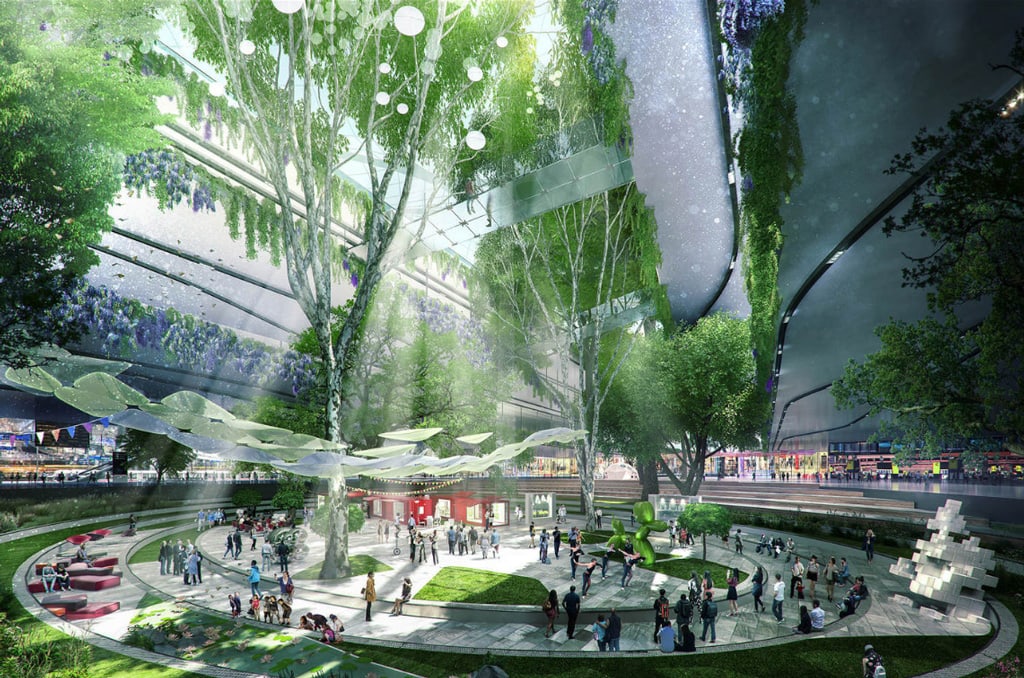
APEX Insight: With Heathrow operating near full capacity, officials have asked architecture firms to develop bold ideas to create a world-class sustainable airport. A design by architectural and urban planning firm HOK is among the final four shortlisted entries being considered by Heathrow.
When London’s Heathrow Airport opened exactly 70 years ago, it was little more than a ramshackle network of tents. Seven decades later, the airport is the second-busiest in the world in terms of international passenger numbers – 75 million travelers passed through Heathrow’s terminal buildings in 2015. As the airport grows, so does opposition to its continued expansion. Stakeholder groups, such as local residents and environmentalists, and years of political wrangling continue to stall the airport’s development.
Moving Forward
With Heathrow operating near full capacity, officials have asked architecture firms to develop bold ideas to create a world-class sustainable airport. The airport’s head of Design, Barry Weekes, says the challenge is to devise an affordable and flexible concept that delivers innovations in passenger service, integrates West London’s local communities and showcases the best of British design. “[The] concepts are just the start of a dialogue which will fundamentally redefine what an airport is, how it looks and feels, how it interacts with its environment, an increasingly demanding generation of new passengers and … with the communities around it,” says Weekes.
“[The] concepts are just the start of a dialogue which will fundamentally redefine what an airport is.” €” Barry Weekes, Heathrow Airport
A design by architectural and urban planning firm HOK is among the final four shortlisted entries being considered by Heathrow. HOK’s London-based director of Aviation and Transportation, Richard Gammon, RIBA, says the firm’s vision for Heathrow has features that permeate and improve every part of the passenger experience. Using urban design principles, the concept aims to give the airport an authentic sense of place, which acts as a showcase for sustainability and corresponds with its existing scale.
One example of how HOK’s concept achieves this is by creating an arrivals concourse that functions as an urban square. The space not only welcomes incoming visitors to the United Kingdom, but also operates as a public area that could host a variety of local events and serve the community.
Creating a Genuine Sense of Place
“As airport terminals get bigger, they risk losing their identity,” says Gammon. “The idea behind HOK’s concept is to give Heathrow a genuine sense of place. The identity of an airport cannot simply be applied or inserted. Instead, placemaking requires an approach and sensitivity toward materials, space and light that challenges the sterile and homogenous [with] authenticity.”
“As airport terminals get bigger, they risk losing their identity.” €” Richard Gammon, HOK
HOK’s departures lounge concept, for example, aims to foster this idea by creating a memorable place that Gammon says, “offers both stimulation and sanctuary,” while reflecting the character and diversity of London’s most distinctive areas alongside world-class retail and diverse culinary options.
A Purposeful Connection to Nature
HOK’s final aim for Heathrow is to create a terminal that “enhances sustainability in its most holistic form,” says Gammon. This, he explains, would be achieved by creating an internal green ecosystem that reduces carbon emissions while promoting health and well-being.
HOK’s concept is among the final four shortlisted entries, which include those from Grimshaw, Zaha Hadid and Benoy. Heathrow will select the winning design firm in July.