


American Airlines Introduces More Self-Service Travel Tools to its App

Share
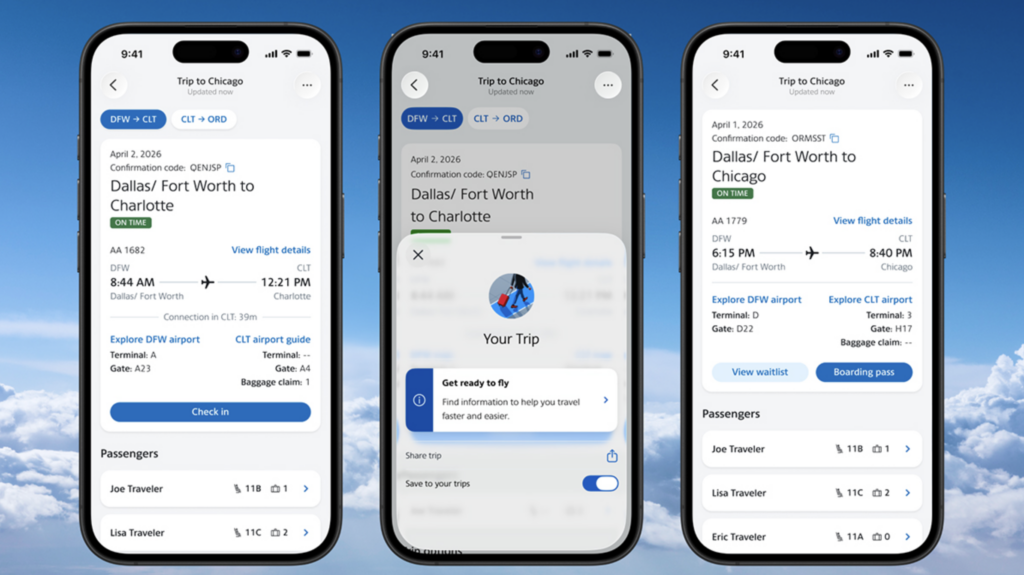
American Airlines is rolling out a major redesign of its mobile app as it continues expanding its digital customer experience strategy. The updates introduce a more streamlined interface, faster access to travel tools, and new self-service features designed to give travelers greater control throughout the journey.
American Redesigns its App Around the Modern Travel Journey
Over the past year, American Airlines has been rebuilding key parts of its mobile app based on customer feedback and changing travel habits. Instead of focusing only on visual updates, the airline says the refresh aims to make travel management simpler, faster, and more intuitive during every stage of the journey.
“Our goal is to build digital tools our customers actually want to use every time they travel,”
– Heather Garboden, American Airlines
At the center of the update is a redesigned ‘trip details’ page that now acts as the primary hub for upcoming travel. The updated layout allows passengers to move more easily between key functions using swipeable mini banners while making important information easier to spot.
Important functions such as waitlist status, check-in, and boarding passes are now positioned more prominently, allowing customers to access essential tools with fewer taps. Additional trip management options, including seat selection, upgrades, checked baggage, trip changes, wheelchair requests, and infant additions are also now grouped into a more centralized layout.
“Our goal is to build digital tools our customers actually want to use every time they travel,” said American Airlines Chief Customer Officer Heather Garboden. “Each update builds toward a smoother, more connected experience that reflects how people actually travel today and as expectations change, so will the app.”
The redesign also places stronger emphasis on disruption management. When irregular operations occur, support tools and rebooking information now appear directly inside the affected trip rather than forcing passengers to navigate to separate sections.
American says the new design also gives the airline more flexibility to add new features over time. The updated platform makes it easier to introduce new digital tools and keep up with changing customer expectations without needing major redesigns.
The app refresh comes as airlines compete more aggressively on digital experience quality. As travelers become increasingly accustomed to frictionless mobile services in other industries, expectations for airline apps continue rising too.
New Features Expand Self-Service and Day-of-Travel Flexibility
Beyond the redesigned interface, American is also introducing new tools designed to give passengers more control during travel day operations.
One of the newest additions allows customers to purchase Priority Group 4 boarding during the check-in process inside the app. The upgrade gives passengers earlier boarding, better access to overhead bin space, and dedicated check-in and security lanes where available.
The airline has also introduced a new option allowing AAdvantage members to purchase additional miles during check-in at lower rates. American says the feature is designed to help travelers more quickly reach redemption thresholds for future trips or upgrades.
Additional digital enhancements are scheduled to roll out over the coming months.
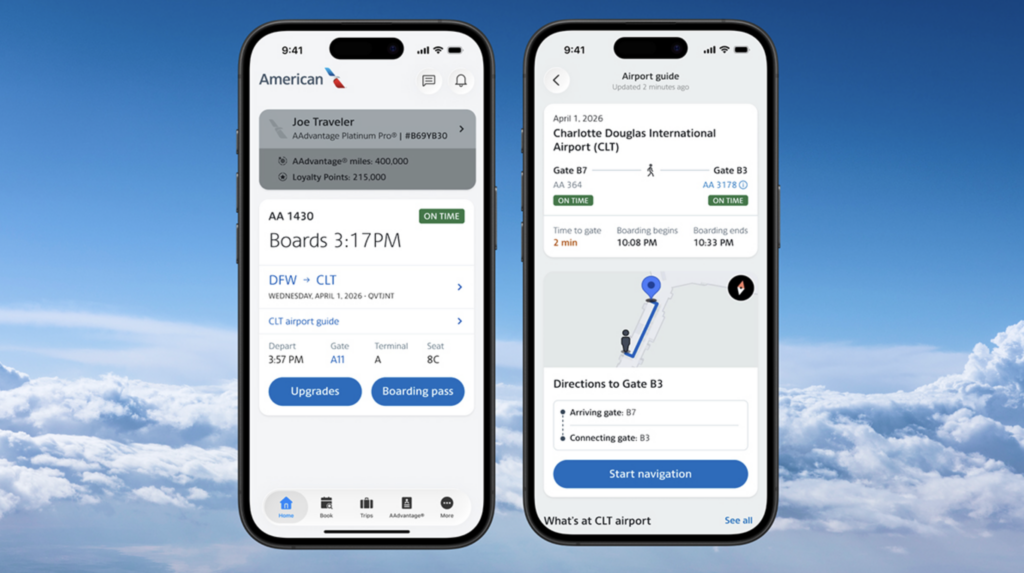
One upcoming feature will add airport maps directly into the app for connecting passengers. Travelers will be able to see directions between gates and estimated walking times, helping make connections easier, especially at larger hub airports. The feature also reflects how airlines increasingly see airport navigation as part of the broader digital travel experience rather than something handled solely through airport infrastructure.
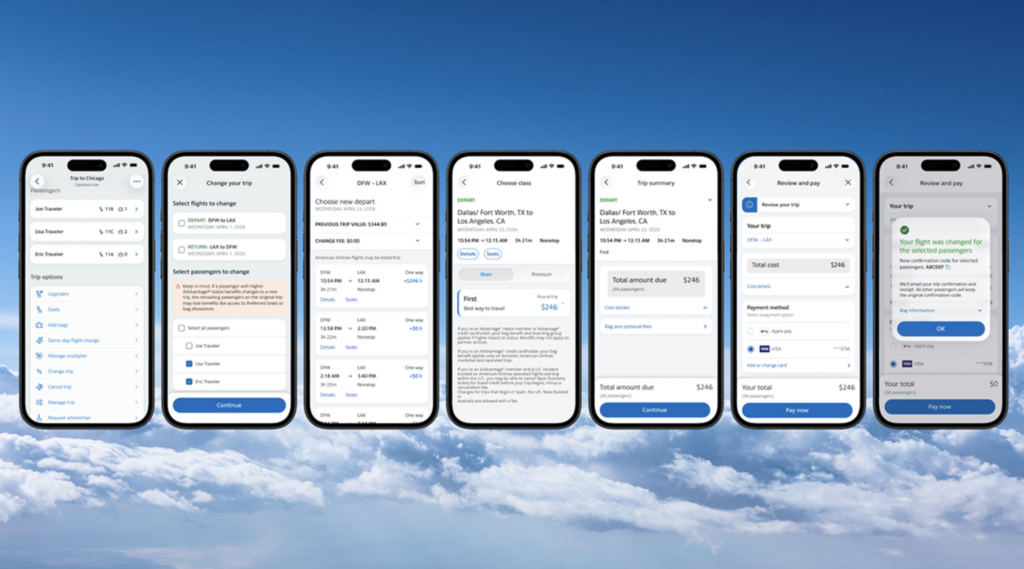
Elsewhere, American is preparing to launch a new reservation-splitting feature that allows passengers traveling together to separate a shared booking within the app. The tool is designed for situations where one traveler’s plans change while the remaining passengers continue on the original itinerary.
Rather than contacting customer service or navigating more complex booking channels, travelers will be able to complete the process in just five easy steps. Once finalized, the modified traveler receives a new confirmation code while the remaining passengers continue on the original reservation without changes.
These types of self-service tools are becoming increasingly important across the airline industry as carriers look to reduce friction while giving travelers more independence during disruptions and schedule changes. Instead of relying entirely on airport agents or call centers, passengers increasingly expect to manage changes from their phones in real time.