


APEX Future Travel Experience Senate Targets Shared Infrastructure to Deliver More Reliable Journeys

Share
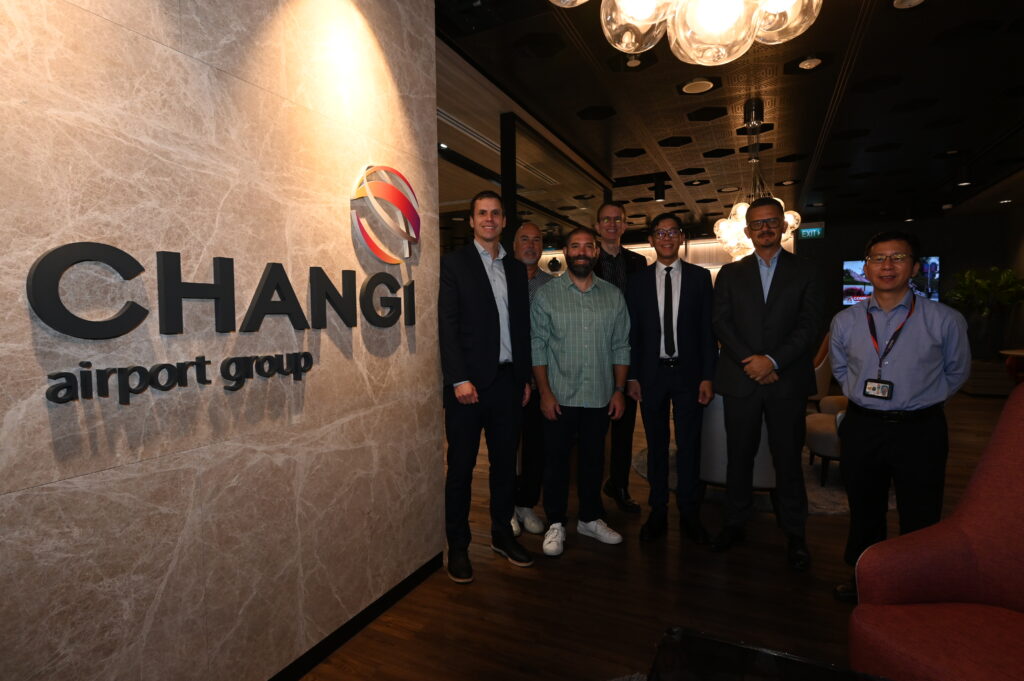
Airline, airport, and technology leaders called for practical guidance on shared infrastructure and responsible data use to turn airport innovation into more reliable passenger journeys at the APEX Future Travel Experience Senate in Singapore on November 17. Their priorities centered on documenting successful collaborations, defining the foundations for smart ramp deployment, and helping partners translate those lessons into better departures, connections, and disruption recovery.
Hosted by Changi Airport Group ahead of APEX FTE EXPO, the APEX Future Travel Experience Senate brought together participants in Singapore and online. As a governing group working with the APEX Board, it connected airport operations, airline requirements, and supplier capabilities with the association’s wider passenger experience agenda.
APEX Group CEO Dr. Joe Leader asked participants to identify specific actions and a clear measure of progress for the year ahead. “I want to know: here’s what success looks like in the year ahead. That’s the most important thing,” Dr. Leader said.
APEX Future Travel Experience Managing Director Max Gosney anchored the discussion in three priorities established at the inaugural Dallas meeting: “build trust around data,” “accelerate smart ramp implementation,” and use those foundations to improve connections and passenger recovery during irregular operations.
The discussion produced recommendations for practical case studies and infrastructure guidance, alongside a proposal from Dr. Leader to explore cooperation with Airports Council International. Participants supported closer collaboration while stressing that any approach would need to reflect different airport business models, commercial relationships, and operating environments.
A Playbook Built Around What Already Worked
Members called for specific examples that explained how successful partnerships operated, what infrastructure they required, and which outcomes they delivered. Their emphasis placed usable evidence at the center of the proposed work, with enough detail for another airport or airline to assess whether a solution could fit its circumstances.
Allegheny County Airport Authority CEO Christina Cassotis, who oversees Pittsburgh International Airport, urged participants to identify existing successes. “Where are the bright spots here? Where do they exist?” She called for short case studies that could help airports discover approaches they had not yet considered.
Gosney captured the proposed direction as participants considered how to turn those examples into a practical industry resource.“That’s a playbook almost of where it’s working,” Gosney said.

The distinction between broad ambition and operational applicability shaped the discussion. Members wanted examples that accounted for common-use facilities, airline-controlled infrastructure, regional differences, and the responsibilities of each partner. A successful arrangement at one airport could offer useful lessons without transferring unchanged to another.
Dr. Leader proposed exploring how APEX and Airports Council International could work together on guidance for common infrastructure and appropriate access. The discussion identified a potential path for cooperation, with the scope, participants, and form of any joint work still to develop.
One Passenger Across the Entire Journey
The operational discussion repeatedly returned to passenger outcomes. Predictable departures, timely baggage delivery, and functioning gates underpinned the experience that airlines and airports sought to improve. Participants examined how automation could reduce variation across the interdependent activities required to prepare an aircraft for departure.
“What I would like as an ex-airport operator is consistency,” APEX Future Travel Experience Head of Transformation Darin Juby said. Drawing on his airport operations background, he argued that technology should deliver a clear result and receive enough time to demonstrate its value.
Juby connected that reliability with the value of terminal amenities. Attractive surroundings could enrich a journey, but a delayed departure could overshadow those benefits. His comments placed dependable movement through the airport alongside the experiences designed to delight passengers along the way.
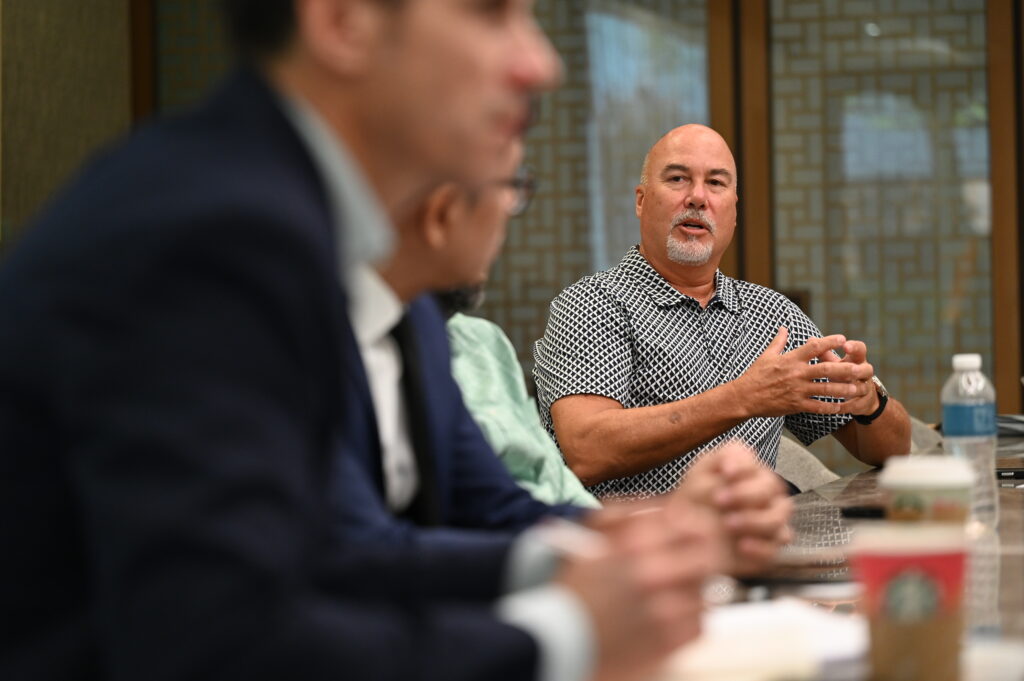
Gerald Ong, representing Hamad International Airport, emphasized the customer shared across the aviation supply chain. “It’s essentially the same one customer that we are all targeting.” He described a journey that began at home and continued through airport services, retail, and the flight, while emphasizing the need to balance technology with human assistance.”
That perspective connected operational investment with the experience of the traveler moving between organizations. Different companies could retain distinct commercial objectives while working toward a more predictable journey for the person they all served.
Shared Infrastructure Before Wider Automation
Southwest Airlines Head of Emerging Trends Kevin Kleist identified the foundational requirements beneath smart ramp ambitions: connectivity, data collection, cybersecurity, and privacy. Different organizations would adopt different equipment at different speeds, creating a need to plan how those technologies would communicate.
“The future of the ramp isn’t about choosing a single technology. It’s about building the shared foundation that allows different technologies to connect, operate securely, and scale as capabilities evolve,” Kleist said.
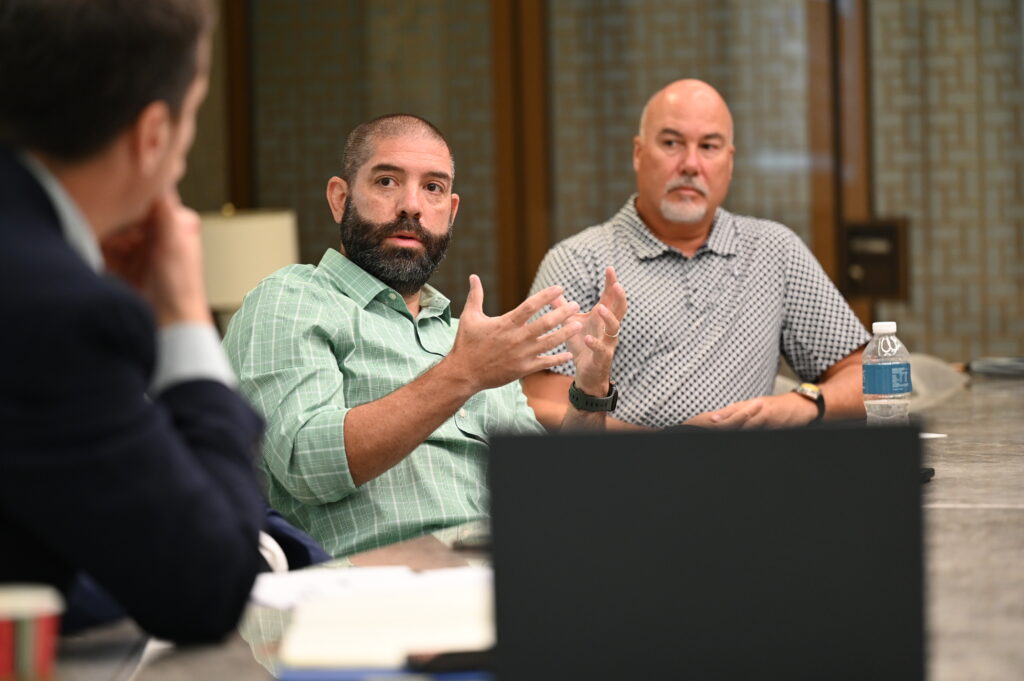
Participants examined how greater consistency in access to networks, cameras, and sensors could support deployment across multiple airports and reduce unnecessary duplication. They also recognized that shared arrangements would need to address investment, operating responsibilities, security, and appropriate permissions.
Charlotte Douglas International Airport Innovation and Experience Director Martha Edge suggested exploring minimum infrastructure expectations tailored to different regions. “Is there a minimum standard that is proposed as a best practice for North American airports, for European airports, Asian airports?” Her proposal included room for alternatives where airports faced different constraints.
For equipment manufacturers, infrastructure readiness carried immediate implications. “We need first to have the infrastructure ready,” Oshkosh AeroTech Managing Director Asia Pacific Thomas Liput said. He described a progression through electrification and assisted automation toward more autonomous equipment, highlighting the importance of preparing airport facilities alongside the machines they would support.
Liput’s examples included the charging infrastructure needed for electric ground support vehicles. His comments underscored the need for airports, airlines, ground handlers, and manufacturers to align specifications and implementation plans as technology developed.
Moonware Founder and CEO Javier Vidal added the software requirement behind coordinated automation. “In order to deploy those successfully, you need to first have a brain to coordinate them,” he said of autonomous vehicles. He emphasized a digital foundation capable of coordinating equipment and resources across the broader operation.
Together, those contributions framed smart ramp development around the interaction of equipment, software, infrastructure, and people. Individually capable technologies would need enough operational context and interoperability to work effectively alongside other systems.
Start With the Outcome, Then Define the Data
Data discussions revealed broad support for collaboration alongside differing perspectives on ownership, access, and responsibility. Participants distinguished operational information from personal or commercially sensitive data and examined how a specific use case could establish an appropriate basis for cooperation.
Dallas Fort Worth International Airport EVP and Chief Technology and Innovation Officer Paul Puopolo asked a practical question: “At the end of the day, what’s the output that I want?” He distinguished sharing infrastructure from conducting analytics, explaining how airports and airlines could use common resources while pursuing different operational objectives.
That distinction shifted attention toward the particular information and permissions each partner needed. An airport’s priorities could include safety and sustainability, while an airline might also focus on turnaround performance. Shared infrastructure could support those different objectives without requiring identical analytical approaches.
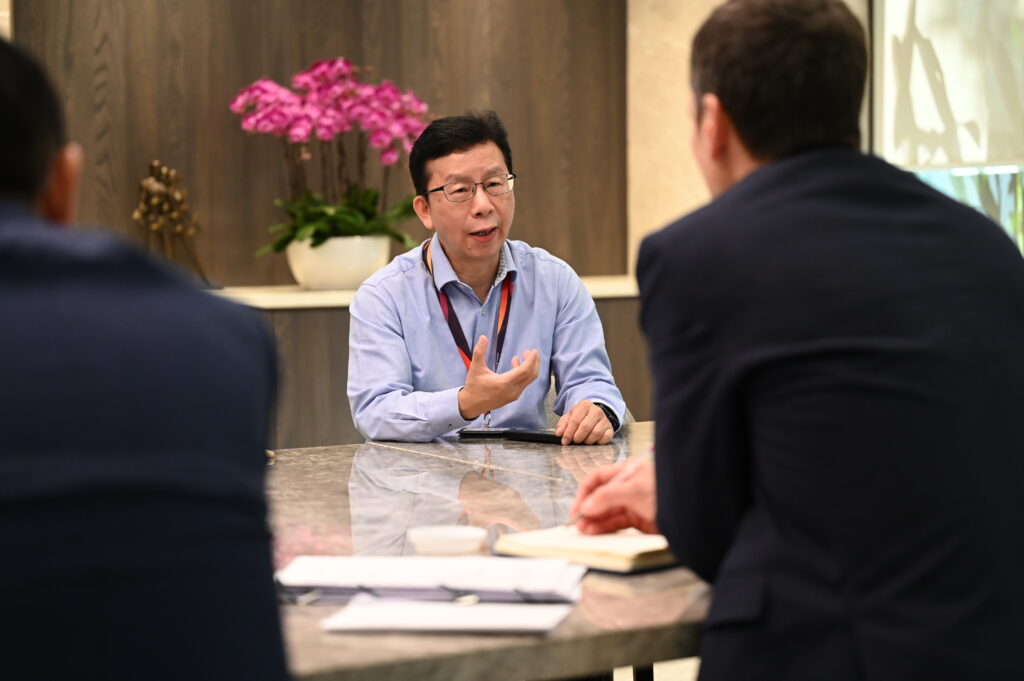
Cassotis emphasized the importance of agreeing on definitions, baselines, data quality, and access before judging results. Even apparently straightforward measures, such as waiting time or occupancy, required a shared understanding. Participants also discussed how partners would handle irregular information and define responsibilities throughout a relationship.
“The tech is actually the last chapter,” Changi Airport Group SVP of DIVA (Digital Factory) Jeffrey Loke said. His comments emphasized the need to establish shared objectives and ownership of the problem before selecting the technical means of connecting systems.
Loke favored collaboration organized around defined goals, including on-time departures, safety, security, and customer satisfaction. That approach would allow partners to identify relevant data sets and agree on purposeful access while respecting their different responsibilities.
Turn Ramp Visibility Into Earlier Action
Computer vision provided one example of technology connecting the needs of airports and airlines. Assaia President Americas Tim Toerber outlined that shared focus: “We’re a computer vision software company focused on supporting better turnaround operations at the gate for both airports and airlines.”
At Changi, Loke described a pilot using camera feeds and AI to recognize ramp activities and anticipate potential departure delays. The trial sought to identify when critical turnaround activities slipped and alert the relevant teams.
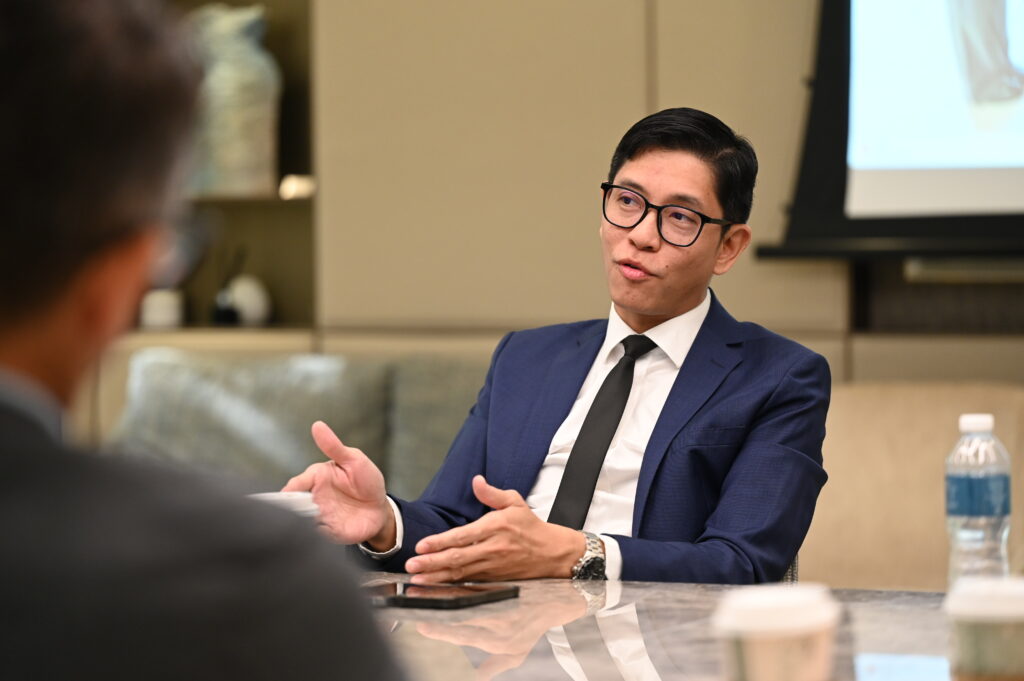
Earlier awareness could support decisions about ground handling activity, gate availability, and the next aircraft scheduled to arrive. The example illustrated how a defined operational goal could guide the information partners collected and the actions they took.
For the APEX Future Travel Experience Senate, those capabilities connected with the ambition to improve connections and passenger recovery during disruption. The discussion concentrated on the operational foundations for that ambition, including earlier warning of delays and better coordination among teams responsible for the turnaround.
The potential benefit depended on turning visibility into a response. Participants examined how useful information could help organizations intervene before one delayed task affected subsequent movements, while keeping the desired passenger and operational outcomes in view.
Give Innovators a Route Into Live Operations
The discussion also examined how promising technologies could progress through testing and implementation. Juby described the difficulty smaller innovators could face while aviation customers evaluated unfamiliar solutions and suggested that airports could explore ways to share some of the risk.
Cassotis outlined Pittsburgh’s xBridge approach to bringing robotics, AI, and automation companies into a live airport environment. The initiative gave businesses opportunities to understand operational challenges and test whether their technologies could address them, including companies that had not previously considered aviation applications.
“Could your technology make a difference in any part of the operation?” Allegheny County Airport Authority CEO Christina Cassotis recalled asking prospective innovators.
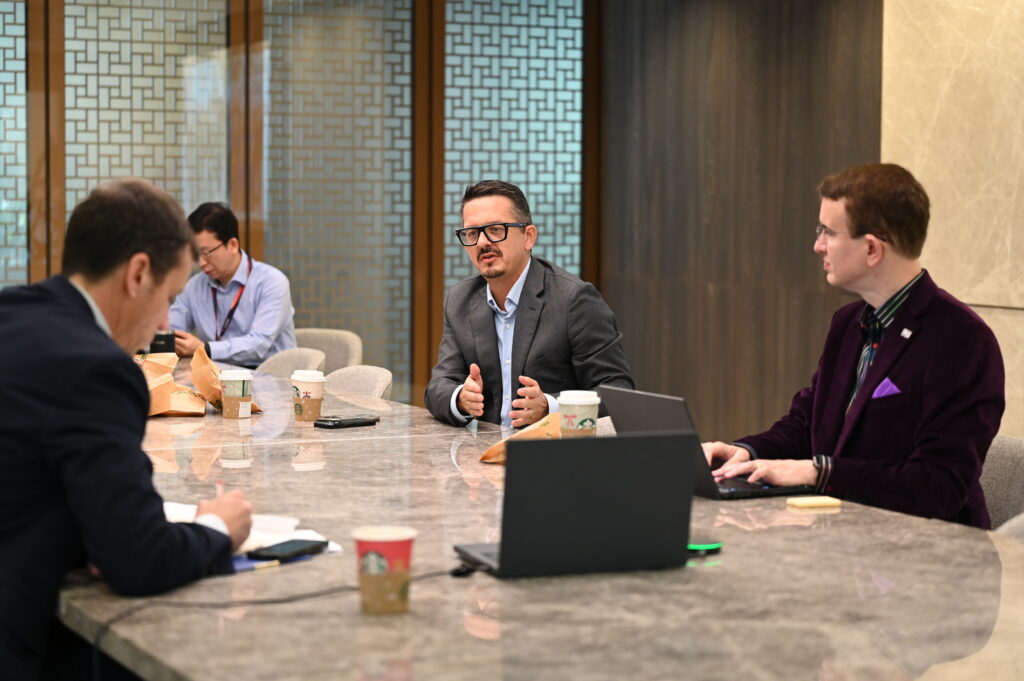
Changi Airport Group Information Technology Consultant Joe Chiu described how enterprise architecture and shared platforms supported collaboration with smaller technology partners. Changi provided the framework so those partners could “integrate to our microservices, integrate to our data platform,” connecting their solutions with the airport’s systems.
Chiu outlined the evolution of a chatbot developed with a young company, from an earlier rules-based service toward generative AI and voice capabilities. His account emphasized continuing collaboration, testing against misuse, and safeguards around data and platform security as the service developed.
Those examples highlighted practical ways to give innovators access to operational problems while retaining governance. Across the discussion, participants emphasized clear expectations, opportunities to test, and an understanding of the capabilities needed to sustain a solution in an airport environment.
Carrying the Work Toward Measurable Progress
The APEX Future Travel Experience Senate identified a direction for further work: capture successful collaborations, explain the infrastructure and agreements behind them, and help more organizations assess which lessons they could apply. Participants paired optimism about available technology with a clear request for practical implementation detail.
Gosney committed to circulating notes and recommended actions and taking the discussion forward with Dr. Leader to the APEX Board. He also pointed toward the World Innovation Summit at Haneda as a future opportunity to advance the work, while Dr. Leader invited specific actions for forthcoming gatherings in Tokyo and Dublin.
For the APEX Future Travel Experience Senate, progress would rest on connecting shared ambition with the conditions required to deliver it. The intended passenger gains remained concrete: more predictable departures, better coordinated operations, and stronger foundations for managing connections and disruption.