


APEX TECH 2026: Air India Embraces Customer-First Transformation Using Inflight Experience

Share
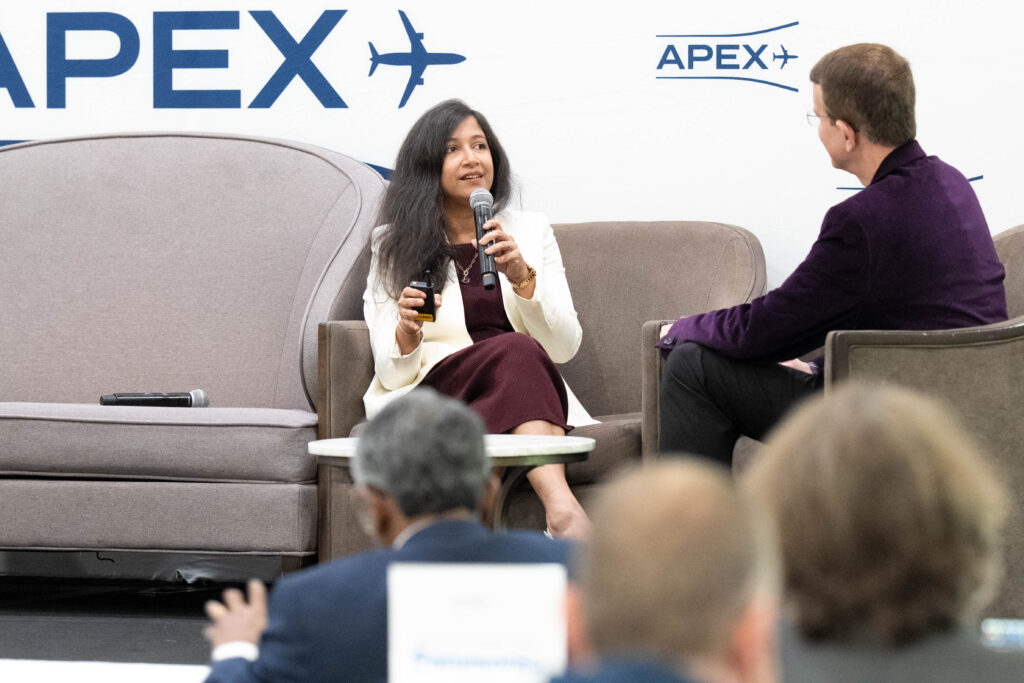
As APEX TECH 2026 came to a close, Air India Vice President CX Strategy and Intelligence Anjali Birla delivered the final keynote, sharing how the airline is using customer insight, technology, and inflight experience to guide one of the most ambitious transformations in global aviation. Speaking with APEX CEO Dr. Joe Leader, Birla outlined how Air India is rebuilding its brand, operations, and onboard experience around a clear customer-first philosophy.
A Transformation Decades in the Making
Birla began by outlining the scale of change that has taken place since Air India returned to Tata Group ownership in 2022. Founded nearly a century ago, Air India was nationalized in 1953 before re-entering private ownership with significant operational and brand challenges.
“The Economist called this ambitious journey that we’re on the Everest of corporate turnarounds.”
To address them, Air India leadership created a five-year roadmap known as VIHAAN.AI. “Vihaan in Sanskrit means the dawn of a new era,” she explained, noting that the program aimed to redefine Air India’s identity while modernizing nearly every aspect of the airline. “The Economist called this ambitious journey that we’re on the Everest of corporate turnarounds.”
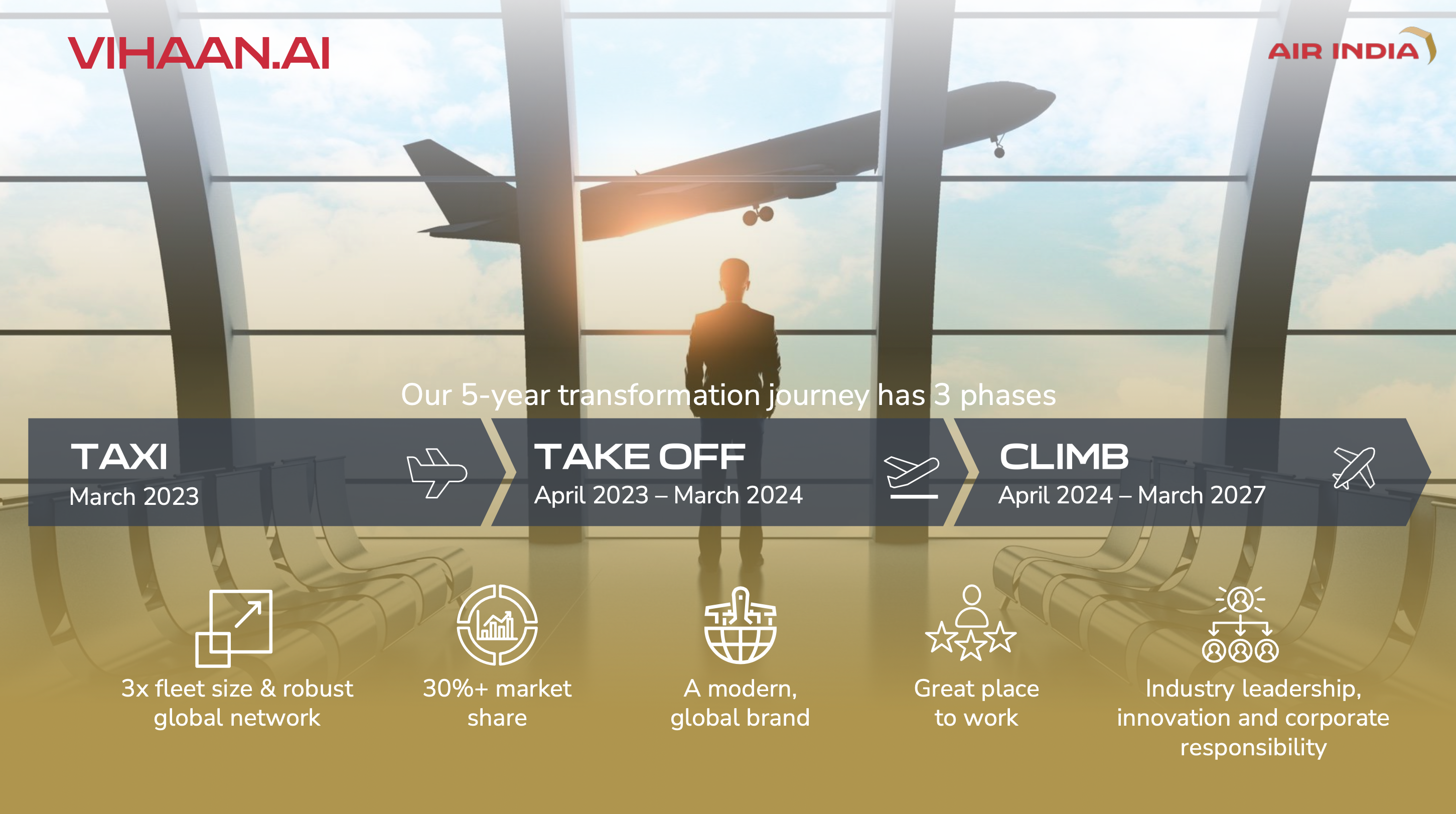
The transformation has included one of the largest single aircraft orders in aviation history, fleet refurbishments, a complete digital overhaul, and the launch of a new brand identity. Birla also highlighted the creation of South Asia’s largest aviation training academy, capable of training up to 2,000 people daily, alongside the merger of four airlines into two distinct brands. “All of this in a span of about two and a half years,” she said.
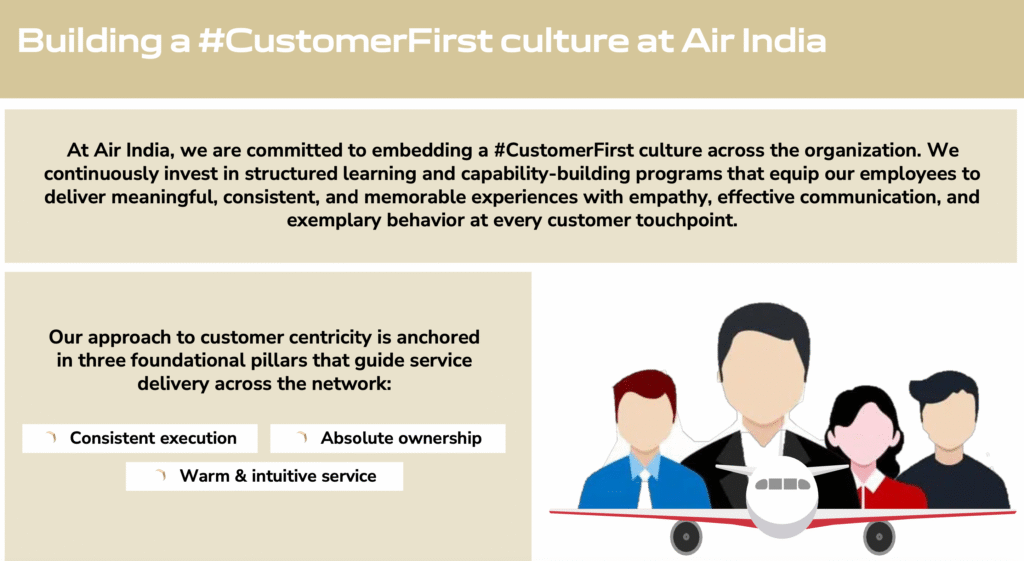
Air India’s culture shift has been equally important. After decades under government ownership, Birla explained that it now places strong emphasis on what a “customer-first mindset” built around consistent execution, ownership, and intuitive service.
Prioritizing Inflight Experience Through Customer Insight
When asked how in-flight entertainment and connectivity (IFEC) factored into Air India’s broader transformation, Birla made clear that decisions were rooted in direct customer feedback rather than internal assumptions. “We didn’t want to do it based on what consultants were telling us or based on what we thought needs to be done, but on what the customer really wanted.”
Air India engaged nearly 10,000 customers globally to identify priorities, and IFEC ranked among the top ten focus areas. “So right from day zero, we were clear that in-flight entertainment and connectivity is going to be a big driver of customer affinity, customer loyalty,” Birla said. This emphasis made inflight experience one of the earliest visible signs of transformation for passengers and reinforced confidence that change was underway.
“From day zero, we were clear that in-flight entertainment and connectivity is going to be a big driver of customer affinity, customer loyalty.”
The airline faced the added complexity of integrating multiple fleets and systems following mergers. Birla described how delivering a consistent experience required simplifying what customers saw, even when backend systems differed. “The first thing that we did was create a uniform UI (user interface),” she explained. “Whatever may be happening at the back end, the customer shouldn’t be seeing that.”
To address hardware differences, the airline introduced streaming solutions on aircraft without seatback screens while retrofit programs progressed. Birla described this approach as part of transparent communication with customers.
“We know it’s taking time for us to build the experience that you’re looking for,” she said. “But in the interim, we have a bring-your-own-device (BYOD) streaming solution available that allows you to stream more than 2,000 hours of content.”
Balancing Global Appeal with Cultural Identity
Air India’s content strategy reflects its ambition to serve a global audience while simultaneously celebrating its Indian heritage. Birla explained that programming decisions are continuously shaped by passenger feedback and evolving viewing trends. “We very rigorously track feedback,” she said. “We track qualitative inputs that they provide to us after every flight.”
The airline offers a mix of Bollywood, Hollywood, regional cinema, and international programming. Birla pointed to Korean dramas as an example of emerging content trends that resonate with passengers. Children’s programming has also expanded to include both video and audio options based on parental feedback. “While we need our kids to be engaged, we don’t want them watching a screen all the time,” she said.
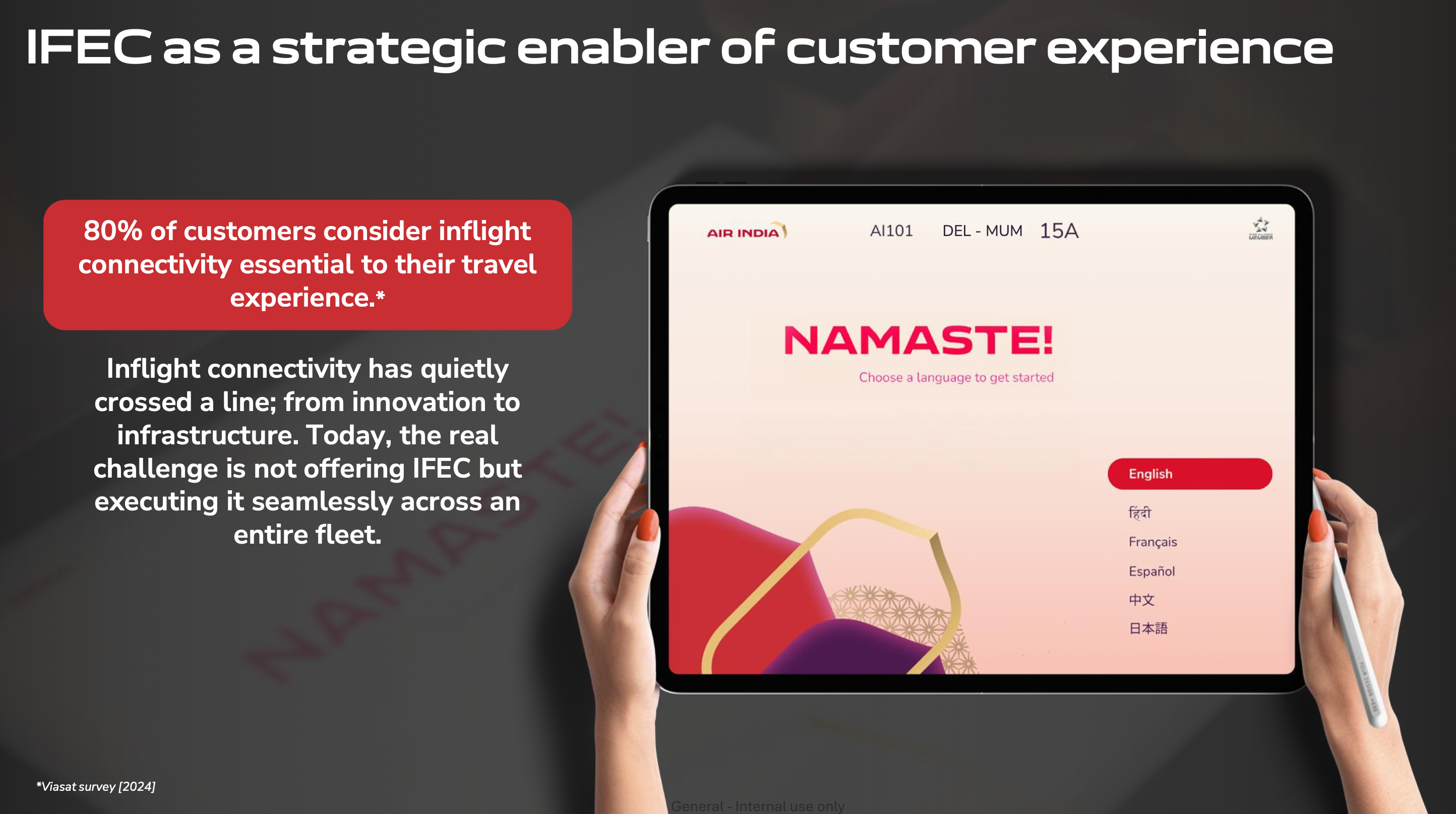
This approach supports Air India’s broader brand vision as “a world class airline with a deeply rooted Indian heritage and culture.”
Crew feedback also plays an important role in shaping the onboard experience. Birla emphasized that frontline employees offer valuable insights into passenger behavior and service gaps. “They’re in constant touch with passengers,” she said.
Data, Feedback, and Continuous Improvement
Birla highlighted the growing role of data in shaping Air India’s inflight strategies. The airline initially focused on reliability and usage trends before expanding into qualitative analysis through surveys, social media, and direct feedback.
“We started with understanding how much time passengers are spending on titles,” she explained, noting that email engagement and social media responses also provide useful signals.
Looking ahead, Air India plans to move toward greater personalization. “Right now, it’s more of a uniform experience,” Birla said. “But we’re on the journey to personalize journeys a lot more.”
Operational reliability remains central to the airline’s progress. Domestic on-time performance has improved significantly, reaching above 80 per cent, while international operations continue to advance toward target benchmarks. “It’s just when, not if,” Birla said, expressing confidence in the carrier’s ongoing improvements.
Crew enablement has been another focus area. Birla described the shift from manual reporting to fully digital systems as a significant operational improvement.
“We completely changed this to fully digital,” she said, noting that new tools allow crews to manage interactions more efficiently and respond to service challenges with greater sensitivity. Training programs have supported this transition, with over 50,000 employees completing development initiatives designed to align with Air India’s evolving service culture.
“We’re on the journey to personalize journeys a lot more.”
A Customer-Centred Roadmap for the Future
Birla closed the discussion by emphasizing that successful transformation depends on understanding customer needs, securing internal alignment, and maintaining disciplined execution.
“It’s really basic,” she said. “It’s understanding very deeply what your customer is looking for. It’s building buy-in internally. It’s very rigorous in execution and governance.”
She also highlighted the importance of designing the full inflight environment, not just screen content. From refreshments to cultural elements, every detail contributes to the overall passenger experience. “It’s not just what you’re watching on the screen,” Birla said. “It’s the whole environment around.”
By continuing to listen closely to feedback and adapting along the way, Air India aims to build long-term trust and demonstrate that its transformation is not a one-time shift, but an ongoing commitment to delivering a more reliable, connected, and customer centered travel experience.
Read about the other airline keynote sessions at APEX TECH 2026 from Aeroméxico, Delta and United. For coverage of the panel sessions and workshops, click here.