


APEX TECH 2026: Building a Unified Digital Ecosystem Across the Connected Cabin

Share
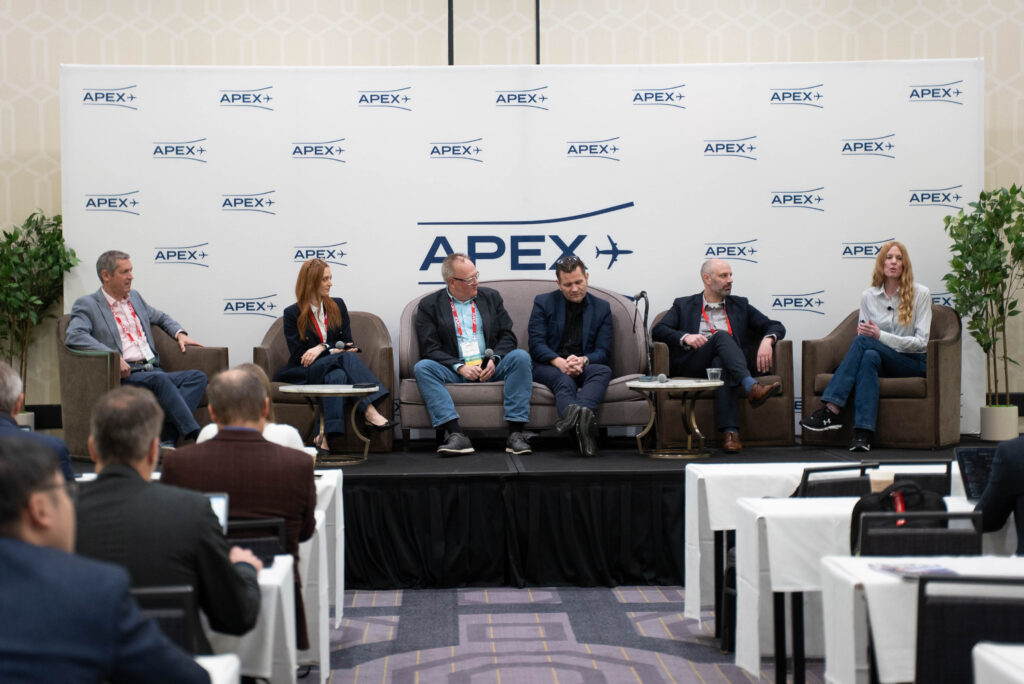
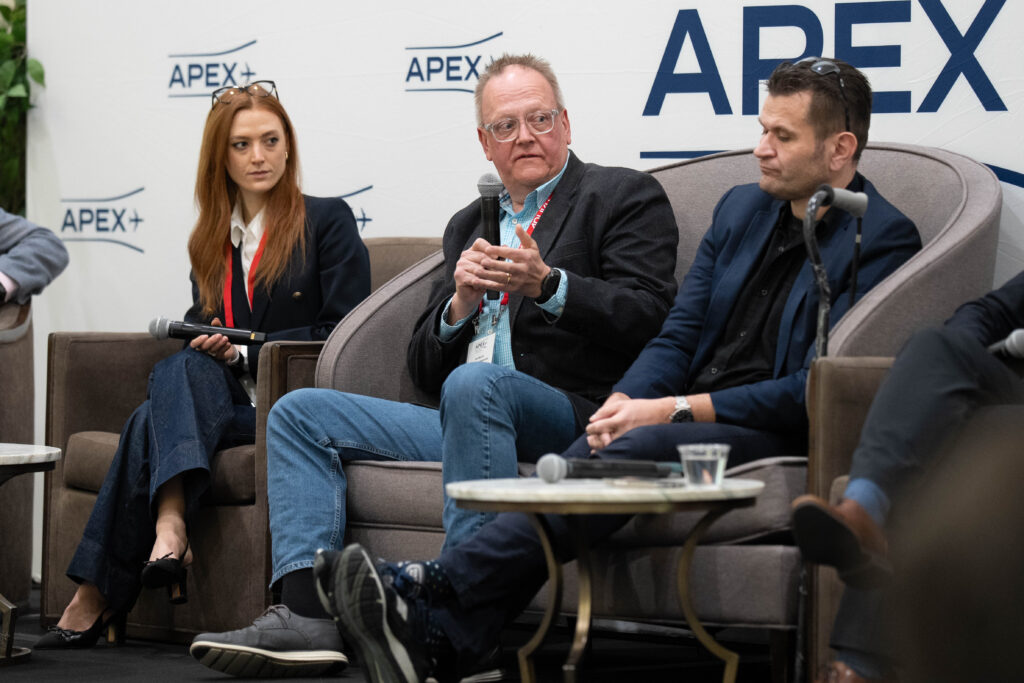
At APEX TECH 2026, maximizing digital integration and enabling streaming took the spotlight during a panel moderated by Runway Girl Network Founder Mary Kirby. The session brought together five leaders with different perspectives across the in-flight entertainment and connectivity (IFEC) industry: Safran VP Products and Strategy Ben Asmar; Bluebox Avionics CEO Kevin Clark; Panasonic Avionics SVP Product Management and Strategy Andy Masson; Thales Avionics Director of Marketing Operations Jon Norris; and AirFi.aero CEO Laura Roesges.
Together, they explored how airlines are trying to connect every inflight touchpoint into one digital ecosystem, from seatback and wireless IFE to apps, connectivity, and data. The discussion highlighted opportunities, but also frictions. Namely, that passengers expect the cabin to work like the internet on the ground, while airlines still have to solve licensing and integration issues as well as contend with slower upgrade cycles.
“If you’re on a plane, it’s not a personal space. It’s a broadcast set up from a licensing rights point of view.”
– Jon Norris, Thales InFlyt Experience
Whoever Owns the Content, In-Flight Rights are Still Essential
Kirby opened by posing a hypothetical about the future of streaming. If a streamer ever owned a major studio, would it change the trajectory of inflight streaming?
Norris answered that ownership does not erase licensing. “Even if there’s an acquisition, you still have to maintain proper rights and licensing,” he said. He drew an important line between airline-offered streaming and a passenger’s personal subscription. “In none of those services does the contract that you have with them cover you to watch anything inflight. It’s only terrestrial. It’s only in your home,” he said.
“Technology is not the hard part here. The hard part is, what is the framework, what’s the licensing model, and how do we get [streamers] involved?”
– Ben Asmar, Safran Passenger Innovations
In other words, the industry still has to treat inflight viewing as a broadcast use case. “If you’re on a plane, it’s not a personal space. It’s a broadcast set up from a licensing rights point of view,” Norris said. That is why, he explained, APEX’s initiatives such as APEX STREAM (Standardized Technical Rights Enforcement for Airline Media) focuses on protecting rights “regardless of what technology is being used to transmit it and what kind of model we have.”
If airlines want streamer apps onboard at scale, Norris explained the aviation industry needs alignment first: “We need to consolidate our view from an industry point of view first, and then understand whether we should reach out to them.”
Streamers Will Come, But the Industry Has to Bring Them In
Masson predicted that in-flight distribution will eventually become too big for streamers to ignore. “It’s going to happen eventually,” he said, pointing to the size of the aviation market. “There are 4.4 billion people who fly today, and in a couple of years that’s going to go up to 8 billion people who fly,” he said. “At some point, one of the streaming platforms is going to recognize that’s a market they don’t want to slice off.”
But Masson also suggested streamers will not move based on vendor enthusiasm alone. “They’re not going to listen to us,” he said. “They’re going to listen to the collection of the airlines and the APEX bodies, but it will ultimately happen for sure.”
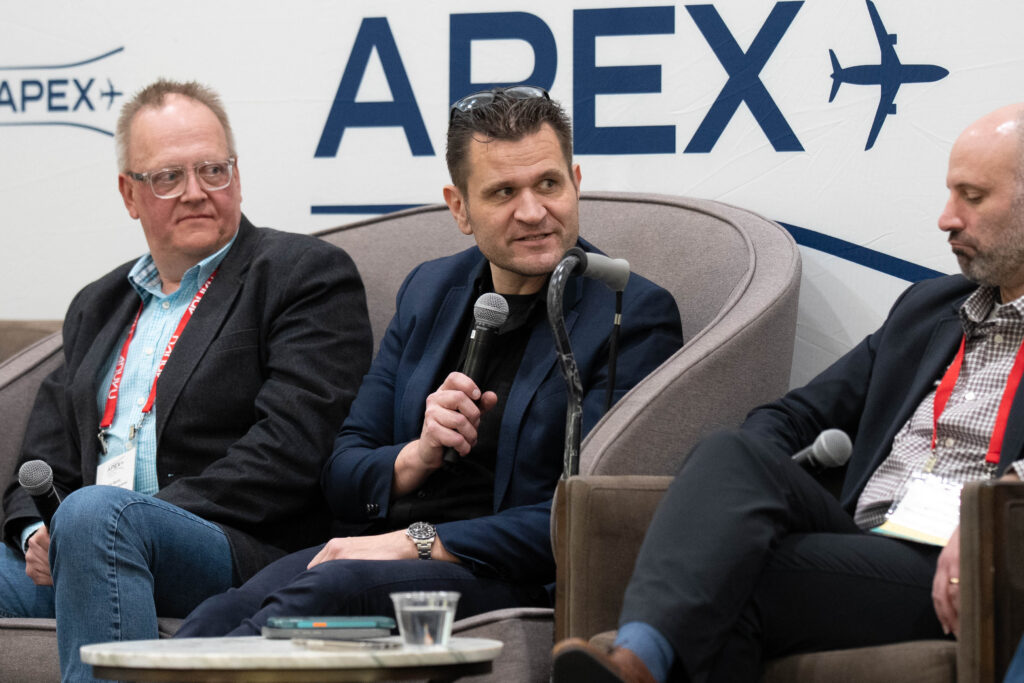
Asmar agreed with the long-term direction but highlighted the commercial realities. “Technology is not the hard part here,” he said. “The hard part is, what is the framework, what’s the licensing model, and how do we get these guys involved?” He also laid out streamers’ incentives in plain commercial terms: “Their objective is subscriber acquisition. That’s why they get out of bed every morning.”
His message to the industry is show to streamers the addressable audience and build the pitch around it. “We as an industry need to work with them to show them the 4.4 billion or the 8 billion people… and get a little bit smart with how we approach them,” he said.
“We [need to] move to a cloud-native environment where things are off the shelf, giving the autonomy to airlines so that they can change things in real time as they want to.”
– Jon Norris, Thales InFlyt Experience
A More Dynamic Cabin Depends on Software
From the wireless IFE side, Clark noted passenger behavior already points toward greater flexibility. Bluebox sees “traditional content, but also lots of short form,” including “curated YouTube videos.” He explained that airlines need solutions that adapt to different fleet types and upgrade cycles. Bluebox’s strategy focuses on portability. “We abstract the software from the hardware,” he said, so airlines can move capabilities to different platforms and “evolve with the demand.”
Roesges added that successful wireless IFE often depends on how airlines define the experience they want to deliver. Wireless works best when airlines accept that passengers will use personal devices and providers can “close that gap.” But the real questions go further. “How holistic should the experience be throughout your entire fleet… where does connectivity come in… do you want entertainment as a pacifier, or do you want to gain ancillaries from it?” she asked. She emphasized that airlines often need guidance to align stakeholders and turn good technology into a consistent onboard experience.
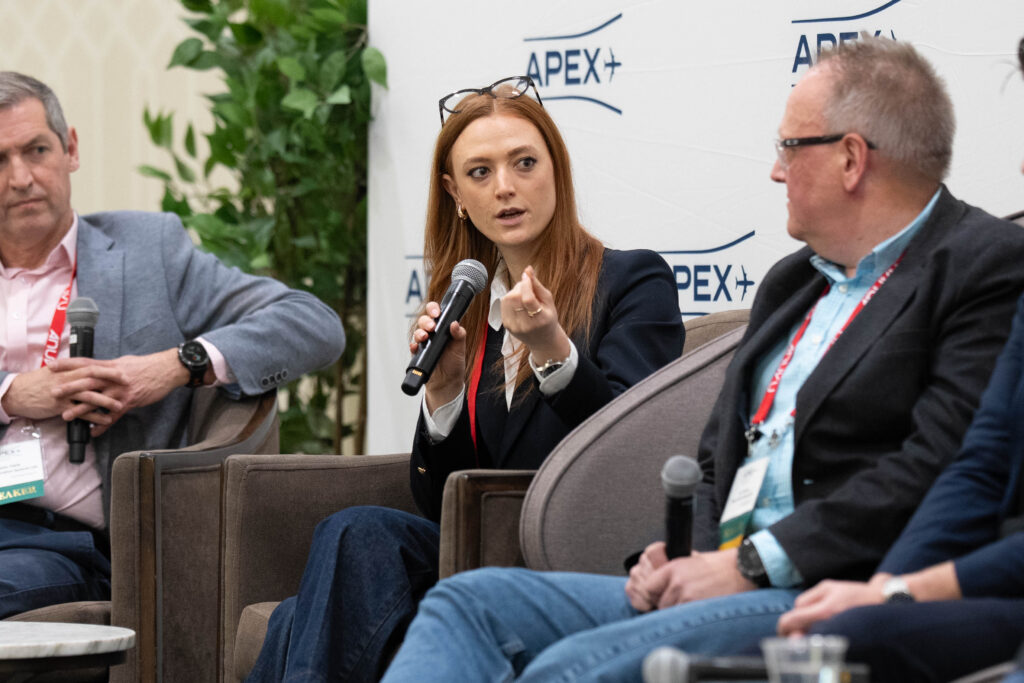
The theme of adaptability surfaced repeatedly. At present, passengers tastes evolve faster than aircraft upgrade cycles, which means digital platforms must move faster. Norris described this as a need for greater dynamism. “Our whole ecosystem just needs to be far more dynamic,” he said, both in the type of content offered and the speed of change.
He described where he sees the market heading: “We move to a cloud-native environment where things are off the shelf, giving the autonomy to airlines so that they can change things in real time as they want to.” He pointed to the potential for “real time data feedback” and personalization that starts in-flight and carries forward.
Norris said some airlines are preparing for that pace by building internal digital capability. “They have large digital teams,” he said, and they are building the infrastructure to support faster iteration, including tools like “a virtual aircraft,” the ability to “do A/B testing,” and to “launch it live on a plane.”
“Why is it we need to go through a very rigorous tests that take potentially six weeks when others in financial, medical, and other well regulated industries can publish software in a few minutes?”
– Ben Asmar, Safran Passenger Innovations
Data, AI, and the Push for Personalization
Kirby then shifted the conversion to ask if panelists agreed with the premise that “data is the new oil.” Asmar argued the industry has collected plenty of data, but the value depends on using it well and quickly. “All that is only possible if we collect data,” he said, “but it’s also only possible if we use it in a meaningful way, and we do it at speed.”
He questioned why software release cycles in aviation remain so heavy compared with other regulated sectors. “Why is it we need to go through a very rigorous test… that takes potentially six weeks when others in financial, medical, and other well regulated industries can publish software in a few minutes?” he asked. “We don’t need to be different.”
Asmar connected the payoff to revenue and loyalty: a “hyper personalized experience” makes passengers “more inclined to buy the product,” and it can “drive loyalty retention.” He sketched out what successful personalization could look like operationally: learning from a passenger on an outbound flight, then adjusting what is offered on the return. That is not science fiction, he argued, if airlines can “move data to the aircraft quickly” and “publish apps quickly.”
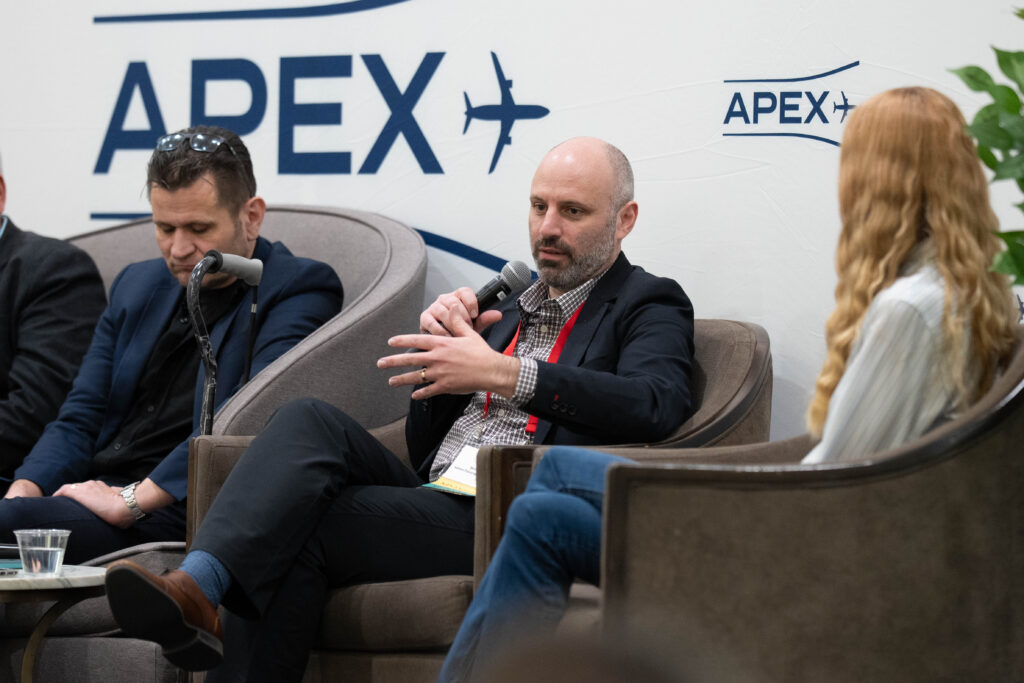
Masson echoed that and went even further, predicting a shift away from today’s app-centric approach. Panasonic’s current tools, he said, already allow airlines to “create a simple seat row,” run “A/B testing,” and use “self-service toolset” capabilities. Longer-term, he predicted, “You’re going to be presented with an AI, hyper-personalized platform without apps. It will beat the app, and it will give you exactly what you want.”
Roesges grounded the AI build-up in practical constraints. “What a lot of airlines forget is you’re actually limited because that is a lot of CPU,” she said. She explained AirFi’s approach as using “very lightweight” connectivity to send a query to the ground and return the response to the cabin, while managing traffic “intelligently” so it stays responsive.
“Airlines want to have an engagement experience, and we’re seeing it now with the reimagining of narrow-body aircraft”
– Ben Asmar, Safran Passenger Innovations
The Case for a Harmonized Digital Experience
The panel then shifted to the topic of seatback screens and wireless IFE. Speakers described a future where both coexist, with the digital platform serving as the unifying layer.
Masson argued that seatback remains the strongest way for airlines to keep passengers within their ecosystem. “If I connect to Starlink, I’m not sitting in the airline’s digital environment,” he said. “I want to be in the airline’s image…seeing their advertising… creating ancillary [revenue]… and the passengers see it and they feel it.”
Norris backed the idea that airlines still need an anchor touchpoint onboard. “Seatback is not going anywhere,” he said, calling it “the digital anchor for the airline,” especially if the airline wants to “monetize or provide really good services.” He also argued the experience is becoming “multi-screen,” and that you cannot have that without an embedded screen.
Asmar tied that trend to aircraft missions and fleet reality. With longer-range narrowbodies like the A321XLR entering service, airlines want wide-body-style engagement. “Airlines want to have an engagement experience, and we’re seeing it now with the reimagining of narrow-body aircraft,” he said. “What we can all work on as an industry is moving digital platforms faster and faster,” he said, whether the touchpoint is wireless, seatback, or the airline’s own app.
Clark’s perspective from the retrofit market highlighted operational realities. Bluebox can “drop it in” to “create a digital network,” and layer services like IFE and retail on top. He noted that airlines cannot refit every aircraft at once, and passengers notice inconsistencies. A consistent software layer helps reduce that gap.
“[In future,] you’re going to be presented with an AI, hyper-personalized platform without apps.”
– Andy Masson, Panasonic Avionics
Looking Ahead
As the panel closed, the discussion returned to a practical question. How soon will streaming apps integrate directly into seatback systems? Norris provided a clear answer with an important condition. “If the licensing rights are in place, then by the end of the year,” he said, adding that with cloud-native platforms, “anything designed for the web on the ground can be served in the air.”
Masson noted that Panasonic already supports streaming provider caching models. “It’s flying today. It works extremely effectively,” he said. Asmar reinforced that the main limitation is not hardware. “Ultimately, the answer is now,” he said. “The limitation is not the hardware, it’s the licensing rights.”
The takeaway from the panel was clear. The cabin’s digital ecosystem will not be defined by one screen type, one connectivity solution, or one vendor platform. Airlines will succeed by building an integrated digital foundation that respects licensing, moves at software speed, and gives them control over every inflight touchpoint.
Read about the takeaways from the APEX TECH 2026 workshop on managing content rights. For more coverage of the event, click here.