


APEX TECH 2026: Engineering the Next Phase of Connected Travel

Share

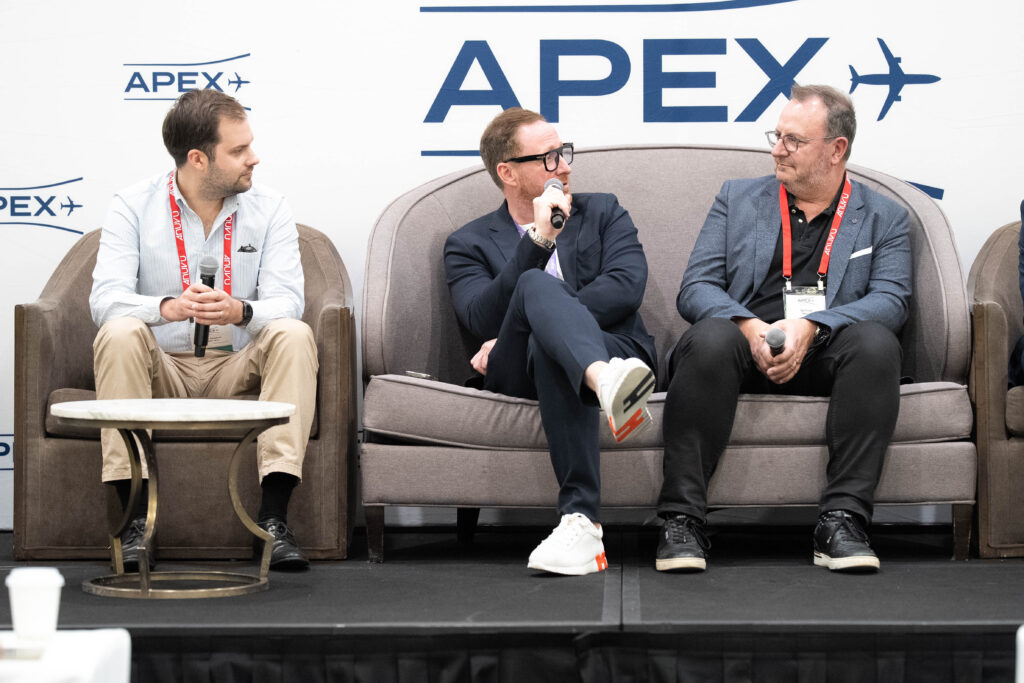
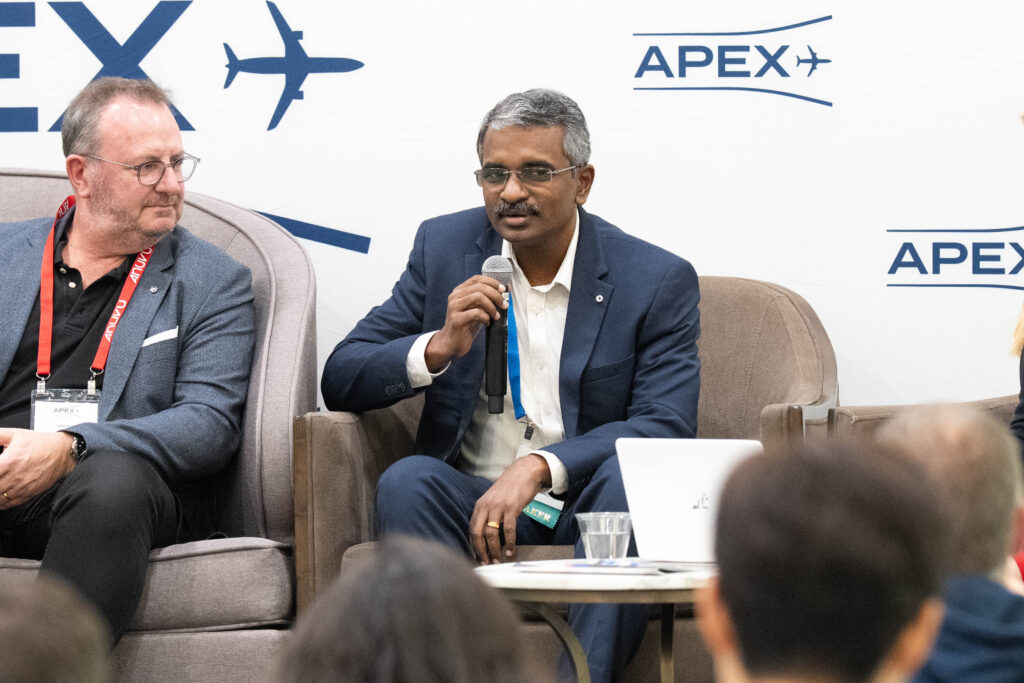
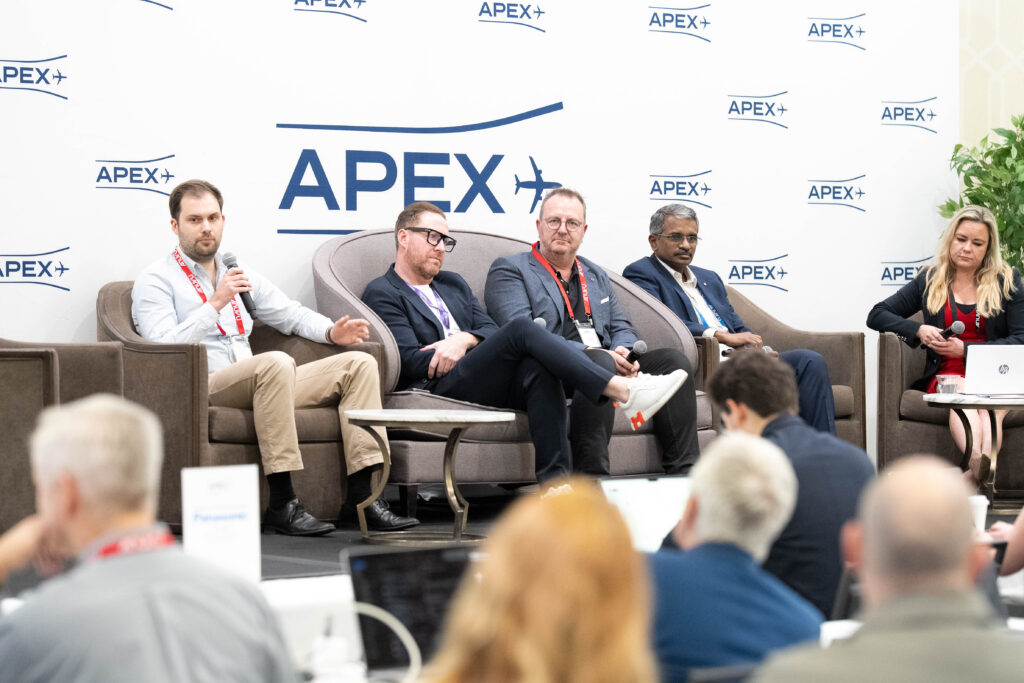
At APEX TECH 2026, the engineering behind connected travel was at the center of a panel discussion moderated by Inflight Magazine Editor Satu Dahl. The session brought together four leaders with distinct perspectives: Reaktor Aero Head of IFEC Engineering Walter Berggren; PXCom CEO Cyril Jean; Air India Head, IFEC, Digital & Tech, Premjith Manapetty; and Spafax Global SVP of Business Development Mark Wright.
Together, they explored how performance engineering, data integration, and intelligent IFEC (in-flight entertainment and connectivity) systems are reshaping connected travel, redefining how airlines manage onboard experiences, and opening new opportunities for personalization and revenue. The discussion highlighted both the transformative potential and the practical challenges of building digital ecosystems that can scale across fleets while meeting rising passenger expectations.
From Hardware Limits to Software-Driven Innovation
Dahl began by asking panelists to define the biggest engineering shift taking place today. Berggren explained that for years the pace of innovation onboard depended heavily on hardware limitations, recalling that “hardware was lagging behind.” Now, he said, advances such as “excellent picture quality” and “snappy processors” in modern seatback systems signal that hardware no longer acts as the primary bottleneck, opening the door for faster progress on the software side.
That evolution is changing priorities for both airlines and suppliers. “Since hardware is no longer the constraint, now we’re going to need to double down on software,” Berggren said. He argued that future gains will come from building digital platforms that adapt and improve over time, rather than launching stagnant systems that remain unchanged for years.
Jean agreed that open platforms and tighter integration between seatback systems and connectivity are expanding what is possible. “The major improvement we witness is obviously on the seatback screens and the open platforms… plus their deep integration with the inflight connectivity (IFC),” he said, adding that the integration “brings a lot of opportunities.”
From the airline perspective, Manapetty framed the shift as a move toward ecosystems that can keep up with passenger expectations year over year. “Software has to catch up with the rest of the passenger experience that’s on the ground,” he said. “It cannot be a five year old system that is stuck.”
Seamless Connectivity Becomes the New Passenger Expectation
Then the conversation turned to whether connectivity has become a must-have. Manapetty said yes, but he also clarified what “good” really means. “The word seamless is abused, but that’s exactly what is needed,” he said.
He explained that the cabin reaches maturity when passengers and crews stop talking about the system entirely. “Technology becomes mature when we stop talking about technology,” he said. “If we are still talking about connectivity, it means it’s not yet there.” For him, “seamless” means no dead zones and no awkward workarounds. “You can’t have dead zones,” he said. “All that is not acceptable.”
Wright echoed that point from a passenger and advertising perspective. “Audiences… really just want reliability,” he said. “They don’t know anything about multi-orbit… They just want it to work.” He added, “They don’t care how that internet gets there. They just care that it’s there.”
The panel also addressed the operational complexity behind that expectation. Manapetty noted that airlines increasingly have to manage multiple connectivity approaches across different missions, including air-to-ground for large domestic markets and satellite for international routes. The hard part becomes the “handover” between networks, especially when routes and coverage vary. He described it as “a super challenge to manage the handover from air to ground to satellite.”
Berggren added an important nuance. Not every onboard use case needs the same connectivity profile. For passengers on phones, low-latency and high throughput matter most. But for many seatback and platform update use cases, “latency is not a problem,” he said, and the technology has existed “for years already.” As such, airlines can deliver more connected features now, if they focus on execution.
Data Integration and the Ongoing Challenge of Trust
As the conversation shifted to data, Wright argued airlines already sit on massive value. “Airlines already have some of the richest data pools in the world,” he said. “I don’t think it’s necessarily more data or better data. It’s more how we use that data and what we use it for.”
The blocker, he said, is trust. “There’s a trust issue amongst the protagonists in this industry,” he said, calling it “a big barrier.” He pointed to other industries that have built secure data practices over time and explained that the aviation industry can borrow those patterns, rather than treating data activation as something entirely new.
Manapetty asked directly whether clean rooms help solve an airline trust and control problem. Wright said yes and explained why airlines may find that model more comfortable. “It gives the airlines the ability to keep close control over their own data,” he said. “It never leaves their own environment, and they still maintain total control in terms of who uses that data.”
Manapetty also highlighted the reality airlines operate under. “We have too much data, and also legally we have to store the data,” he said, describing internal privacy protections that limit access even within airline teams. He also pointed out a foundational issue many airlines still face: “Right now our IP systems are not connected,” which makes platform-wide personalization hard until core integration improves.
Personalization Opportunities Balanced With Privacy Concerns
As the panel moved into personalization, Manapetty described the long-term direction in simple terms. “My feed is not equal to your favorite. Why should an IFE screen have the same interface or same content?” he asked. The goal, he said, is that “your screen must be your screen,” instead of a one-size experience that resets every flight.
But he also emphasized the privacy implications. “The more it is private to you, the more privacy matters,” he said, warning that airlines have to be careful about what they display on a shared screen and how they collect consent. He noted that even seemingly small features can trigger compliance issues: “We have to get consent on this, even to show a name.”
Berggren added that airlines cannot treat IFEC software like a one-time cabin install. “We need to start creating software as software,” he said. He criticized the common pattern of over-defining features upfront, launching, and leaving them unchanged. “Day one is just when the real work starts,” he said, arguing for continuous refinement based on real passenger feedback.
Wright reinforced that personalization does not need to begin with one-to-one targeting. “There’s so many different perceptions of what actual personalization looks like,” he said, suggesting airlines start with simpler cohort approaches, like timing and route-based patterns, before moving deeper. “We need to walk before we can run,” he said.
Engineering for Mixed Fleets and Real-World Constraints
As the panel closed, they turned toward what airlines should do now if they want systems that last. Jean recommended a “systemic approach” to future investment: antenna capability that can support different providers over time, a modem management layer that can adapt, onboard server considerations, and then resilient software. His message was that future-proofing depends on groundwork, not just a better UI (user interface).
He also pointed to a strategic challenge airlines face as connectivity improves. “The moment the passenger goes and serves away all the value is directed to Google, Meta and other stakeholders on the web,” he said. That is why integration with airline IT matters. He described IFEC as “the third digital touchpoint, web, mobile, IFEC,” and argued airlines must integrate it “within your IT ecosystem.”
Berggren added that airlines will operate mixed hardware generations for years. “Many airlines will be flying older generation hardware for the considerable future,” he said, creating a harmonization challenge. “Order a mini rack, put it next to the software engineers,” he said, so teams design within real constraints from day one.
Manapetty closed by pointing out that some challenges airlines simply cannot design their way around. “cost” and “time,” plus the unpredictable reality of global operations. “Geopolitics is going to happen. There’s going to be wars, borders that are there, and so on,” he said. “Airspace, everything affects our connectivity.”