


APEX TECH 2026: How Airlines Are Redefining the Connected Cabin

Share
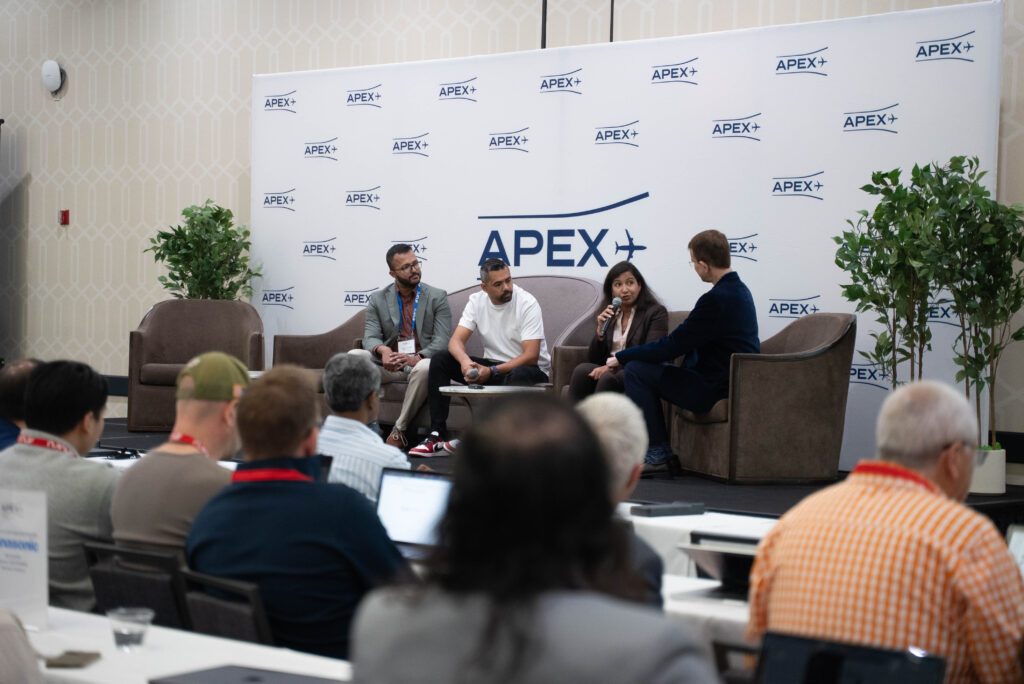
At APEX TECH 2026, the future of in-flight entertainment and connectivity (IFEC) took center stage during a panel moderated by APEX CEO Dr. Joe Leader. The session brought together three airline leaders with different perspectives: Air India Vice President of CX Strategy and Intelligence Anjali Birla, International Airlines Group (IAG) IFEC Strategy, Ops and Performance Manager Mark Cheyney, and WestJet Program Manager Cabin Entertainment & Connectivity Sheryl Prabha Shibu.
Together, they explored how airlines are turning IFEC from optional add-ons into central parts of the passenger experience and the airline brand. The discussion highlighted both the opportunities and challenges airlines face as passenger expectations rise faster than fleet upgrades can be carried out, forcing airlines to balance innovation with consistency and trust when it comes to the connected cabin.
“We have built a governance system where all teams are answerable for customer outcomes.”
– Anjali Birla, Air India
Connected Entertainment as the Foundation of Airline Strategy
The panel opened with a shared recognition that IFEC has shifted from an optional to a necessary element of airline strategy before Dr. Leader asked how airlines define success when connectivity becomes a core part of their brand.
Birla explained that Air India’s transformation began by placing IFEC under the customer experience umbrella rather than technology or operations. “Right at the beginning of this transformation, we made customer experience the central focal point,” she said. “Whether it is in-flight amenities, food and beverage, entertainment, or connectivity, it was all strategically housed under customer experience.”

That decision shaped how Air India measures progress. Birla said customer outcomes sit at the top. “We look at our NPS and CSAT [scores], but we also look very closely at the feedback our customers give us,” she said. “That qualitative feedback is a very rich source of understanding how customers actually feel.”
She added that internal metrics still matter, including content usage, dwell time, serviceability, and SLAs, but there is accountability across all teams. “We have built a governance system where all teams are answerable for customer outcomes,” Birla said. “That has been a big change.”
Delivering Consistency Without Hurting the Brand
The conversation then turned to how airline groups can deliver consistent connected experiences across fleets while preserving brand identity. Cheyney was quick to draw a clear line. “Customers are not buying a ticket on IAG,” he said. “They are buying a ticket with the brand.”
He explained that IAG’s IFEC teams act as an internal developer across the group, working closely with airline customer, marketing, and brand teams. “We work with their teams to make sure we capture tone of voice and brand essence,” Cheyney said. “That trust already exists between the airline and the customer, and we do not want to break it.”
“Customers are not buying a ticket on IAG. They are buying a ticket with the brand.”
– Mark Cheyney, IAG
Consistency, he stressed, comes from having the right processes in place, not from making everything the same. “This does not happen by chance,” he said. “We have governance in place, and we have very clear release processes so everyone understands what will be delivered.”
From a technical perspective, Cheyney said IAG has pushed toward common hardware and software-agnostic platforms. That approach allows airlines to deliver brand-specific features, whether through portals, content curation, or interface design, while still benefiting from scale.
“What the customer sees should be simple,” he said. “They do not need to see the complexity behind the scenes.”
Why IFE Still Matters in a High-Speed World
Shibu brought the discussion back to the cabin, arguing that even as connectivity improves, in-flight entertainment continues to play a unique emotional role for passengers.
WestJet, he explained, has invested heavily in accessibility to ensure entertainment delivers value to every guest. “Over 90 per cent of our content has closed captions in multiple languages,” Shibu said. “We also support audio description and interface improvements for guests with visual disabilities.”
“Connectivity is exciting, but IFE is the thing passengers trust.”
– Sheryl Praba Shibu, WestJet
He then addressed the industry’s broader question about whether IFE becomes less relevant as connectivity improves. “Entertainment has a deep emotional connection with guests,” Shibu said. “When they are on a trip and they need comfort, they know entertainment will be there.”
Using a personal analogy, Shibu described how his daughter relies on sleeping with a stuffed toy every night because it is consistent and dependable. “For me, that is IFE,” he said. “Connectivity is exciting, but IFE is the thing passengers trust.”
Following up, Dr. Leader asked whether that emotional role will continue as high-speed connectivity becomes more common. Shibu was confident. “Yes,” he said. “It is always there. The challenge is how we evolve it using connectivity without losing that reliability.”
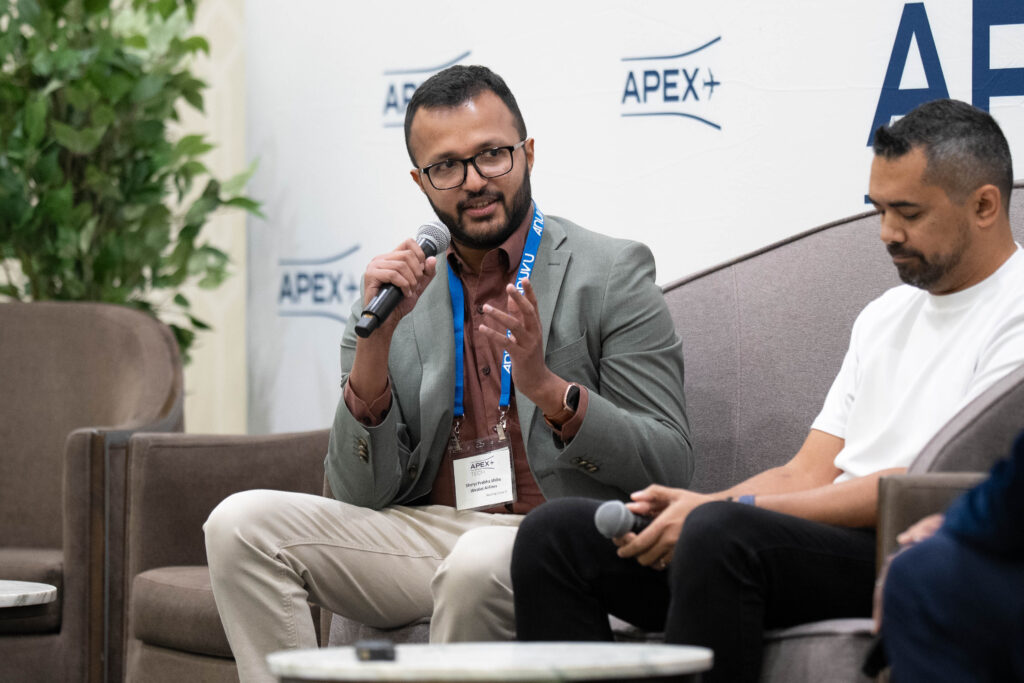
Managing Expectations Via Transparency, Crew Empowerment
As connectivity improves, passenger expectations rise just as quickly, often faster than airlines can deliver across different aircraft types. Dr. Leader asked how airlines manage those expectations, especially since once trust is built, it is difficult to scale expectations back.
Birla acknowledged that this gap is a daily challenge at Air India. “The pace at which customer expectations are changing is faster than our infrastructure,” she said. “Airplane mode no longer exists. Flying is just an extension of everyday life.”
Air India’s approach has focused on transparency alongside interim solutions. Birla said the airline has openly communicated that transformation will take time, particularly for wide-body aircraft. “We have been very transparent that this will not happen overnight,” she said. “In the interim, we introduced streaming as an alternative.”
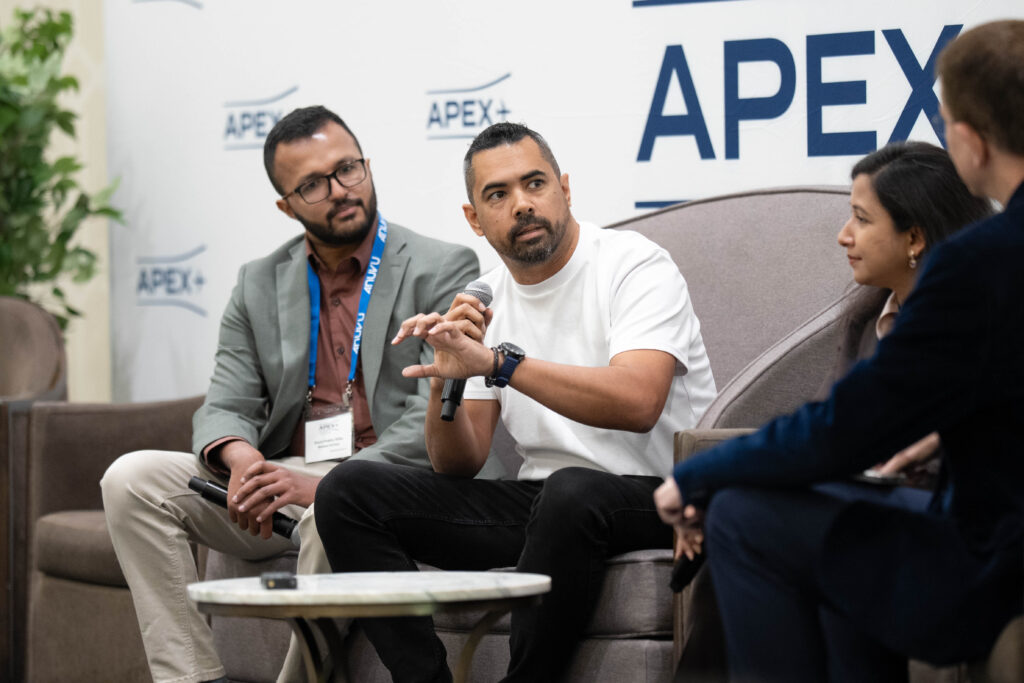
Cheyney described expectation management as a three-part effort: awareness, transparency, and communication. “It is even more important in the bad times,” he said. “If an aircraft changes or connectivity is not available, letting customers know in advance can reduce dissatisfaction and build trust.”
Shibu shared how WestJet operationalized this approach during its connectivity rollout. “We inform guests at booking, before travel, on the day of travel, and pre-boarding,” he said. “Transparency is key, both for guests and for crew.”
The cabin crew plays a critical role when expectations fall short. Shibu explained that WestJet equips crews with content recommendations and talking points to help redirect the experience. “If someone is disappointed, the crew can suggest new releases or content for kids,” he said. “That helps bring the experience back to something positive.”
Birla echoed the importance of crew training. “We have invested a lot in training to bring a more humane touch to those conversations,” she said. “But it is not always easy.”
“We need to stop thinking of entertainment and connectivity as two different universes. Passengers do not think in channels.”
– Sheryl Praba Shibu, WestJet
Defining the Digital Baseline and What Comes Next
As the discussion turned toward the future, Dr. Leader asked what airlines should now treat as non-negotiable in connected entertainment.
Birla described reliable IFE and connectivity as basic hygiene. “That is baseline now,” she said. “The differentiation comes from how you tie in loyalty, service culture, and bring your brand alive on top of that.”
Cheyney agreed, cautioning airlines against treating technology itself as the differentiator. “If everyone has the same technology, there is no differentiation,” he said. “The differentiation comes from how you use it to improve service, loyalty, and recovery.”
Shibu added that the industry needs to rethink its digital architecture. “We need to stop thinking of entertainment and connectivity as two different universes,” he said. “Passengers do not think in channels.”
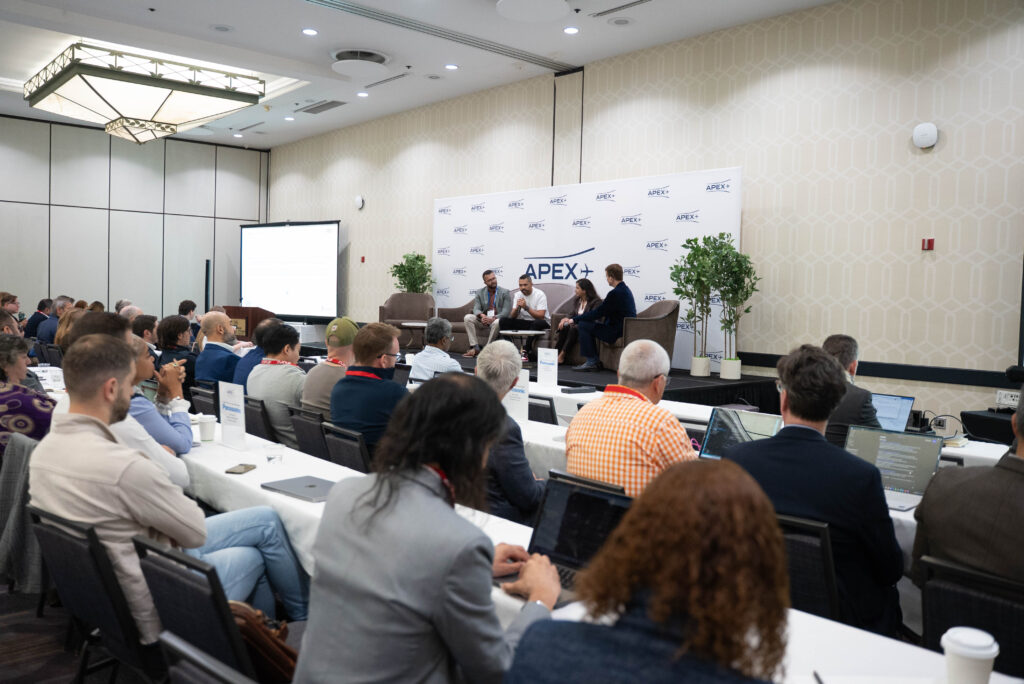
He argued for a flexible middle-layer ecosystem that allows airlines to integrate new services quickly without rebuilding everything. “That intermediate ecosystem is what is missing today,” he said. “It would let airlines pick what they need based on their customer strategy.”
When asked what slows innovation, the panelists pointed to long hardware cycles, complex software, and contracts that struggle to keep pace with consumer technology. Shibu explained that WestJet focuses on getting a strong core product in place first, then improving it quickly over time.
“We will never get it perfect on the first try,” he said. “But we listen, adapt, and improve.”
As the panel wrapped up, the message from the stage was clear. Connectivity and entertainment are no longer about adding features or chasing the latest technology. They are about earning trust, managing expectations, and delivering experiences that passengers can rely on every time they fly.
While safety, certification, and fleet realities mean progress will never be instant, airlines are moving closer to a more agile, transparent, and passenger-focused model. The next phase of connected entertainment will favor airlines that deliver reliably, set clear expectations, and make sure their digital plans actually work on every flight.
To read more about the panel sessions taking place at APEX TECH 2026, click here.