


APEX TECH 2026: Industry Voices Push for Agile, Rights-Aware Inflight Content

Share

At APEX TECH 2026 in Los Angeles on Wednesday, the second workshop session entitled “From Studio to Screen: Managing Rights within the Future Content Mix” brought together aviation leaders to address a critical challenge: examine how inflight content strategies must evolve as connectivity enables streaming-like behavior onboard. Airline executives, technology providers, loyalty specialists, and connectivity partners worked side by side in workshop-format discussions designed to generate real-world solutions.
Workshop participants collaborated at three tables, each exploring how airlines, content partners, and technology providers can manage rights, enforcement, and delivery in an always connected cabin. Travelers now expect in-flight entertainment (IFE) to feel as intuitive and responsive as their at-home streaming experience. They want flexibility, personalization, and minimal friction, even as the industry continues to operate within complex global rights frameworks.
Personalization Accelerates as Connected Cabins Redefine Curation
One team featured contributors from Ideanova Technologies, Warner Brothers Discovery, Inflight Dublin, Southwest Airlines, Spafax, Amphenol CIT, and Axiom. Their discussion centered on how passenger expectations continue to shift in a connected cabin, particularly around personalization and responsiveness. The team highlighted how traditional curation models rely on content service providers (CSPs) making assumptions about what travelers might want to watch.
“Today, CSPs are curating for the airline, assuming what passengers would want, but with greater connectivity, a user specific type of curation becomes possible because recommendations can reflect what they watched or what they typically look for,” said Spafax Senior Vice President Technical Services Arthur Cuyugan.
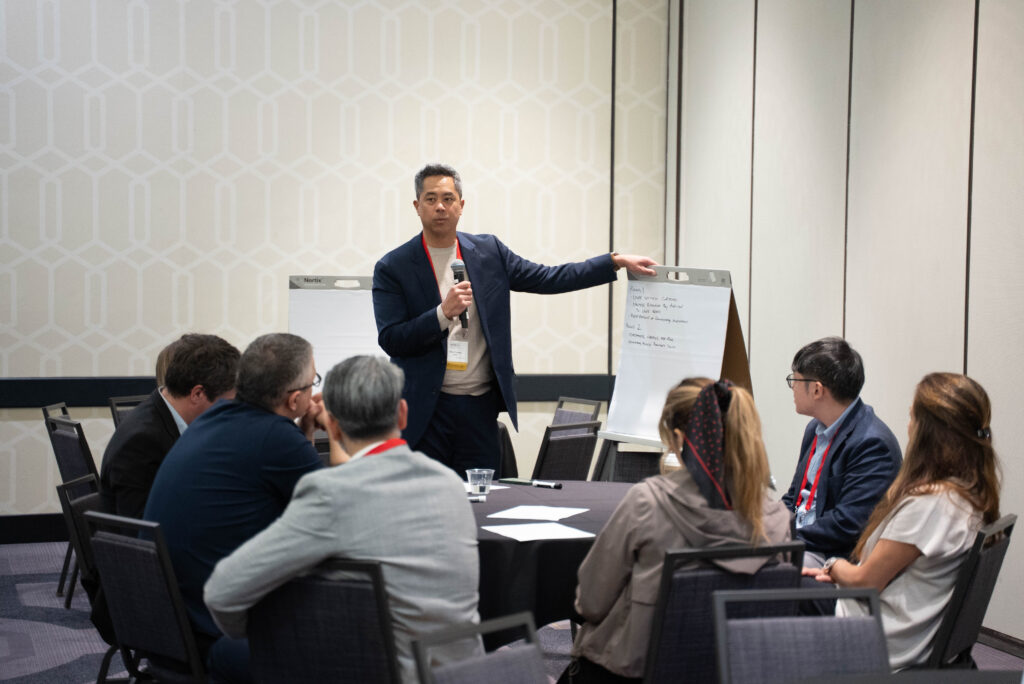
Faster response cycles emerged as a central theme. Participants argued that airlines must shorten the time between passenger behavior and programming decisions. Viewing data creates an opportunity to refine catalogs in near real time, allowing airlines to introduce relevant content quickly and even shape what appears on a traveler’s return flight. Responsive strategies turn usage insight into immediate value instead of delayed planning.
The group also concluded that airlines are underinvesting in activity driven experiences that modern passengers expect. Travelers want more than static catalogs. They want interactive, dynamic environments that evolve with their preferences. Expanding these offerings could strengthen engagement, increase perceived value, and better align inflight entertainment with how passengers already consume media on the ground.
Faster Curation Through Data and Shared Standards
Another team brought together leaders from Safran Passenger Innovations, Language Metadata, Viasat, Siden, Terry Steiner International, and Panasonic Aviation Corporation. Their discussion focused on the structural complexity of inflight rights and how fragmented licensing creates a diluted passenger experience.
“There needs to be some kind of a really major survey as far as, what are all the constraints that everybody’s dealing, as there are a lot of real constraints, but the industry lacks any kind of a thread or analysis that shows this kind of stuff,” Language Metadata’s Yohan Levenson explained.
The industry lacks a unified analysis of real-world constraints. Domestic versus international rights, offline downloads, airplane mode viewing, and territory switching all influence what passengers can access. Aviation lacks a shared baseline understanding of these behaviors. A large-scale survey mapping where and how access breaks down could provide a starting point for smarter standards. Without that visibility, the group agreed, airlines and partners are reacting instead of addressing the system itself.

The team also discussed what they described as a “watered down version” of streaming onboard. Passengers may recognize a platform brand, but blocked titles and partial catalogs prevent the experience from reflecting the streamer’s true identity. When content disappears, it “never reflects the brand values” of the platform, creating a visible gap between expectation and delivery.
Passenger Expectations Outpace Rights Clarity in the Connected Cabin
The third table included participants from Safran Passenger Innovations, Viasat, West Entertainment, Spafax, and Axinom. Their discussion focused on rising passenger expectations for speed, freshness, and always-on access, and how unclear rights ownership complicates delivery.
Passengers now “expect free, fast WiFi and streaming, they always want new content, fresher and faster,” West Entertainment President Kate Groth explained. The group noted that inflight behavior increasingly mirrors ground habits, with travelers moving fluidly between TikTok, YouTube, Instagram, and major streaming platforms while using personal devices as second screens. Despite that shift, participants emphasized that curation still matters because every airline maintains a distinct identity and investment strategy.
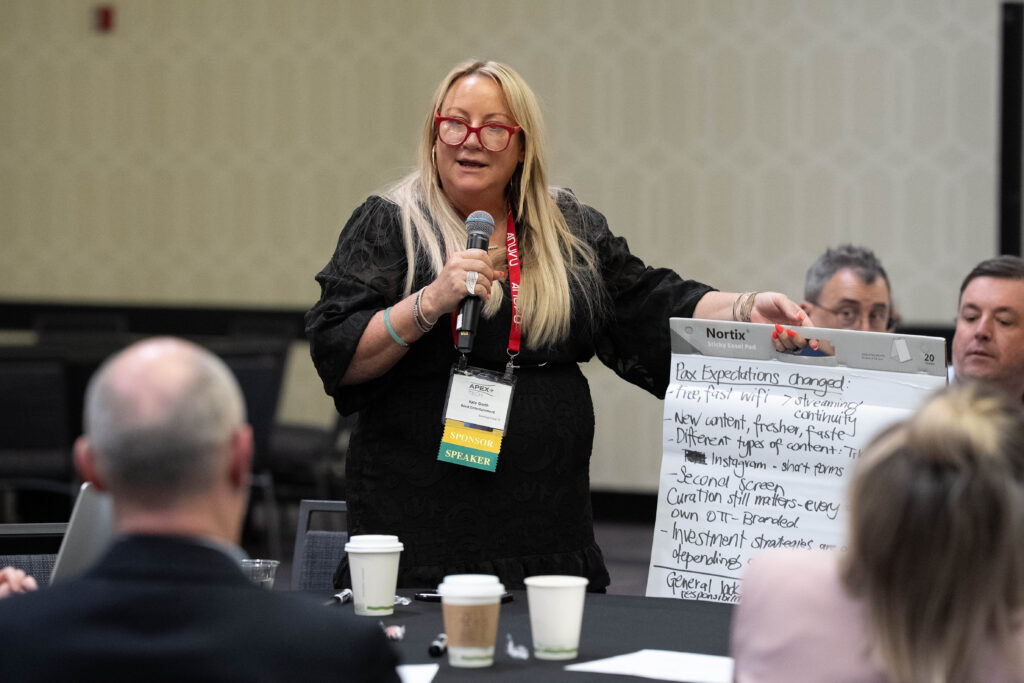
The team repeatedly returned to a structural gap in accountability. Groth described a “general lack of clarity across all the stakeholders on the role of responsibilities and rights.” They argued that airlines and content service providers often absorb the visible consequences of blocked access, even though streaming platforms ultimately control territorial rights.
“It’s not up to a CSP or an airline to understand what rights a streaming platform has,” Groth explained. When restrictions occur, “the block unfortunately cooperates badly on the airline.”
The group stressed that long-term progress requires direct streamer involvement. Workarounds like VPN use or offline downloads demonstrate that passengers will always try to bypass friction. Sustainable solutions must align compliance with real viewing behavior. The team agreed that the next phase of standards should work backward from the passenger experience, ensuring enforcement protects rights without degrading the perception of seamless streaming.
Strategic Alignment: Shared Priorities and Barriers
Each team presented focused perspectives. However, five consistent strategic priorities emerged:
- Close the gap between passenger behavior and programming decisions
- Establish clearer accountability across airlines, CSPs, platforms, and streamers
- Expand personalization through user-driven curation
- Protect rights without creating visible passenger friction
- Develop shared standards that scale across mixed fleets
Despite progress, teams identified four core challenges limiting evolution:
- Fragmented licensing frameworks that lag real passenger behavior
- No unified analysis of cross-border access constraints
- Enforcement inconsistency that erodes passenger trust
- Unclear ownership of responsibility between airlines and streaming platforms
These priorities reflect a broader industry alignment around what must change for inflight content to scale in a connected world. Participants agreed that success depends on aligning rights frameworks, technology standards, and passenger expectations into a system that feels consistent and trustworthy.
The next phase of progress must work “backwards from the end user experience,” ensuring that compliance and infrastructure decisions ultimately serve a cabin environment that feels seamless to passengers, Groth concluded.