


APEX TECH 2026: Inside Aeroméxico’s Data-Driven Strategy for IFE, Connectivity, and Personalization

Share
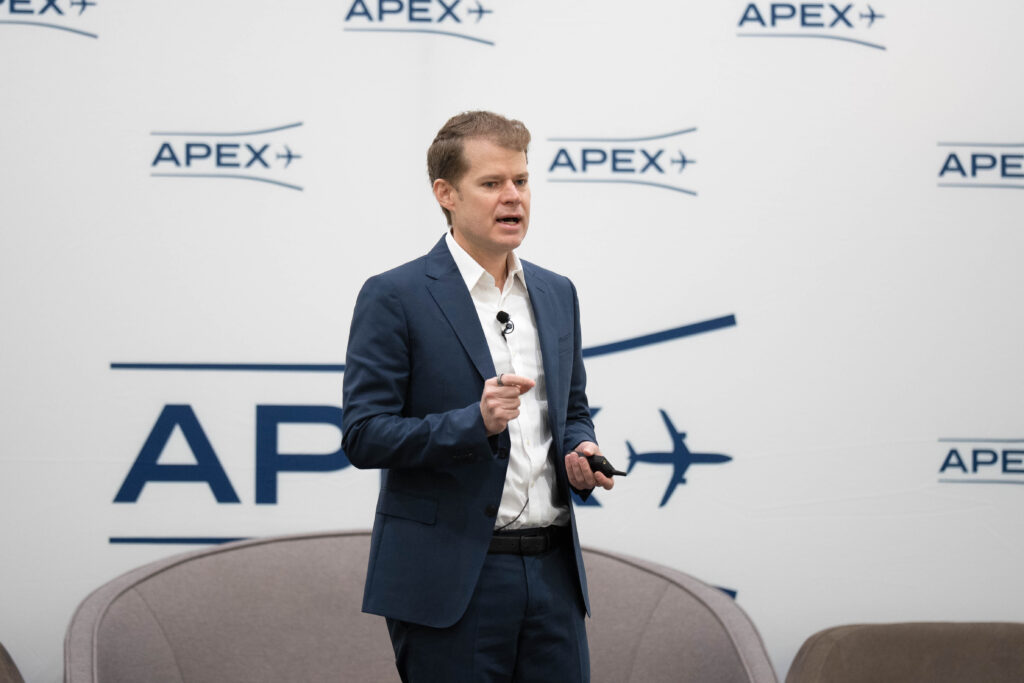
Aeroméxico Chief Digital and Customer Experience Officer Andrés Castañeda Ochoa opened APEX TECH 2026 by challenging the industry to rethink how it defines progress in in-flight entertainment and connectivity (IFEC). Speaking to an audience of technology and passenger experience leaders at LAX, Castañeda argued that the next phase of in-flight experience depends on a disciplined focus on customer needs.
In his keynote, Castañeda outlined how artificial intelligence (AI) and enterprise data strategies are reshaping the connected cabin. His message focused on moving beyond basic connectivity toward integrated intelligence across operations, customer touchpoints, and onboard systems. The goal, he said, is simple but ambitious: turn data into real-time value for passengers and airlines alike.
“Today, about 80 per cent of our 400 applications are already in the cloud.”
Gaining a Unique Perspective
Castañeda opened his keynote by explaining why his role at Aeroméxico gives him a unique perspective on the industry. As both Chief Digital Officer and Chief Customer Experience Officer, he oversees everything from marketing and product to IT, data, and digital platforms. “It’s a big title,” he said, “but mainly it’s two areas. Everything around the customer, and everything around IT and digital.”
That structure enables Aeroméxico to align technology decisions directly with customer insight. Instead of building systems in isolation, the airline uses feedback from Net Promoter Score (NPS), marketing data, and onboard behavior to shape how technology supports the passenger journey.
He explained that the airline has emerged from its pandemic restructuring stronger than ever. “Since we exited restructuring in 2023, we have had the best years in our history,” he said. “You never pass a crisis to take a big opportunity, but this one forced us to reset and invest.”
Those investments are paying off. Aeroméxico surpassed 50 points in global NPS in 2025, has earned APEX Five Star status for six consecutive years, and has ranked as the world’s top on-time performing airline for two years in a row.
“Our customers are not comparing us to other airlines anymore. They are comparing us to Apple, Amazon, and Netflix.”
The Limits of Connectivity Alone
While Aeroméxico has seen strong results following its recent investments, Castañeda was candid about the structural challenges holding the industry back. Chief among them is hardware complexity and long-term contracts that limit flexibility.
“In our fleet of around 170 aircraft, we have four Wi-Fi connectivity providers and five or six different hardware configurations,” he said. “And when you sign ten-year contracts, if you want to innovate, you are kind of stuck.”
Those limitations are increasingly visible to passengers, whose expectations are shaped by digital platforms outside aviation. “Our customers are not comparing us to other airlines anymore,” Castañeda said. “They are comparing us to Apple, Amazon, and Netflix.”
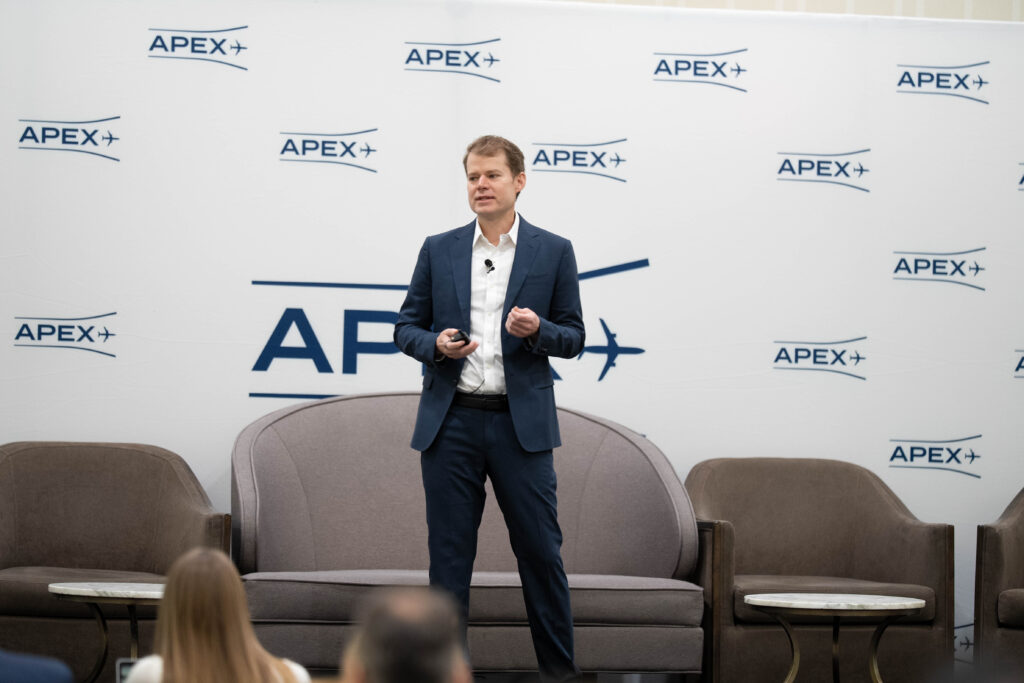
Content fragmentation only adds to the challenge. Live sports, premium content, and exclusive programming are spread across multiple platforms, each with its own licensing rules. “If you want Formula One, it’s Apple TV. Tennis is ESPN. NFL is somewhere else,” he said. “That makes it harder for us to deliver what customers want, when they want it.”
Even with improving connectivity, many aircraft still rely on slow content update cycles. “Most of our aircraft require a two-month programming cycle,” Castañeda said. “That makes it very hard to have the most relevant content onboard.”
The takeaway was clear. Connectivity matters, but what really changes the experience is what airlines build on top of it. With the right architecture and intelligent systems, faster internet becomes a tool for better, more personalized journeys.
“When you have 15 or 20 million customers, you need intelligence at scale. It’s not one by one.”
Turning Data into Intelligence at Scale
To address these challenges, Aeroméxico has focused on building a unified enterprise data foundation designed to support intelligence across the company. Over the past five years, the airline has partnered with AWS to migrate and modernize its systems.
“We decided not only to migrate our applications, but to modernize them,” Castañeda said. “Today, about 80 per cent of our 400 applications are already in the cloud.”
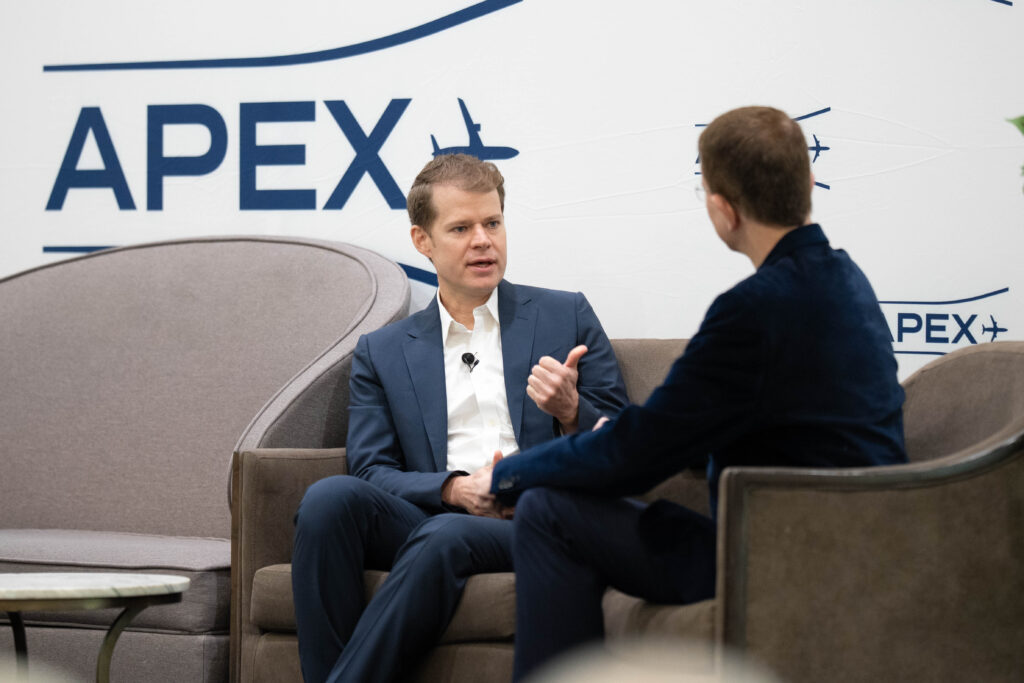
That foundation allows Aeroméxico to connect data across the full journey, from ticket purchase and check-in to IFEC. Rather than treating each touchpoint separately, the airline consolidates all data into a centralized data marketplace.
“We now have up to 90 different variables per customer,” he said. “It’s not about personal identity. It’s about personas and behaviors […] When you have 15 or 20 million customers, you need intelligence at scale. It’s not one by one.”
Castañeda explained that Aeroméxico separates data producers from data consumers. Every interaction generates data, and teams across the airline access it through APIs to design personalized products and services.
This approach enables real-time decision-making in the connected cabin. Content recommendations, connectivity offers, retail opportunities, and service interactions can all be shaped by context and intent.
“Hyper-personalization is no longer just a technology. It’s the new standard in hospitality.”
Personalization, People, and the Road to 2030
During a fireside chat with APEX CEO Dr. Joe Leader, Castañeda addressed how difficult true personalization can be, as passengers do not fit neatly into fixed categories. “The same person can be a business traveler one day and a family traveler the next,” he said. “So how do you predict that?”
This is why Aeroméxico approaches personalization through context rather than labels. On-time performance may matter more on a business trip, while entertainment, flexibility, or service touchpoints may matter more on leisure journeys. Understanding those shifts requires scale, data, and constant learning.
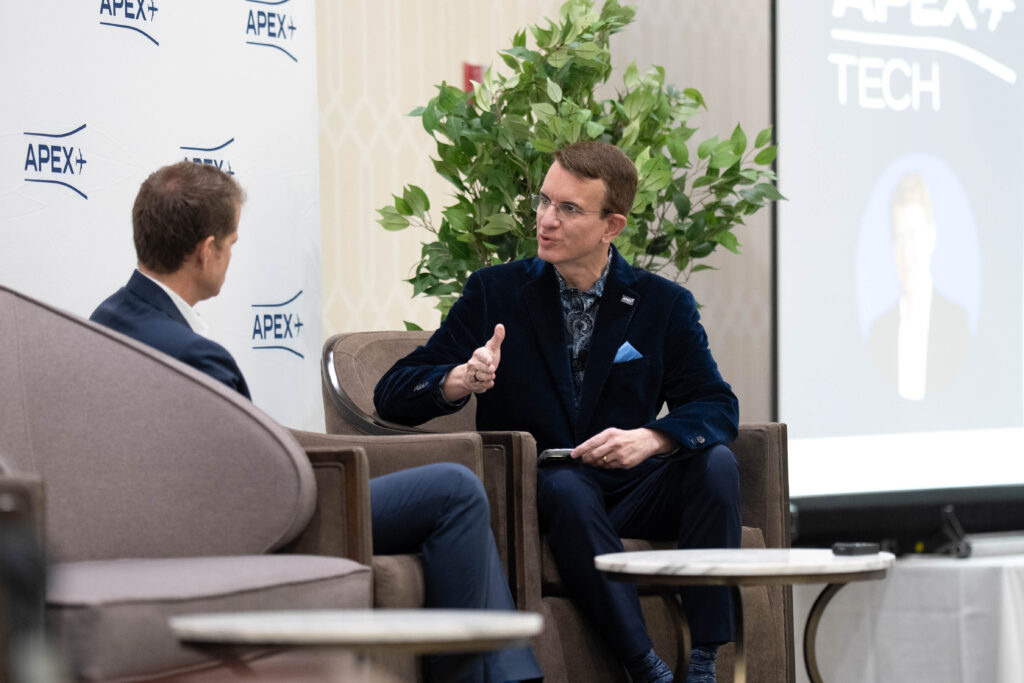
“You need a big platform to understand that,” Castañeda said. “And then you need to train your frontline teams to deliver on it.”
Castañeda closed by sharing Aeroméxico’s vision for 2030, where integrated intelligence supports every stage of the journey. AI-driven systems provide a real-time view of the customer, while technology stays in the background, enabling human service rather than replacing it. “Hyper-personalization is no longer just a technology,” he said. “It’s the new standard in hospitality.”
Dr. Leader echoed that sentiment at the end of the conversation. “You are investing in your product, your people, and your digital foundation,” he said. “That is how airlines win the next decade.”
For Aeroméxico, integrating intelligence across IFE and connectivity is ultimately about using data in the service of people. “We don’t just fly with wings,” Castañeda said. “We fly with the heart of those who make Aeroméxico possible.”