


APEX TECH 2026: Rethinking Streaming Rights in the Connected Cabin

Share
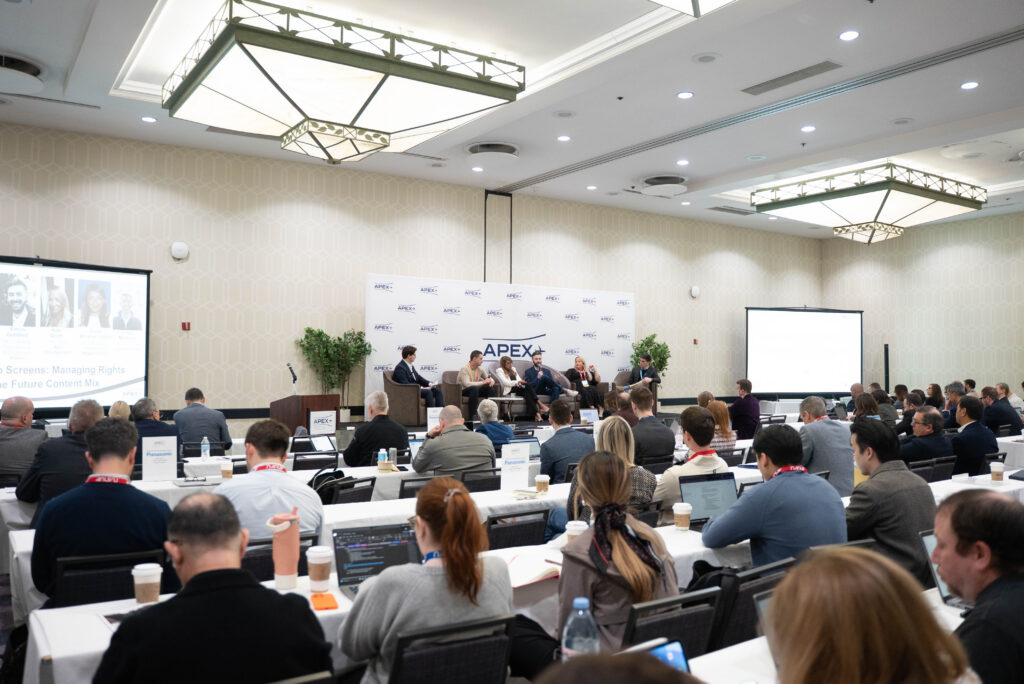
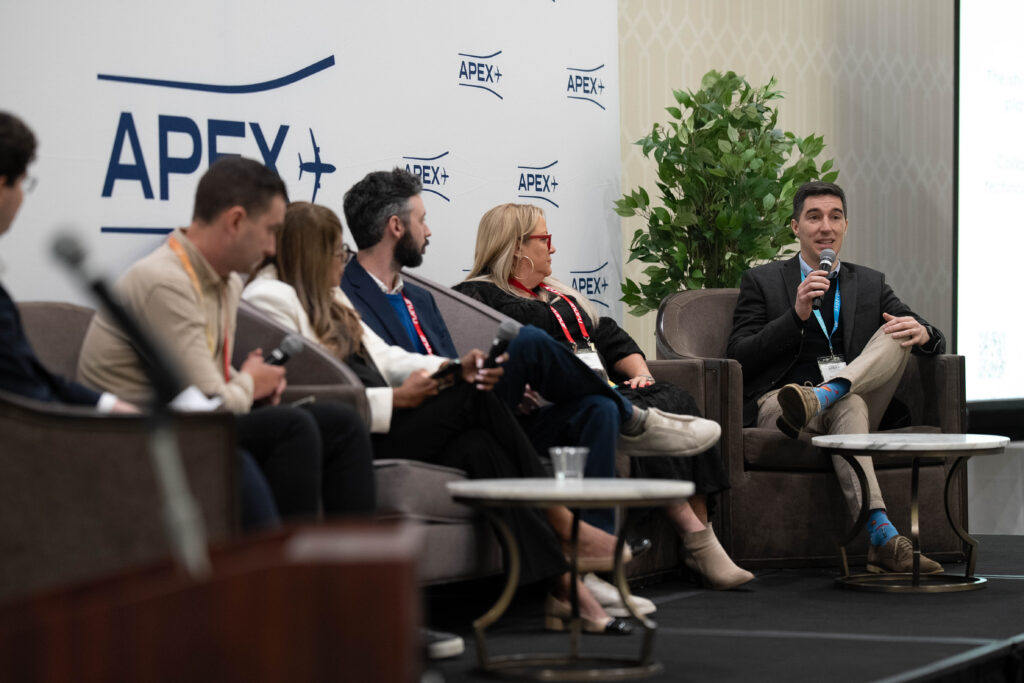
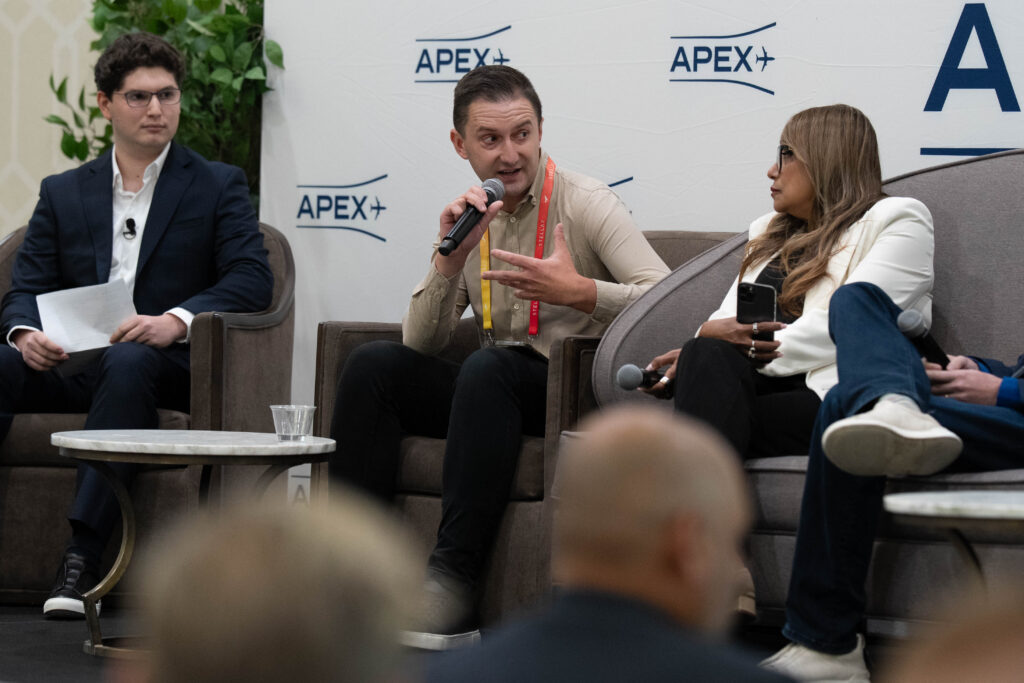
At APEX TECH 2026, streaming rights took center stage in the inflight content debate. The panel, titled “From Studio to Screen: Managing Rights within the Future Content Mix,” was moderated by APEX Journalist Joshua Kupietzky and brought together five leaders with distinct perspectives: Stellar Entertainment CEO Sam Allen; Anuvu VP of Licensing, Programming and Distribution Simon Cuthbert; Inflight Dublin VP of Business Development Sonali Amarasingham; West Entertainment President Kate Groth; and Conetic Group Head of Sales Carlos Martinez.
Together, they examined how passenger expectations for seamless streaming are colliding with legacy licensing models, how connectivity is reshaping in-flight entertainment (IFE) strategy, and how initiatives like APEX STREAM could help align airlines, studios, and technology providers. The conversation made clear that streaming behavior onboard is no longer emerging, it is already here. The challenge now is building a compliant, scalable framework that protects rights while delivering the experience passengers expect.
Airline and CSP Perspective: Curation in a Connected Cabin
Kupietzky opened by framing the core tension: passengers now board aircraft expecting the same on demand access they have at home. As connectivity improves, airlines and content service providers must rethink how content is selected, delivered, and refreshed.
Allen said curation remains central, but the model is evolving. “I see this as the evolution of the curated model,” he explained. Historically, inflight programming has operated on monthly update cycles, guided by box office results, streaming performance, and audience data. That structure limits agility. “When you’re operating in the traditional model with monthly updates, there’s only so much you can do,” he said.
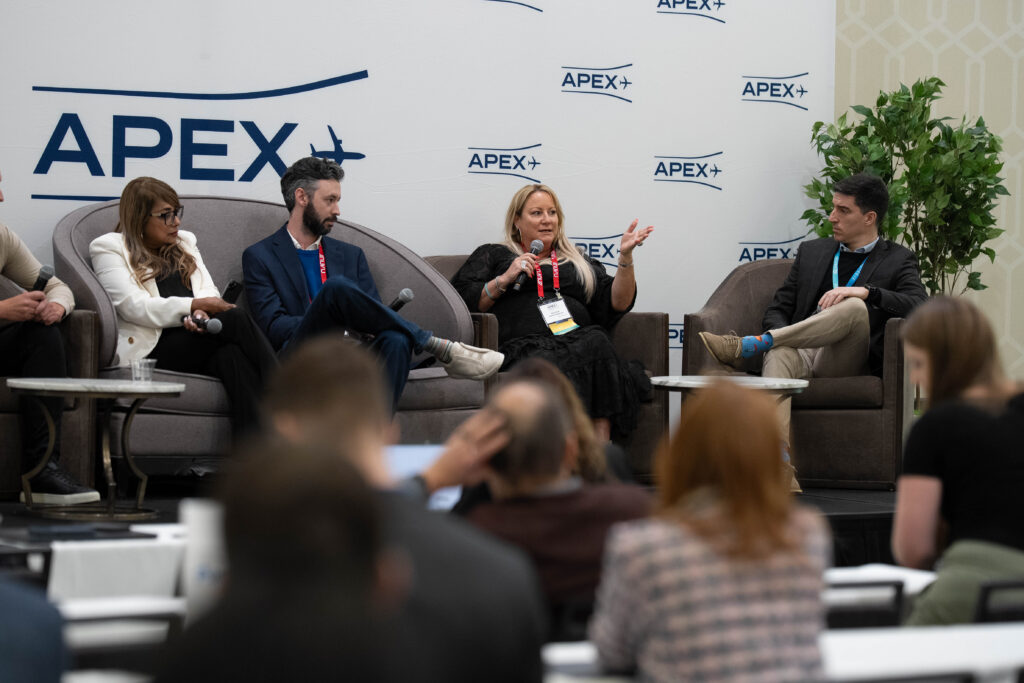
With cloud delivery and connected aircraft, content can move from static loads to a more dynamic ecosystem. Placement, metadata, and supply chains can respond faster to what passengers are watching on the ground. But Allen stressed that success depends on alignment across partners. Airlines, connectivity providers, OEMs, and CSPs must work together to “deliver the best product” and connect the supply chain more seamlessly.
Groth reinforced that faster connectivity creates a real opportunity. Airlines can bring trending documentaries or cultural moments onboard more quickly. “We’ve been waiting for this opportunity for a really long period of time,” she said. The goal is to surprise and delight passengers with content that feels timely rather than delayed.
Where Rights and Real Behavior Collide
As the discussion shifted to licensing, Cuthbert addressed the growing gap between streaming behavior and inflight rights frameworks.
“The hush in the room when we’re just talking about what we were talking about before, about public performance,” he said, acknowledging the sensitivity of the issue. Movies are typically licensed 45 to 90 days after theatrical release, and that model is unlikely to change. The more interesting opportunity lies in television and serialized content.
Cuthbert suggested a hybrid approach. “Maybe you have the first season physically on the aircraft,” he said, while later seasons could be accessed through connectivity. That way, passengers can “carry on where we left off” without overloading onboard storage.
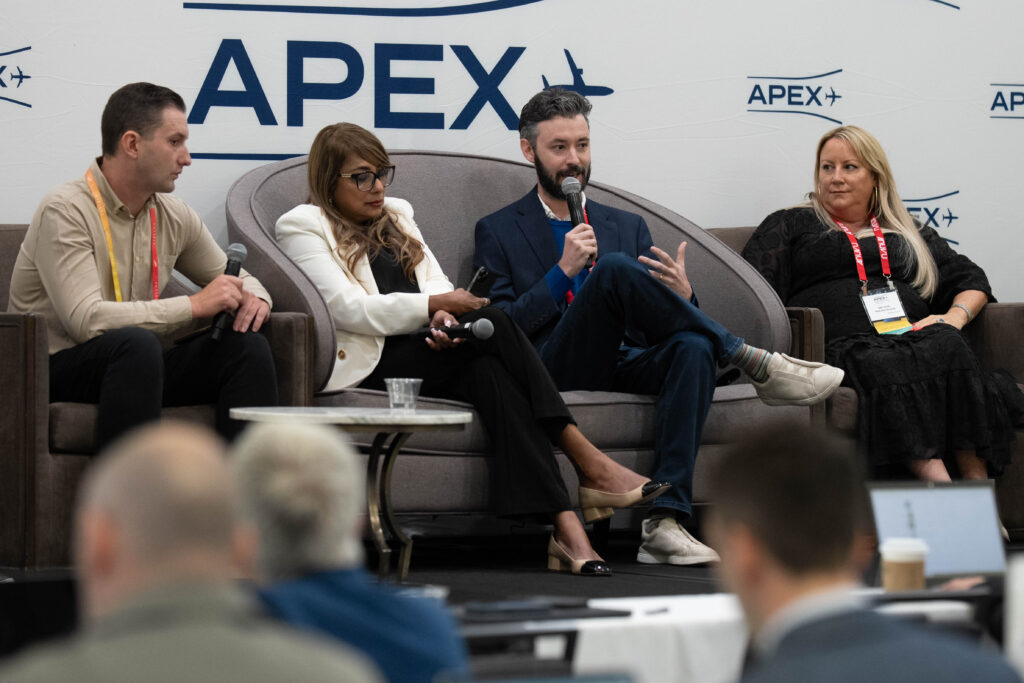
Sports is another area of opportunity. Referencing industry investment trends, Cuthbert noted that “fifty percent is going into sports.” Airlines are uniquely positioned to create shared experiences around major events. “We can do so much better with event based live programming,” he said.
Allen addressed personal subscriptions directly. “Your consumer OTT subscription is not authorized for inflight use,” he said. Airlines remain responsible for the environment they create, even when passengers stream from their own devices. CSPs play a critical role in translating complex licensing rules into operational clarity.
Groth added that this issue extends beyond aviation. Cruise lines, hotels, and other public venues face similar public performance questions. The conversation must expand across the broader travel ecosystem.
Technology and Connectivity Perspective: Blocking, Compliance, and Brand Risk
The panel then explored whether streaming platforms might restrict inflight access in the future. Amarasingham called it “the elephant in the room.” Streaming platforms are likely monitoring how connectivity evolves. Airlines and CSPs may need to work with connectivity providers to register IP ranges and build trust relationships with platforms.
Cuthbert noted that studios are unlikely to build entirely separate inflight apps. If restrictions emerge, airlines themselves may choose to limit access to reduce compliance risk, especially in regions with stricter local laws.
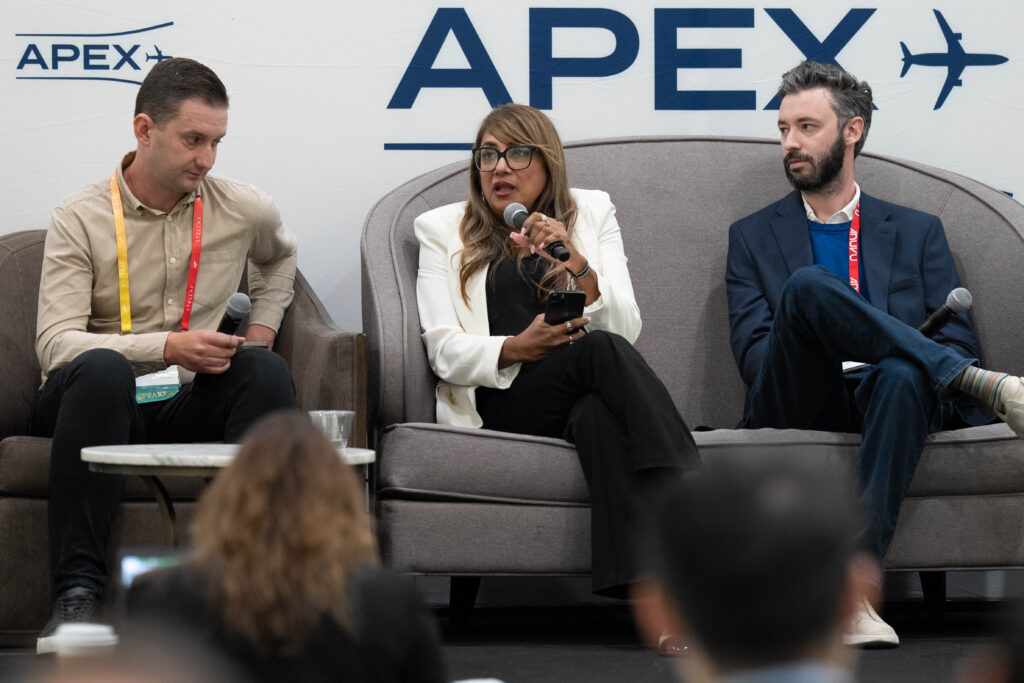
Groth warned that blocking services carries brand consequences. If a streaming app fails onboard, passengers will blame the airline. “The experience is going to reflect badly on the airline,” she said.
Martinez described connectivity as a shift from traditional business to business licensing toward direct to consumer behavior onboard. “We’re talking to direct to consumer platforms,” he said. The industry must adapt without harming airline brands or streaming partners. Collaboration, he emphasized, is essential to create sustainable models that balance monetization and passenger satisfaction.
Building a Shared Framework
The discussion turned toward solutions, including APEX STREAM, or Standardized Technical Rights Enforcement for Airline Media. The initiative aims to support compliance while allowing innovation.
Allen said the value lies in clarity. “I think what APEX STREAM is going to help with is to help provide some more clarity,” he said. The industry shares responsibility to protect rights from studio to passenger.
Cuthbert highlighted the need for unified identifiers and metadata standards. “We wanted more standards in the industry for licensing for a long time,” he said. Inconsistent IDs and manual processes slow down delivery and limit analytics. Standardization enables faster updates and better reporting.
Groth described common frameworks as transformative for programmers. With centralized metadata and faster encoding pipelines, content can move to aircraft much more quickly. AI driven tools can reorganize content queues in real time, making inflight systems feel more like ground based streaming platforms.
Martinez framed standards as a shared language. “Studios speak windows and territories. Airlines speak feeds and cabins. We speak metadata delivery and technology speaks APIs and Excel spreadsheets,” he said. Standards create guardrails that allow the ecosystem to scale.
For passengers, the goal is invisible improvement. Amarasingham explained that standards reduce friction. Travelers should not need to understand licensing structures or IP restrictions. They should simply board and enjoy a seamless experience.
A Passenger Driven Future
As the panel closed, the discussion turned to where in-flight entertainment is heading as connectivity improves and expectations continue to rise.
“It’s absolutely passenger driven,” Allen said. Licensing structures may remain business to business at their foundation, but delivery models will continue to evolve. Faster refresh cycles, stronger localization, and better responsiveness to demand will define the next phase.
The panel agreed that the cabin has crossed a psychological threshold. Passengers now view it as a broadband environment. Streaming behavior is not emerging, it is established. Expectations formed on the ground now travel with them.
The opportunity is substantial. Airlines host large audiences in controlled environments, studios are pursuing new monetization pathways, and connectivity enables real-time distribution and dynamic engagement. But without coordination, fragmentation becomes inevitable.
The takeaway was clear: streaming behavior will continue to move onboard. The industry must respond with shared standards, tighter alignment, and business models that protect rights while strengthening the passenger experience. The future content mix will not be shaped by one stakeholder alone. It will depend on collaboration across the ecosystem.