


APEX TECH 2026: Warner Bros. Discovery on the Future of Non-Theatrical Content

Share
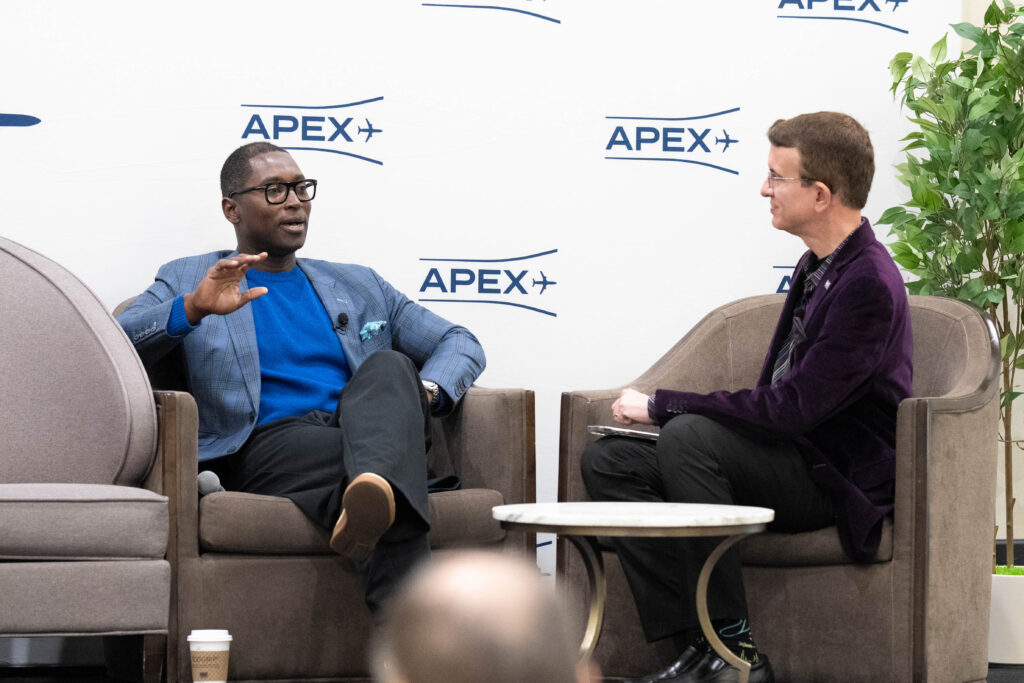
During the second day of APEX TECH, Warner Bros. Discovery SVP Content Sales, IFE & Syndication Esdra Lamy joined APEX CEO Dr. Joe Leader for a keynote conversation that reframed what airlines should prioritize as the streaming landscape continues to evolve. Lamy emphasized that in-flight entertainment (IFE) still delivers something increasingly rare on the ground: a premium, curated environment designed for immersion, discovery, and intentional brand presentation, supported by reliable delivery and stronger insight into what passengers actually watch.
“The world is changing basically daily,” Lamy said, describing an industry where distribution routes no longer follow a predictable pipeline. Studios are navigating mergers, streaming expansion, and new forms of content creation, while airlines face a growing opportunity to differentiate through thoughtful curation instead of simply replicating at home viewing.
“When the traditional path no longer exists, studios have to look at the world differently.”
“I think it’s opened up the landscape,” he continued. “Studios have to look at their world slightly differently.”
A Media Landscape That Keeps Rewriting the Rules
Lamy opened the session by placing airline content strategy within the broader transformation reshaping the global media industry. Creation, attention, and distribution have expanded outward while traditional studio structures continue to consolidate and reorganize. What once flowed through a predictable Hollywood pipeline now competes with other creators, platforms, and entirely new categories of content.
“Once upon a time, everything funneled through the Hollywood pipeline,” Lamy said. Today, “anyone with a phone can become a content creator and generate a mass audience.” As a result, “there’s so much to compete for people’s attention,” particularly on the ground where screens and platforms constantly divide focus.
He argued that this fragmentation makes the inflight environment more valuable, not less. “That’s what makes the inflight experience unique and special,” Lamy said, calling it “the only remaining true captive audience.”
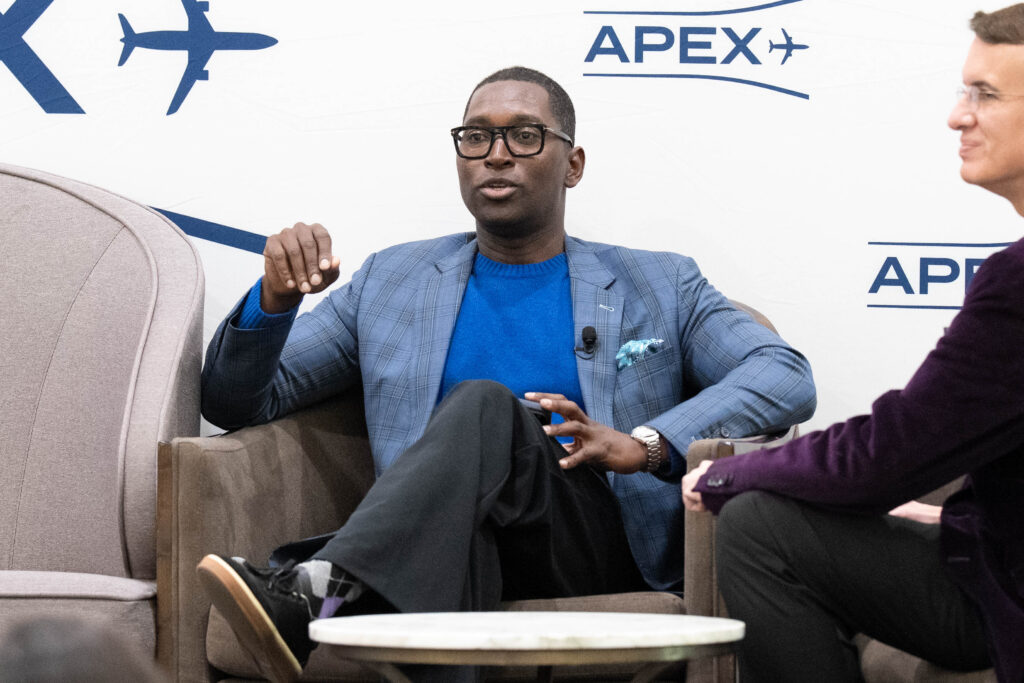
At the same time, the studio ecosystem itself continues to shift. Mergers, acquisitions, and vertical integration have redefined how companies approach licensing and distribution. “The business has shrunk and at the same time it has grown,” Lamy explained. “What does that do with licensing? When the traditional path no longer exists, studios have to look at the world differently.”
Looking Beyond Replicating At Home Viewing
When Dr. Leader asked what airlines often misunderstand about streaming onboard, Lamy addressed the assumption that inflight should simply mirror at home consumption. While passengers increasingly expect connectivity and streaming access, he cautioned against copying the ground experience too closely.
“Trying to duplicate exactly how people consume content on the ground would be cheating the customer experience,” Lamy said.
Instead, he described inflight as a distinct emotional and behavioral environment where curation matters. “Part of the experience is the ability to discover,” Lamy said, pointing to the value of having programmers assemble selections that help passengers encounter something unexpected.

He also highlighted how mood and context shift at altitude. “When you get on the plane, you’re already anxious to begin with,” Lamy said. “Traveling can be anxious for just about all of us.” In that setting, content choices often reflect emotional needs. “Am I looking for comfort? Am I looking to be excited and to be scared?” he asked. It is not only about access, but about creating an experience that aligns with how passengers feel while traveling.
Airlines Can Do What Platforms Often Cannot
Lamy then pointed to a distinct advantage airlines hold over individual streaming platforms. Because airlines license content across studios and rights holders, they can curate collections in ways single platforms often cannot, especially when franchises and talent libraries span multiple distributors.
“Airlines are probably the only place that is in the best position to be able to honor that talent and actually put up all that work in one place,” Lamy said. “That is unique.”
“You are truly the one place that can help set the unique tone for the passenger.”
This capability allows airlines to celebrate storytelling across studios, offering passengers a broader and more immersive experience. As content continues to fragment across platforms, that role becomes even more important. By bringing titles together in one place, they create a smoother and more accessible discovery process.
Lamy also emphasized the role airlines play in shaping how stories are presented. “You are truly the one place that can help set the unique tone for the passenger,” he said, adding that a thoughtful approach turns IFE into more than background viewing and makes it a meaningful part of the journey.
What is Coming Next? More Flexibility
As the discussion shifted toward windowing, rights, and non-theatrical distribution, Lamy explained that flexibility has become increasingly important. “Windowing today is subjective,” he said. “It can vary by studio and even by individual titles.”
He noted that Warner Bros. Discovery has occasionally allowed partners to move between windows for special initiatives. “We are one of the few studios that have allowed partners to jump windows for special events,” Lamy said. “As long as it makes sense internally and supports the brand, we are open to those conversations.”
This openness reflects a broader recognition of airlines as strategic partners rather than secondary distribution channels. Inflight exposure can drive awareness, spark interest in franchises, and create meaningful global touchpoints.
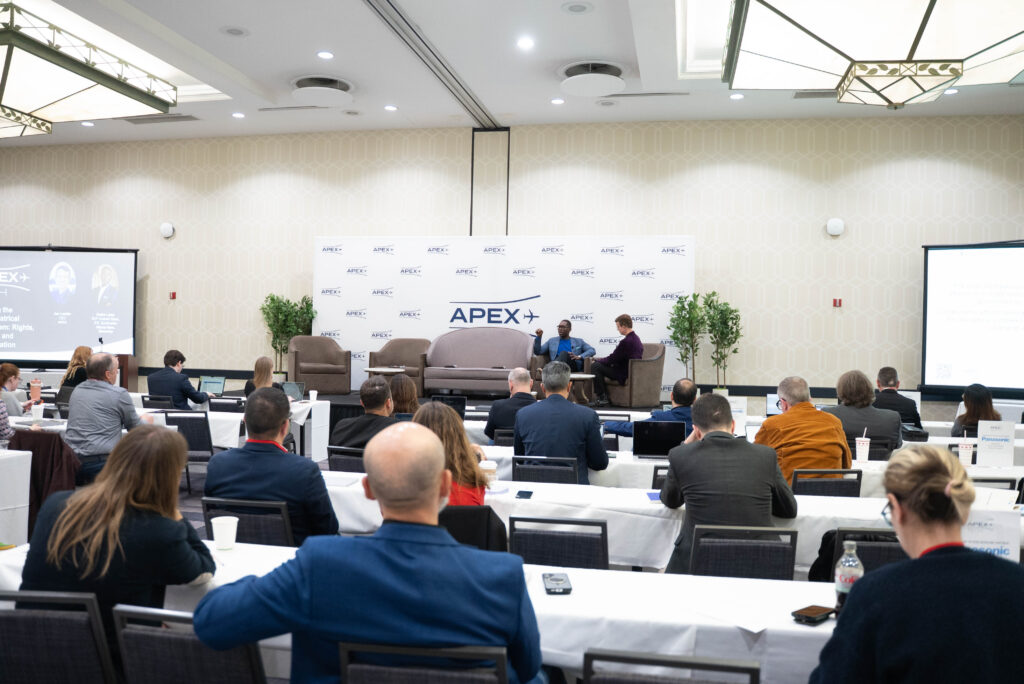
Operational reliability also remains essential to IFE’s future success, explaining that buffering or delays can shape how audiences perceive content. He claimed studios evaluating inflight partnerships increasingly consider how delivery affects brand integrity.
As streaming models evolve, Lamy added that studios continue to look at how onboard access fits within broader licensing frameworks. While new approaches may emerge, he believes caution remains necessary. “We are all in the business of meeting customers where they are,” Lamy said. “But we must also ensure that business models make sense.”
Security, rights management, and brand protection remain critical considerations as technology advances. “As technology evolves and becomes more secure, conversations will continue to progress,” Lamy noted.
Smarter Measurement Intent and the Passenger Focus
From Lamy’s perspective, the future of IFE depends on reliability, insight, and intent. He acknowledged that airlines already analyze what passengers actually watch, and that those insights help guide programming decisions.
At the same time, he stressed the importance of thoughtful brand alignment. “There’s got to be real intent behind what we’re doing around brand appearance.”
“We are all in the business of meeting customers where they are, but we must also ensure that business models make sense.”
Technology now plays a central role in shaping these decisions. “Technology sort of wrapped itself around the content,” Lamy said, describing a shift where success is defined not only by what is licensed but also by “how you deliver content, how you measure content, and the continuous evolution of that content ecosystem through technology.”
Lamy closed by encouraging the industry to keep the conversation going, continue asking questions, and stay focused on the passenger. “Ultimately, it’s about the consumer,” he said, and ensuring people have “the opportunity to experience the content the right way, wherever they want to.”