


FTE Global 2026: How Airline and Airport Leaders Are Using AI, Data and Smarter Infrastructure to Shape the Future of Aviation

Share

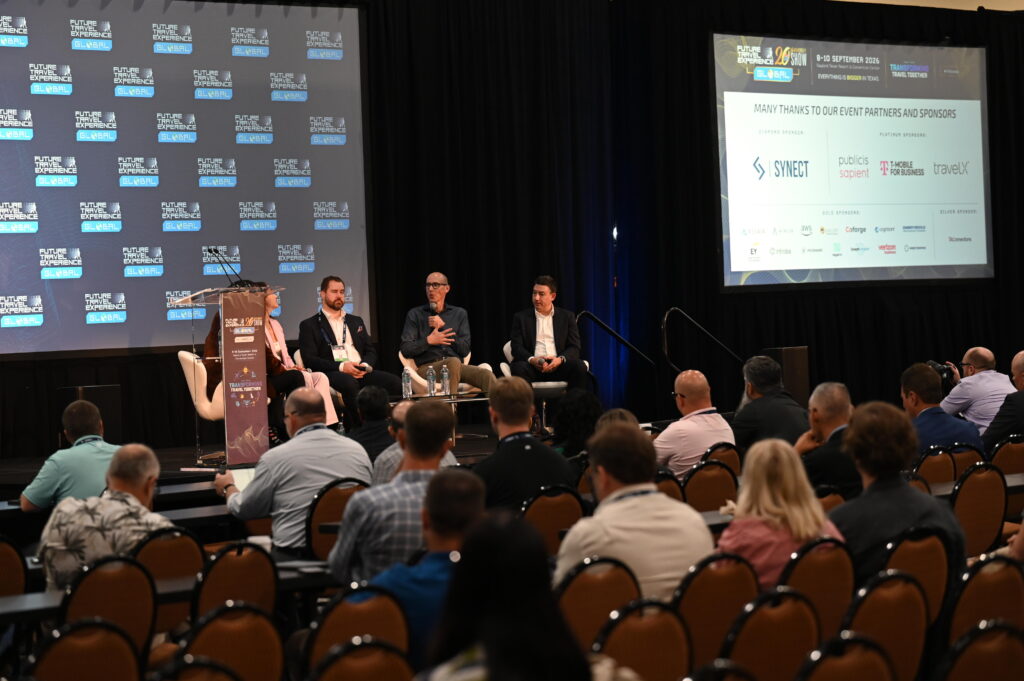
At FTE Global 2026, the strategies airlines and airports use to prepare for the future took center stage during a panel moderated by APEX Future Travel Experience Group CEO Dr. Joe Leader. The session brought together four industry leaders with different perspectives: Alaska Airlines Director of Innovation Bernadette Berger, Munich Airport (MUC) Managing Director and Chief Operating Officer Thomas Hoff Andersson, Southwest Airlines Chief Operating Officer Andrew Watterson, and Dallas Love Field Airport (DAL) Director of Aviation Patrick Carreno.
Together, they explored how artificial intelligence and data sharing in the face of capacity constraints are reshaping the way airlines and airports operate for the better. The numbers made the benefits of embracing new technologies tangible: Carreno said Dallas Love Field is exploring how it could eventually grow from serving around 18 million to 24 million passengers each year using only 20 gates; Berger shared that Alaska recently reported a 60 percent improvement in mishandled baggage rates during transfers; and Hoff Andersson said new CT security technology could increase Munich Airport’s checkpoint throughput by 50 to 60 percent.
The discussion focused on how growing passenger demand and rising expectations is pushing the industry to get more from existing infrastructure, improve collaboration, and build systems flexible enough to adapt to what comes next.
Creating More Capacity Without More Infrastructure
Dr. Leader opened the discussion around one of aviation’s biggest challenges: how to accommodate continued growth when airports cannot simply keep building terminals and gates.
For Dallas Love Field, that constraint carries particular significance. Carreno said the airport has peaked accommodating around 18 million passengers each year, and now looks at how it could eventually handle 24 million passengers using only 20 gates.
“We’re going to squeeze as much as we can out of that in the LEAP program,” he said, referring to the Love Field Expansion Airport Program, a multi-year, multi-million-dollar investment initiative. Carreno explained that LEAP is requiring DAL to look beyond traditional expansion and find ways to make every part of the airport more efficient. As such, the airport is exploring digital transformation and AI, and is using a digital twin to understand how its existing infrastructure can support more passengers.
“How is everybody maximized to the best? How is everybody working together?” Carreno asked. “It’s not just us. It’s our partners like Southwest, it’s concessionaires, it’s the TSA, it’s everybody.”
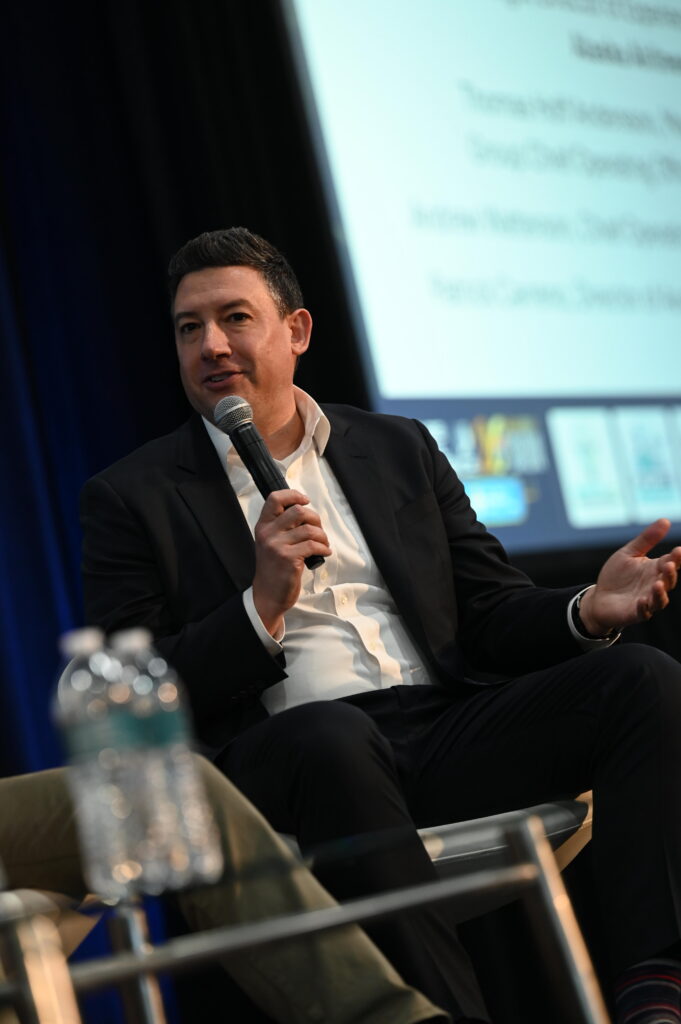
Southwest faces the same pressure from the airline side. Watterson said the carrier operates around 11 turns per gate per day at Dallas Love Field and uses its aircraft for roughly 12 hours each day. As Southwest adds new products and services, he said the airline must introduce more complexity without sacrificing its productivity.
“It’s really about having complexity that does not get in the way of that productivity,” he said. Such potential complexity is presenting itself in the form of newly introduced assigned seating procedures, extra-legroom products, the creation of a brand new lounge network, and partnerships with an increasing number of international airlines.
Munich Airport approaches capacity from a different position. Hoff Andersson said the airport plans to continue expanding alongside Lufthansa, including an extension of its Terminal 2 satellite that will add capacity for another 10 million passengers. At the same time, he said airports also need to find smaller ways to increase throughput within their existing footprint.
New computed tomography security technology rolled out in April 2025, for example, could increase checkpoint throughput by 50 to 60 percent. MUC also operates more dynamically in how it assigns gates and check-in counters.
“Sometimes it’s also the small things,” Hoff Andersson said. “Really dig into the numbers and optimize, optimize, optimize to make that part of your culture.”
Using AI to Move From Information to Action
Dr. Leader then challenged the panel on when digital systems will move beyond simply telling passengers that something went wrong and begin solving problems for them.
Berger said Alaska Airlines already explores that next step. For her, the question extends beyond whether AI can take action to whether it can determine what an individual passenger actually wants.
“We’re spending a lot of time on really understanding our guests’ behavior and their preferences,” she said. “If we know something about you, should I tell you that I know this and make an easy decision for you, the actual human, or should I go ahead and do it for you?”
That distinction becomes especially important during disruptions. One traveler may want the airline to automatically rebook a flight or hotel, while another may want to make that decision themselves.
Alaska already applies predictive technology behind the scenes. Berger pointed to baggage movement and dispatch automation, where ramp agents can receive step-by-step directions similar to an Uber driver. She said the technology has contributed to a 60 percent improvement in transfer mishandled baggage rates.
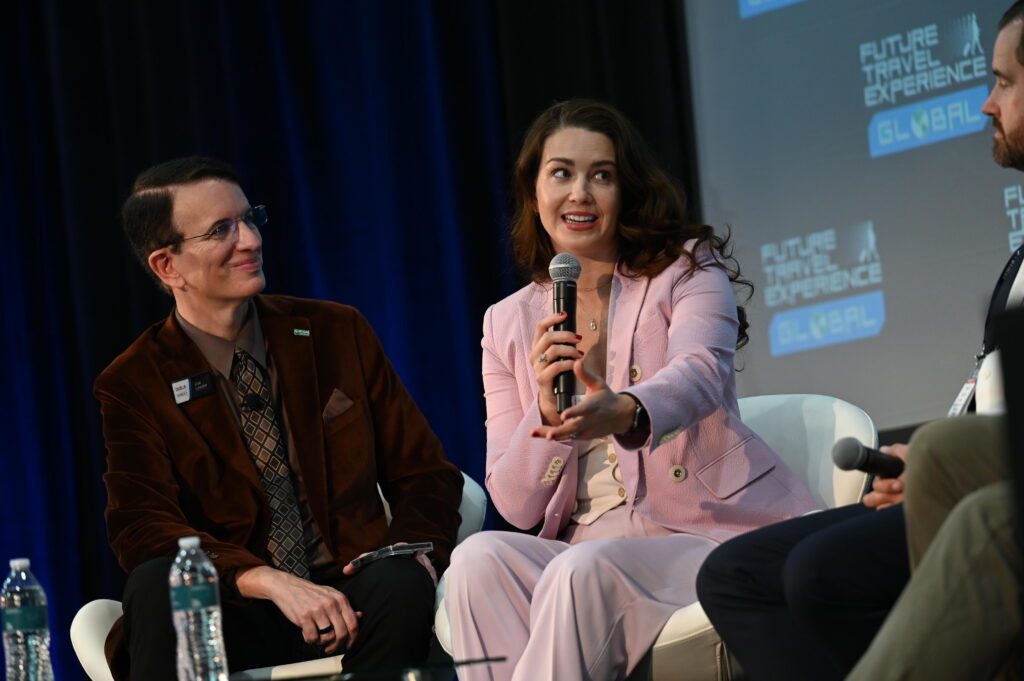
Berger also described Alaska’s use of digital twins to better understand peaks across its hubs. The airline looks at what work can move earlier in the process, an approach it calls “shift left,” so employees and infrastructure can prepare before demand peaks.
“The whole idea of having a digital twin of your operation has been transformative for us,” she said.
Carreno described how Dallas Love Field also looks at AI beyond traditional airport operations. DAL is exploring how airport and passenger data could interact with AI-enabled traffic signals across Dallas to improve how travelers reach the airport. The goal is to consider the passenger journey before the traveler reaches the terminal and use technology to remove friction earlier in the trip.
“Whatever we do has the adaptability and flexibility to get the most out of it,” Carreno said.
Data Sharing and Better Decision-Making
The conversation then turned to one of the biggest barriers to smarter operations: airlines, airports, government agencies, and other stakeholders often hold valuable information in separate systems.
Berger called data sharing between airlines and airports an important missing link. She argued that the industry needs to determine what information airlines and airports can share to improve efficiency while helping passengers make tighter connections.
Better information could help airlines move bags more efficiently, prepare for quick passenger connections, and make sure ground services reach the right place at the right time.
Hoff Andersson pointed to Munich Airport’s relationship with Lufthansa as an example of what deeper collaboration can look like. He clarified that the pair operate under a mutual non-disclosure agreement. “Airport operations, airline operations, it’s a team sport,” he said. “It’s very difficult to do it without a partner on board.”
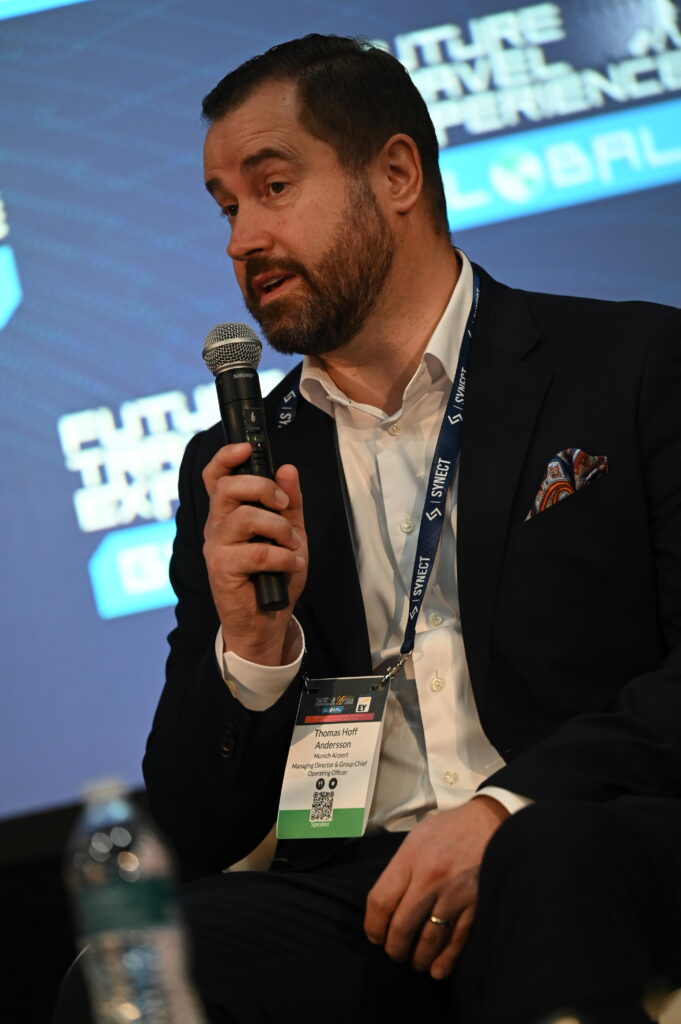
He also described what happens when that coordination breaks down. Hoff Andersson recalled an incident at Munich in which hundreds of passengers remained onboard aircraft overnight after returning to the ramp because the airport had reached its nighttime curfew. The airport had resources to help, he noted, but the problem never received proper escalation.
“Even though you had the systems individually making the right decisions, it ended up being a catastrophe,” he said.
For him, the lesson learned was to create systems connecting airlines, ground handlers, air traffic control, airport operators, and government agencies, so the entire operation can recognize and respond to problems together.
Watterson added that greater coordination also matters beyond the airport, particularly as airlines, regulators, and air traffic control look for ways to manage increasingly constrained U.S. airspace.
“With good technology and good safety systems, you can make better use of the U.S. landmass and have more throughput to the airspace,” Watterson said.
Across the panel, the broader point shifted from collecting more information to ensuring the right information reaches the right people at the right time and drives the right action.
Rethinking the Passenger Journey
Looking further ahead, the panel considered how new aircraft, mobility concepts, and changing customer behavior could reshape the passenger journey.
Berger, who spent more than a decade designing aircraft before joining Alaska Airlines, challenged one of aviation’s most basic assumptions: that an aircraft cabin must continue to follow the traditional tube design.
“Is an airplane a mode of transportation or is it a mode of hospitality?” she asked. Berger pointed to blended-wing aircraft as an opportunity to move beyond traditional window, aisle, and middle-seat thinking. A wider cabin could instead create different spaces around how passengers want to spend their time.
“Now we can really break free and think about, well, what type of activity do I want to do as a passenger, and how can I create neighborhoods and zones?” she said. That could include quiet areas, family zones, or spaces designed for dining and socializing.
Watterson approached the future passenger journey from a different direction. For Southwest, he said future network and product decisions still have to start with the airline’s existing customers and where they want to travel. “We fly to places because our customer bases are strong and big,” he said.
That same approach guides how Southwest evaluates new operating models. Watterson said the airline remains focused on the Boeing 737 and on opportunities that fit its existing network and productivity model rather than adding complexity simply because a new technology becomes available.
The panel also discussed the potential role of electric vertical takeoff and landing aircraft, or eVTOLs, while acknowledging questions about how they could fit into already constrained airport environments.
Berger sees potential for eVTOLs to replace some ground transportation rather than compete with commercial jets around runways. At Seattle-Tacoma International Airport, for example, she argued that an eVTOL could potentially land near parking facilities and connect passengers directly with downtown Seattle.
“I do think there is a place for eVTOLs to evolve,” she said, though caveated it would have to be at the right price.
Hoff Andersson said Munich Airport has also studied eVTOL operations, but the business case remains difficult. For now, the airport prioritizes transportation investments that can move larger numbers of people. “The biggest priority for us in Munich at the moment is also to get high-speed trains,” he said.
Future-Ready Decisions and Removing Friction
In the final round of questioning, Dr. Leader asked the panelists to look ahead at what parts of today’s passenger journey could eventually disappear.
Berger pointed to the way passengers currently search airline websites and apps. “Searching for content on a website, searching for what you want to do on an app,” she said. “I think all this UI will go away.” Instead, she expects passengers to increasingly tell an AI-powered system what they want and have the technology help complete the task.
Hoff Andersson focused on border control. “Take [away] all of the border control checkpoints in Europe. I hope,” he said. “Look at Singapore. It’s so smooth, so seamless. If we can do it at one place in the world, why should we not be able to do it in other places?”
Carreno also pointed to the security checkpoint as another opportunity to create a more seamless airport experience, but stressed that airports cannot wait for every problem to get solved before making improvements, instead championing incremental advancements where possible.
Watterson identified airspace efficiency as one of the most important areas for future improvement, remarking that as travel demand grows, the United States will need to move more aircraft through the system without sacrificing safety or reliability. “Even if we were flawless on ATC, we still need more efficiency in the airspace,” he said.
As the session closed, the panel delivered a consistent message. Preparing for the future does not require predicting one technology or operating model that will transform aviation. It requires making smarter decisions with the infrastructure, data, and technology already available, connecting them more effectively across partners, and building enough flexibility to adapt to what comes next.
The future of travel, the panel suggested, depends as much on using today’s assets more intelligently as on inventing tomorrow’s.