


Sleep Cycling: Smart Masks Keep Jet Lag Away as You Hit the Hay
Share
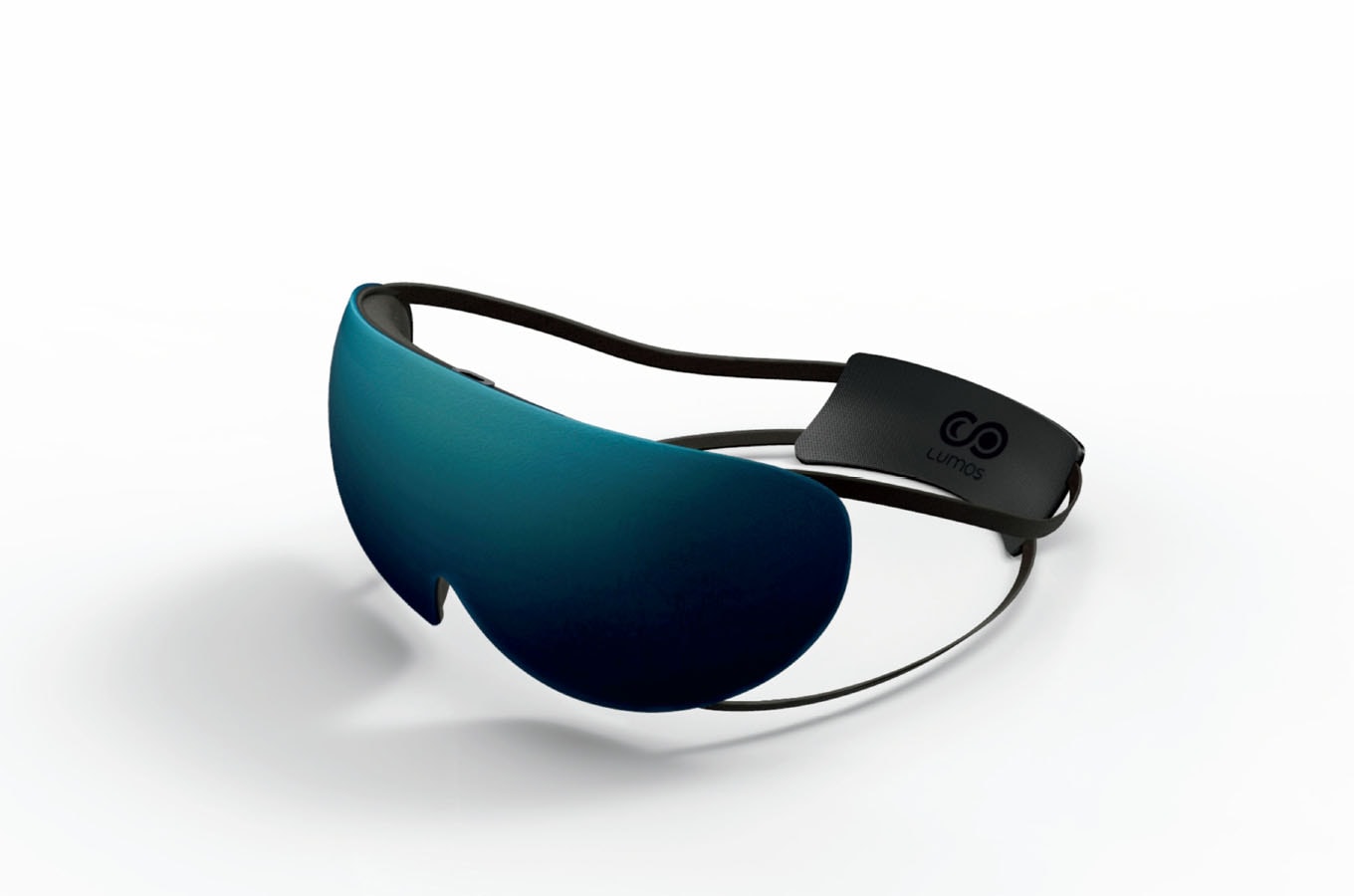
APEX Insight: Could a smart sleep mask be the key to jet lag prevention for passengers, and extra revenue for airlines?
Every passenger has his or her own way of dealing with jet lag upon landing. But what if airlines could offer something that would eliminate the effects of jet lag altogether? California startup LumosTech promises that its smart sleep mask can do just that. And with the product set to hit the market in mid-2018, the company has already received quite a bit of interest from airlines, says Vanessa Burns, the company’s co-founder and CEO.
Applying science licensed from, and patented by, Stanford University, the LumosTech sleep mask pulses short bursts of light to reset the body’s clock as users sleep. “The sleep cycle is controlled by light – we’ve known this for a long time,” Burns says. “With these very short light pulses, we are able to control the timing of melatonin, the hormone that controls when you feel tired and when you feel awake.”
“With short light pulses, we are able to control the timing of melatonin.” – Vanessa Burns, LumosTech
The amount of time a passenger needs to wear the mask prior to departure depends on where they’re going. “For jet lag, we can actually shift the sleep cycle three or four hours in a single night,” the Stanford alumnus explains. Traveling from San Francisco to New York City? That’s one night with the sleep mask. Going to London? You’ll need two nights with the mask, which, despite its high-tech function, looks and feels like other low-tech versions on the market. In the San Francisco-New York City scenario, that means instead of forcing themselves to hit the pillow when it only feels like 8 p.m., passengers would actually feel tired at 11 p.m. New York time.
While Burns was unable to share the names of interested parties, there is one airline that has already made a step in the direction of better sleep: Lufthansa handed out Polish startup Neuroon’s sleep masks – which, like LumosTech’s version, use light therapy to minimize the effects of jet lag – on its inaugural FlyingLab flight from Frankfurt to San Jose in 2016.
If other airlines follow suit, we may begin to see sleep masks as an added perk for frequent flyers and business travelers, who may be interested in renting them as they would a virtual reality headset. Instead of having to arrive at their destination two or three days in advance of a big meeting, or risk being groggy in the boardroom, they could arrive the day before feeling as if they’ve traveled through time.
“Sleep Cycling” was originally published in the 8.2 April/May issue of APEX Experience magazine.