


Southwest Selects Starlink to Deliver Next-Generation In-Flight Connectivity

Share
Southwest Airlines has announced it will introduce Starlink Wi-Fi across its fleet, marking one of the most ambitious connectivity upgrades in the carrier’s history. The carrier plans to bring next-generation satellite internet to hundreds of aircraft beginning this summer, aiming to deliver an at-home digital experience in the cabin. The roll-out positions in-flight connectivity (IFC) as a core part of Southwest’s broader strategy to modernize the passenger journey.
Building a Fleetwide High-Speed Network
Southwest’s Starlink program centers on speed, reliability, and scale. Engineered by SpaceX, the low-Earth orbit (LEO) satellite network allows passengers to stream, message, and work in real time across the airline’s route network , which spans 11 countries. Instead of incremental upgrades, Southwest is moving toward a fleet-wide transformation designed to support modern digital behavior.
“We’re thrilled to deliver a connectivity experience to Southwest Airlines and its Customers that really is similar, if not better, than what you can experience in your own home.”
– Jason Fritch, SpaceX
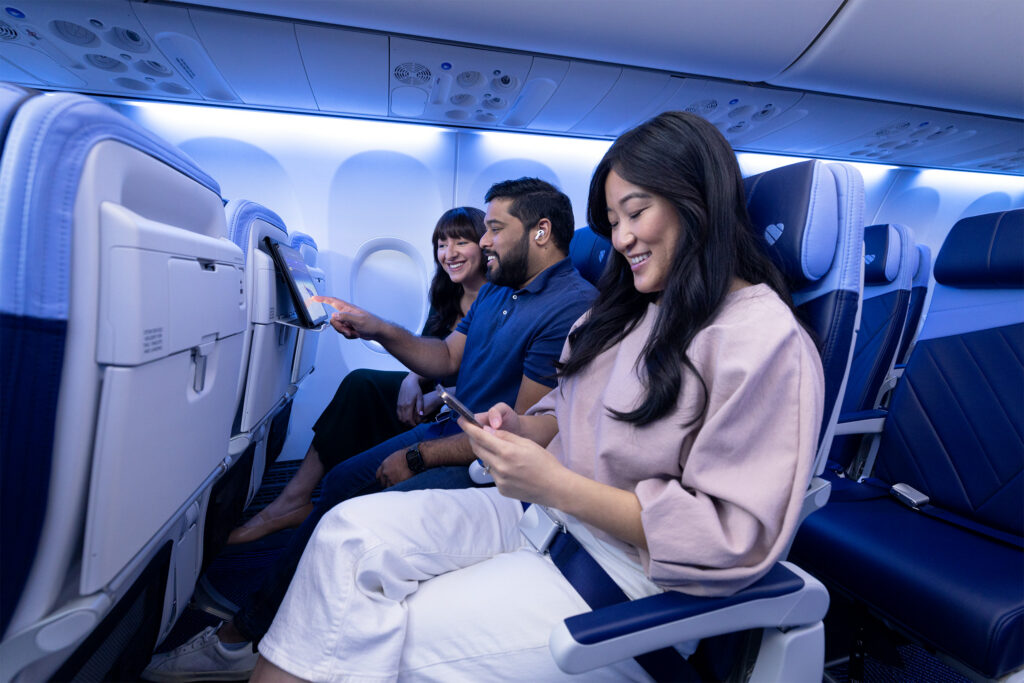
“Free Wi-Fi has been a huge hit with our Rapid Rewards Members, and we know our Customers expect seamless connectivity across all their devices when they travel,” said Southwest Airlines EVP, Chief Customer & Brand Officer Tony Roach. “Starlink delivers that at-home experience in the air, giving Customers the ability to stream their favorite shows from any platform, watch live sports, download music, play games, work, and connect with loved ones from take-off to landing.”
The airline expects the first Starlink-equipped aircraft to enter service this summer, with more than 300 aircraft planned to be online by the end of 2026. Starlink’s constellation includes more than 9,000 satellites orbiting close to Earth, reducing latency compared to traditional geostationary (GEO) networks. For passengers, that difference translates into smoother streaming, faster uploads, and more stable real-time communication.
“We’re thrilled to deliver a connectivity experience to Southwest Airlines and its Customers that really is similar, if not better, than what you can experience in your own home,” said SpaceX VP Starlink Enterprise Sales Jason Fritch. “Starlink is the future of connected travel, making every journey faster, smoother, and infinitely more enjoyable.”
Connectivity also strengthens Southwest’s existing loyalty ecosystem. The airline already offers free Wi-Fi to Rapid Rewards Members through its partnership with T-Mobile, and Starlink raises the performance ceiling of that offering. Instead of basic browsing access, members gain a platform capable of supporting full digital lifestyles in the air.
Redefining the Cabin as a Digital Environment
The Starlink rollout sits within a larger effort to elevate Southwest’s cabin experience. Connectivity is no longer treated as an add-on feature. It now functions as core infrastructure that supports entertainment, productivity, and personalization across the flight.
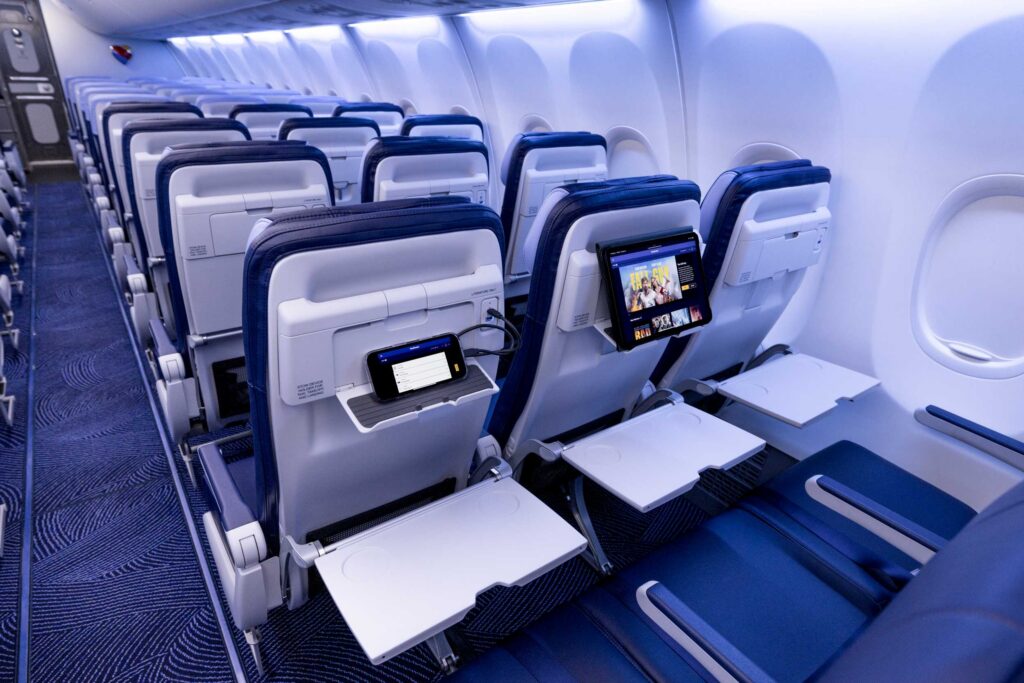
Southwest is pairing the connectivity upgrade with physical cabin improvements. The airline is introducing assigned and premium seating options, installing new RECARO seats, adding in-seat power at every position, and expanding overhead bin capacity. Seat-backs include holders for personal devices, reinforcing the shift toward device-centric in-flight ecosystems.
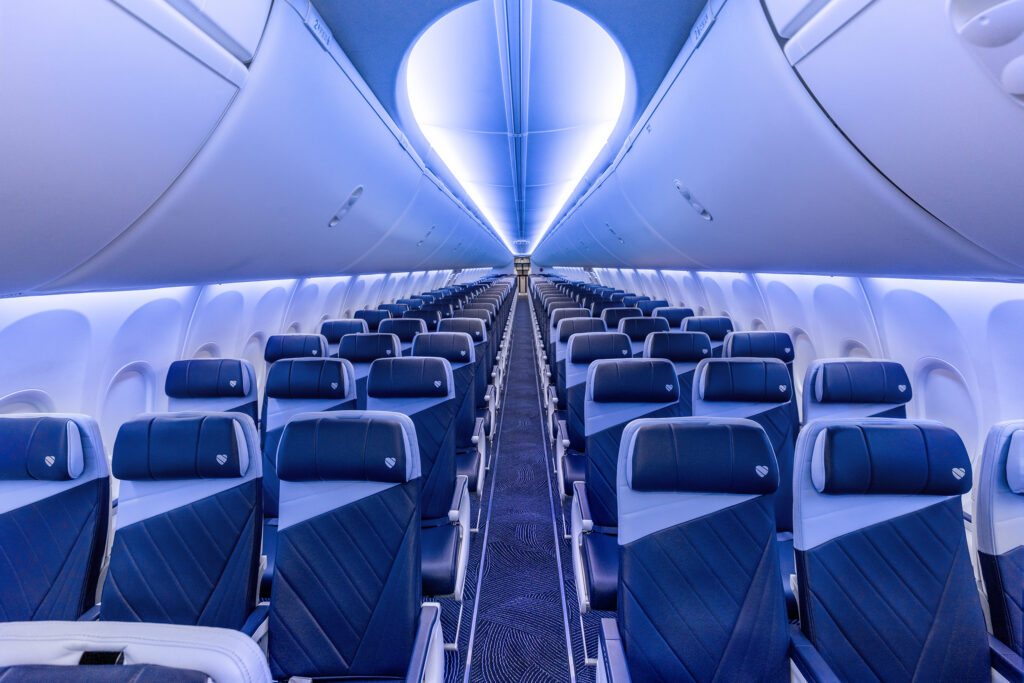
The new Extra Legroom experience adds another layer of segmentation. Passengers purchasing these seats receive enhanced snacks, priority boarding benefits, and more personal space. Combined with faster Wi-Fi, these changes position the cabin as a more flexible environment that adapts to different passenger needs.
High-speed connectivity also expands what in-flight entertainment can look like. Streaming platforms, live sports, and cloud-based content become accessible without the constraints of traditional onboard servers. The cabin begins to resemble a connected media space rather than a closed system.