


SynCastRequest Maximizes Inflight Services Revenue for Airlines Without Connectivity

Share
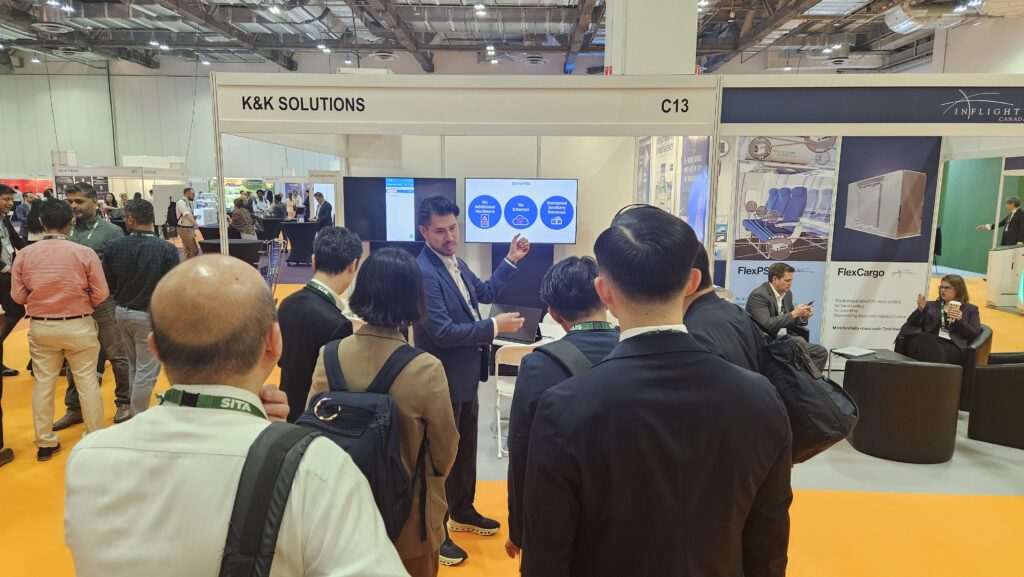
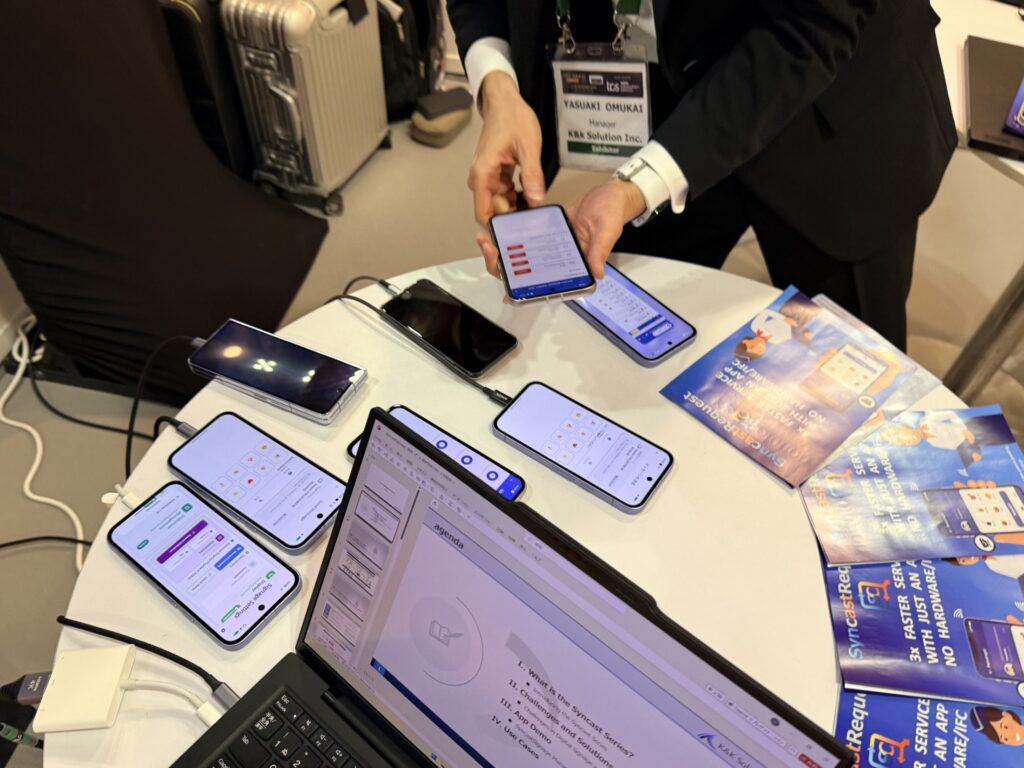
SynCastRequest, developed by new APEX member K&K Solution Inc., delivered a leap forward for airlines operating without onboard internet at APEX FTE Asia Expo. The mobile app allows passengers to request food and beverage service from their own devices, while cabin crew receive the orders directly on theirs. No in-flight connectivity (IFC) and no seatback screens are required. The system establishes a secure mesh network between smartphones and tablets, enabling real-time interaction using only device-to-device communication.
The app functions offline using Bluetooth and other low-energy wireless protocols to link passenger and crew devices. Passengers scroll through available menus, tap their selections and submit orders without needing a flight attendant call button. The crew’s interface shows a visual seat map with order details and timestamps. From there, flight attendants are able to prioritize and deliver items without relying on traditional cart service or overhead call buttons.
“The app created the mesh network to connect between devices,” K&K Solution Inc. Head of Product and Platform Empowerment Department Kiyotaka Tsuji said during the demonstration. “It also selected the best available method. In our test today at APEX FTE Asia Expo, it chose Bluetooth automatically.”
The system provides full digital traceability without relying on any router or server. Unlike most current onboard systems, SynCastRequest works without any aircraft modification or expensive installation. It runs entirely through mobile devices that airlines already use for crew operations or that passengers carry in their pockets.
“We didn’t connect to any routers,” Tsuji said. “No internet. The app just found the other app and began syncing. It was completely offline.”
“The app created the mesh network to connect between devices.”
– Kiyotaka Tsuji, K&K Solution Inc.
During the product demo, the SynCastRequest team displayed both the passenger and crew interfaces. After a passenger submitted a request, the crew received it almost instantly. Orders were clearly marked by seat number, and crew could mark requests as fulfilled or pending. The app also captured operational data for post-flight review, including time taken to deliver each request and the most frequently ordered items.
“Since all the orders were digitalized,” Tsuji said, “managers could review performance later. They could see what sold the most during the flight and how long it took to complete each request.”
APEX Future Travel Experience Group CEO Dr. Joe Leader tested the product himself and emphasized its strategic value. He praised the system’s ability to increase inflight revenue while removing friction in the ordering process.
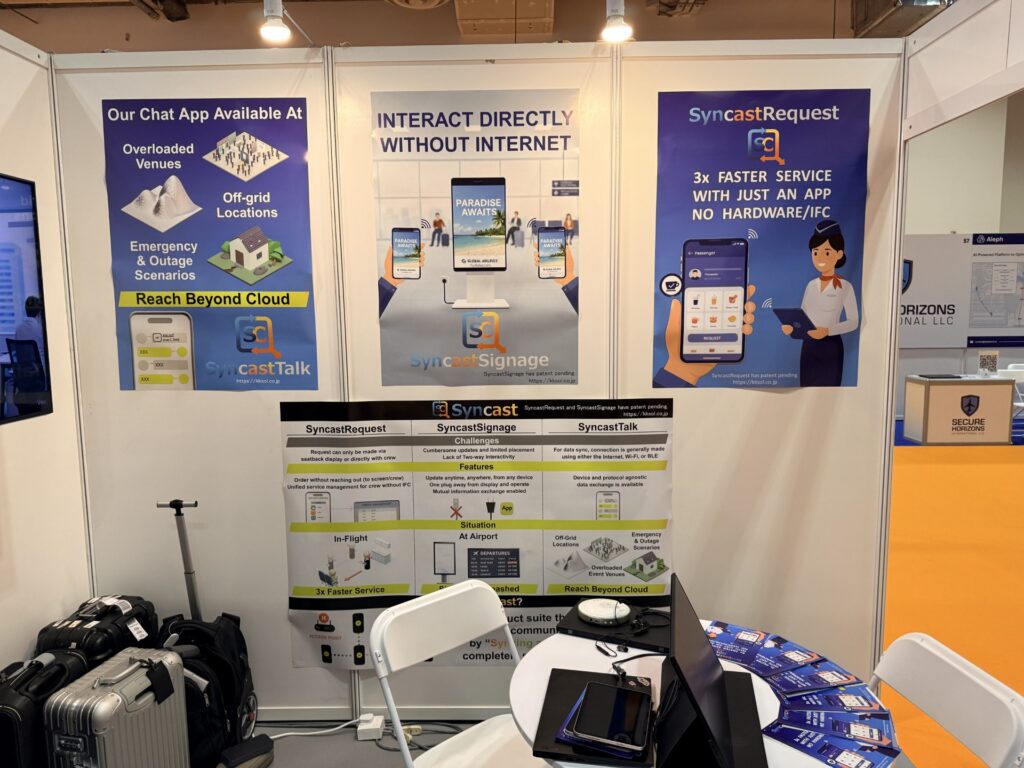
“SynCastRequest serves as a perfect fit for airlines without inflight connectivity that want the functionality of online ordering,” Leader said during the product demonstration. “That is game-changing for low-cost and ultra-low-cost carriers.”
Leader pointed out that most inflight purchases only happen when passengers pressed the call button or wait for the cart. Many customers skip ordering altogether because they didn’t want to cause inconvenience or they miss the chance to buy mid-flight.
“One of the most frustrating things is that airlines only sell food and beverage if someone is brave enough to press the call button or waited for the next round,” Leader said. “SynCastRequest eliminates that barrier.”
The system’s flexibility also stood out. It works on both iOS, Android, Windows and Linux; and QR codes or pre-flight app instructions provide the only setup needed for travelers. It can also be customized for specific airlines or integrated with other applications.
K&K Solution Inc. is currently experimenting with utilizing the mechanism on Linux to explore applications in IoT and Edge computing contexts.
“SynCastRequest serves as a perfect fit for airlines without inflight connectivity that want the functionality of online ordering.”
– Dr. Joe Leader, APEX
In addition to live ordering, the crew application features a dashboard and analytics system for performance tracking. Crew members view a seat map to identify orders by location and access a digital order log that allows them to sort, prioritize and manage multiple requests at once.
Tsuji explained that SynCastRequest goes beyond just digitizing the cabin service. It gives crews a structured method to deliver faster, more personalized inflight experiences, while enabling managers to make data-driven decisions after every flight.
“You can visually see where the order came from and how long it took to deliver,” he said. “That gives managers the insight to adjust menus, improve timing and track crew performance with real data.”
Marketing materials claimed a “3x faster” service experience, referencing how the platform allows crew to serve without walking the aisles or taking orders verbally. By moving to an asynchronous request model, SynCastRequest cuts down idle time and enables more efficient service rounds.
The company positioned SynCastRequest as part of a broader ecosystem under the SynCast brand. Two other tools, SynCastSignage and SynCastTalk, demonstrated the same offline-first communication philosophy. SynCastSignage allows airports to update digital signage using nearby phones, while SynCastTalk offers offline messaging in crowded or off-grid environments.
All three solutions share one goal: allowing secure, efficient data exchange without cloud infrastructure. SynCastRequest is particularly relevant to airlines unable or unwilling to invest in connectivity or onboard networks.
Tsuji confirmed that SynCastRequest has attracted interest from airlines and airport operators. He said the team had not launched the product publicly yet and was seeking its first commercial customer.
“Innovation does not always have to live in the connectivity cloud.”
– Dr. Joe Leader, APEX
“We have not prepared a fixed licensing cost,” he said. “We wanted to work with the airline industry directly to find the right model.”
The demonstration at APEX FTE Asia Expo generated enough interest to secure engagement with a major airline. While the carrier remains unnamed, the opportunity marks a significant step forward for the product, showing its readiness for real-world deployment.
SynCastRequest’s simplicity appears to be its greatest strength. By removing the need for internet, routers or heavy integration, the system brings digital transformation to the cabin in a lightweight, affordable format that everyone has: their phones. It provides passengers more control, frees crew from repetitive tasks and enables airlines to increase inflight spending without high capital investment.
“Innovation does not always have to live in the connectivity cloud,” Leader said. “Sometimes, the most important advances happen when technology works properly on-board that simply appears to offer a higher level of service.”
To witness demonstrations from more innovative companies looking to increase ancillary revenue for airlines while improving the passenger experience, register to attend the APEX FTE EMEA 2026 and co-located FTE Ancillary & Retailing event in Dublin, Ireland from June 9-11.