


United’s Island Hopper: A Passenger Experience Across the Pacific

Share
Few commercial routes blur the line between transportation and public service as clearly as United Airlines’ Island Hopper. United Flights 132, 133, 154, and 155 operate the multi-stop services between Honolulu and Guam, stretching across the Federated States of Micronesia and the Marshall Islands and linking communities where aviation is not a convenience. It is infrastructure. For passengers, the journey feels less like a single flight and more like a moving corridor between worlds.
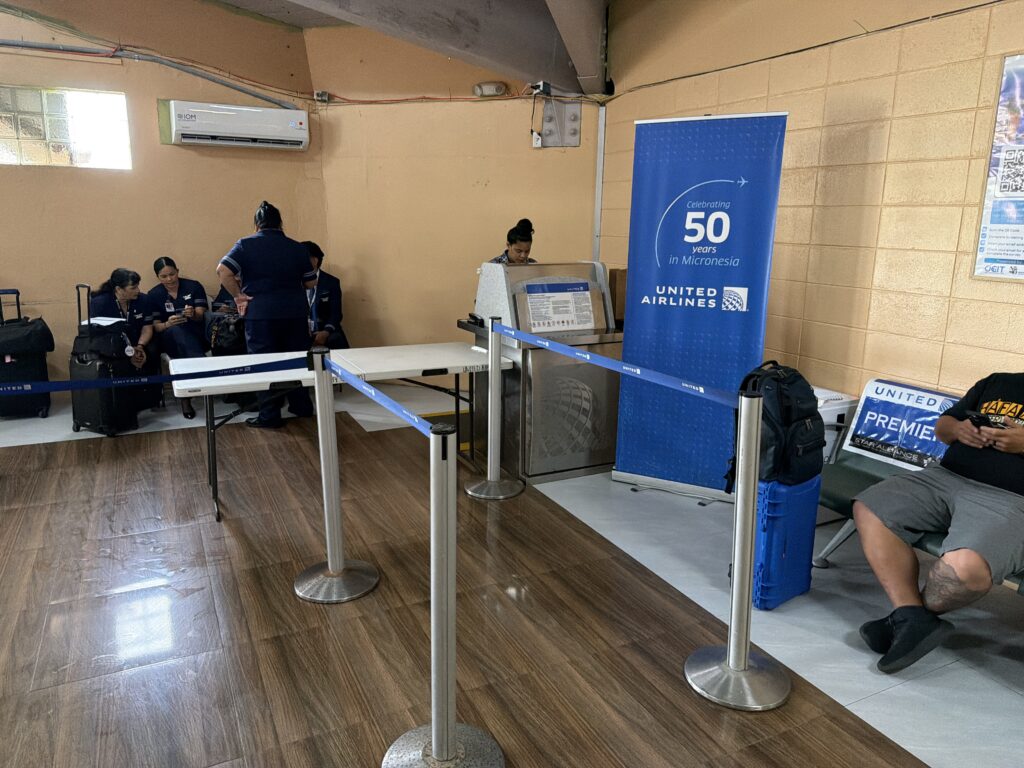
The route traces its roots back to the late 1960s, when Air Micronesia, affectionately known as “Air Mike,” launched service to create a lifeline across the Pacific. That mission later folded into Continental Airlines and eventually United, but the purpose never changed. For more than half a century, the flight has served as the primary bridge for mail, medicine, and commerce between remote atolls scattered across the open Pacific Ocean. A nonstop Guam to Honolulu flight takes about seven hours on a United Boeing 777-300. The Island Hopper transforms that same distance into a day-long expedition across the turquoise heart of the Pacific.
Boarding a Flight with Purpose
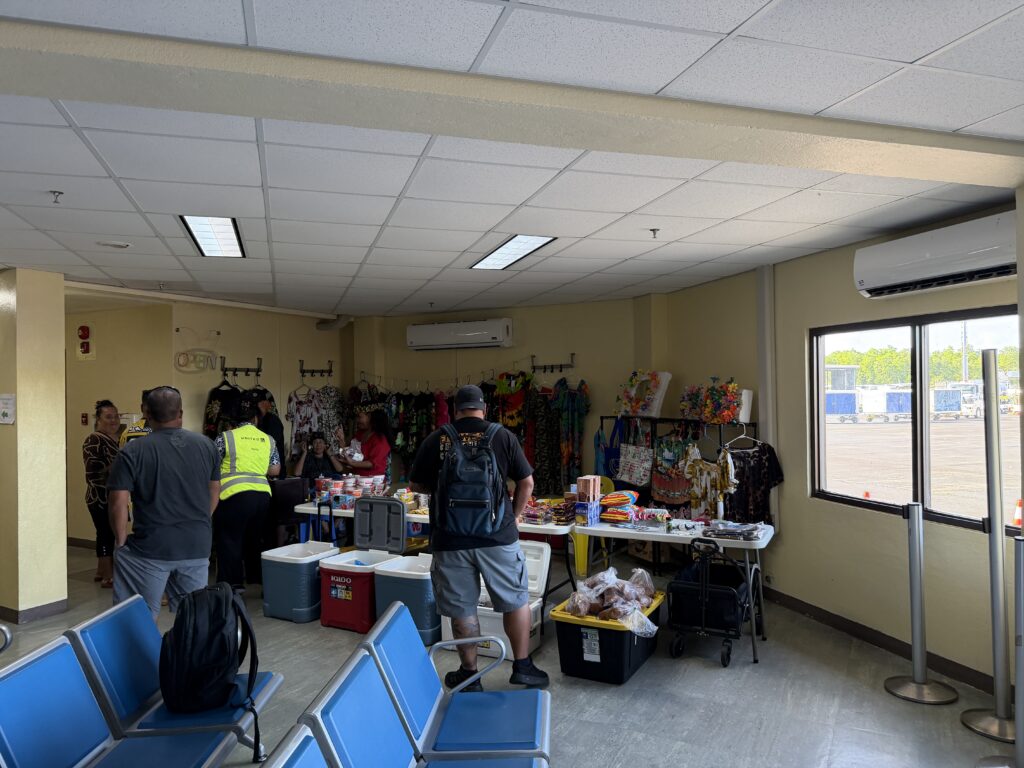
In January, I traveled on UA 154 from Honolulu to Guam, stopping in Majuro, Kwajalein, Kosrae, Pohnpei, and Chuuk. The experience began at the gate, where the passenger mix immediately signaled that this route operates under a different logic than leisure travel. Families carried taped cargo boxes alongside suitcases, and coolers outnumbered traditional luggage.
Most passengers were flying one or two segments. To the best of my knowledge, I was the only passenger traveling the entire route in one stretch. Many travelers were US military personnel or island residents returning home with groceries, gifts, and supplies that cannot easily be replaced on remote islands. Even before boarding, the atmosphere felt cooperative and social.
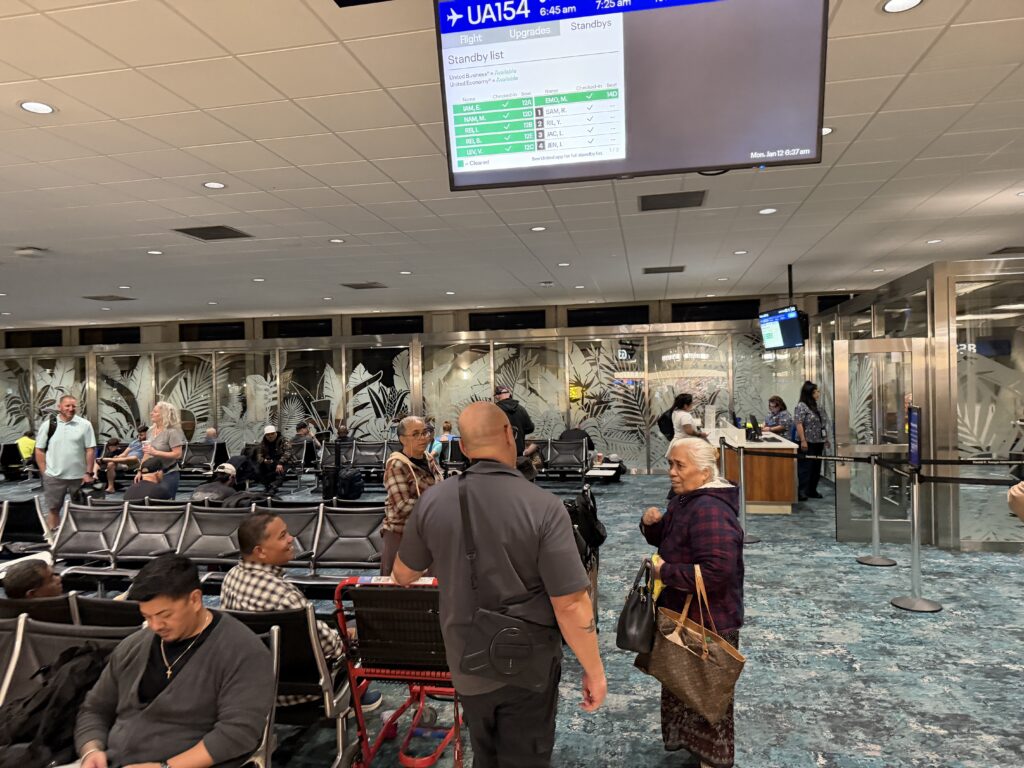
Conversation filled the waiting area in Honolulu. People greeted one another like neighbors as United ground staff exchanged familiar smiles with frequent flyers, often recognizing them by name. The flight already carried a sense of shared responsibility.
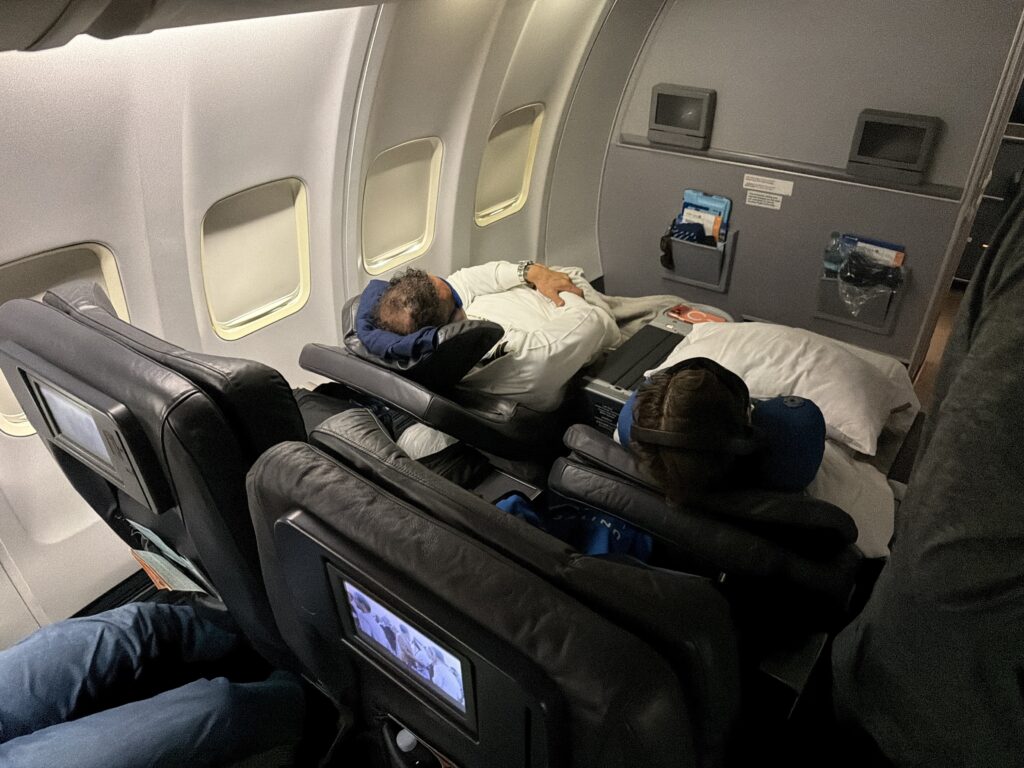
Once onboard, the Honolulu-based crew of four welcomed passengers with relaxed energy. United’s Business Class cabin has 16 seats, but 1A, 1B, 2A, and 2B were blocked off for pilot crew rest. A second set of Guam-based pilots occupied those seats before taking over in Majuro. The aircraft also carried an onboard mechanic seated in the first row of Economy. At every stop, the mechanic stepped outside to inspect the aircraft and address mechanical issues. These details rarely matter on standard routes. Here, they form part of the choreography that keeps the Island Hopper running.
Overhead bins reflected the route’s role in daily life. Groceries, medical supplies, gifts, and personal cargo shared space in careful balance. Outside, coolers and boxes were loaded with equal priority. Inside the cabin, passengers greeted one another like regular commuters rather than strangers.
A Cabin That Changes with Every Stop
Once airborne, the defining feature of the Island Hopper became clear. The cabin never stayed the same for long. At each island stop, the social environment resets. Passengers disembarked, new travelers boarded, languages shifted, and conversations changed tone. The aircraft became a rotating snapshot of Pacific life.
Some flight segments lasted barely 44 minutes. Just as passengers settled in, the aircraft descended again. Instead of monotony, repetition created momentum. Every landing brought new faces and fresh energy.
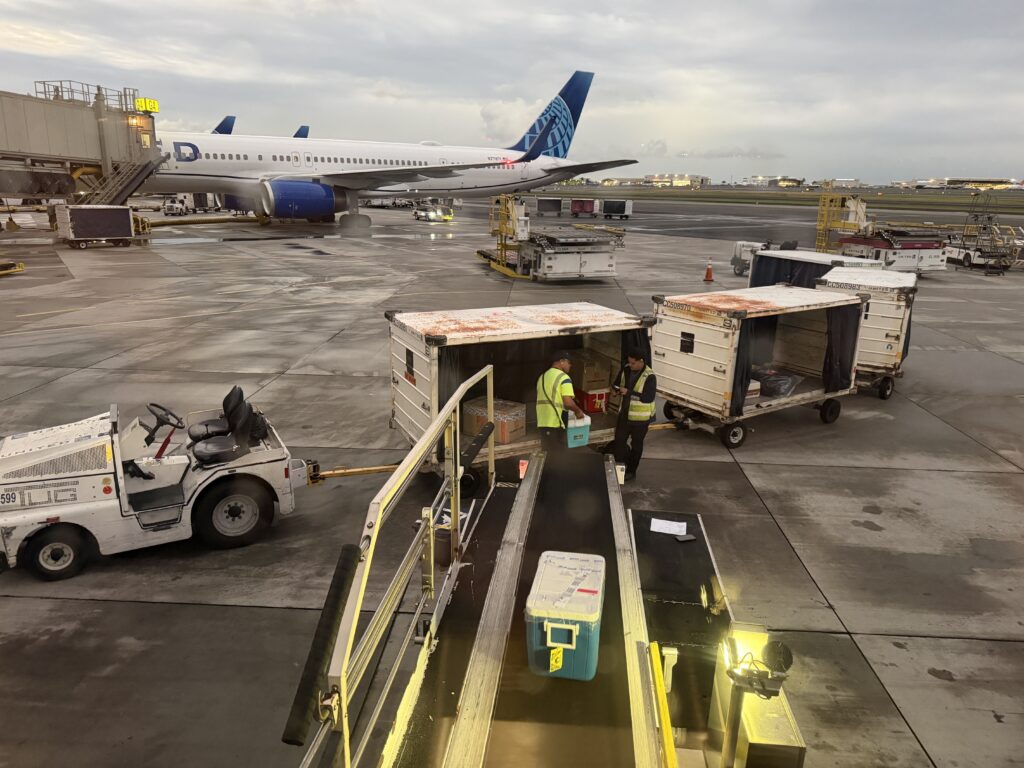
For travelers, this rhythm felt closer to a regional train journey than a standard flight. Cabin crew greeted returning passengers by name. Cargo loaded in Honolulu included mail, medical supplies, and essential goods destined for communities that depend on air service. The aircraft felt less like a shared public space in motion and more like a moving lifeline connecting people and places.
United’s crews played a central role in maintaining that atmosphere. Flight attendants developed familiarity with Pacific island culture, with many of them native to islands in the Pacific, that shaped service delivery. Announcements often included localized greetings. Passengers unfamiliar with the multi-stop structure received extra guidance about transit expectations. The result was a cabin culture built on patience and awareness rather than the rushed tempo common on mainland routes.
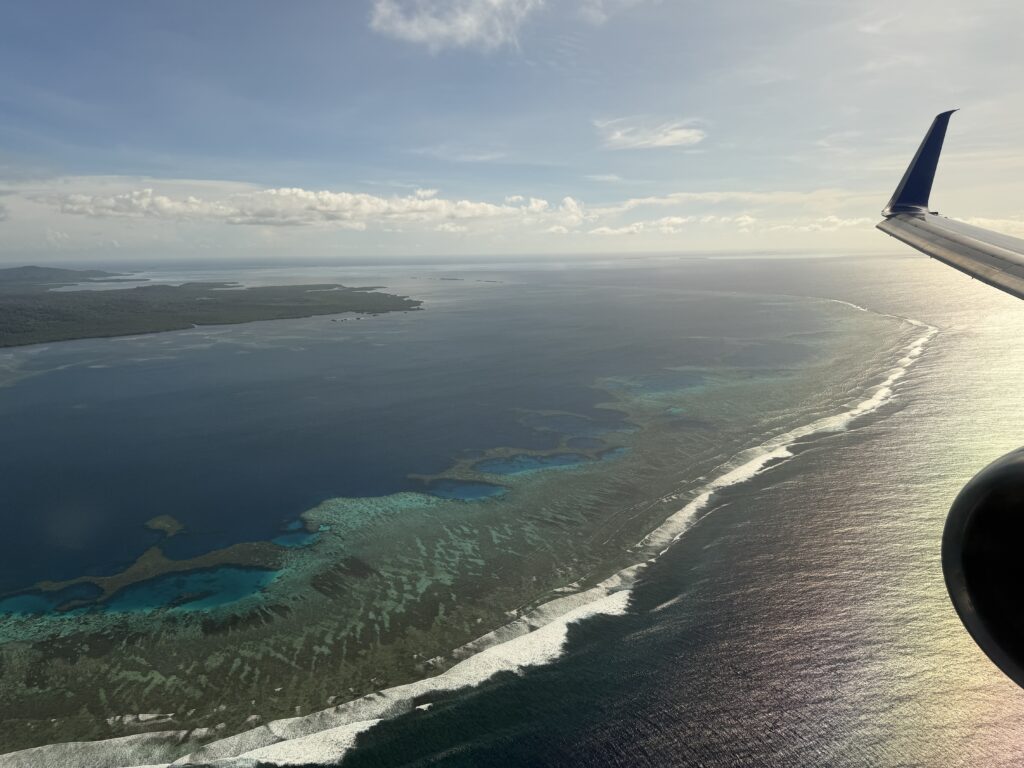
From the window, the scenery remained a constant spectacle. Coral reefs glowed electric blue beneath the wings. Thin runways appeared nestled into lush green jungle and a bright blue lagoon. Villages sat close enough to the tarmac that arrivals felt personal. Airports resembled neighborhood gateways rather than industrial hubs.
Majuro: The Midpoint Handoff
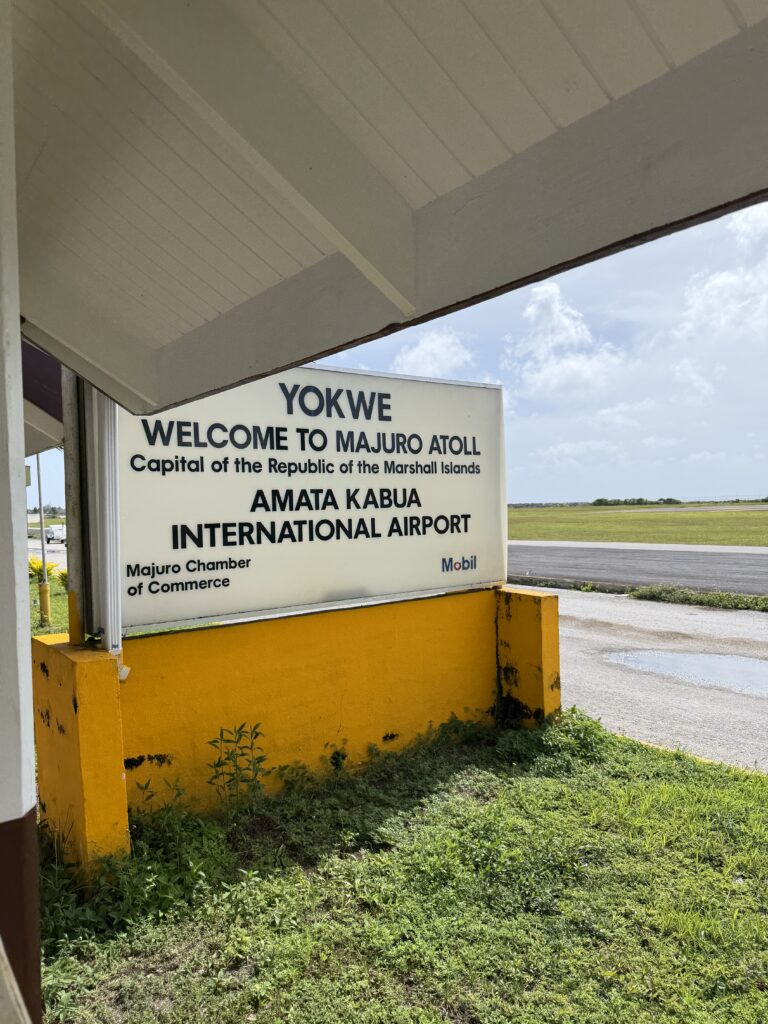
Majuro marked a pivotal moment in the journey. Both the pilots and the flight attendants switched here, reinforcing that the Island Hopper is effectively multiple flights stitched together. Watching the transition offered a rare glimpse into the logistics required to sustain the route.
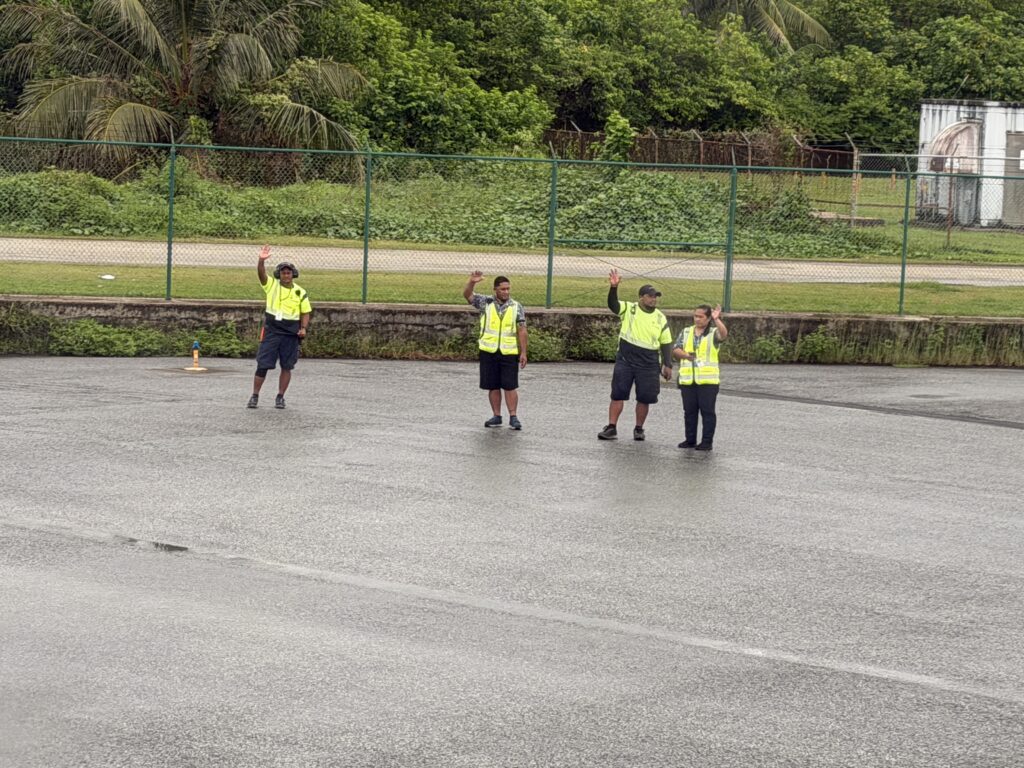
The Honolulu-based crew stepped off after nearly six hours in the air. A new Guam-based crew boarded and blended into the cabin almost instantly. Announcements came in new voices, but the tone remained familiar. Service continued without interruption. The swap felt like a relay handoff designed to protect both safety and stamina on a marathon schedule.
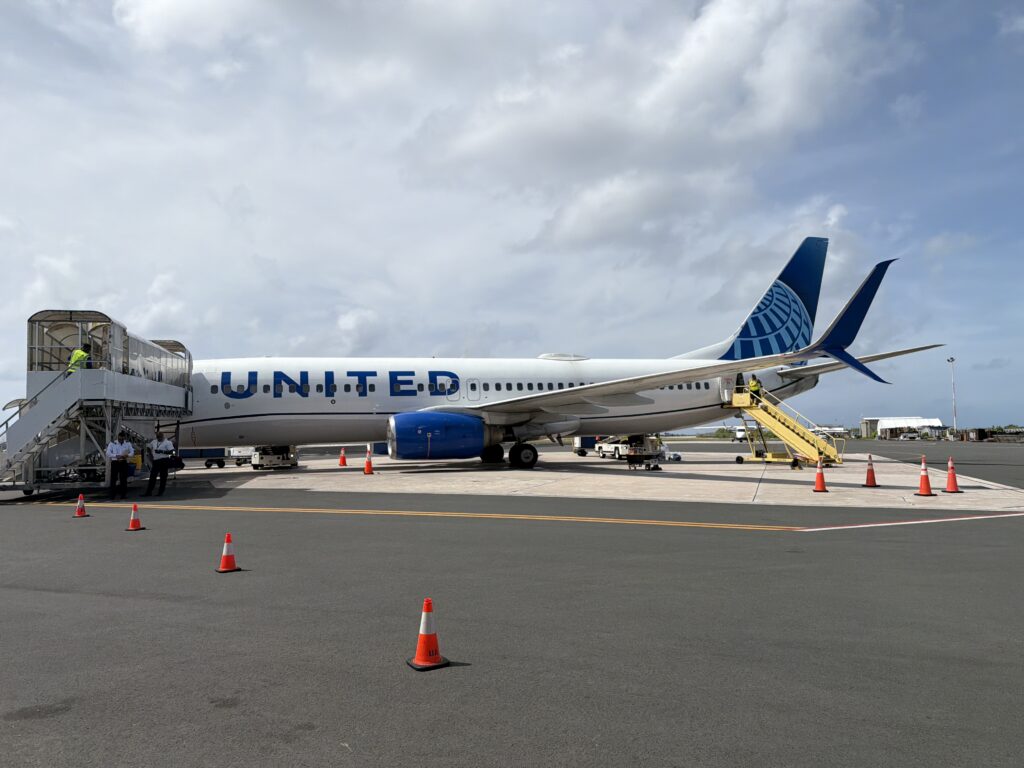
Because the route operates far from traditional maintenance bases, the onboard mechanic and pilots conducted a walk-around and inspection at every stop. Watching them circle the aircraft on sunlit tarmacs underscored how self-contained the operation must be.
Service That Matches the Journey
Service mirrored the social nature of the route. Even on the shortest legs, the crew moved quickly with drinks and snacks. On longer segments, full meals are served. On my itinerary, breakfast was served between Honolulu and Majuro, and dinner between Chuuk and Guam. These moments anchored time on a journey that stretched across nearly 17 hours. The menus are intentionally designed to reflect the region, tying the onboard experience to the communities the flight serves.
“Our menus are crafted to align with the destinations across our network. On select Island Hopper segments, we’re proud to showcase Pacific-inspired dishes like chorizo fried rice and beef tinaktak, reflecting the rich culinary traditions of the communities we connect while reinforcing our focus on delivering a differentiated onboard experience,” said United Airlines Senior Manager Menu Design Stephen Parkerson.
The island style of travel appeared everywhere. Coolers packed with fruit and fish sat beside carry-ons. The cabin carried the faint scent of fresh food and ocean air. Flight attendants greeted regulars by name and helped first-time travelers understand the rhythm of the stops.
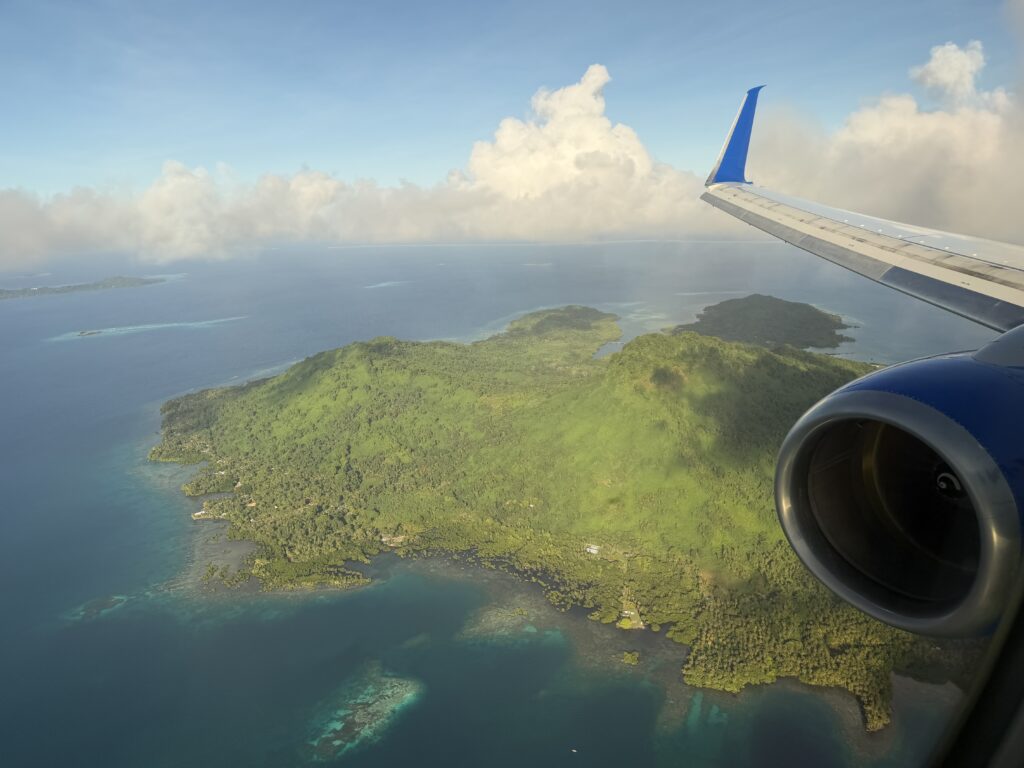
Throughout the trip, the crew pointed out the best photo opportunities. Passengers clustered toward one side of the cabin as reefs came into view. Aviation became a shared form of sightseeing rather than isolated travel.
The Aircraft Behind the Experience
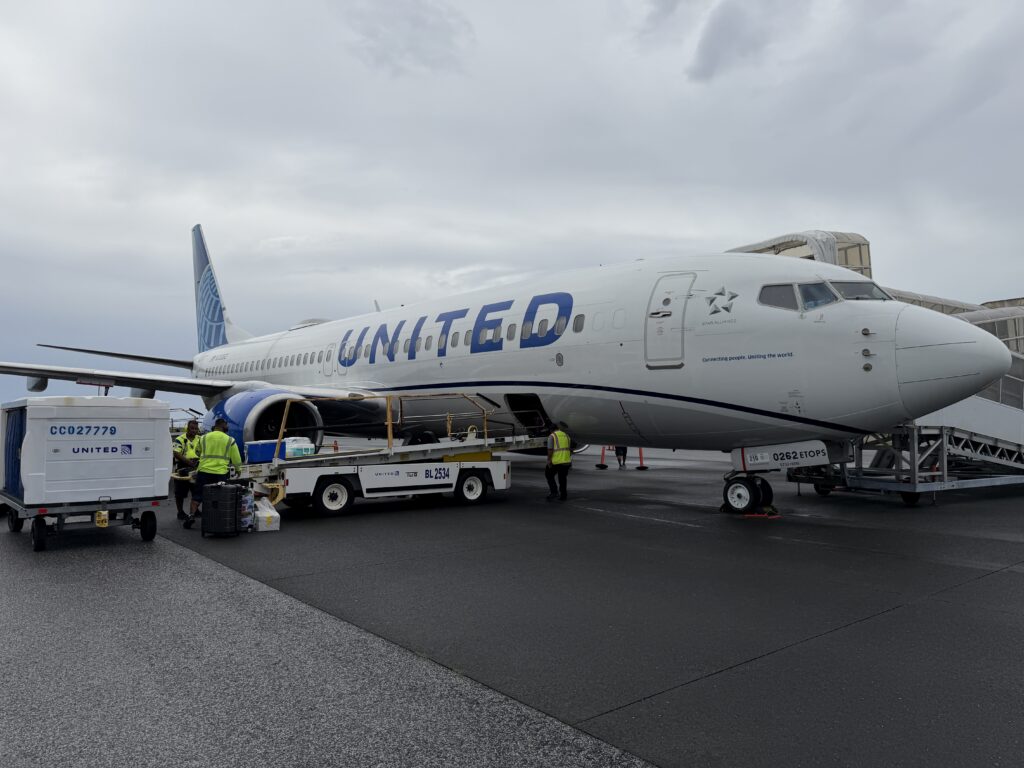
The Island Hopper has been operated by a Boeing 737-800, chosen because it can handle the tough conditions of this route. The aircraft belong to United’s Guam sub-fleet, a small group of Boeing 737-800s rotated in from the airline’s mainland network and configured to handle the demands of repeated short hops across remote islands. These aircraft are assigned specifically to the region. Because they operate in a salty, humid environment, they go through extra corrosion inspections beyond normal checks. Routine maintenance happens in Guam, but every 18 to 24 months each aircraft is rotated out for heavy maintenance.
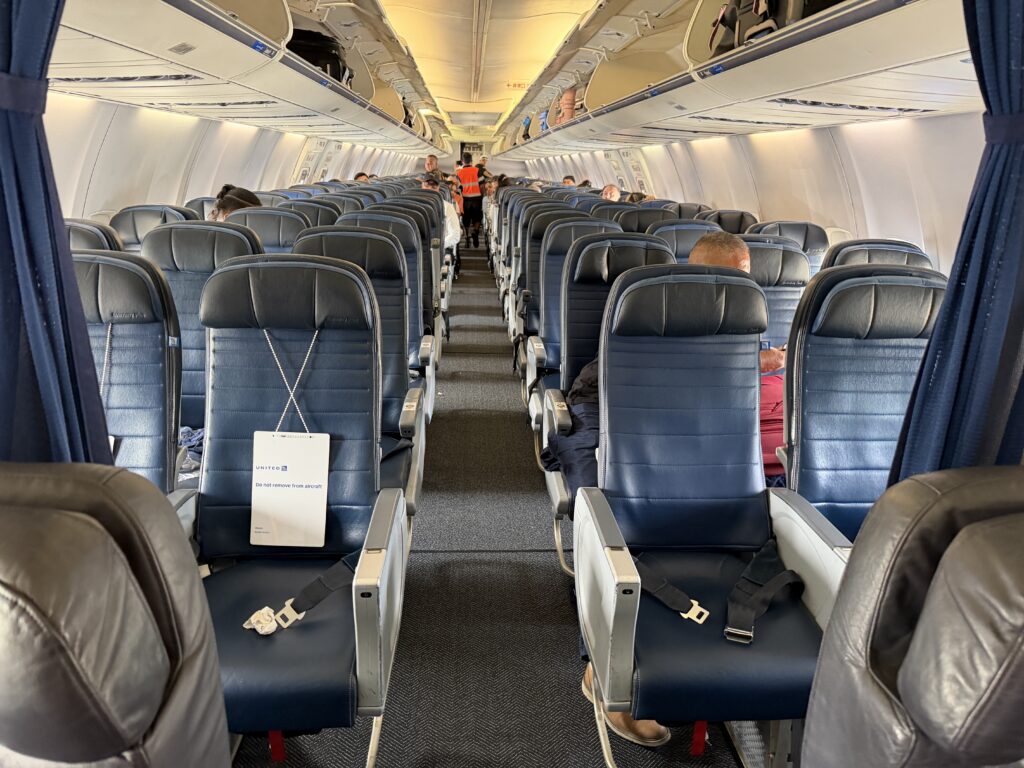
However, United recently announced plans to modernize that experience. The Guam sub-fleet is being transitioned to an all Boeing 737 MAX 8 operation during 2026. For passengers, the upgrade represents a meaningful shift.
“The first of ten 737 MAX 8 aircraft has already been stationed in Guam, bringing a well-deserved and enhanced customer experience to the 15 destinations we serve in the region. The larger overhead bins, charging ports, accessible seatback screens at every seat and Bluetooth device pairing meet the premium experience that customers deserve and expect from United Airlines,” said United Airlines Chief Customer Officer David Kinzelman.
“The newer seatback screens allows us to dramatically upgrade the in-flight entertainment offering on these flights,” added United Airlines Director In-Flight Entertainment Dominic Green. “In addition to an extensive range of content, including originals from Apple TV, HBO Max and A24, we are also increasing the amount of content with languages that are more relevant to the region, such as Mandarin, Cantonese, Korean and Japanese.”
Arrival with Perspective
By the final descent into Guam, exhaustion mixed with reflection. The cabin had cycled through multiple identities. Strangers had shared a day inside a floating crossroads, and completing the route felt like finishing a chapter rather than simply landing.
For travelers, the journey reshaped expectations of air travel as efficiency faded beside meaning. The Island Hopper showed that passenger experience does not depend solely on hardware upgrades or premium branding. It grows from empathy, context, and purpose. For residents, the flight reinforced a connection to a wider world. The aircraft carried opportunity, supplies, and relationships in equal measure.
The Island Hopper centers the passenger experience in a way few flights do. It strips away the illusion that air travel is purely transactional. Here, flying becomes visible infrastructure and every landing reinforces connection. Passengers temporarily join a living network that keeps remote communities linked to the wider world. Geography shapes the cabin, and culture fills it. The result feels authentic, cooperative, and deeply memorable.