


Air Messenger: Airlines Lead B2C Instant Messaging App Revolution
Share
This story was originally published in the March/April issue of APEX Experience magazine.
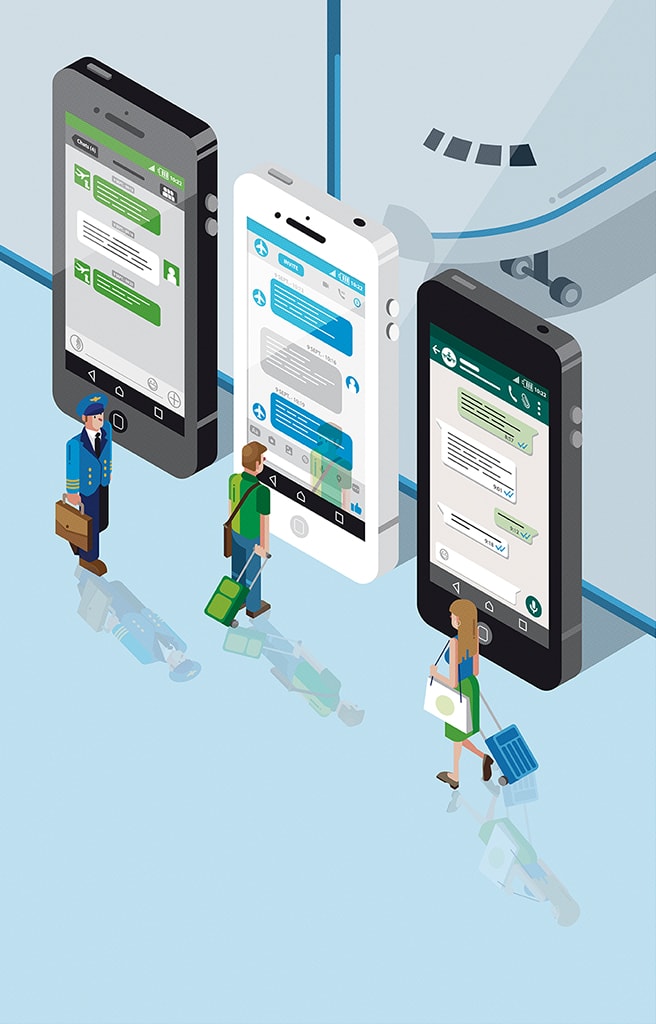
Instant messaging apps are revolutionizing the way businesses engage with consumers, and airlines aren’t just getting the message – they’re paving the way.
The future is the present, and the present is instant. Social media is no longer a toy, nor is it any longer simply an easy way to speak with (or shout at) friends and strangers. Social media platforms have become tools. A business would no more question having a Facebook or Twitter account than it would having a phone line. Funny, then, how it’s taken so long for companies to engage with their customers through instant messaging (IM), but better late than never. Unsurprisingly, the airline industry is getting in first, forging partnerships with established messaging services as well as exploring uncharted technological territory.
“It’s a multi-device, mobile-first world.” – Simrat Sawhney
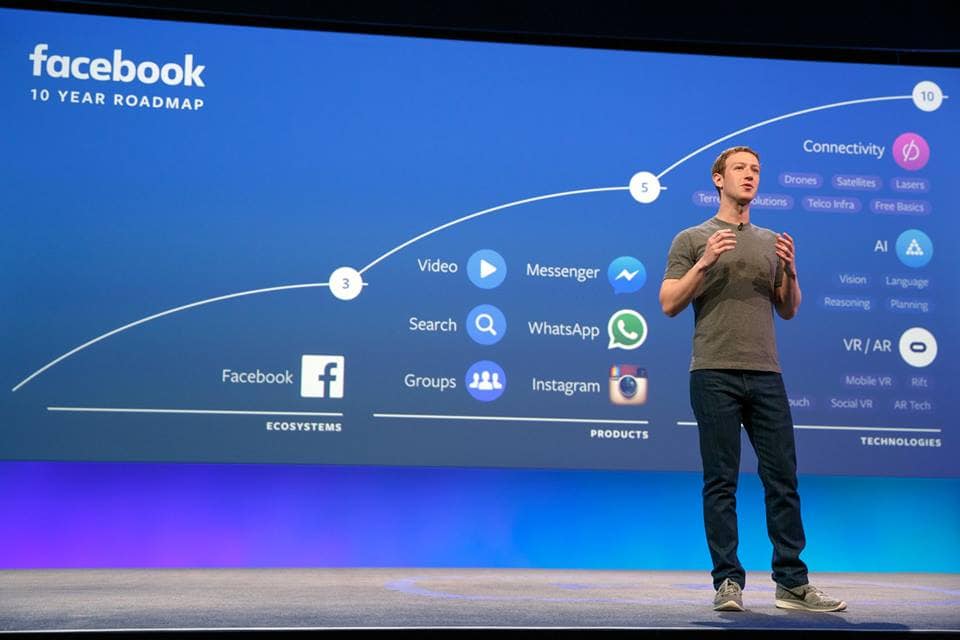
“As Messenger has grown, we think this service has the potential to help people express themselves in new ways, to connect hundreds of millions of new people, and to become a communication tool for the world,” Mark Zuckerberg told 2,000 developers at the company’s F8 conference in March 2015. Facebook controversially spun its Messenger service into a separate mobile app, and the company is now developing it into its own platform. One new place Facebook would like Messenger to venture is the world of travel.
KLM, Transavia, Hyatt and Uber are already on board as early adopters of Facebook Messenger’s latest business-friendly incarnation. KLM and Transavia (both part of Air France-KLM group) are also currently active on WhatsApp, which had already built a huge following before getting snapped up by Facebook for a whopping $16 billion in 2014. The similarly
featured Line, favored by ANA and Thai Airways, dominates Japanese instant messaging with the help of more stickers than you can imagine. China’s WeChat is used by every major Chinese airline, as well as by British Airways, South African Airways and KLM.
 THE BUSINESS CASE FOR SPEECH BUBBLES
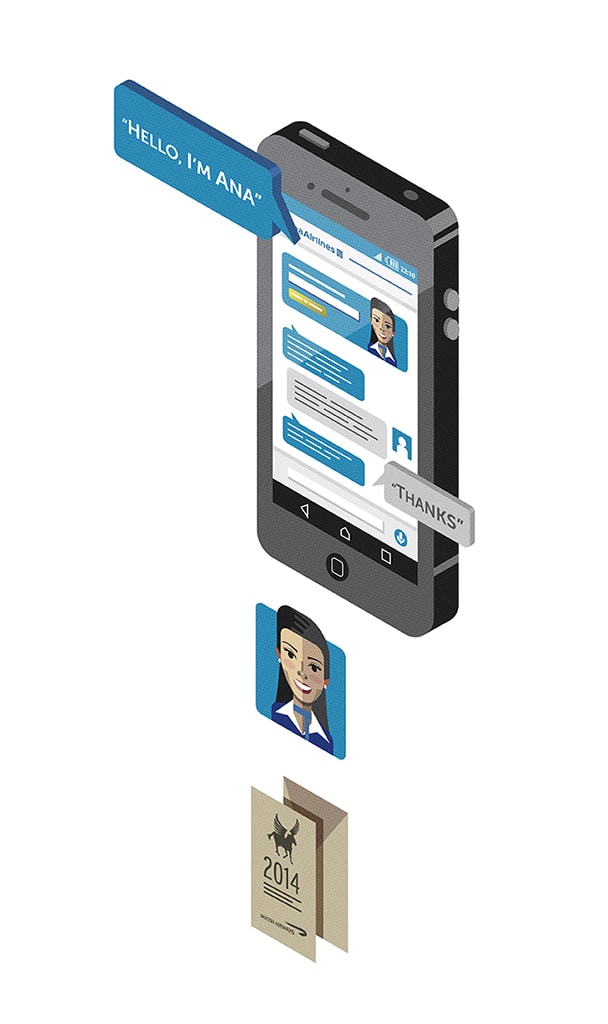
Business-to-consumer (B2C) engagement with instant messaging is not a fad, but the shape of things to come. It’s a natural progression of communication in an increasingly networked (and globalized) society, and a venture that aims to meet consumers where they already are. Once upon a time, we queued for airplane tickets at the airport. Then we visited travel agents. Next, we tentatively embraced the then alien World Wide Web. Now booking a ticket by tapping at your phone doesn’t seem strange at all. This rapid, relentless progression of technology has trained us to make the leap from in-person transactions to live chats in a series of baby steps.
One advantage of engaging passengers in an instant messaging chat is that the discussion is preserved, using an architecture already in place. Don’t want to build a customer management tool from scratch? Cool – just punt it to the multibillion-dollar company that has already done it, and see where the two of you can connect. An added benefit is that your passengers don’t have to repeat their whole story each time they switch customer service agents: The thread can be passed along and read at a glance, a recipe for reduced frustration all around.
TRAVEL GOES MOBILE
“It’s a multi-device, mobile-first world,” said Simrat Sawhney, Facebook Travel and E-Commerce strategist, during her presentation at the APEX Asia conference last year. The rise of the smartphone and tablet is about as seismic a shift in the travel industry as was the rise of the Internet itself, and that requires a rethinking of customer engagement. “For many travel suppliers, [the shift to mobile] means an opportunity to strengthen or reestablish customer relationships that have been eroded by other intermediaries,” Facebook’s global head of Travel, Lee McCabe, said in a recent article he coauthored with the Boston Consulting Group. “For intermediaries, it means rethinking their offerings to protect the positions they have established on the PC.”
“Travelers want to be able to respond to messages, look at special offers or download their tickets in a central spot.” – Lee McCabe, Facebook
Current modes of B2C communication are fragmented. Airlines advertise special offers widely (and mostly impersonally), socially and through e-blasts. Customers engage on Twitter, by phone, e-mail, what have you. Referencing more than one of these threads at any one time often results in a tangled proposition. But, according to McCabe, bringing these threads into a single place provides mutual benefits for both brand and consumer. “When there’s a single string for the conversation, there’s no need to dig through a bunch of text messages or e-mails,” he said in an interview with McKinsey & Company. “Travelers want to be able to respond to messages, look at special offers or download their tickets in a central spot.”
Facebook wants to be that spot. There are precedents to Facebook’s ambition, though: Weixin, the Chinese-language version of WeChat, lets users do everything within the app, from banking to booking taxis to checking in for flights. “There are more than 468 million monthly active users using WeChat, and checking it many times a day,” said Dodo Su from China Southern’s Products and Management division at the most recent APEX Asia conference. “In 2013, we became the first Chinese carrier to launch an account on the chatting service. Now, we’ve developed over 20 functionalities on this account.”
Last December, Facebook introduced a transportation feature integrated with ride-hailing company Uber, so Messenger users could summon a car directly from Facebook’s app. But Facebook has a long way to go before reaching the level of services already offered by its antecedents, and it knows that. Messenger executive David Marcus told Wired that these are only “the first baby steps in a series of millions of steps.”
“If it provides value to the customer and the airline, it’s a win-win.” – David Meyer, Qantas Airways
What does Facebook – or indeed any company – get out of partnerships such as these? Messenger and WhatsApp have more combined users than Facebook itself: A huge audience for businesses willing to insinuate themselves into their customers’ daily communication routines. WhatsApp has ditched its freemium model, very likely as its parent chases much, much bigger fish. Essentially, Facebook is starting to behave like a software-as-a-service (SaaS) company, with all the customer-funneling that that entails. “If it provides value to the customer and the airline, it’s a win-win,” said David Meyer, Qantas Airways’ Category manager, at APEX Asia. “These tools need to be meaningful to everyone, and those are the ones that will rise to the top.”
RISE, ROBOTS, RISE
We can’t discuss instant messaging at scale without also talking about artificial intelligence (AI). Indeed, IM and AI go together like peanut butter and Nutella. Zuckerberg has been spending many sleepless nights hacking away at an AI that he envisions to be like Tony Stark’s AI, J.A.R.V.I.S. (Just A Rather Very Intelligent System) from Iron Man.
Ultimately, AI has a reserved seat on the chat train. When you have enough end users contacting your business, you need a smart – very smart – way to manage all that traffic. Your social media team will look like frantic 1940s switchboard operators before too long, unless you automate things like support triage, complaint management and, eventually, sales funnels. The meteoric rise of productivity app Slack has also normalized chatbots, which have actually been around for a long time. Old-school Internet users likely remember IRC (Internet Relay Chat), and the creation of simple bots to help you work more efficiently. Now bots have gone prime time, alerting a company’s team members to changes in their social media and online support-desk environments. To be useful, though, a bot has to be “rather very intelligent.”
Today, Facebook’s AI is getting close to besting an amateur human player at the classic board game Go. While easier to learn than chess (the game of choice to test AI), the game has around 10 times as many potential moves per turn, so it’s considered a stiffer test of an AI’s, well, intelligence. It’s a start, but Google is much further along. The Google AI, named DeepMind, has recently defeated the European Go champion in five straight games.
Of course, you write a bot that’s smart enough to beat a grandmaster so that it can be smart enough to deal with a business traveler trying to change a complicated itinerary on the way to the airport. Your bot can’t just be good – it has to be great. The humans in charge of an airline’s instant messaging-based communications have to trust that their bots have their backs.
Businesses have discovered instant messaging as a way to engage customers beyond the sales pitch. Passengers can communicate in a meaningful way with the airlines at any point in the journey without changing their chat habits. Meanwhile, airline employees have never had a better excuse to use their smartphones at their desks.