


AIX 2026: Panasonic Avionics Launches eXneo for Interim Legacy Cabin Upgrades

Share
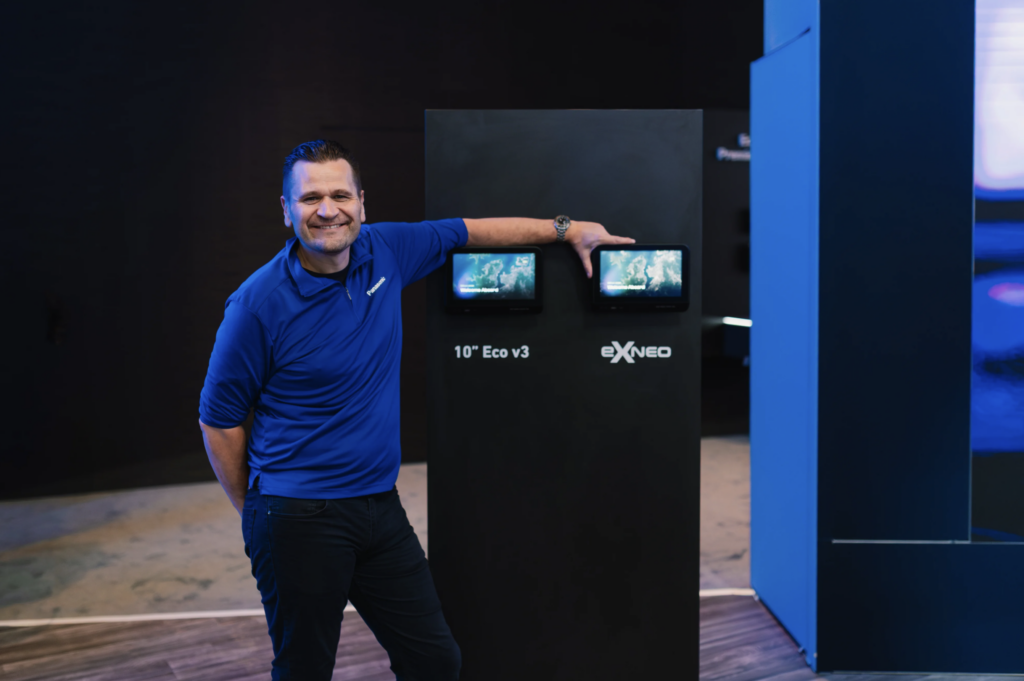
During its media briefing at Aircraft Interiors Expo (AIX) 2026, Panasonic Avionics Corporation launched eXneo, a retrofit seatback monitor solution designed to bring next-generation in-flight entertainment (IFE) capabilities to older aircraft cabins without a full interior overhaul. Available from 2027, the new product gives airlines a quicker and more affordable way to upgrade older Panasonic X Series systems while keeping their current seats and much of the existing equipment.
eXneo Creates a Practical Upgrade Path for Aging Fleets
Panasonic introduced eXneo as a drop-in replacement for legacy X Series seatback monitors, allowing airlines to refresh existing cabins without investing in entirely new seating platforms. Rather than forcing a complete rip-out of seats, monuments, and wiring, the company says eXneo uses existing harnesses and mechanical interfaces to simplify installation, reduce aircraft downtime, and lower cost.
That practical approach addresses a growing airline challenge. Many carriers want newer digital experiences but face long lead times, certification burdens, and the expense of traditional cabin retrofits.
Panasonic Avionics Senior Vice President of Product and Strategy Andy Masson said the demand signal from customers has been consistent. “This is the question we hear all the time,” said Masson. “Airlines tell us they want the full Astrova experience, but they also want to know how their existing X Series retrofit systems can run those same digital applications and deliver many of the same benefits.”
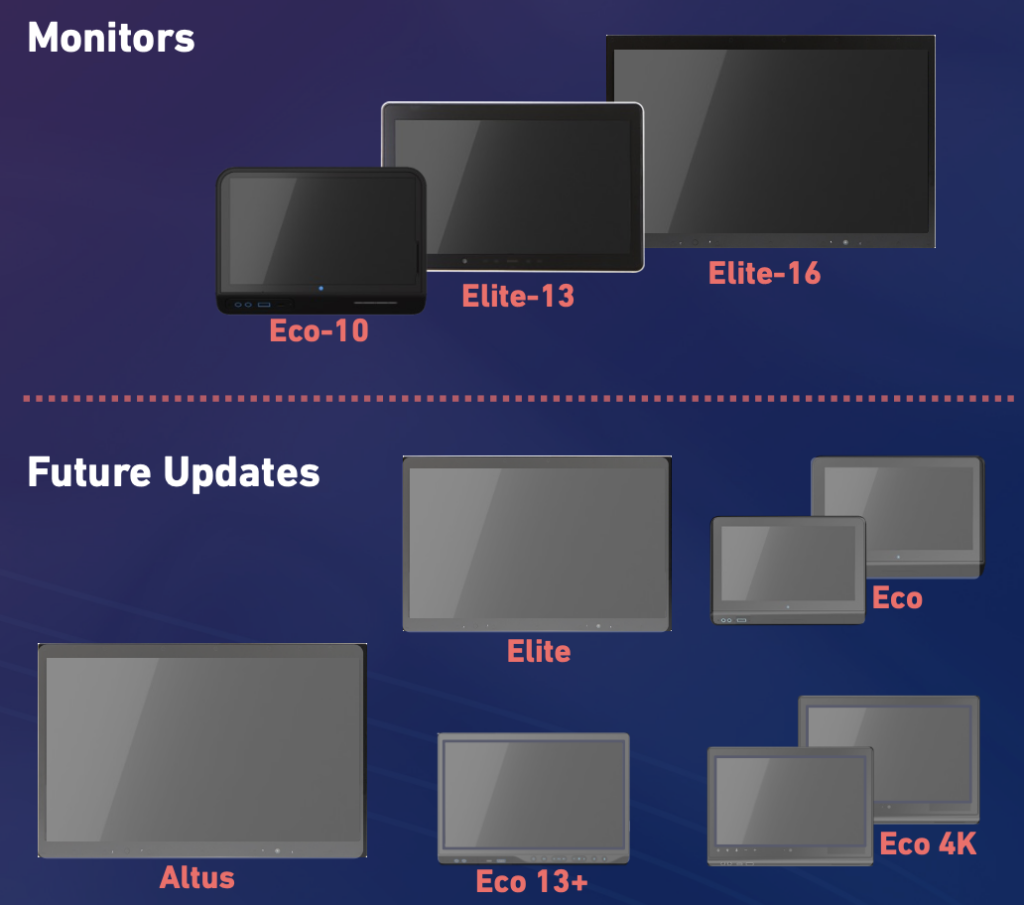
Masson said eXneo was built specifically to solve that problem. “We needed to have something that fits directly in those seats,” he said, explaining why Panasonic focused on keeping the same form factor, weight, and power profile while upgrading the technology inside.
He added that airlines are looking for smarter ways to evolve passenger experience while protecting past investments. “eXNeo gives our customers a clear path to enhance their digital engagement, extend the life of their cabin investments, and deliver meaningful improvements to the passenger experience today, while positioning for the future.”
Panasonic says more than 1.25 million installed monitors are within the product’s potential market scope, making eXneo one of the company’s largest retrofit opportunities.
New Electronics Deliver New-Generation Performance
While eXneo is built around retrofit simplicity, Panasonic says the internal technology is thoroughly modern. Instead of replacing seats or major cabin structures, the product upgrades the electronics inside select existing monitors while keeping the same size, weight, and power use.
The system uses the latest CPU and GPU technologies, has four to eight times more memory depending on monitor type, updated storage, Bluetooth 6.0+ BLE capability, and the latest Android operating system with future software support. Panasonic says eXneo works with both its Astrova and Converix platforms and is ready for connected seatback experiences powered by low-Earth orbit (LEO) connectivity.
Masson said the real transformation comes from what passengers do not see. “The real power from Neo comes from inside,” he said.
According to Panasonic, the added memory and stronger processing power enables faster interfaces, richer graphics, and more advanced applications. Updated Bluetooth capability also supports wireless audio and newer device connections.
During the Hamburg briefing, Masson and Panasonic Avionics CEO Ken Sain demonstrated quicker map loading and smoother navigation compared with older systems. Masson said the additional compute power will help airlines deliver a more consistent digital experience across fleets. “The additional compute will allow our airline customers to create a similar Android experience with their Astrova platforms and their X Series platforms.”
Masson added that airlines will be able to introduce newer applications and services, whether web-based or embedded. “They’ll be able to add the newest apps and features, along with their own custom applications, whether web-based or built directly into the system.”
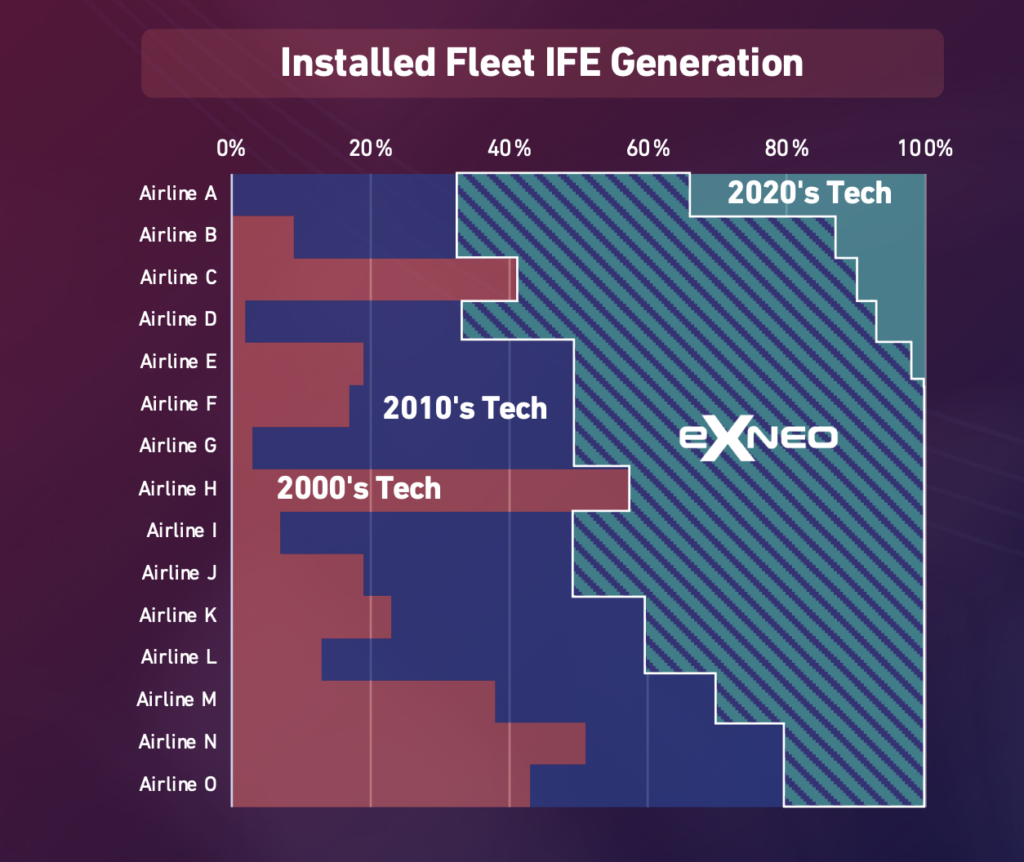
The timing of eXneo reflects real pressure across commercial aviation. Many airlines want newer passenger technology, but full cabin upgrades often face delays tied to seat supply, certification timelines, integration complexity, and capital costs. During the briefing, Panasonic said programs that once moved in 12 to 18 months can now take 24 to 36 months, while supplier engineering capacity has become more limited.
That has left some carriers operating fleets with technology from multiple generations at the same time, creating customer experience and branding challenges as passengers increasingly expect the same digital quality on every aircraft.
Operationally, the company is emphasizing speed. Masson said Panasonic can board an aircraft overnight, remove the old monitors, install upgraded units, and return the aircraft to service by morning. “We’ll go on board, we’ll take every monitor off, put every new monitor on. It’s done.”
Masson said the product is especially valuable for aircraft with about ten years of service life remaining, or for newer aircraft delivered with legacy systems that owners want to improve ahead of a larger refurbishment.
Part of a Larger Panasonic Fleet Strategy
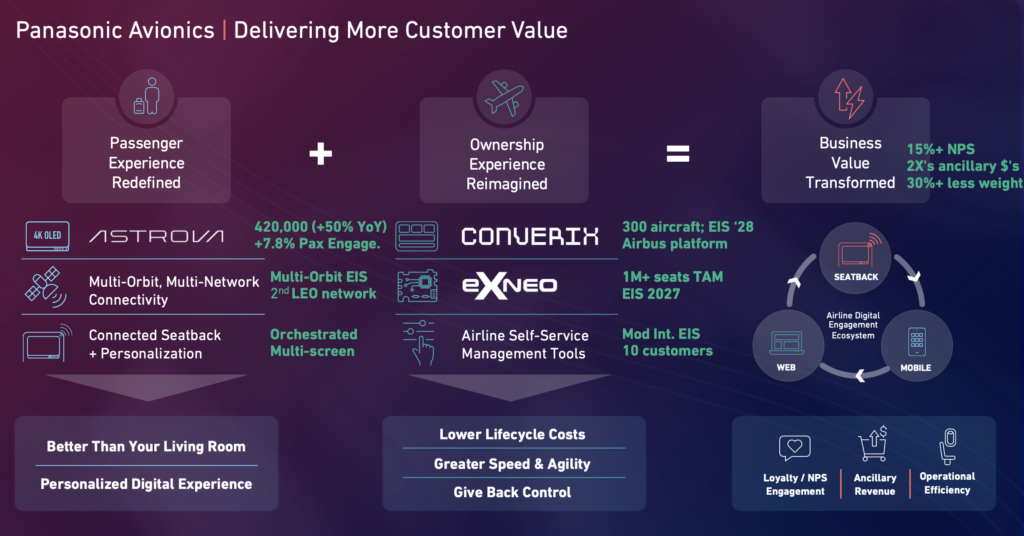
The eXneo launch came alongside Panasonic updates on Astrova, Converix, and connectivity, reinforcing a broader strategy that now covers both new aircraft and installed fleets.
The company said Astrova has surpassed 420,000 awarded seats, up 50 per cent year-over-year, with every screen size already ordered and shipped. Panasonic also shared passenger data suggesting newer seatback technology still drives engagement. In a study covering approximately 1,450 flights and 415,000 passengers, Astrova delivered an 18.1 per cent increase in seatback uptake and a 7.8 per cent rise in passenger engagement minutes.
Panasonic also challenged the idea that fast Wi-Fi makes seatback screens irrelevant. Using data from 5,100 flights and 1.2 million passengers, the company said seatback engagement increased slightly after Starlink-equipped aircraft entered service.
At the same time, Panasonic used the briefing at AIX to promote its multi-orbit connectivity roadmap and a future built around connected seatback experiences that combine seatback screens, personal devices, and airline digital channels.
That broader ecosystem makes eXneo more important than a typical retrofit product. If airlines modernize only their newest aircraft, they risk creating split fleets where some cabins support personalization and next-generation services while others lag behind. eXneo gives carriers a faster way to bring older aircraft closer to the same digital standard.
Sain framed the strategy directly during the briefing, saying, “Astrova solved forward-fit upgradability. eXNeo solves retrofit upgradability for up to a million seats.”
That may prove to be the most valuable takeaway from Panasonic’s briefing at AIX. Airlines rarely replace every cabin at once, but they still need to keep pace with passenger expectations. eXneo offers a way to modernize faster, spend smarter, and deliver a more consistent onboard experience across the fleet.