


airBaltic Expands Inflight Retail with Launch of AirMall on Starlink-Equipped Fleet

Share

Latvian airline airBaltic has partnered with InterLnkd to include AirMall in its Skynet onboard Wi-Fi portal, becoming the first Starlink-connected carrier to launch an inflight shopping mall experience. The platform gives passengers access to more than 20,000 brands directly on their own devices, with no onboard stock or crew involvement. It also marks a new step in how airlines monetize connectivity, turning the connected cabin into a revenue driver rather than just a passenger amenity.
Turning Connectivity into Commerce
airBaltic’s rollout of AirMall sits at the intersection of two fast-moving trends in aviation: high-speed inflight connectivity and the expansion of ancillary revenue streams. By embedding AirMall into its Skynet Wi-Fi portal, the airline turns standard internet access into a shopping experience that feels similar to buying things online on the ground.
The concept is straightforward. Instead of relying on traditional duty-free carts or onboard inventory, passengers can browse and purchase products directly from their own devices. Items are delivered after the flight, removing the need for storage space in the cabin or additional workload for crew.
This model aligns with airBaltic’s broader investment in Starlink-powered connectivity. High-speed, low-latency internet enables a smooth browsing experience, which is essential for driving engagement with onboard retail.
“By adding AirMall to our new Skynet platform, we’re giving passengers a new way to shop inflight from their favourite brands. With curated products, home delivery, and airBaltic Club points earned on every purchase, AirMall is an important step in building on our investment in in-flight Wi-Fi and expanding what we can offer our customers onboard,” said airBaltic VP Customer Experience & Insights Natālija Kuzmina.
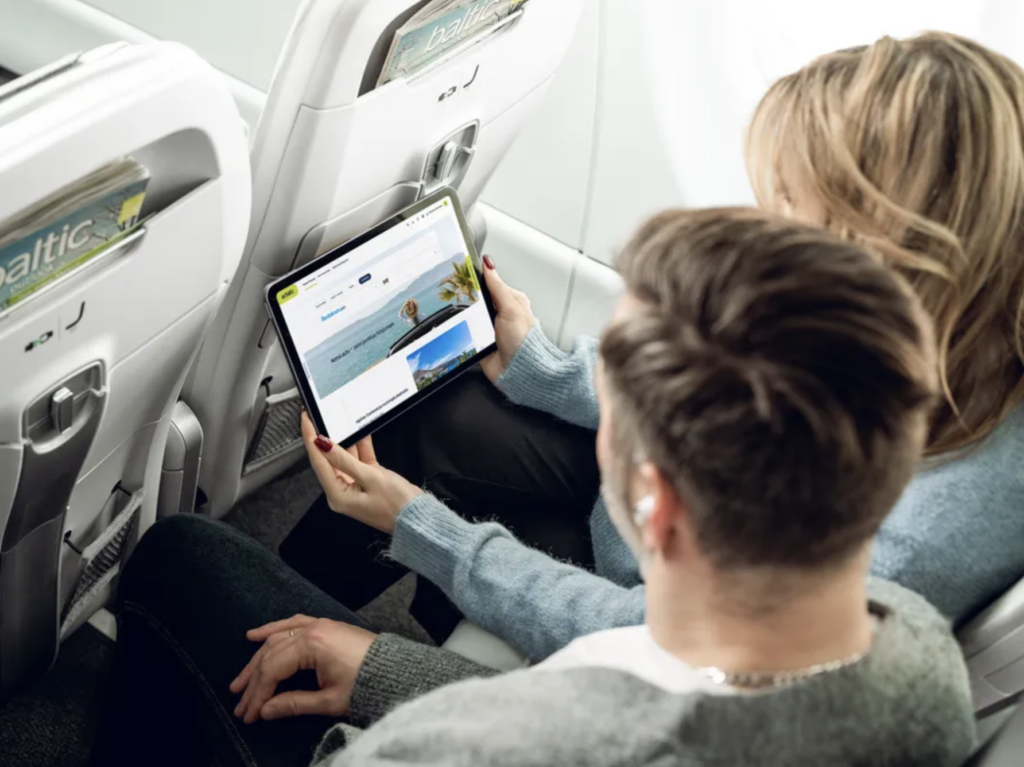
The integration also reflects a shift in how airlines think about retail. Rather than pushing products with a one-size-fits-all approach, AirMall uses a data-driven method to tailor what passengers see based on their individual profile and where they are traveling to. For example, someone flying to a beach destination might see different suggestions to someone heading to a city on a business trip.
InterLnkd’s technology powers this personalization through a data-driven matching system that surfaces products aligned with passenger preferences. For travelers, this makes the experience more intuitive. For airlines, it improves conversion and unlocks new revenue potential.
“airBaltic rolling out AirMall on a Starlink-enabled fleet is a clear sign that airlines are turning the connected cabin into a digital experience. We’ve built a globally scalable solution that fits seamlessly into an airline’s own digital and loyalty ecosystem. Passengers can enjoy the same convenience and choice they expect on the ground, while airlines get an engaging and practical way to offset the cost of connectivity,” said InterLnkd CEO Barry Klipp.
The solution is provider-agnostic. While airBaltic’s deployment runs on Starlink, InterLnkd has confirmed compatibility with other connectivity providers, including Viasat, allowing airlines to adopt the platform across different infrastructures.
A Scalable Model for the Digital Cabin
airBaltic’s rollout highlights how digital retail can scale without the limitations of physical infrastructure. Because AirMall operates through the airline’s existing Wi-Fi portal, there is no need for additional hardware or complex installation.
This plug-and-play approach comes at a time when airlines are under pressure to justify the cost of inflight connectivity. While demand for Wi-Fi continues to grow, high installation and operating expenses have made it difficult to generate strong returns. By layering retail and other digital services onto connectivity, airlines can begin to unlock new revenue streams.
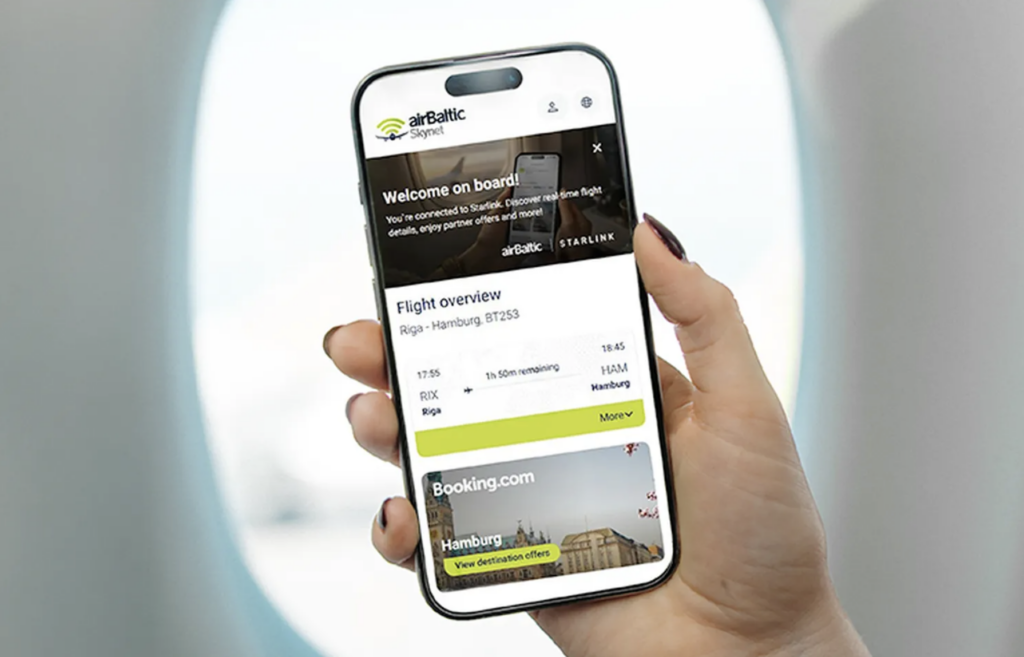
AirMall stands out as a practical opportunity in this space. Unlike advertising or subscription models, retail offers a familiar and immediate value proposition. Passengers already know how to shop online, and loyalty integration adds an extra incentive to engage.
For airBaltic, the addition of AirMall alongside existing Skynet partners such as Booking.com, SIXT, and GetYourGuide reinforces the idea of the inflight portal as a broader digital marketplace. Together, these services extend the passenger journey beyond the flight itself, connecting booking, transport, experiences, and retail into a single platform.