


AIX 2026: Panasonic Expands IFE with Air India Deal and Astrova Debut on Air Canada

Share
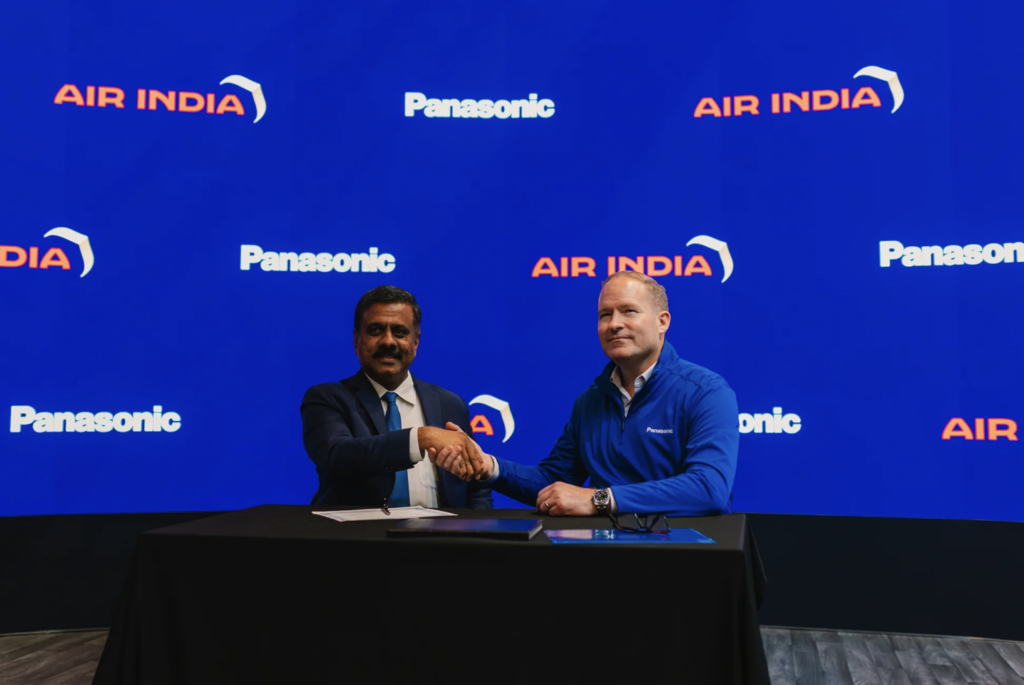
At Aircraft Interiors Expo (AIX) 2026, Panasonic Avionics Corporation highlighted its expanding role across both the operational and passenger-facing sides of the cabin. The company announced a major maintenance agreement with Air India while also marking the in-service debut of its Astrova platform with Air Canada.
Air India Partnership Expands Panasonic’s Role in IFE Lifecycle Support
Panasonic’s first announcement at AIX 2026 centers on a long-term agreement with Air India, which has selected Panasonic Technical Services’ Total Care Package to support in-flight entertainment (IFE) systems across 74 aircraft. The deal spans a mix of widebody and narrowbody platforms, including Boeing 787-9, Airbus A350-1000, A350-900, and A321neo aircraft.
The agreement goes beyond traditional maintenance. Through its Total Care Package, Panasonic will handle full support for its IFE systems, including Astrova and X Series, across both new and existing aircraft. This covers system monitoring, spare parts, global engineering support, and 24/7 technical assistance.
The partnership for Air India is closely tied to its broader fleet renewal and modernization strategy. As the airline expands and upgrades its fleet, maintaining consistent performance and reliability across onboard systems becomes critical to delivering a premium passenger experience.
Panasonic’s role is designed to support that goal by improving system uptime and reducing operational disruptions. By optimizing performance and introducing predictive maintenance capabilities, the company aims to help Air India cut downtime and keep service consistent across its fleet.
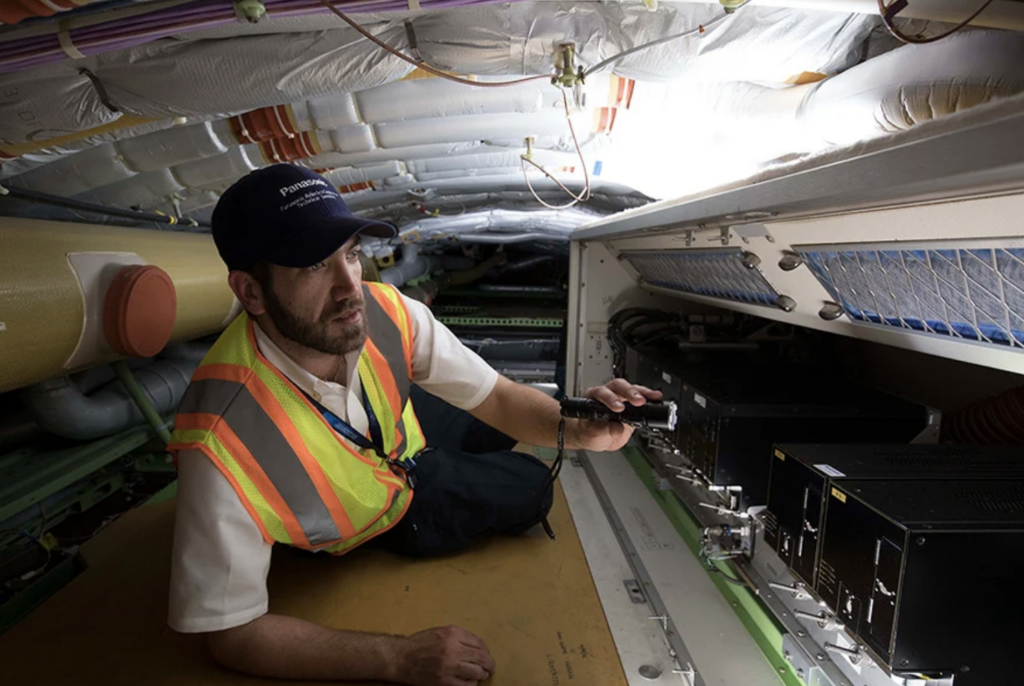
“Responsive, high-quality maintenance support is vital for the operational efficiency of our growing fleet,” said Air India Senior Vice President of Engineering and Maintenance Jeremy Yew. “Panasonic Avionics’ decision to establish new line maintenance stations in Delhi and Mumbai significantly strengthens our ability to minimize IFE-related disruptions and maximize aircraft availability.”
As part of the agreement, Panasonic is making long-term investments in India, including new maintenance stations in Mumbai and New Delhi. These facilities will connect fleet monitoring data directly to on-aircraft maintenance, enabling faster response times and more efficient servicing.
This approach reflects a broader trend in the industry. Airlines are looking for partners that offer not just technology, but reliable day-to-day support backed by local teams real-time service capabilities.
Panasonic Avionics Vice President of Panasonic Technical Services Tom Eskola, emphasized this point. “Committing to our Total Care Package, which is designed to deliver the best possible in-flight experience for passengers, underscores Air India’s commitment to innovation and operational excellence.”
The agreement also reinforces Panasonic’s position as a long-term partner for airlines undergoing large-scale transformation. As airlines invest in new aircraft and upgraded cabins, ongoing support and maintenance are becoming just as important as the initial installation.
Astrova Enters Service with Air Canada, Showcasing Next-Generation IFE
While the Air India deal highlights Panasonic’s strength in lifecycle support, the launch of Astrova with Air Canada showcases its next-generation passenger experience strategy.
Astrova has officially entered service on an Air Canada Airbus A321, marking the first time the platform is flying with passengers. The airline is installing the system across 19 A321 aircraft, with additional deployments planned across Airbus A220-300, A321XLR, and Boeing 787-10 aircraft.
This rollout reflects a large-scale commitment to a unified IFE experience across the fleet. By deploying Astrova across both new and existing aircraft, Air Canada aims to deliver a consistent, high-quality experience regardless of aircraft type or cabin class.
Astrova is built around a more immersive entertainment experience. It features 4K OLED HDR10+ displays designed to deliver a home-cinema feel, along with spatial audio streamed directly to passengers’ wireless headphones using Bluetooth connectivity.
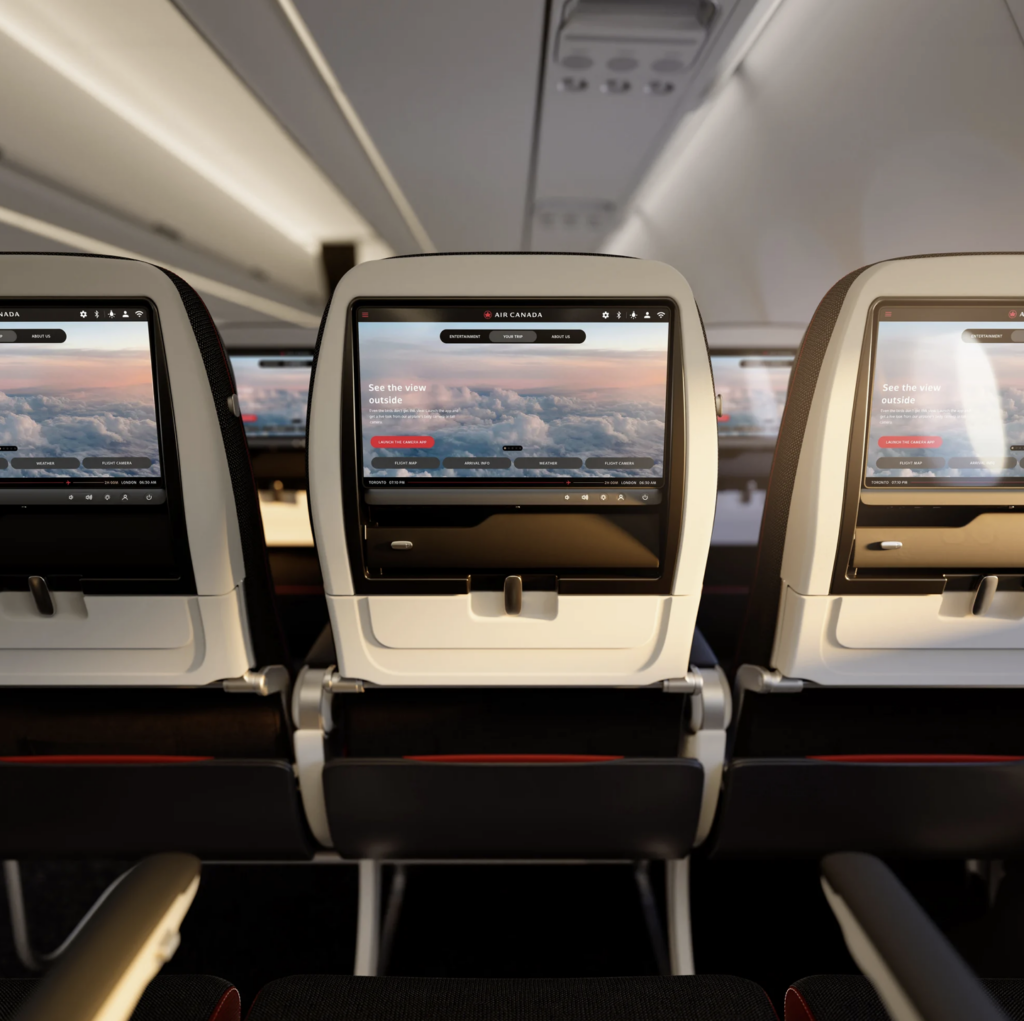
For passengers, this represents a shift toward higher-quality, more personalized entertainment. The combination of high-resolution displays and wireless audio creates a more flexible and engaging experience, bringing onboard entertainment closer to what travelers expect on the ground.
The system also supports productivity. Each seat includes up to 67W of USB-C power, allowing passengers to charge phones, tablets, and laptops throughout the flight. This reflects the growing importance of device integration and onboard connectivity.
Beyond the passenger experience, Astrova’s modular design is a key differentiator. The system includes a patented removable peripheral bar that can be upgraded without replacing the entire system, allowing airlines to introduce new features over time.
Panasonic Avionics Senior Vice President of Global Sales Hernan Abbes, highlighted the importance of this flexibility. “This debut demonstrates the scalability of Astrova across diverse aircraft types while delivering a premium experience at every seat,” he said. “Its modular design allows airlines to adapt and evolve the system over time.”
For Air Canada, that adaptability is central to its strategy. “Providing a consistent, premium experience across our diverse fleet is a top priority,” said Air Canada Managing Director of Onboard Product John Moody. “The scalability of the Astrova system allows us to integrate high-quality entertainment across all aircraft and all classes of service.”
The launch of Astrova also reflects a growing shift in in-flight entertainment. Airlines are moving away from fixed systems toward more flexible platforms that can evolve alongside technology. This includes higher-quality displays, wireless capabilities, and modular upgrades that extend the lifecycle of onboard systems.