


AIX 2026: SES Expands Connected Cabin Strategy with Google, Japan Airlines, and Boeing Partnerships

Share
SES is using Aircraft Interiors Expo (AIX) 2026 to highlight a broader push into next-generation in-flight connectivity (IFC), covering passenger experience, airline partnerships, and aircraft integration. The company announced a partnership with Google to simplify Android connectivity, expanded its work with Japan Airlines on long-haul multi-orbit connectivity, and reached a key milestone with Boeing on line-fit installation.
SES and Google Simplify the Passenger Connection Experience
A significant focus of SES’s AIX 2026 announcements centers on improving how passengers connect to inflight Wi-Fi. While airlines have invested heavily in connectivity infrastructure, the first step of logging in has often remained a point of friction, with delays, redirects, and repeated prompts creating a disjointed experience.
To address this, SES is collaborating with Google to streamline Android login through deeper integration with the operating system. On SES-equipped aircraft, when an Android device connects to the network, the airline’s portal opens automatically, so passengers don’t have to open a browser or type in a website.
This creates a faster and more intuitive connection process, allowing passengers to access Wi-Fi, entertainment, and onboard services with fewer steps. Android users can also use features like autofill for passwords and payments, making the process even smoother.

“With SES multi-orbit in-flight connectivity reaching millions of passengers, we believe the experience at 35,000 feet should be as seamless as it is on the ground,” said Google Android Platform Director of Engineering Lars Bergstrom. “By eliminating login and connection friction, we are ensuring that whether travelers are streaming, gaming or working, they have immediate access to trusted features.”
Beyond just logging in, the partnership also aims to keep passengers engaged throughout the flight. With Android Custom Tabs, the airline portal stays active in the background like an app, so passengers can switch between apps and come back without needing to reconnect. This creates a smoother, more continuous experience.
For airlines, this helps drive more engagement and revenue. Passengers are more likely to spend time on the portal, which can boost loyalty sign-ups, ads, onboard shopping, and premium upgrades. By making the experience easier to use, airlines can increase conversions and generate more additional revenue while building stronger customer relationships.
“By working with Google to streamline Android access to the onboard portal, we are making it faster for passengers to get online while keeping the airline’s branded experience and commercial opportunities front and center,” said SES Director of Aviation Product Management Aaron Goldberg.
The rollout represents an industry first for in-flight connectivity, introducing a “portal as an application” model that aligns more closely with how passengers use their devices on the ground. It also reflects a bigger shift, where the onboard portal is seen as an important digital touchpoint, not just a way to get online.
Japan Airlines Expands Multi-Orbit Connectivity to Long-Haul Fleet
Alongside its focus on passenger experience, SES is also growing its airline partnerships, with Japan Airlines choosing its multi-orbit connectivity solution for its long-haul fleet. The deal builds on more than a decade of work together and reflects Japan Airlines’ continued investment in onboard digital services.
Under the agreement, SES will equip 20 Airbus A350-900 aircraft and 21 Boeing 787-9 aircraft with its multi-orbit electronically steered antenna system. This includes both line-fit installations on new aircraft and retrofits on existing aircraft, with deliveries expected to begin in 2028.
The system combines geostationary (GEO) and low-Earth-orbit (LEO) satellite coverage, enabling faster speeds, lower latency, and more consistent global connectivity. Electronically steered antennas have a slimmer design, which helps improve aerodynamics and makes them easier to install than traditional systems.
“Japan Airlines’ passengers will benefit from multi-orbit connectivity delivering fast, dependable internet access with wide coverage and low latency,” said SES Vice President of Global Airline Partnerships Enrique Villasenor.
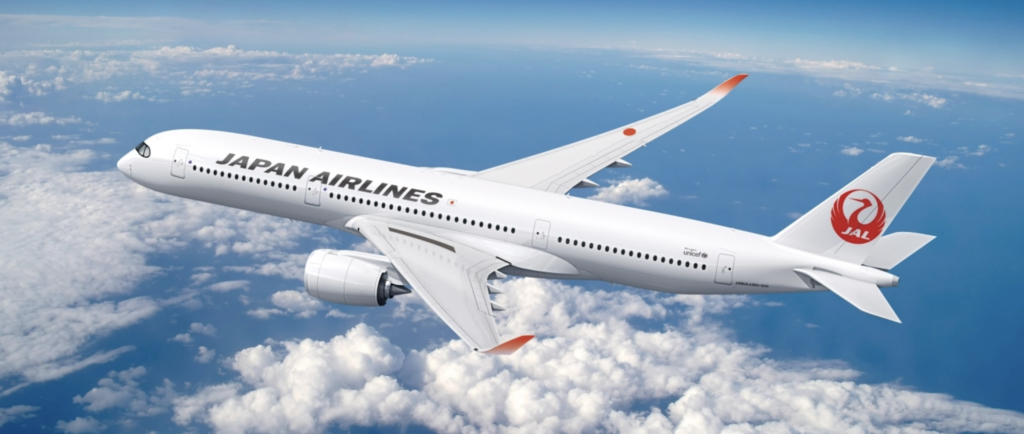
For Japan Airlines, the expansion builds on its long-standing leadership in connectivity. The airline was among the first to introduce free Wi-Fi across its domestic network and continues to prioritize digital services as part of its broader customer experience strategy.
“SES has been a trusted partner since 2013,” said Japan Airlines Deputy Senior Vice President of Customer Experience Junko Sakihara. “Our decision to expand SES connectivity to our long-haul fleet reflects the reliability, redundancy, and continuous innovation of the multi-orbit system.”
The move highlights the growing importance of multi-orbit architectures in aviation. By combining different satellite networks, airlines can deliver more reliable and scalable connectivity, particularly on long-haul routes where performance has historically been inconsistent.
Boeing Partnership Advances Line-Fit Connectivity Integration
SES’s third major announcement at AIX 2026 focuses on aircraft integration, with a milestone reached with Boeing toward making its multi-orbit connectivity system available for line-fit installation. The development marks a significant step in simplifying how airlines deploy connectivity on new aircraft.
Through the partnership, Boeing will install SES’s in-cabin connectivity hardware during aircraft production, enabling airlines to receive aircraft with the onboard network already in place. This reduces the need for post-delivery modifications and accelerates the timeline for entering service with connectivity fully operational.
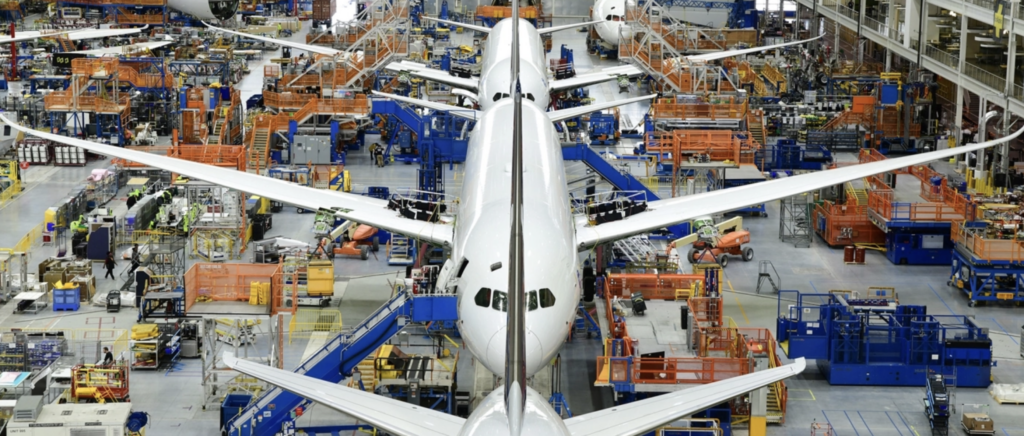
The system is expected to first be available on the Boeing 737, followed by the 787, with plans to expand it across more Boeing aircraft over time.
“We are on track for full line-fit offerability, giving airlines a seamless path to select and install the multi-orbit antenna solution during factory production,” said SES President of Mobility Mike DeMarco.
The collaboration also supports Boeing’s broader push to integrate advanced connectivity into the production process. “We are making strong progress bringing multi-orbit connectivity into production, enabling a more streamlined installation approach and supporting scalable solutions,” said Boeing Director of Airplane Connectivity Destry Lucas.
SES’s multi-orbit system works across both low-Earth-orbit and geostationary satellites, offering global coverage, better reliability, and low-latency performance. The company says it has completed more than 500 installations so far, with over 1,000 more planned, showing strong demand from airlines for flexible, high-performance connectivity.