


AIX 2026: Air Canada, Collins Aerospace Unveil Aurora Suites, New A321XLR Cabin Experience

Share
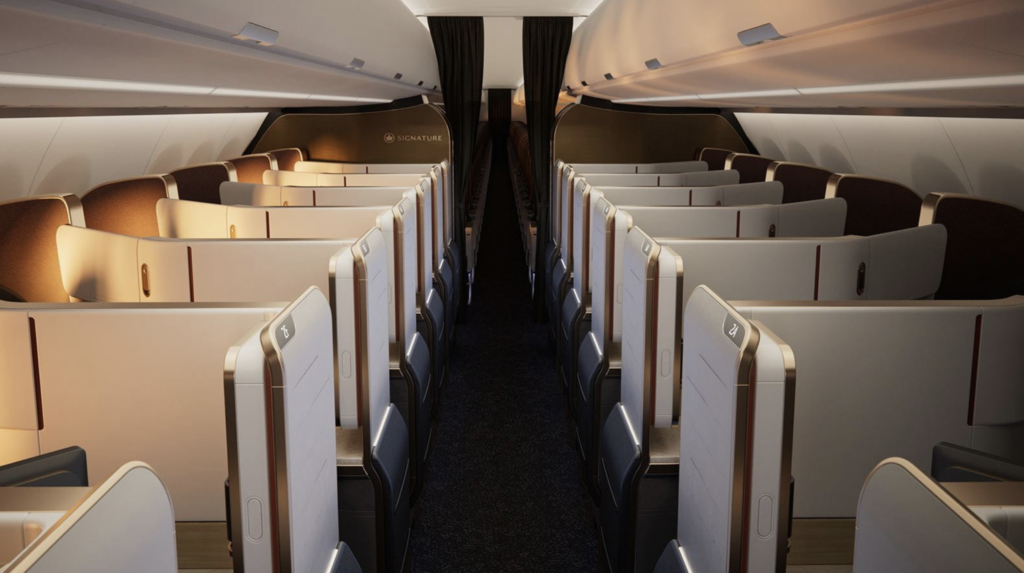
Air Canada and Collins Aerospace unveiled a major new cabin program at Aircraft Interiors Expo (AIX) 2026 that will see the introduction of the latter’s Aurora suites and next-generation economy-class seating across the airline’s incoming Airbus A321XLR fleet. The investment marks one of Air Canada’s most significant product upgrades in years and brings lie-flat seats to a Canadian single-aisle aircraft for the first time. The new interiors combine premium comfort, smarter technology, and a distinctly Canadian design identity as the carrier prepares for future growth.
Aurora Suites Bring Widebody Comfort to the A321XLR
The fully redesigned cabins will debut this summer on the Airbus A321XLR, giving Air Canada a true lie-flat Signature Class experience for the first time on a single-aisle aircraft. The headline feature of the new A321XLR is Air Canada’s custom Aurora business class suite, developed with Collins Aerospace and design partner Acumen. Each aircraft will feature 14 lie-flat suites at the front of the cabin, giving travelers a premium experience normally found on larger long-haul aircraft.
“Details matter: we listened closely to feedback and challenged ourselves to create an experience defined by a strong Canadian sense of place, alongside a commitment to craftsmanship, functionality, and long-term durability.”
– Mark Nasr, Air Canada
“Aurora is designed to provide a widebody business class experience on single-aisle aircraft, offering passengers the comfort, space and privacy expected on long-haul flights,” said Collins Aerospace VP Global Airlines and Lessors Cynthia Muklevicz. “By integrating the suites, monuments and galley space into a unified architecture, we’re able to make better use of the cabin footprint while maintaining passenger comfort and the service capabilities airlines need to deliver a true premium experience.”
For Air Canada, the project has been in development for nearly five years due to delays on the XLR program. “We started working with Collins on the Aurora platform in 2021,” said Air Canada Managing Director of Onboard Product John Moody. “It gave us an opportunity to look at what we liked and what we wanted to change in order for it to be the right product for Air Canada.”
One of the most notable design decisions was not adding suite doors. While enclosed suites have become common in premium cabins, Moody said privacy was already built into the seat geometry.
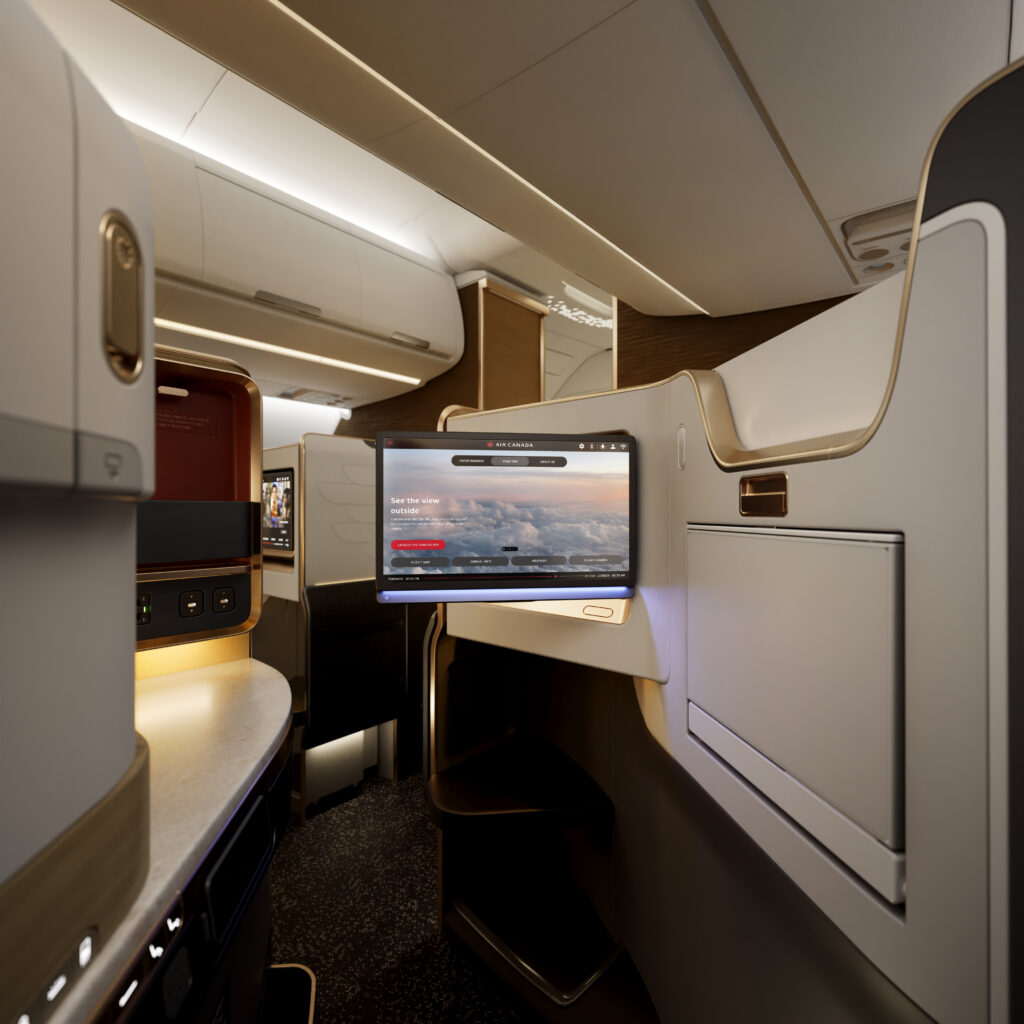
“We have a seat here that is extremely private,” he said. “Once you’re in it, it honestly feels bigger than it might look from outside.”
Instead of doors, Air Canada used the space more strategically. A specially shaped outer wall near the ottoman creates additional foot room and a longer sleeping surface while preserving aisle space for crew service and passenger movement from hip height upwards.
“In the airline industry, a lot of things are about trade-offs,” Moody said. “This is actually a space where it’s a win-win for customers in terms of aisle space and being able to move up and down the cabin.”
“By integrating the suites, monuments and galley space into a unified architecture, we’re able to make better use of the cabin footprint.”
– Cynthia Muklevicz, Collins Aerospace
The suites were also designed to accommodate different travel styles. A sliding privacy section between two adjacent suites mean that passengers can see each other’s faces if they want to. “The baseline design was almost too private,” Moody said. “That’s great for someone traveling alone, but more customers today are traveling for leisure, as couples or families.” With this design feature in mind, Moody said the airline would be actively encouraging people traveling together to sit next to rather than across from one another.
Additional suite features include multiple charging points, open storage areas, a 19-inch 4K OLED in-flight entertainment (IFE) screen with Bluetooth audio, and a secondary low-light display that would be next to the passengers’ head when the seat is in lie-flat mode that provides subtle journey updates without using the main entertainment screen.
Customized Galley Makes the Most of Cabin Space
Interestingly, Moody shared that the 49-degree angle of the Aurora business-class seats “created relatively large triangular spaces at the front and the back of the cabin.” He continued, “We wanted to use those as efficiently as possible in order to be able to deliver a full Signature Class service. So, working with Collins, working with our design agency, we developed a galley that essentially installs the galley carts at that same 49-degree angle, […] preserving the space we needed to deliver a full service while also maximizing the amount of space to put the seats in.”
Economy Cabin Receives Major Upgrades
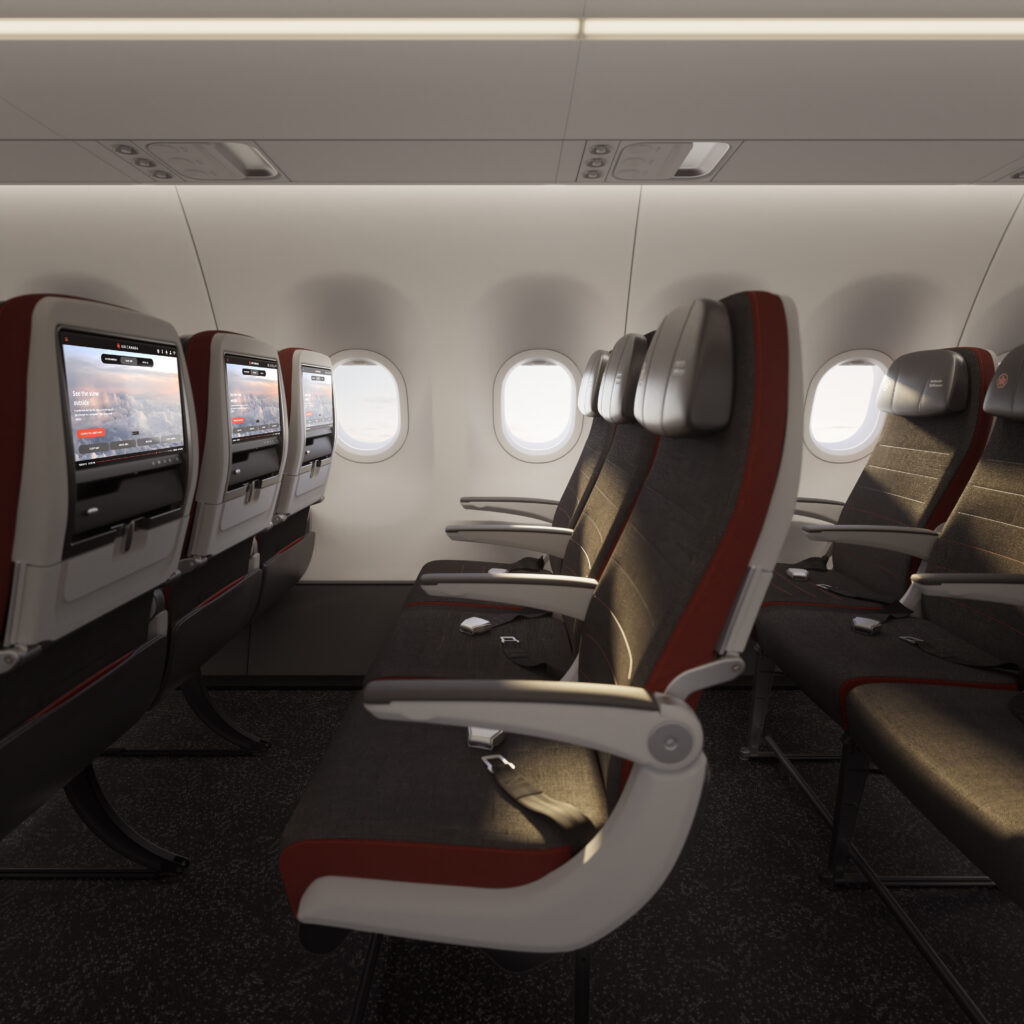
Beyond business class, Air Canada is also introducing a stronger experience for every passenger onboard. The A321XLR fleet will feature 168 Collins Meridian+ economy seats designed with improved personal space and comfort.
The Meridian+ platform uses a contoured architecture to create more usable room around the hips, knees, and elbows. Air Canada also selected upgraded seatback features that improve stowage, in-flight entertainment integration, and personal power access.
Across the aircraft, all passengers will benefit from larger overhead bins, high-powered USB-C charging, AC outlets, Bluetooth audio, and upgraded 4K OLED entertainment screens. Economy customers will receive 13-inch displays, while business class seats feature larger 19-inch monitors.
The focus on economy comfort is especially important because the A321XLR is designed to operate longer missions than a typical narrowbody aircraft. Announced in 2019, the newest long-range version of the Airbus A321 family entered service in late 2024, with Iberia and Aer Lingus as launch customers.
Because the aircraft is single aisle yet capable of transatlantic and other long-haul flying, seat comfort, entertainment, and personal space become even more important for travelers spending many hours onboard.
“This investment is about fundamentally redefining the experience of flying with Air Canada. From the moment of stepping on board, we’re setting a new standard for how Canadians and the world connect with our brand,” said Air Canada EVP and Chief Operations Officer Mark Nasr. “Details matter: we listened closely to feedback and challenged ourselves to create an experience defined by a strong Canadian sense of place, alongside a commitment to craftsmanship, functionality, and long-term durability.”
“That’s why you see the warming of these cabins into warmer neutrals, bronzes instead of silver finishes […] It supports the brand direction of glowing-hearted hospitality.”
– John Moody, Air Canada
A Canadian Design Identity Supports Future Growth
The A321XLR interiors are the first major expression of Air Canada’s new Glowing Hearted design standard, inspired by the phrase “with glowing hearts” from the Canadian national anthem.
“We call it our Glowing Hearted generation,” Moody said. “That is an intentional warming of the cabin, and not just the cabin; it is an intentional warming of the Air Canada brand.”
Previous Air Canada cabins leaned heavily on cooler blues and charcoal tones. The new interiors move toward warmer neutrals, bronze metal accents, wood textures, and softer lighting designed to create a calmer and more welcoming environment.
“That’s why you see the warming of these cabins into warmer neutrals, bronzes instead of silver finishes,” Moody said. “It supports the brand direction of glowing-hearted hospitality.”
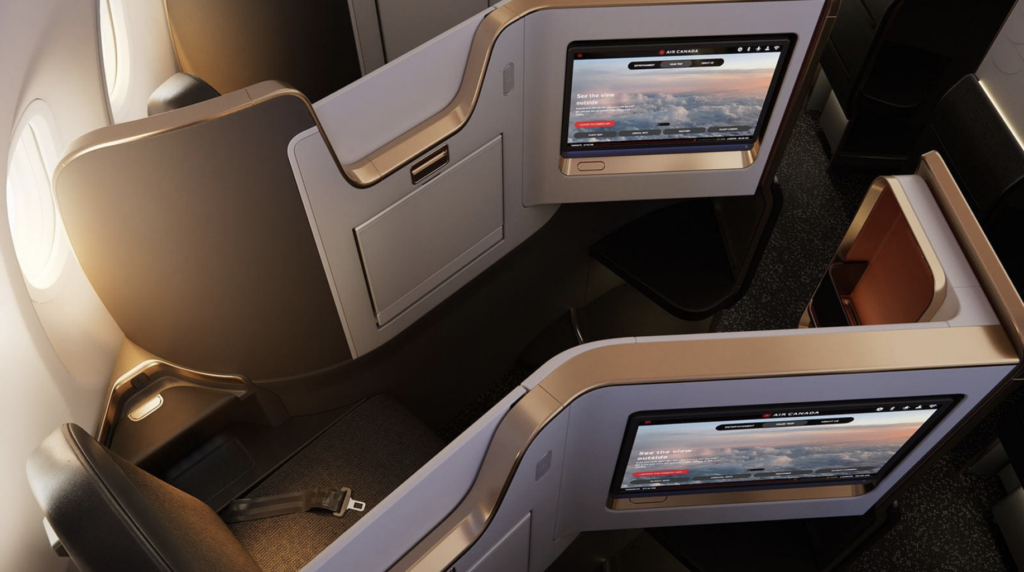
The design also includes subtle Canadian touches. Air Canada Signature red stitching appears throughout the cabin, while a backlit maple leaf canopy welcomes passengers as they board.
The aircraft itself will play an important strategic role. With long range and lower operating costs than widebody jets, the A321XLR gives Air Canada more flexibility to launch thinner transatlantic routes while still offering lie-flat premium service.
That means markets that may not support a Boeing 787 or Airbus A330 can still receive a competitive premium product. It also gives the airline new options for high-demand transcontinental routes within North America.
Air Canada’s first A321XLR is expected to enter service this spring, with a total of 30 aircraft planned for the fleet. The launch is part of a broader product refresh that also includes Boeing 787-10 aircraft with Signature Plus Suites, while Airbus narrowbodies, Rouge aircraft, and regional jets are also set for cabin and connectivity upgrades.