


Alaska Airlines’ Milk Run: A Passenger Experience Through Southeast Alaska

Share
Few commercial routes connect an airline with the communities it serves as closely as Alaska Airlines’ Milk Run. Alaska Flights 61, 62, 64, 65, 66, and 67 operate the multi-stop services across Southeast Alaska, connecting smaller communities including Petersburg, Wrangell, Ketchikan, Sitka, Cordova, and Yakutat with larger cities such as Juneau, Anchorage, and Seattle. For passengers, the journey feels less like a traditional point-to-point flight and more like a moving connection between communities, carrying people, mail, luggage, and essential supplies to places where air travel plays an important role in everyday life.
The Milk Run traces its roots to Alaska’s early bush pilots, who launched service to create a lifeline across the state, carrying mail, medicine, and other essential goods to remote communities beginning in the 1930s. The Milk Run earned its name from its many stops and history of delivering milk and groceries to communities along the route. That tradition became part of Alaska Airlines’ network in Southeast Alaska in 1968, when the airline merged with Alaska Coastal Ellis and Cordova Airlines, but the purpose never changed. For more than half a century, the Milk Run has served as a primary bridge for people and commerce between communities across Southeast Alaska, many of which have limited or no road access. A nonstop Anchorage to Seattle flight takes about three hours and 45 minutes. The Milk Run transforms that same distance into a day-long journey through the rugged mountains and glaciers of Southeast Alaska.
Boarding a Flight Built Around Communities
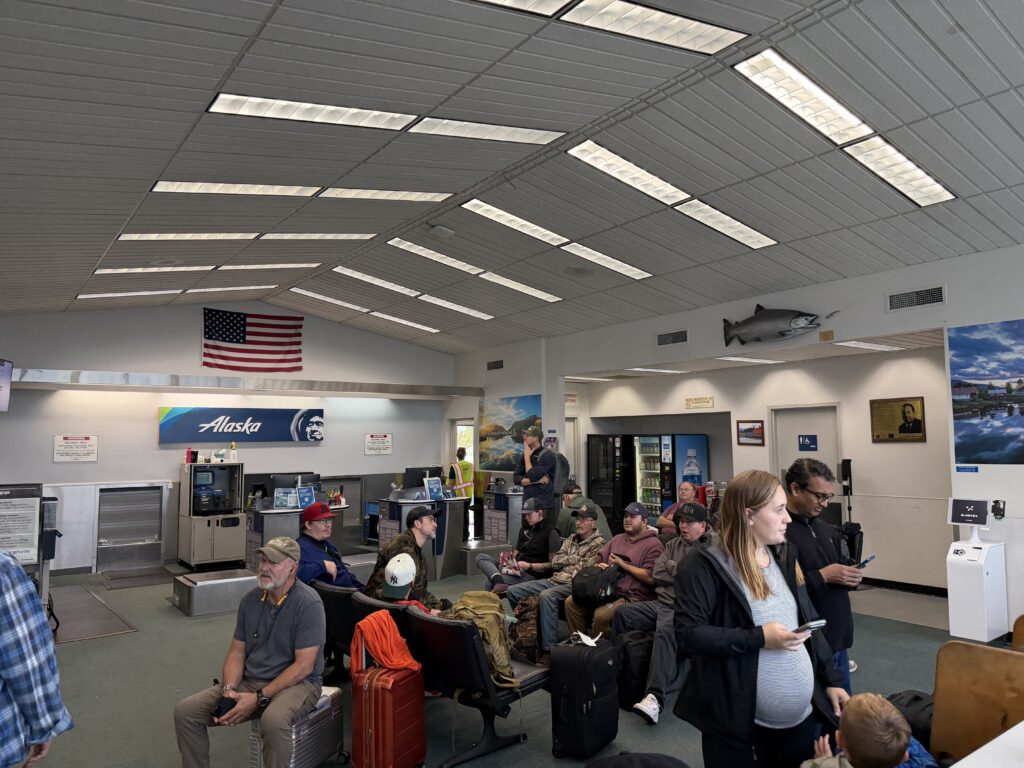
In August, I traveled on AS 64 from Anchorage to Seattle, stopping in Juneau, Petersburg, Wrangell, and Ketchikan along the way. The experience began at the gate, where the passenger mix immediately signaled that this route operates differently from a typical point-to-point flight. Families and local residents carried taped cargo boxes alongside suitcases, and coolers outnumbered traditional luggage.
Most passengers were traveling only one or two segments rather than making the entire journey to Seattle. Many were local residents returning home with groceries, gifts, and other supplies that can be harder to find in remote parts of Southeast Alaska. To the best of my knowledge, I was the only passenger traveling the entire route in one stretch. Even before boarding, the flight felt closely tied to the places it served.
Conversation filled the waiting area in Anchorage. People greeted one another like neighbors, while Alaska ground staff exchanged familiar smiles with frequent flyers, often recognizing passengers by name and asking about their families. Before even boarding, the Milk Run already felt less like an ordinary flight and more like a service built around the people who rely on it.
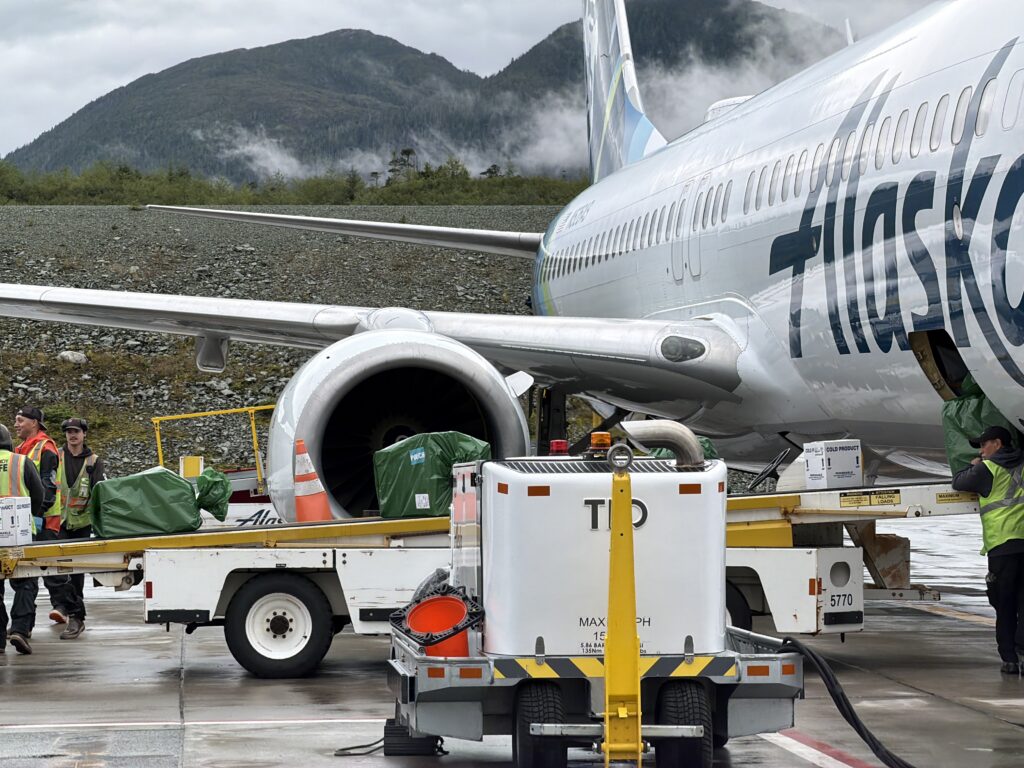
Once onboard, the Anchorage-based cabin crew of four welcomed passengers with relaxed energy. Overhead bins reflected the route’s role in daily life, with groceries, gifts, and personal belongings sharing space above the cabin. Outside, boxes, coolers, pipes, and luggage were loaded with equal priority. Inside, passengers greeted one another more like regular commuters than strangers.
A Cabin That Changes with Every Stop
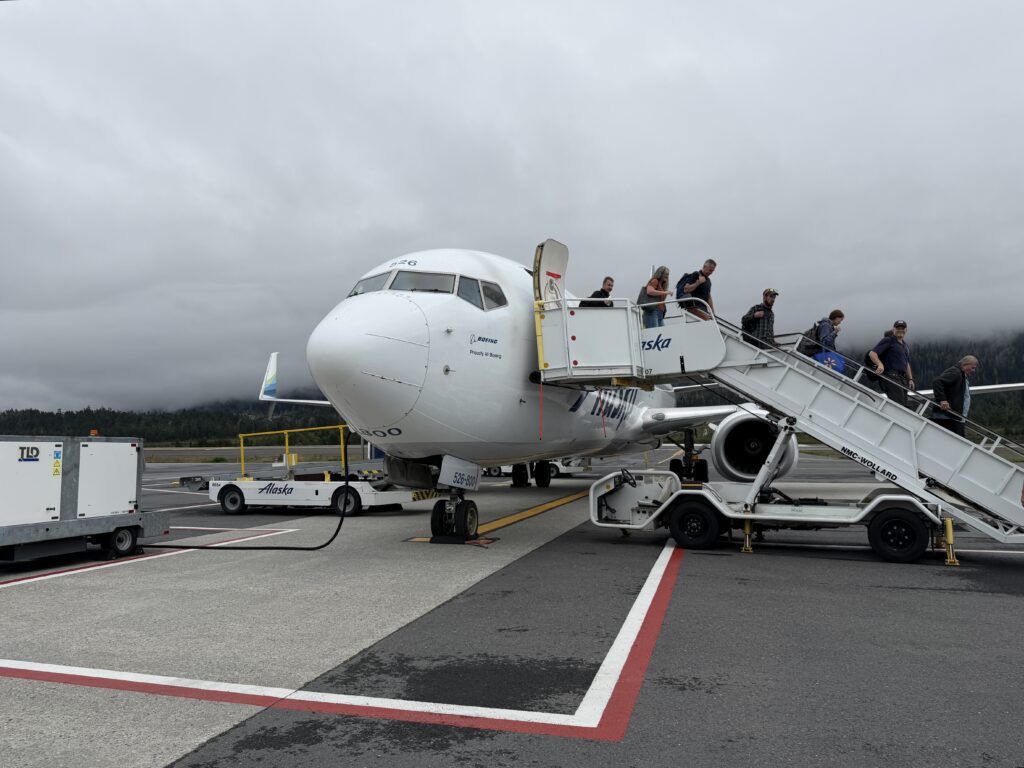
Once airborne, the defining feature of the Milk Run quickly became clear. The cabin never stayed the same for long. At each stop, passengers stepped off, new travelers boarded, and conversations shifted as the aircraft continued through Southeast Alaska. The Boeing 737 became a rotating snapshot of the places it connected.
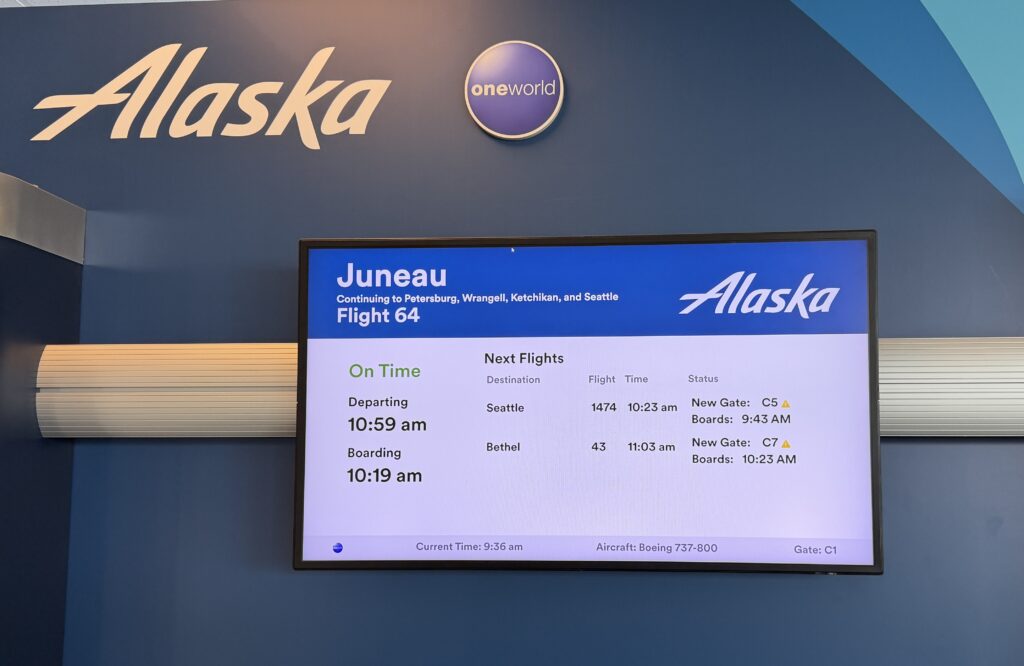
The crew structure reflected the unusual journey as well. Juneau, our first stop, marked an important transition, with the pilots leaving the aircraft and new pilots taking over for the remainder of the journey to Seattle. The Anchorage-based flight attendants, however, remained onboard for the entire Milk Run, providing a familiar presence as the passengers and pilots around them changed throughout the day. Watching the transition offered a glimpse into the crew logistics required to operate such a unique multi-stop flight.
Some flight segments lasted only minutes. The shortest came between Petersburg and Wrangell, a route Alaska describes as the shortest scheduled jet flight in the world. Our flight spent just nine minutes in the air and reached an altitude of only 4,000 feet. We had barely finished climbing out of Petersburg before the aircraft began descending again. Just as passengers settled into their seats, it was already time to prepare for another landing. Instead of monotony, repetition created momentum, with every landing bringing new faces and fresh energy.
For travelers, this rhythm felt closer to a regional train journey than a standard flight. Each stop brought a new mix of local residents and travelers onboard, while cabin crew greeted returning passengers by name. Cargo loaded in Anchorage included mail, medical supplies, and essential goods destined for towns that depend on air service. The aircraft felt less like a traditional flight and more like a moving link between people, goods, and places across Southeast Alaska.
Between Mountains and Communities
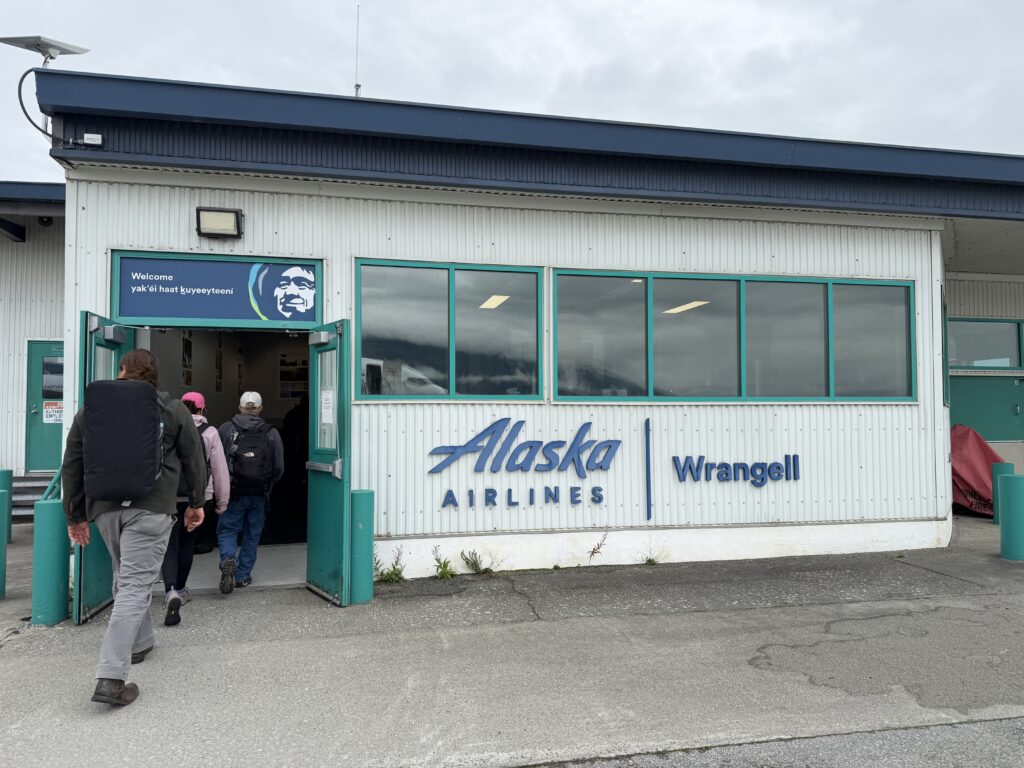
The airports reinforced that feeling. Alaska Airlines owns 13 terminal buildings across the state, including those in Petersburg and Wrangell. The two terminals share the exact same footprint, with each consisting of a single room that features check-in desks, baggage claim, two vending machines, and a restroom. Each terminal receives only two scheduled flights a day, the northbound and southbound Milk Runs, making the arrival of each flight a central part of the airport’s daily routine.
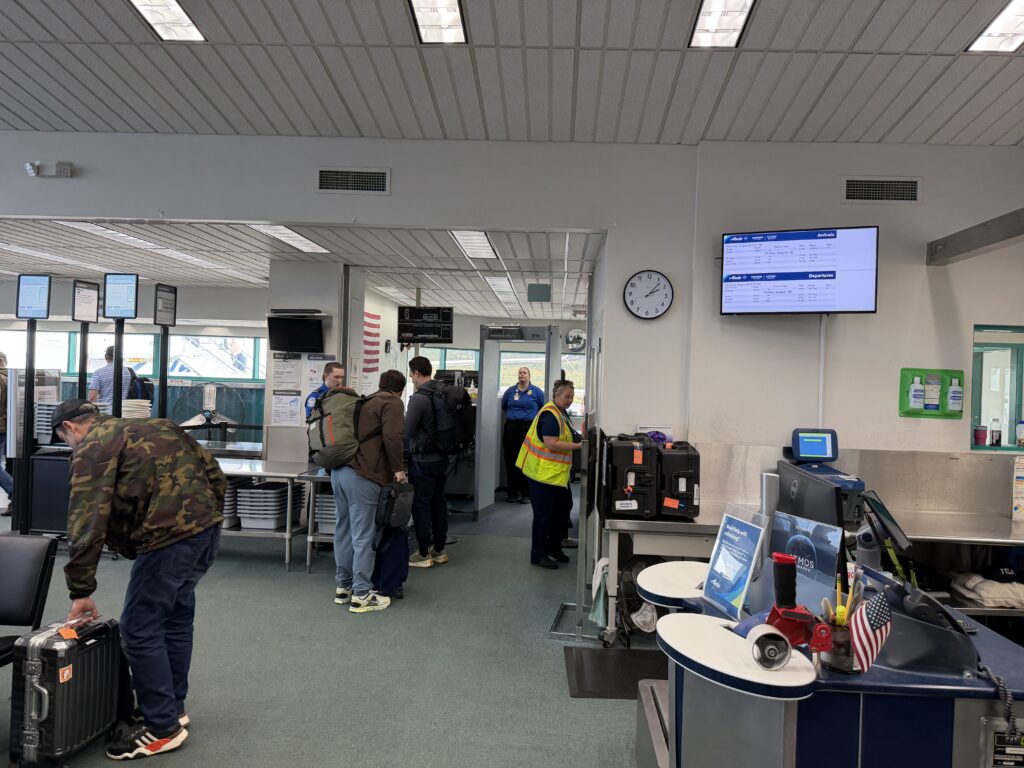
The TSA checkpoint sits directly in front of the boarding area, so any continuing passenger who chooses to step off the aircraft and onto the pavement must clear security again before reboarding. On my journey, I got off at each stop, which meant passing through security again before continuing to the next destination.
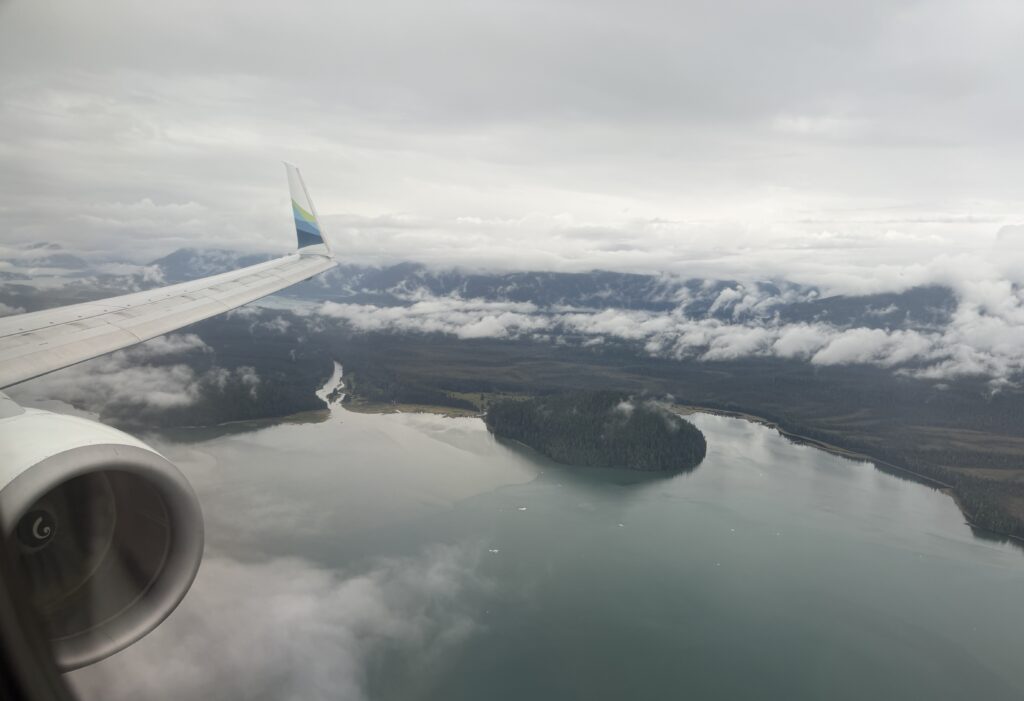
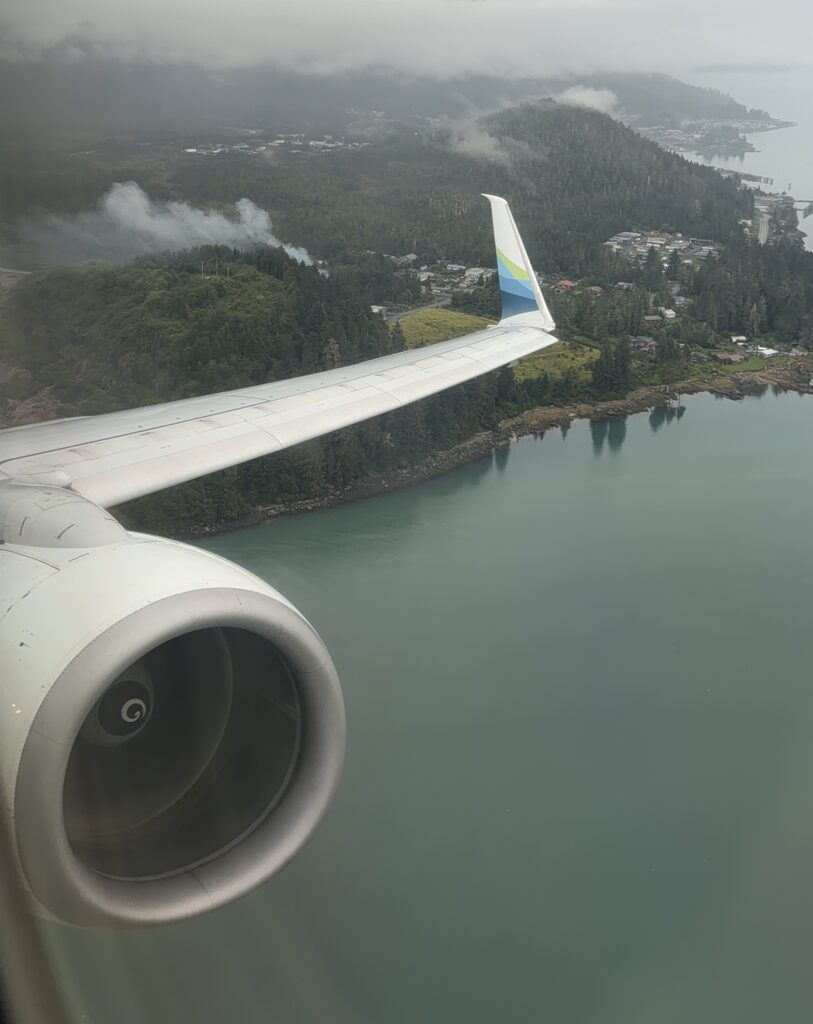
From the window, the scenery remained a constant spectacle. Mountains, glaciers, forests, and vast stretches of wilderness filled the view beneath the wings across Alaska’s southeast panhandle. Thin runways appeared nestled between towering mountains, with small towns sitting just beyond the pavement. The final approaches felt more like the end of a roller-coaster ride than a commercial flight on a Boeing 737.
The repeated takeoffs and landings gave passengers a better understanding of the geography that makes these flights so important. Places that may appear isolated on a map became a series of short flights from the cabin. With no roads connecting many of these towns to one another or to the outside world, the view from above made clear why air service remains such an important link across Southeast Alaska.
Alaska’s crews played a central role in maintaining that atmosphere. Many of the pilots and flight attendants who regularly work the Milk Run have flown the route for years, building relationships with the passengers and towns they serve along the way. Crews recognize returning travelers, know the places outside the window, and understand that many passengers depend on these flights as part of everyday life. When local high school teams travel for athletic or academic competitions, crews may even announce their wins over the PA on the flight home, prompting applause from passengers throughout the cabin. “It really is that kind of nostalgia, small company feel, and connection to community,” said Alaska Airlines Regional Vice President Marilyn Romano.
Service That Matches the Journey
Service reflected the unusual rhythm of the Milk Run. On most legs, there is not enough time for cabin service, with the seatbelt sign often remaining on for nearly the entire flight. On my itinerary, drinks and snacks were served between Anchorage and Juneau, while dinner was served in First Class between Ketchikan and Seattle. The flights in between were so short that the crew often began preparing for landing almost as soon as the aircraft finished climbing.
“You’re not going to be able to do service in 20 minutes, much less nine minutes between Wrangell and Petersburg,” said Romano. Regular Milk Run passengers know what to expect, with many bringing their own snacks for the shorter flights.
On longer flights, the experience changes. First Class passengers can pre-order meals on eligible flights through the Alaska Airlines app or website beginning two weeks before departure and up to 20 hours before the flight. On the final flight from Ketchikan to Seattle, passengers could choose from up to five options, including hot entrees, seasonal selections, and Alaska’s Signature Fruit & Cheese Platter.
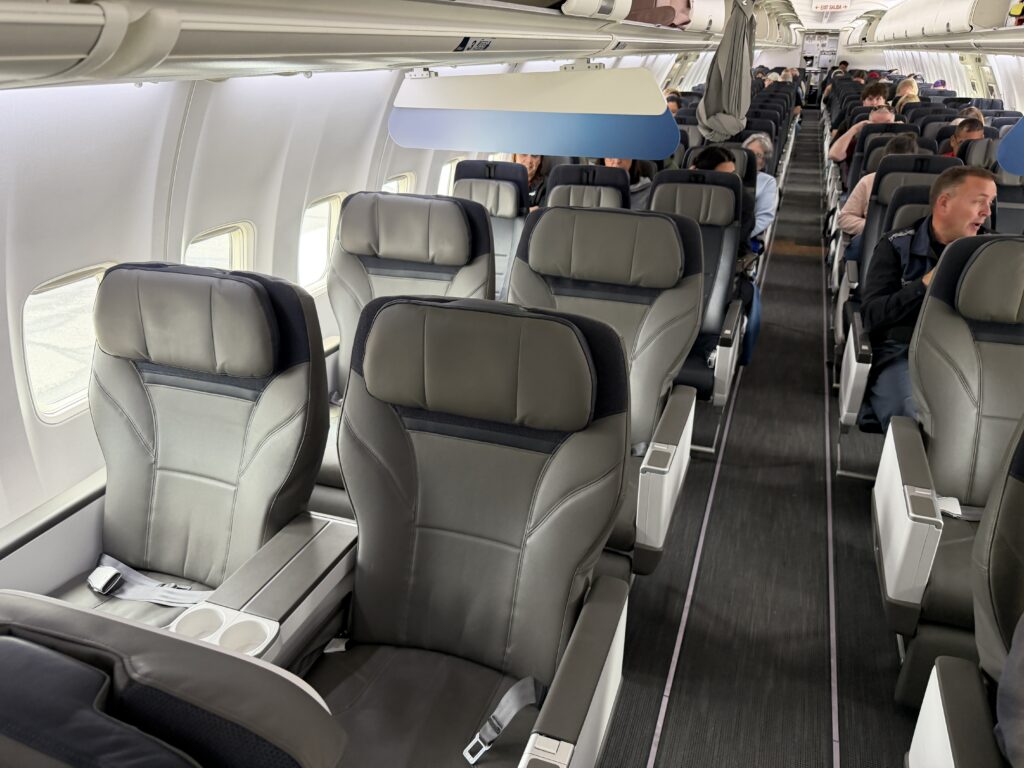
Catering requires Alaska to plan around where food can be loaded along the journey. Fresh catering is primarily available in Anchorage and Seattle, making shelf-stable options particularly useful between smaller communities. “It’s why we have our snack packs, which are shelf stable and easy to pack,” Romano said. “They have a longer shelf life as opposed to fresh food.”
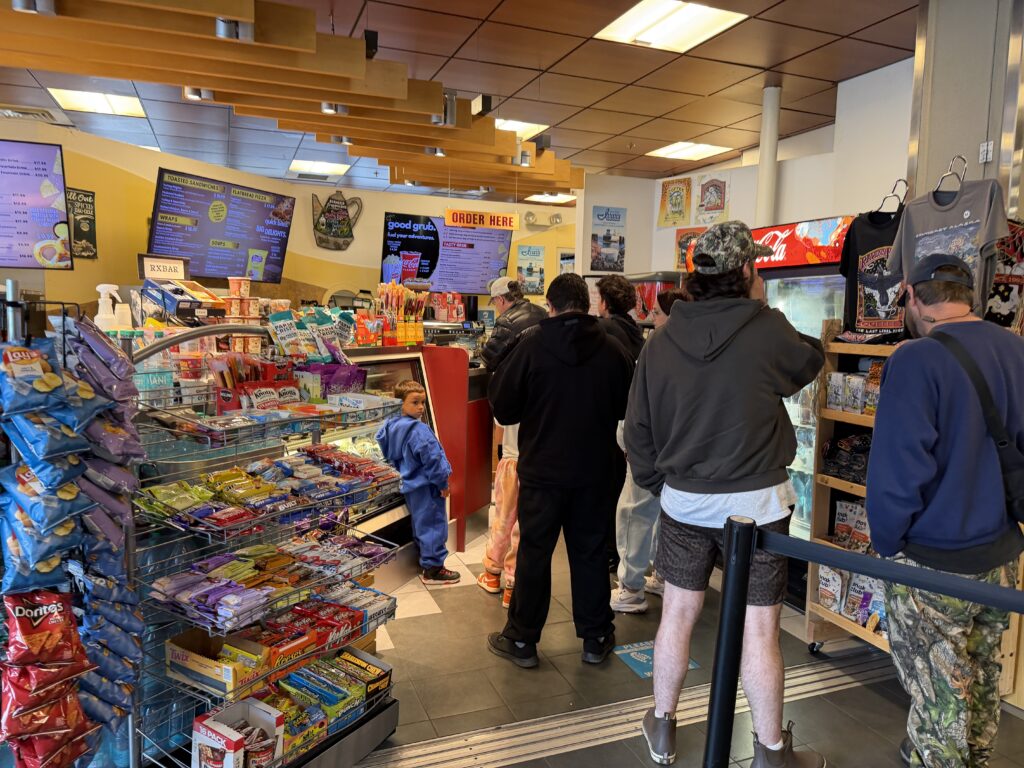
The local character of the Milk Run appeared everywhere. During our stop in Ketchikan, our captain, Julie, stepped off the aircraft and returned carrying fresh popcorn from the airport snack bar for the crew. For decades, Alaska Airlines captains have made the same stop to buy popcorn for their crews, creating a tradition unique to the Milk Run.
A Different Side of Air Travel
By the final descent into Seattle, a long day of flying gave way to reflection. The cabin had cycled through different passengers, conversations, and destinations with every stop. Completing the Milk Run felt less like reaching the end of a flight and more like finishing a journey through Southeast Alaska.
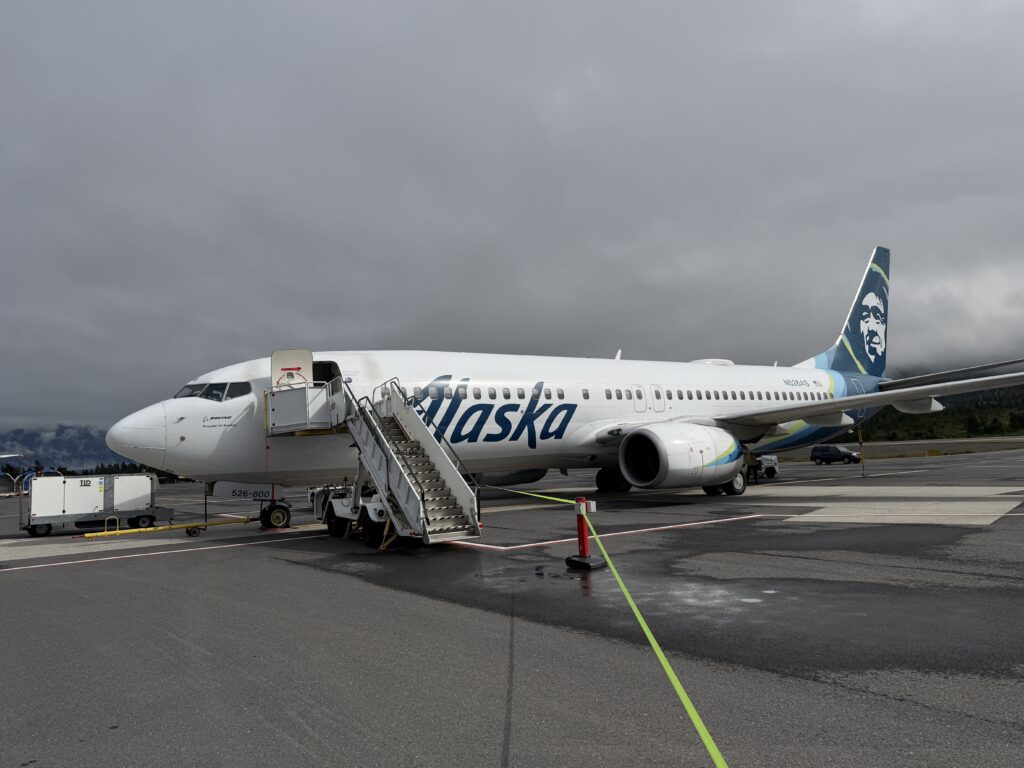
For travelers, the journey reshaped expectations of air travel as efficiency gave way to meaning. The Milk Run shows that passenger experience does not depend solely on seats, service, or technology. It grows from empathy, context, and purpose. For residents, the flight provides an essential connection between communities and the wider world. The aircraft carries people, supplies, and relationships in equal measure.
The Milk Run centers the passenger experience in a way few flights do. Here, flying becomes more than transportation, and every landing reinforces the role aviation plays in everyday life. Passengers temporarily join a network that keeps communities across Southeast Alaska connected to one another and the wider world. Geography shapes the journey, and local traditions give it character. The result feels personal, connected, and distinctly Alaskan.