


APEX FTE EXPO 2026: Axinom and Rosen Aviation Unveil a New Connected Seatback Platform

Share
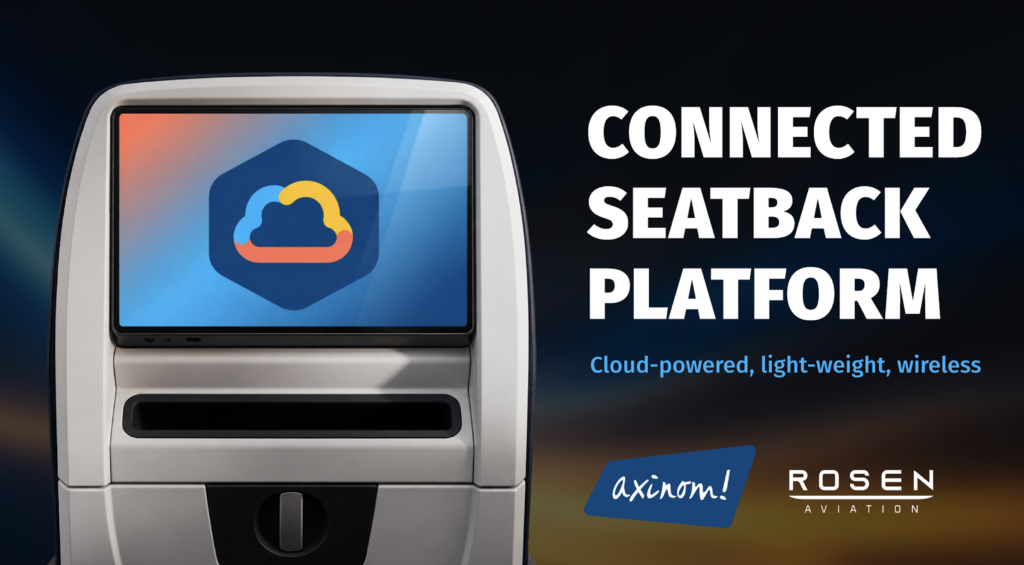
Axinom and Rosen Aviation have developed a new Connected Seatback Platform that moves in-flight entertainment (IFE) to the cloud while removing the traditional head-end server and cabin data wiring. The platform combines Rosen Aviation displays with Axinom software, giving airlines more control over the seatback and new ways to use it for entertainment, loyalty, commerce, trip services, and disruption management. At APEX FTE EXPO in Singapore, the companies will give attendees the first public look at the platform through live demonstrations.
Moving IFE Beyond the Traditional Head-End
The Connected Seatback Platform takes a different approach to how IFE works onboard. Traditional systems usually rely on a central server in the aircraft, with each screen connected through cabin data wiring and operating within one vendor’s system.
Axinom CEO Ralph Wagner explained that this model developed when aircraft had limited connectivity. Improvements in low Earth orbit (LEO) satellite connectivity now make it possible to connect each screen directly to the cloud.
“Once LEO connectivity keeps an aircraft online from gate to gate, those limits no longer have to exist,” Wagner explained. He described the new approach as “the cloud as the brain, and every screen a connected device of its own.”
Rosen Aviation Senior Vice President Strategy Lee Clark sees a similar opportunity on the hardware side. Traditional IFE systems require data wiring to each seat, which adds weight and can make cabin changes more difficult.
“With a permanent link to the ground, we can take the data wiring out, build the display to the airline’s specification, and separate the cabin layout from the system,” Clark explained. That gives airlines more flexibility when changing their cabins or choosing displays.
With the new system, wiring to each seat only carries power, while Wi-Fi-enabled displays receive data wirelessly. Each screen has its own processing power and runs Axinom’s software.
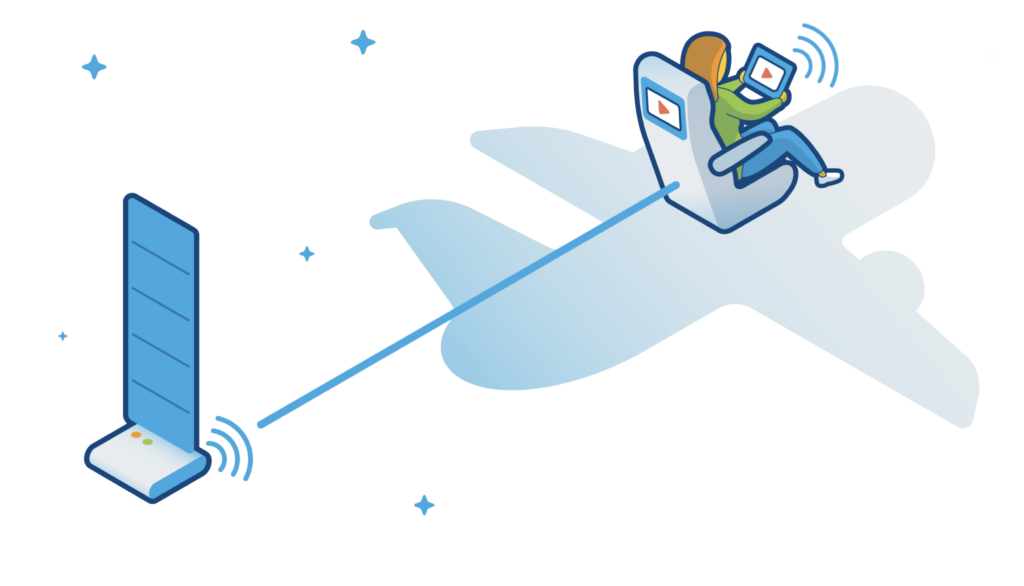
Edge caching keeps content stored on the screen if connectivity drops. Each display can currently hold up to 8 TB of content, while the system updates it over the air instead of using a fixed loading schedule.
Removing the head-end server and cabin data wiring can make installation and retrofits easier. Airlines can change seat layouts without rebuilding the IFE system and replace individual displays without affecting the rest of the cabin.
“Installation and retrofit take far less effort, because there is no data infrastructure to route through the cabin and no IFE rack to integrate,” Clark noted. He added that a seat reconfiguration no longer requires airlines to rework the entertainment system.
Rosen can build displays ranging from 11 to 97 inches, giving airlines different options across each cabin. Economy could use lighter seatback screens, while premium cabins could add larger displays, curved surfaces, digital windows, or in-seat spatial audio.
“The display is built to the airline’s specification, from 11 to 97 inches, so the fit-out is a decision made class by class,” Clark explained. The same software runs across the aircraft, allowing airlines to create different experiences for each cabin without using separate systems.
Turning the Seatback Into a Connected Airline Surface
The system gives airlines more ways to use the seatback beyond entertainment. They can control the home screen, applications, offers, and services passengers access during the flight.
“For the airline, it means the seatback stops being a product it buys from an IFE vendor and becomes a surface it designs,” Wagner explained. Entertainment remains part of the experience, but airlines can add retail, loyalty, trip services, and other applications.
Passengers can pair their phone with the seat through the airline’s app. The airline can then use information it already has, including loyalty status, language, flight details, and viewing preferences, to personalize the screen.
“The home screen already knows them: their name and tier, the status of their bag, their viewing preferences, their last orders, and whatever else the airline chooses to show,” Wagner noted. The passenger’s phone remains the trusted device for signing in and making payments, so passwords and payment information do not need to go through the seatback screen.
That connection can extend beyond entertainment. A passenger facing a missed connection could receive an alert at the seat, review other flight options, and rebook before landing.
Wagner sees opportunities across upgrades, commerce, advertising, destination services, and loyalty. The seat gives airlines another place to reach passengers with information and offers connected to their journey.
“Loyalty may gain the most, because the airline can finally recognize its members in the cabin and not only at the gate,” Wagner noted. Passengers who do not want to connect their profile can still use the screen without personalization.
The system can connect with other parts of the cabin too. Through the ARINC 853 Cabin Secure Media-Independent Messaging standard, screens can communicate with seats, lighting, sensors, and crew tablets.
Wagner pointed to examples such as showing lavatory availability on the screen or sending a passenger’s order directly to a crew tablet. Passenger announcements could pause content and display a notice across every screen, regardless of what a passenger has open.
“The seatback is only one of many devices in the cabin, alongside seats, lighting, sensors, and crew tablets, and they all share data,” Wagner explained. “That makes the screen the place where the passenger deals with their surroundings.”
Previewing the Platform at APEX FTE EXPO
At APEX FTE EXPO, Axinom and Rosen Aviation will preview the Connected Seatback Platform before its full showcase at Aircraft Interiors Expo 2027 in Hamburg. The Singapore demonstration will show how the system works for both passengers and airlines.
Visitors will be able to sign in with a phone and see the seatback respond with a personalized screen. The companies will demonstrate several potential uses while showing how airlines can control what appears on the display from the ground.
“We will show the platform in action from a passenger’s point of view and from the airline’s,” Wagner explained. “A visitor signs in on the phone, and the screen responds with a personalized view.”
The demonstration will show how the seatback can react to activity elsewhere in the cabin. For example, attendees will see how a passenger announcement can pause what appears on the screen through the onboard messaging system.
Clark sees Singapore as an opportunity to gather feedback before the companies bring a larger demonstration to Hamburg. “This is a sneak preview, so visitors will get a first look at how the platform behaves,” he noted. “What we are most excited about is hearing people’s initial reactions and gathering feedback.”
The companies want those conversations to help shape how airlines and other partners use the technology. Instead of creating one standard seatback experience, Axinom and Rosen want airlines to decide which applications, services, and cabin features work best for their passengers.
For Wagner, the biggest change comes down to what the seatback can do. “It used to be a place to watch a movie, and it is turning into the one screen in the passenger journey that the airline fully controls,” he explained. “With the cloud as the brain, the airline decides what the screen does, and it can change that at any time without touching the aircraft.”
Axinom and Rosen Aviation will showcase the Connected Seatback Platform at booth 304 during APEX FTE EXPO, with live demonstrations that will let attendees experience the platform from both the passenger and airline perspectives.