


SPACEFRAME Economy Seat Concept by BMW Designworks Improves Comfort, Operational Efficiency

Share
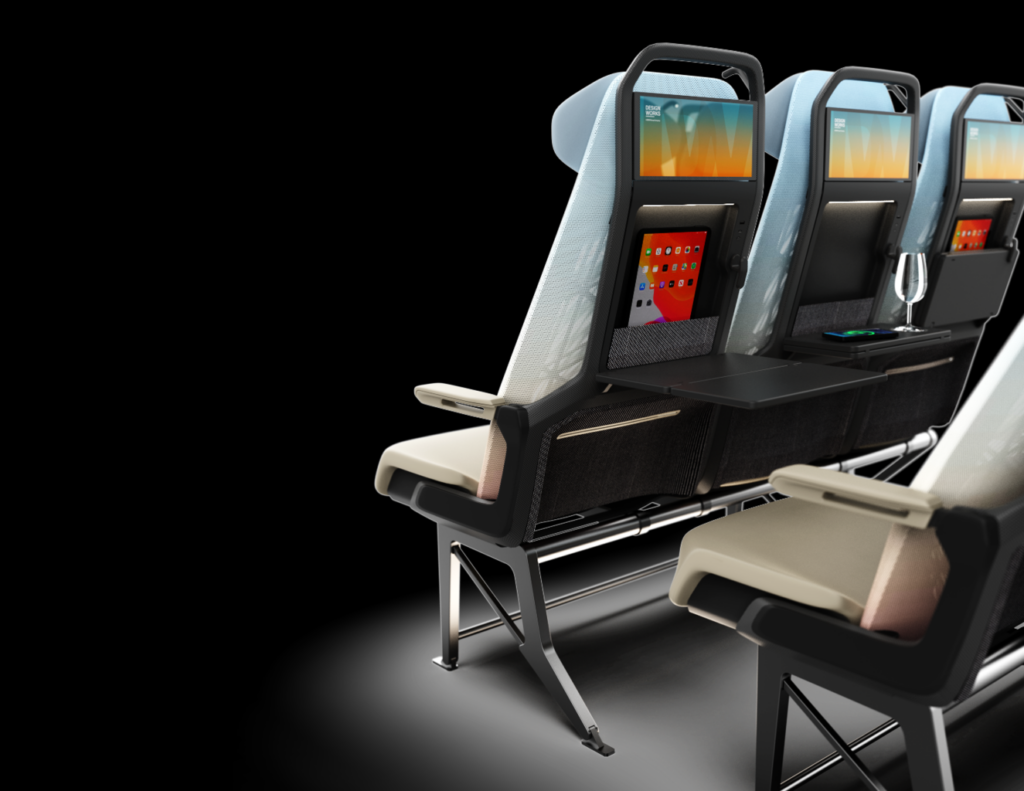
BMW Designworks has been named a finalist for the 2026 Crystal Cabin Award in the Passenger Comfort category for its SPACEFRAME economy-class seat concept, which offers a lightweight structure, ergonomic support, and modular design. By focusing on how passengers actually use their environment, SPACEFRAME shows how smarter design can improve both comfort and an airlines’ operational efficiency.
Redefining Economy Comfort Through Structure & Ergonomics
For years, improvements in aircraft cabins have focused on premium seats, while economy seating has been optimized for weight reduction and density. This has led to thinner seats and tighter spaces that prioritize efficiency over comfort. SPACEFRAME takes a different approach by putting the passenger first to improve how people sit, move, and relax during the flight.
Drawing from BMW Group’s experience in automotive seat design, at the center of the concept is a lightweight composite exoskeleton that replaces the traditional aluminum frame used in most economy seats. This reduces weight, helping airlines cut fuel use and emissions while maintaining the strength required for aviation.
The design also makes use of advanced fabric and composite materials including a breathable mesh backrest that improves airflow on long flights, while built-in lumbar support promotes better posture. The materials, which are similar to those used in modern car or office seating, are adaptable, allowing airlines to customize the seat to match their brand and passenger needs.
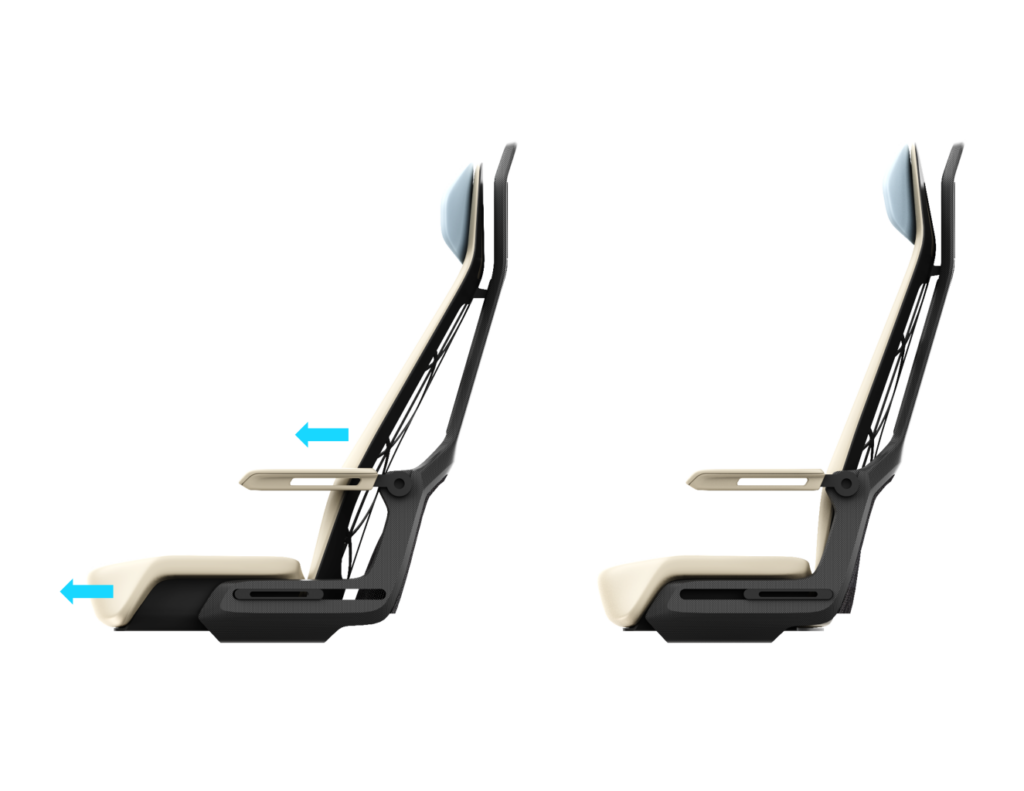
The seat’s recline mechanism introduces a major shift in how passengers experience personal space. Instead of leaning back into the person behind, the seat slides forward in a way that does not take up extra space. This allows passengers to relax without disrupting others, eliminating a common source of frustration in economy cabins. It also ensures that activities like working on a laptop, eating, or viewing in-flight entertainment remain unaffected.
Moreover, the design makes it easier for passengers to get in and out of their seats. Even when the seat in front is reclined, SPACEFRAME provides up to 7.5-inches more clearance compared to a typical slimline seat at the same 32-inch pitch. This added space is especially valuable for passengers in window and middle seats.
A Modular and Sustainable System, Built for the Future
SPACEFRAME is designed to evolve over time. Instead of treating the seat as a fixed product, the concept introduces a modular system that can be updated as passenger needs and airline strategies change.
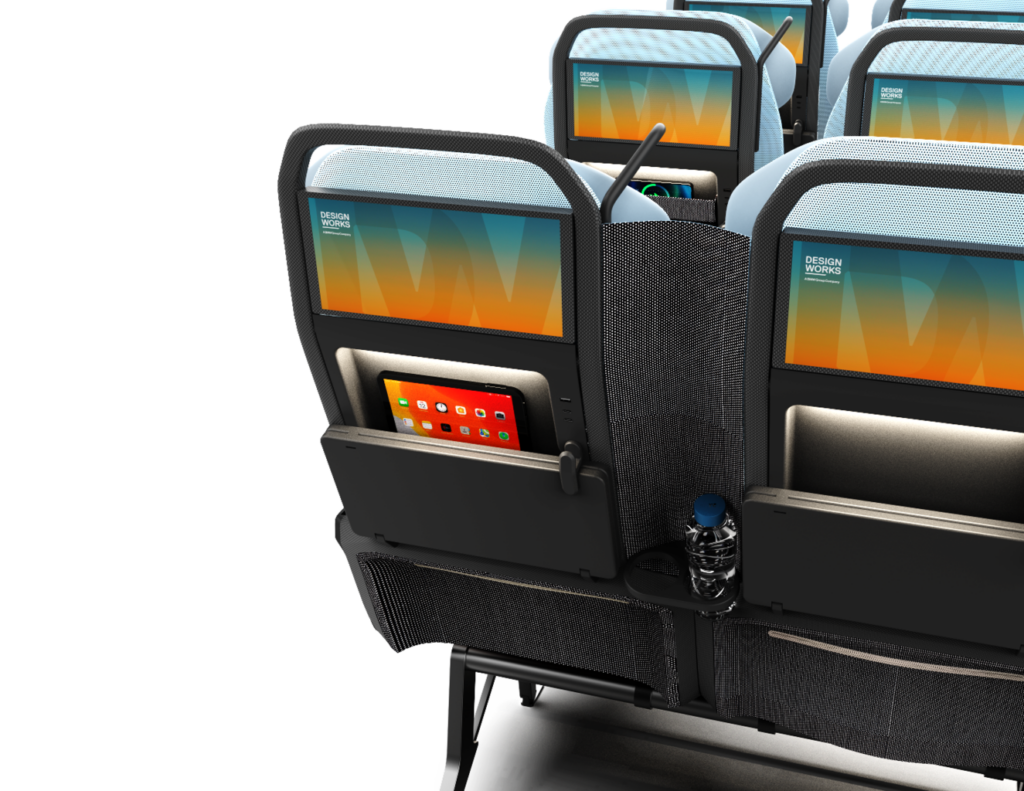
Features such as lighting, power outlets, and wireless charging are housed in modular pods that can be easily accessed and replaced without changing the entire seat. This simplifies maintenance and extends the product’s lifespan, helping airlines reduce both downtime and cost.
Airlines can also customize elements such as bottle holders, device trays, and screen sizes. This flexibility allows carriers to align the seat with their brand and service model, while also adding new features over time without a full redesign.
Sustainability is built into the design from the start. SPACEFRAME is engineered for disassembly, making it easier to recycle and reuse materials at the end of its lifecycle. The use of advanced materials supports a more circular approach, reducing waste and improving resource efficiency.
SPACEFRAME represents a new direction for economy-class seating. By combining a lighter structure, better ergonomic support, and an adaptable design, it addresses the long-standing challenge airlines face in creating both comfort and operational efficiency.