


BMW Designworks’ SPACEFRAME Makes the Case for a New Era of Economy Seating
Share
One of the biggest opportunities for cabin innovation may now be in economy class, where millions of passengers still deal with outdated seating. While premium cabins have improved significantly over the past two decades, economy seats have often focused on thinner cushions, lower weight, and tighter layouts instead of meaningful comfort. For airlines trying to improve passenger satisfaction while controlling costs, BMW Designworks’ SPACEFRAME concept makes a strong case that economy seating needs to evolve.
Elevating Economy for the Majority of Passengers
Designworks has built a strong reputation in aviation through premium cabin programs, where airlines often seek distinctive design, stronger branding, and elevated customer experiences. The company’s first commercial aviation client was Singapore Airlines in 2012, beginning with first class on the Boeing 777-300ER.
Since then, the firm has continued working with Singapore Airlines while also partnering with EVA Air on Boeing 787 business class interiors and supporting the launch of STARLUX Airlines across multiple aircraft types.
That track record has largely been built at the front of the aircraft, where airlines often invest heavily to attract premium travelers and differentiate their brand. Meanwhile, most travelers continue to fly in economy, where progress has often come through small updates rather than real reinvention.
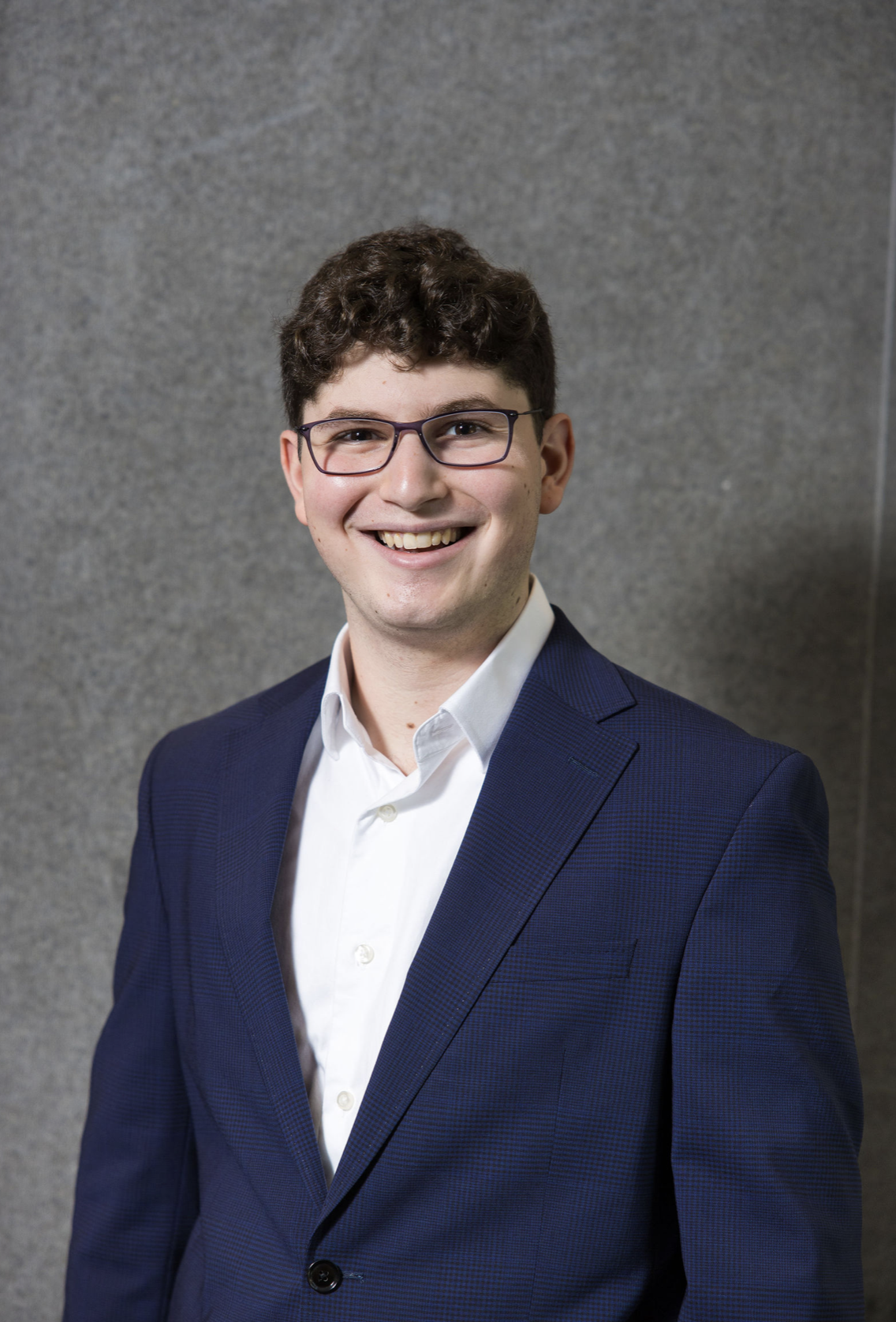
Designworks Associate Director of Strategy and Partnerships Nathan Portlock said that imbalance helped inspire SPACEFRAME.
“Most of our aviation work has focused on first and business class, which has brought a lot of great innovation,” he said. “What makes this project exciting is that we’re trying to improve the experience for the majority of passengers in economy, and that’s something the industry hasn’t really focused on in a long time.”
That mission also reflects what makes Designworks unique. As a wholly owned subsidiary of BMW Group, the studio works across BMW, MINI, and Rolls-Royce while also advising outside clients in aviation and other industries. That model allows ideas to move between automotive and aircraft interiors, especially in compact spaces where every inch matters.
“The SPACEFRAME concept grew out of research we had been doing on automotive seating,” Portlock said. “We were studying biomaterials, advanced composites, and ways to cut weight, then started asking how those same ideas could help airlines lower fuel burn while also creating a more comfortable seat.”
A Better Economy Experience Through Smarter Design
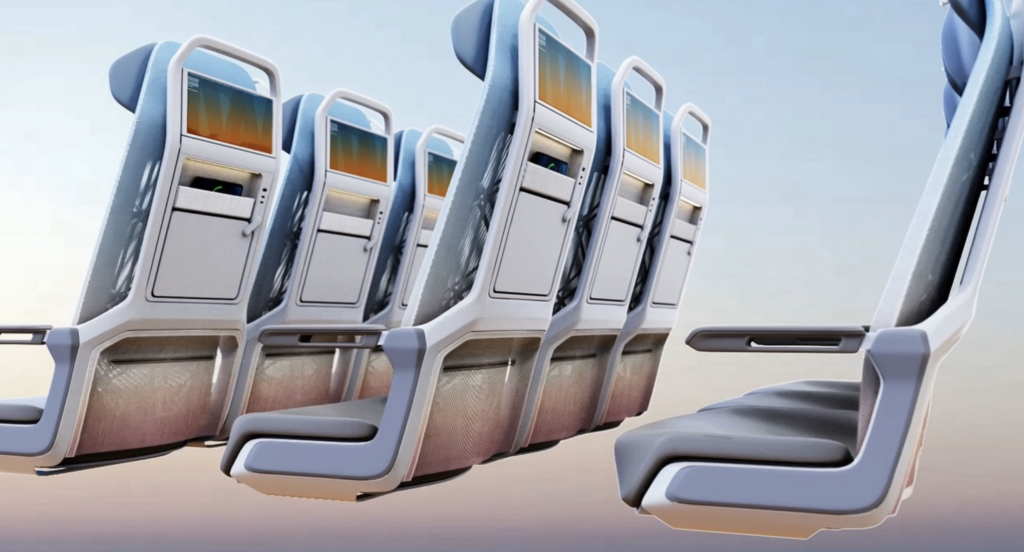
SPACEFRAME arrives with a clear goal: solve common frustrations that have defined economy travel for years. Rather than following the typical slimline seat formula, Designworks developed a lightweight exoskeleton frame with suspended seating surfaces and modular components designed to improve comfort and daily usability.
Portlock said airlines repeatedly ask about recline tension between passengers. “One issue airlines keep asking us about is how to solve for what we call guilt-free recline,” he said. “Passengers want to lean back, but nobody likes taking space from the person behind them, so it can create tension onboard.”
SPACEFRAME addresses that issue with what Designworks calls space-neutral recline. Instead of moving backward into the row behind, the seat reclines within its own footprint, helping reduce one of the most common sources of tension in economy travel. The goal is a recline experience that feels fairer and more comfortable for everyone.
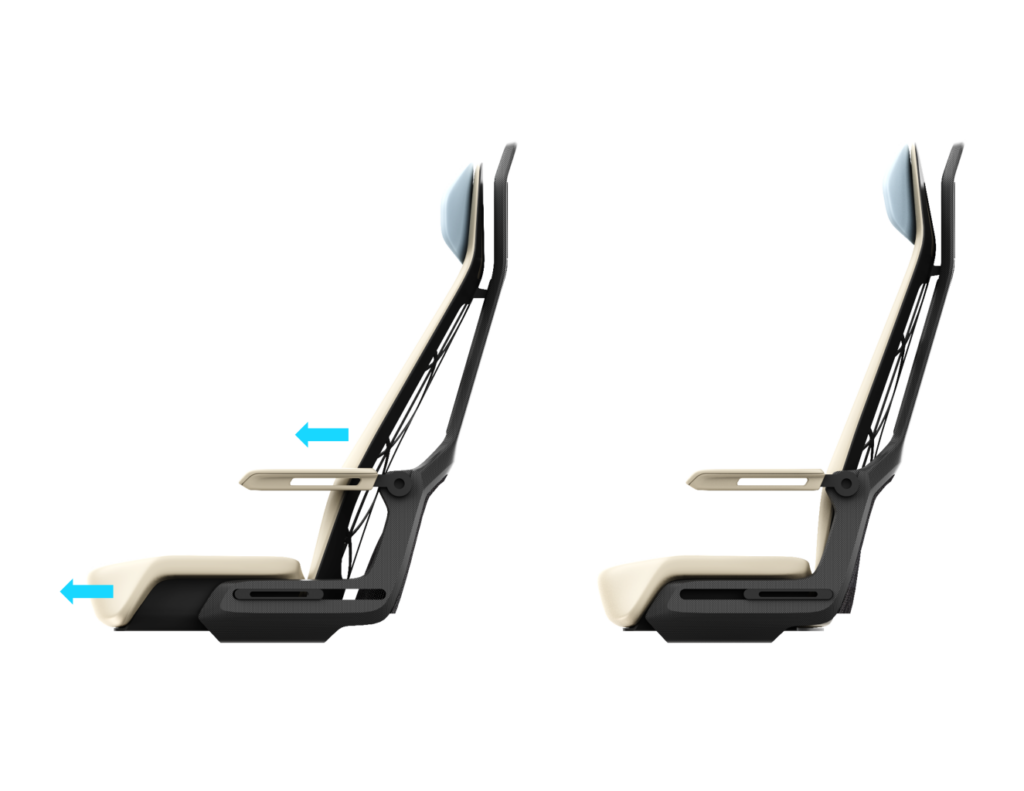
The seat also improves row access. “When you need to get up and go to the bathroom, you gain about five and three quarters inches of extra clearance compared with a conventional economy seat,” Portlock said. That added room could make a real difference on long flights and during boarding or lavatory visits.
Comfort is another central theme. Portlock said the structure draws inspiration from modern tensile fabric office seating, an area that has advanced significantly over the past two decades.
“Twenty years ago those chairs were not so comfortable, but today they’re some of the best ergonomic chairs you can buy,” he said. “They’re designed for people to sit in them for more than 10 hours.” By adapting that technology, Designworks aimed to create a seat that is lightweight, supportive, and more comfortable for longer flights.
That approach separates the comfort layer from the load-bearing frame, which could reduce weight while improving support. For passengers on long-haul flights, it could offer a noticeable step up from traditional foam-heavy economy seats.
SPACEFRAME Offers a Different Passenger Experience
A major strength of SPACEFRAME is its flexibility. Rather than designing separate seat platforms for different route types, Designworks envisions one core platform that can be adapted for short-haul, mid-haul, or long-haul missions.
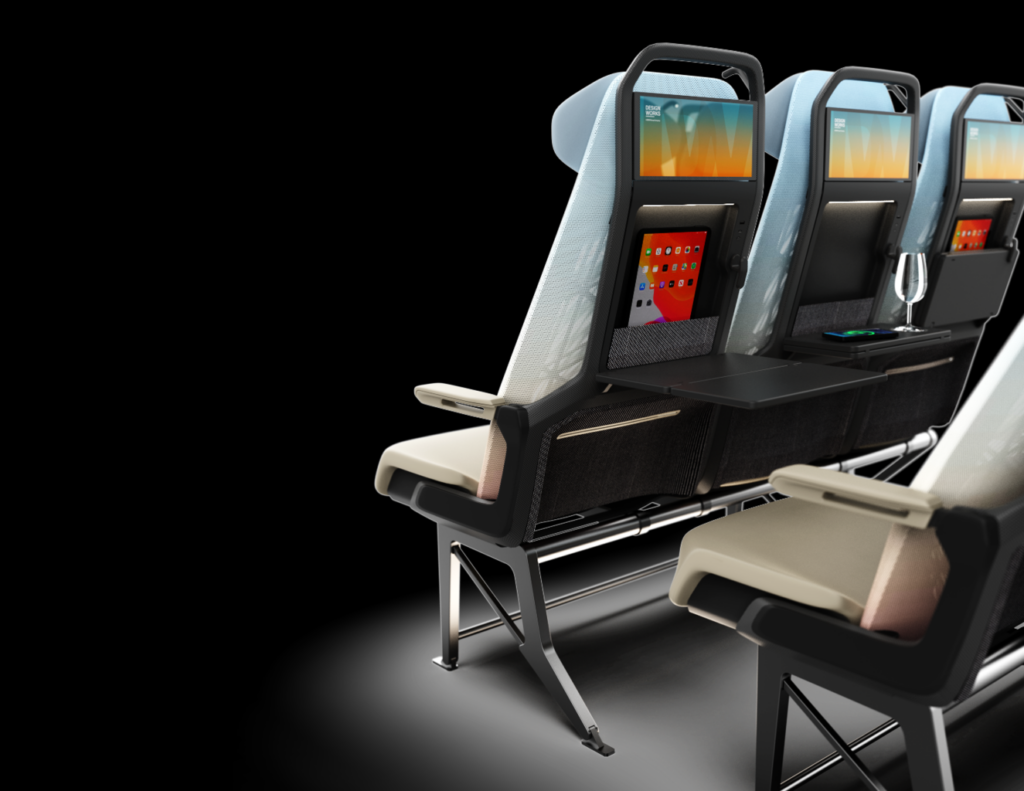
On short-haul aircraft, the concept can skip integrated in-flight entertainment (IFE) screens while still offering stable tray tables and built-in device holders. Designworks said that even at a 30-inch pitch, SPACEFRAME can still provide up to 5.75 inches of additional clearance compared with conventional slimline seats.
Mid-haul operations could include embedded screens and modular service features. Tray tables, seatbacks, IFE modules, device pods, and cushions can all be removed or upgraded without dismantling the full seat. That could reduce maintenance time, lower costs, and extend the product’s useful life.
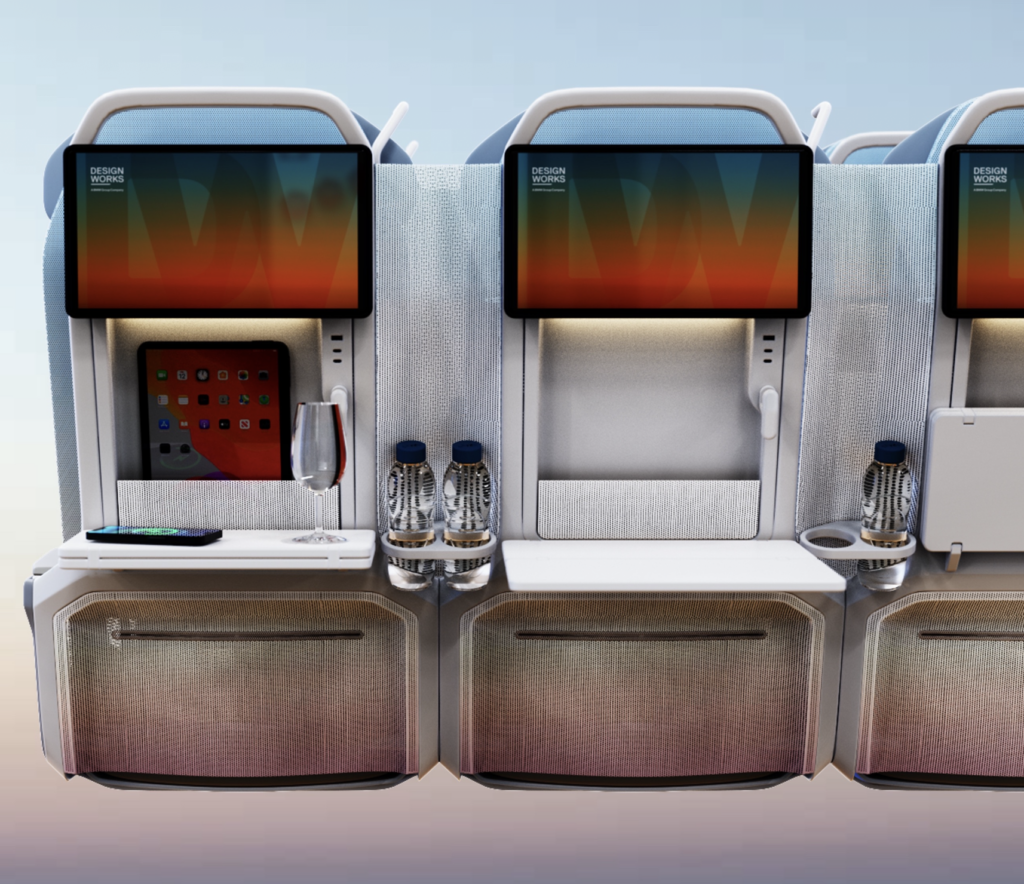
Long-haul cabins would add larger IFE displays, USB-C power, wireless charging, ambient lighting, privacy-oriented closeout panels, and water bottle storage.
Portlock said this modular approach matters because seat life cycles and technology life cycles no longer move at the same pace. “These seats are expected to stay in service for more than a decade, but passengers still expect the IFE to feel as current as their iPhone,” he said.
That gives airlines a practical way to refresh technology over time without replacing the full seat structure.
Better for Airlines, Better for the Planet
Designworks made clear that passenger comfort alone will not change the market. Any new economy seat also needs to deliver clear business value for airlines. While the company developed the SPACEFRAME concept, it is not a seat manufacturer, meaning success will depend on working with airline and supplier partners to bring the design into production.
“If you want real progress in comfort, sustainability, and circularity, those innovations also have to make economic sense for airlines,” Portlock said.
That is where SPACEFRAME aims to stand apart from many concept seats. The company says modular architecture can extend product life, lower replacement costs, and reduce maintenance complexity. Lighter seats can also reduce fuel burn over time, especially across large fleets, helping lower Cost Per Available Seat Mile (CASM).
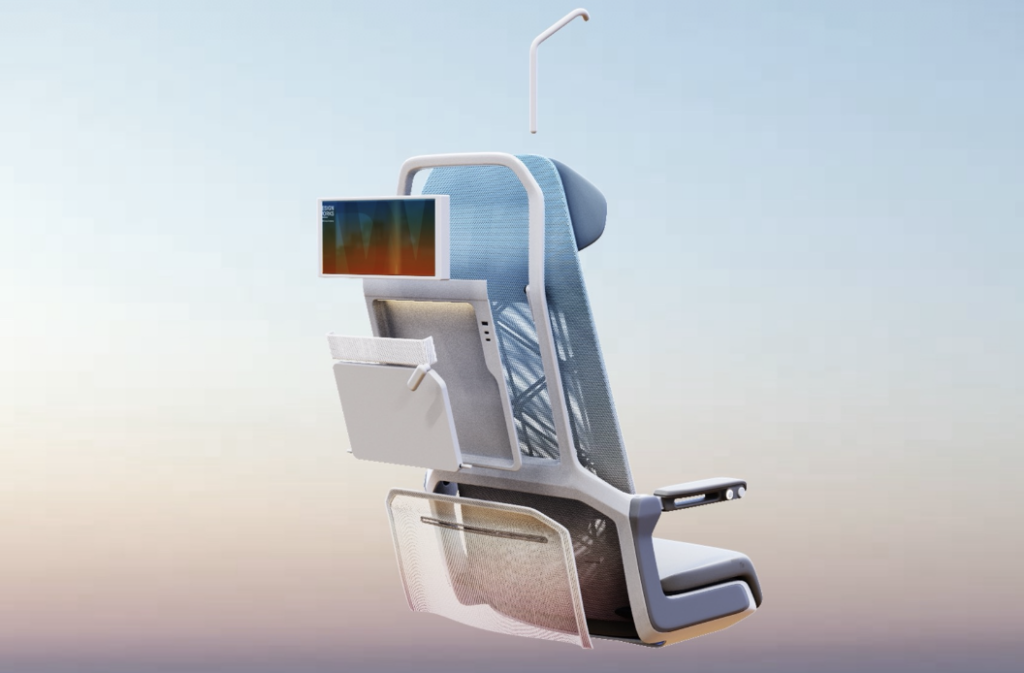
Furthermore, sustainability plays a central role. SPACEFRAME follows design-for-disassembly principles, allowing components to be separated more easily for repair, refurbishment, reuse, or recycling at the end of their life cycle. That could reduce waste while supporting a more circular aviation supply chain.
Still, SPACEFRAME remains a concept, and Designworks is now seeking airline and supplier partners to move the project into prototyping, testing, and certification. But the broader message may matter just as much as the seat itself.
For years, aviation has often treated economy as a category where only limited improvements were possible. Designworks is making the opposite case. The majority of passengers fly economy, and all of the longest journeys include economy travelers. The largest opportunity to improve the passenger experience may still sit at the back of the aircraft.