


AIX 2026: Unum Aircraft Seating Unveils Cabin-Ready Unum Two Business Class Seat

Share
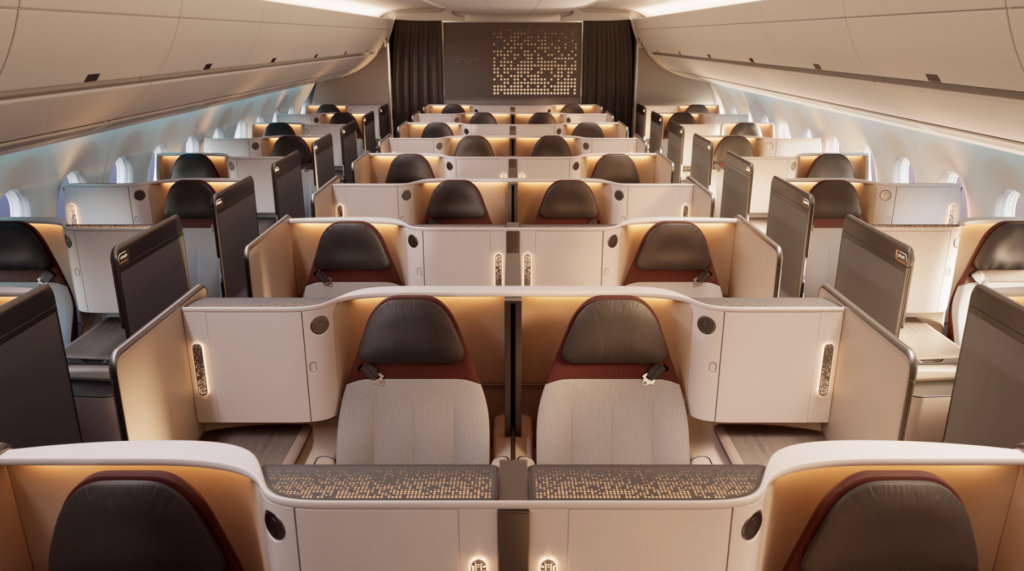
Unum Aircraft Seating is bringing its forward-facing business class vision closer to reality with the debut of Unum Two at Aircraft Interiors Expo (AIX) 2026. Now presented as a cabin-ready product after a three-year development program, the seat marks a key step in the company’s evolution from concept to certified supplier.
From Concept to Cabin-Ready Platform
Unum Two was first introduced as a design study aimed at challenging traditional assumptions around business class seating. At AIX 2026, the product returns as a fully developed, cabin-ready solution following an intensive three-year process that included industrial design, engineering, and testing.
The result is a forward-facing business class seat that combines direct aisle access with a strong sense of space and privacy. At 21.5 inches wide, it offers a roomy feel, with a fully flat bed, a large footwell, and a spacious side console. A privacy door is also included, aligning with current passenger expectations for personal space.
The seat is built around Unum’s patented Scimitar mechanism, which enables a zero-gravity position and smooth, continuous adjustment. Rather than relying on layered cushioning or complex structures, the design focuses on creating comfort through movement and usable space. This reflects Unum’s approach to making premium seating intuitive and adaptable rather than overly complicated.
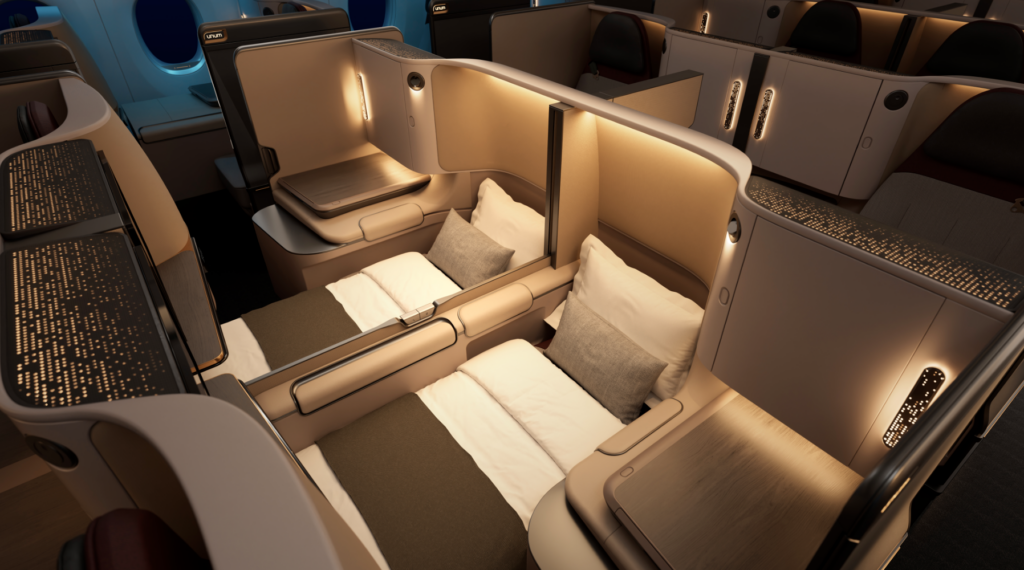
“When we first shared the forward-facing concept three years ago, we were clear about the ambition of Unum Two,” said Unum CEO and Founder Chris Brady. “Now we are presenting a seat that has been through the full discipline of design, engineering, and testing, and is ready for airline programs.”
Beyond passenger comfort, the seat has been engineered with airline requirements in mind. Durability and maintainability are main considerations, with a focus on ensuring consistent performance over time. “A seat must work as well on day 100 as it does on day one,” Brady said, underscoring the importance of reliability in long-term operations.
The development of Unum Two also reflects a growing shift toward forward-facing configurations in business class. While reverse herringbone layouts have dominated long-haul cabins in recent years, forward-facing designs are gaining renewed attention for their ability to balance space efficiency with a more traditional seating orientation.
Expanding a Flexible Business Class Portfolio
The introduction of Unum Two is part of a broader strategy to build a cohesive and flexible product portfolio. The new seat complements Unum One, the company’s existing herringbone configuration, giving airlines a choice between layouts while maintaining a consistent design language and passenger experience.
Together, the two products form a unified platform that can be adapted across a range of aircraft types and cabin configurations. This flexibility is particularly important for airlines looking to standardize the premium experience across both narrowbody and widebody fleets while accommodating different operational needs.
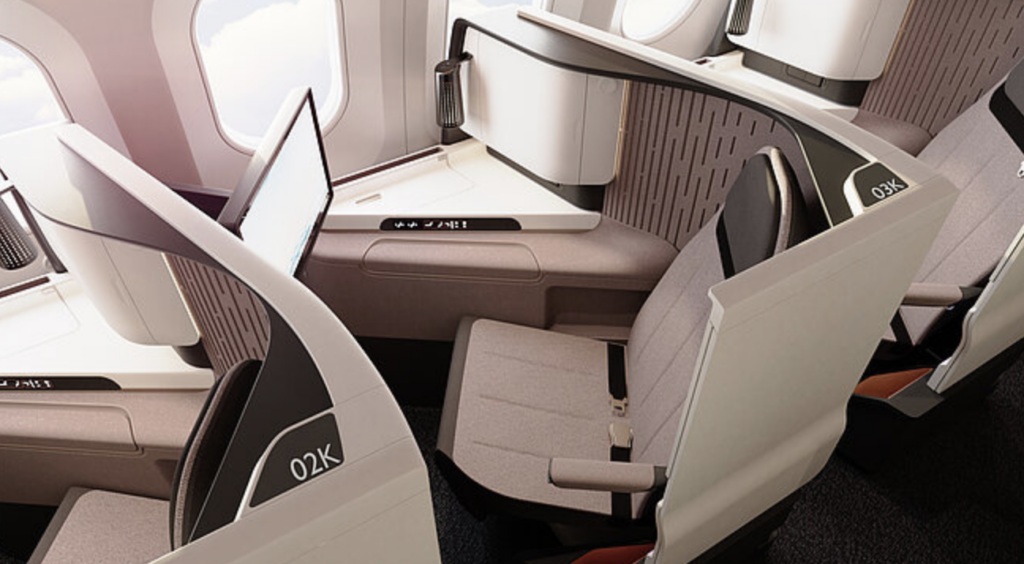
At AIX 2026, Unum is also showcasing a Boeing 787-optimized version of Unum One, further extending its portfolio. Developed using the seat’s modular architecture, the layout is designed to maximize efficiency while maintaining consistency in passenger comfort and design across the cabin.
This modular approach allows airlines to tailor configurations without compromising the overall experience. By using a shared design philosophy and common components, Unum aims to simplify integration and reduce complexity for operators.
The emphasis on flexibility reflects broader shifts in the aviation market. Airlines are increasingly looking for seating solutions that can adapt to different routes, aircraft types, and passenger expectations while maintaining a consistent brand identity. A unified platform like Unum’s helps carriers balance these competing priorities more effectively.
Offering multiple configurations within a single product family helps simplify procurement, maintenance, and training. It also makes it easier to scale, allowing airlines to use consistent seating across growing fleets.