


American Airlines Brings Seatback Screens and More Premium Seats to Narrowbody Fleet

Share
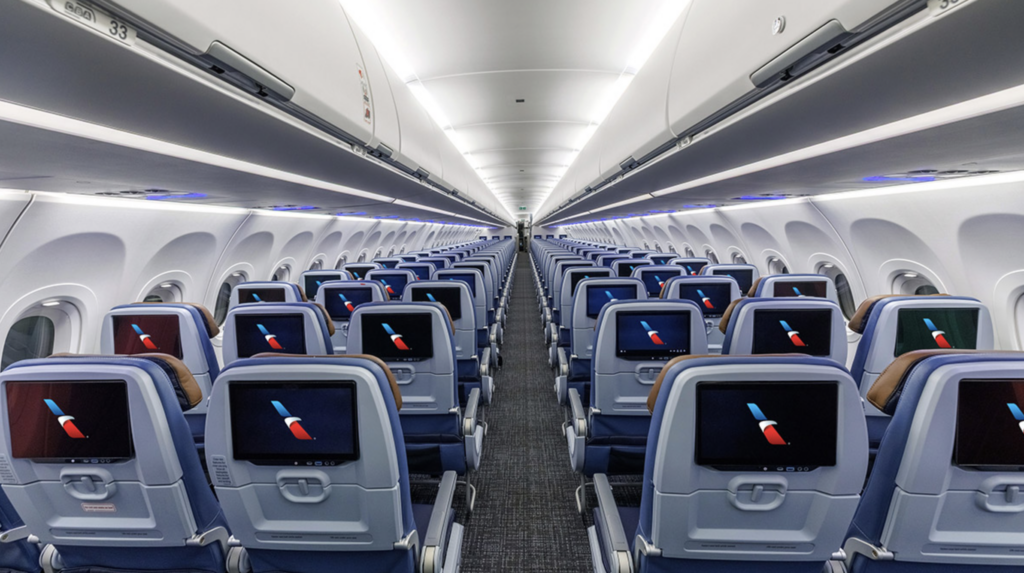
American Airlines is making one of its largest investments in the onboard experience, announcing plans to install next-generation seatback entertainment screens at every seat across its narrowbody fleet while significantly expanding premium seating. The fleetwide transformation will introduce 4K displays, Bluetooth audio, USB-C charging, and personalized entertainment alongside the airline’s upcoming high-speed Starlink connectivity. American will also increase the share of premium seating on narrowbody departures from approximately 25 percent today to around 40 percent in the coming years.
American Brings Seatback Entertainment Back Across Narrowbody Fleet
At the center of the transformation is a major change in American’s in-flight entertainment (IFE) strategy. The airline will install seatback screens at every seat on new Airbus and Boeing aircraft delivered beginning in 2028, while existing narrowbody aircraft will receive the technology through a fleetwide retrofit program.
American plans to move quickly with the rollout, with installation across the fleet expected to be completed by the early 2030s. The expansion will build on the more than 140 long-haul aircraft that already feature embedded seatback entertainment.
“We’re making one of the most significant investments in the onboard experience in our history,” said American Airlines Chief Customer Officer Heather Garboden. “From next-generation seatback entertainment at every seat to substantially more premium seating options, these enhancements will give our customers more ways to relax, stay connected and enjoy their journey.”
The next-generation entertainment system will feature some of the largest displays available on narrowbody aircraft in North America, including larger screens in premium cabins. The 4K displays will provide improved picture quality, color and contrast across movies, television programs, music, games and other entertainment.
American plans to make the new entertainment experience more personalized, with movie and TV recommendations based on passenger preferences. Updated interactive flight maps will provide real-time flight information and details about the destination throughout the journey.
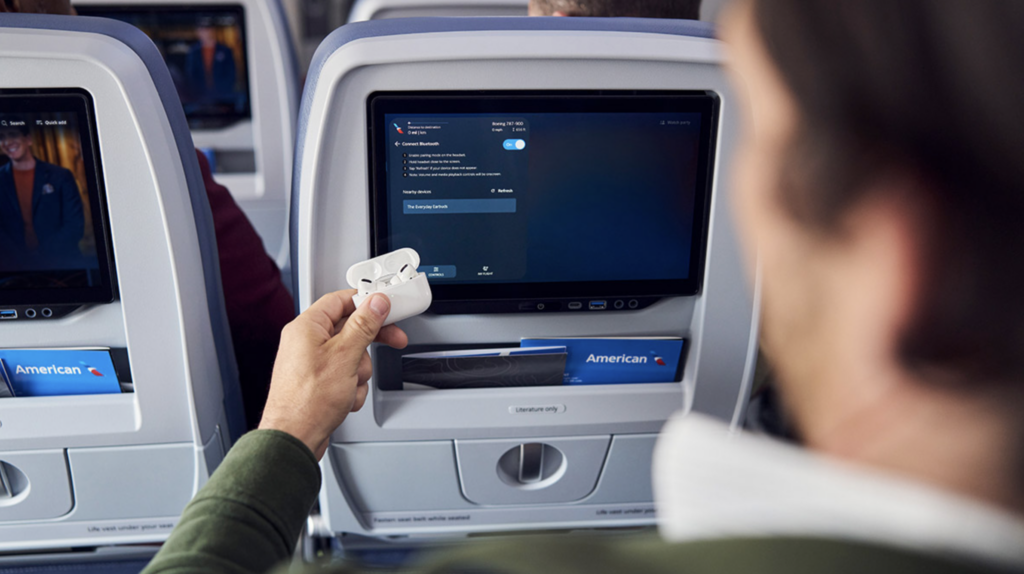
Each seat will feature Bluetooth connectivity, allowing passengers to connect their own wireless headphones or earbuds directly to the screen. USB-C fast charging ports will help keep personal devices charged throughout the flight.
The investment marks a major change in American’s narrowbody entertainment strategy. For years, seatback screens were a familiar part of American’s short-haul onboard experience, but the airline began removing them from narrowbody aircraft in 2018 as it shifted toward entertainment streamed directly to passengers’ personal devices. At the time, airlines increasingly viewed personal device entertainment as a way to reduce the cost, weight, and maintenance associated with embedded IFE systems.
Today, American primarily offers seatback entertainment on its widebody aircraft used for long-haul international flights, along with a small number of narrowbody Airbus aircraft that operate transcontinental routes. The new investment will eventually bring embedded entertainment back across the narrowbody fleet.
This time, however, American is pairing seatback screens with faster onboard connectivity rather than choosing between the two. Beginning in 2027, the airline plans to install Starlink Wi-Fi across more than 500 narrowbody aircraft, providing faster connectivity for streaming, browsing, gaming, and working onboard.
Together, Starlink and seatback entertainment will create a more connected experience, allowing passengers to use the screen in front of them for entertainment while keeping their phones, tablets, and laptops available for messaging, browsing, working, and other activities.
More Premium Seats Reshape American’s Narrowbody Cabins
Seatback entertainment is only one part of American’s broader narrowbody upgrade. The airline is adding significantly more First Class and Main Cabin Extra seats across the fleet, giving passengers more opportunities to choose a premium or extra-legroom experience.
Today, premium seating makes up approximately 25 percent of seats on American’s narrowbody departures. Over the coming years, the airline plans to increase that to around 40 percent through a combination of aircraft retrofits and new deliveries.
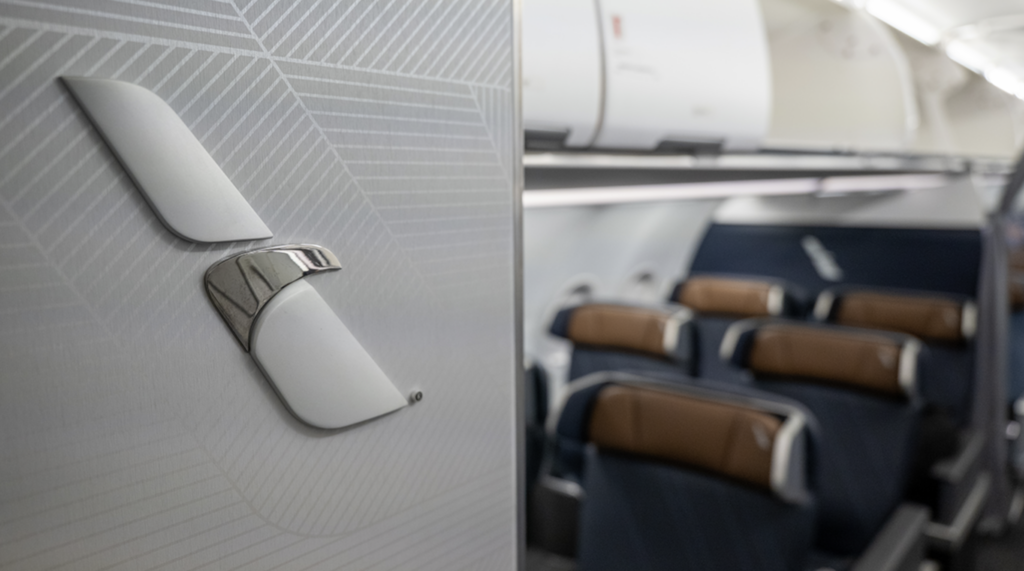
American is already updating its Airbus A319 and A320 fleets with an additional row of First Class seats. The refreshed aircraft will feature larger overhead bins, updated lighting, power at every seat, and redesigned premium seats with more storage and privacy.
Future Boeing 737 MAX 10 aircraft will feature 24 First Class seats, while American plans to reconfigure its Airbus A321neo fleet with additional First Class capacity. The airline will expand Main Cabin Extra across most of its narrowbody fleet, giving more passengers access to extra legroom, earlier boarding, dedicated overhead bin space, and complimentary beverages.
The expansion comes as demand for premium travel continues to grow. American said premium customers generated nearly half of its passenger revenue during the second quarter, despite representing a smaller share of its overall seating capacity.
The cabin upgrades are part of American’s larger effort to improve the passenger experience both on the ground and in the air. The airline is investing in new and expanded Flagship and Admirals Club lounges, introducing new premium food and beverage offerings, and continuing to improve its digital travel experience.
American has expanded complimentary Wi-Fi for AAdvantage members across its narrowbody and two-class regional fleets, with Starlink set to further improve onboard connectivity beginning in 2027.
Seatback Screens and Connectivity Create a Multi-Screen Experience
American’s decision to bring seatback entertainment back across its narrowbody fleet reflects a broader shift in how airlines are thinking about the relationship between connectivity and IFE.
For years, faster onboard Wi-Fi and the growing use of personal devices raised questions about whether passengers still needed a screen at every seat. In a LinkedIn post following American’s announcement, APEX Group CEO Dr. Joe Leader said APEX data shows that Wi-Fi and seatback entertainment can work together rather than compete.
Dr. Leader said free Wi-Fi can actually increase engagement with seatback entertainment. Passengers can use their phones, tablets, and laptops for messaging, browsing, or working while using the seatback screen as their main source of entertainment.
“The modern airline IFE experience now mirrors the way people live at home: multiple screens and engagements, each serving a different purpose,” Dr. Leader said. “Connectivity and seatback entertainment do not compete. They complement each other.”
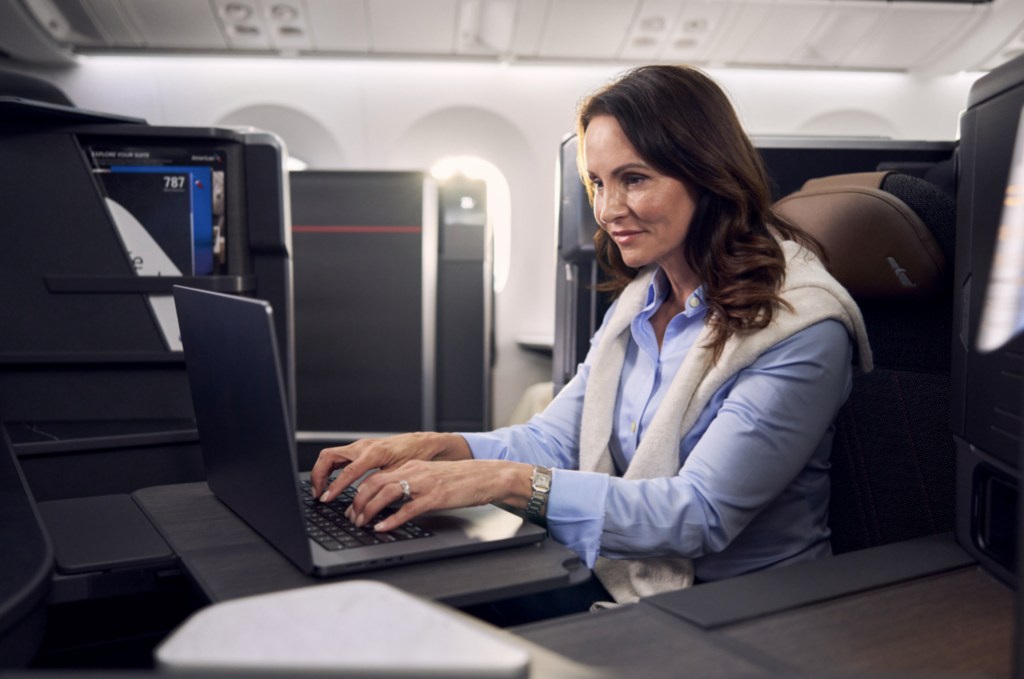
That multi-screen approach will become increasingly relevant for American as it brings both Starlink and seatback screens across its narrowbody fleet.
The opportunity for seatback entertainment extends beyond movies and TV. Dr. Leader said newer IFE systems are becoming more modular and easier to update, while personalization can turn the screen into a platform for entertainment, loyalty, commerce, and relevant advertising. American’s planned system already moves in that direction with personalized entertainment recommendations and enhanced interactive flight maps.
The decision represents more than simply bringing back a familiar passenger amenity. American is combining next-generation seatback entertainment with faster connectivity, more premium seating, and refreshed cabins as it continues investing in the overall onboard experience. As Dr. Leader described the move, “This does not represent a return to the past. It represents a bet on the future.”