


“C”-Galley Design from JAMCO and JAXA Designed to Improve Crew Operations In-Flight

Share
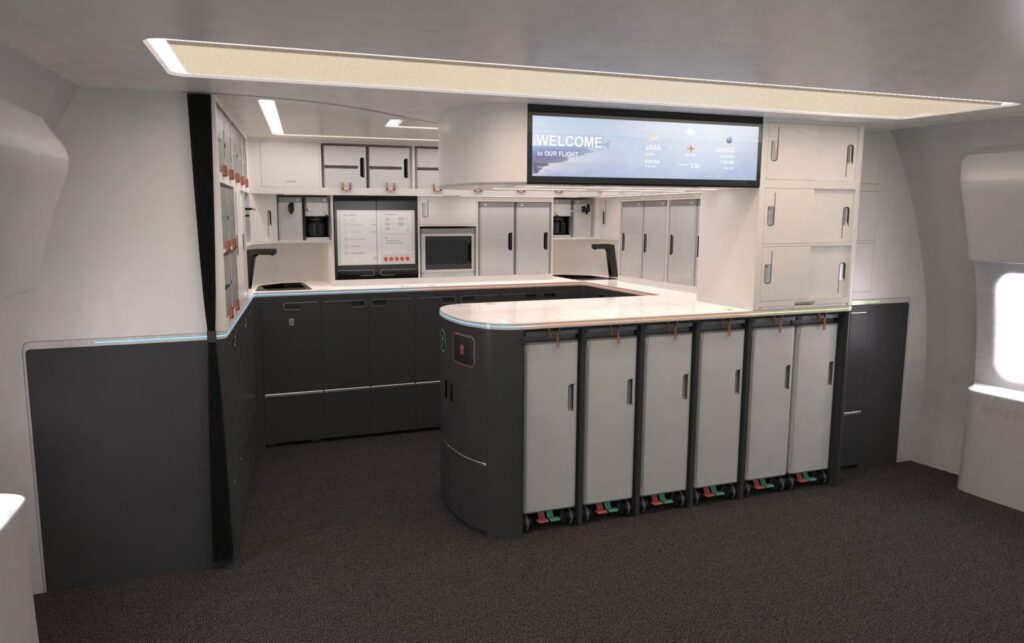
JAMCO and JAXA have been named finalists for the 2026 Crystal Cabin Award in the Cabin Technologies category for their Cabin Crew Centered or “C”-Galley, a new aft galley concept designed to improve how cabin crew work onboard. The layout separates key service tasks, reduces crowding, and improves efficiency without taking up more space. By focusing on how crew actually operate, the “C”-Galley shows how better design can improve inflight service and the overall passenger experience.
A Crew-Centered Approach to Galley Design
Aircraft galleys are usually designed around saving space and maximizing storage, with workflow treated as an afterthought. Because of this, cabin crew often deal with tight spaces and limited room to work during busy service times. The “C”-Galley focuses on the crew first, rethinking how their tasks are organized and carried out in the rear (aft) cabin.
Jointly developed by JAMCO Corporation and Japan Aerospace Exploration Agency (JAXA), the concept is based on extensive interviews with active cabin crew. These insights helped identify key pain points in current galley layouts, particularly around movement, overlapping tasks, and limited workspace. The result is a design focused on making the galley easier, more comfortable, and more efficient to use.
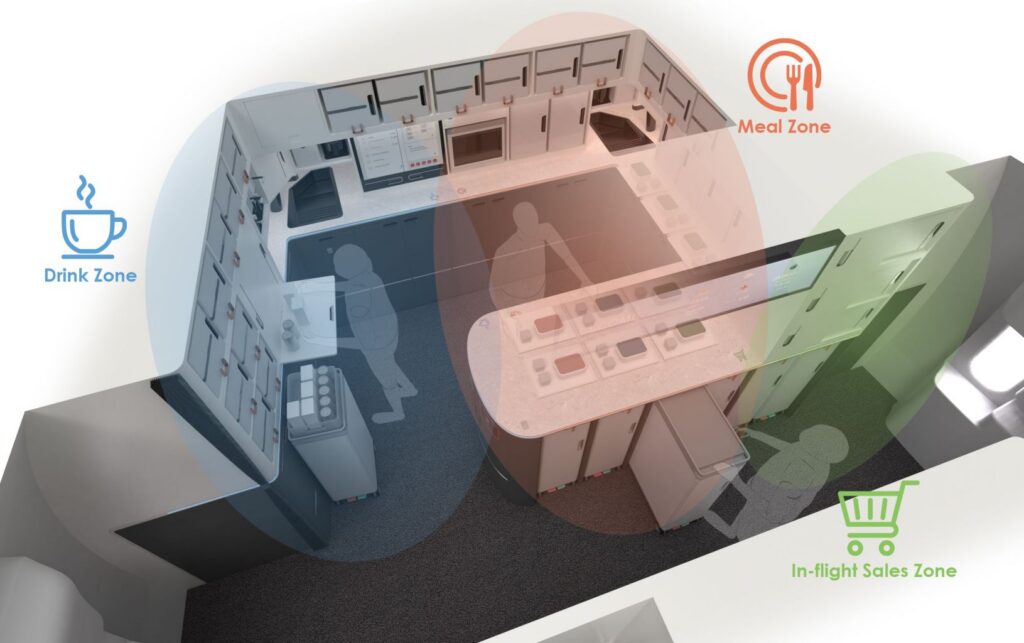
The “C”-Galley introduces a new layout that separates tasks into three dedicated areas: Meal preparation, beverage service, and onboard sales each have their own space, reducing the need for crew to cross paths during service. This helps minimize congestion and allows multiple crew members to work at the same time without interfering with one another.
Reducing cross-traffic is especially important during peak service periods, when multiple tasks happen at once. In traditional layouts, crew often move back and forth across shared spaces, which can slow service and increase physical strain. By organizing tasks into clearly defined zones, the “C”-Galley creates a more structured and predictable workflow.
The design also includes a wide, open central work surface. Unlike traditional galleys with limited or broken-up counter space, this setup makes tasks simpler and more efficient. Storage below the counter is accessible from both sides, helping crew move more easily and reducing unnecessary steps.
The concept was tested through virtual simulations, where cabin crew evaluated how it would work in real situations. According to JAMCO, feedback was highly positive, with many expressing strong interest in seeing it used on actual aircraft. This suggests the design is not only innovative, but also practical for everyday operations.
Enhancing Service Without Compromising Space
One of the most notable aspects of the “C”-Galley is its ability to deliver these improvements without increasing the overall footprint or reducing storage capacity. In an aircraft where space is tightly managed, maintaining the same dimensions while enhancing functionality is a significant achievement.
Despite the redesigned layout, the galley maintains the same storage capacity as traditional systems, so airlines do not have to give up space or revenue. Instead, it uses the existing footprint more effectively.
The central work surface also adds flexibility. During service, it functions as the main preparation area for crew. Outside of service, such as during lights-off periods, it can double as a self-service snack space for passengers. This dual-purpose design gives airlines more value without adding extra equipment or complexity.
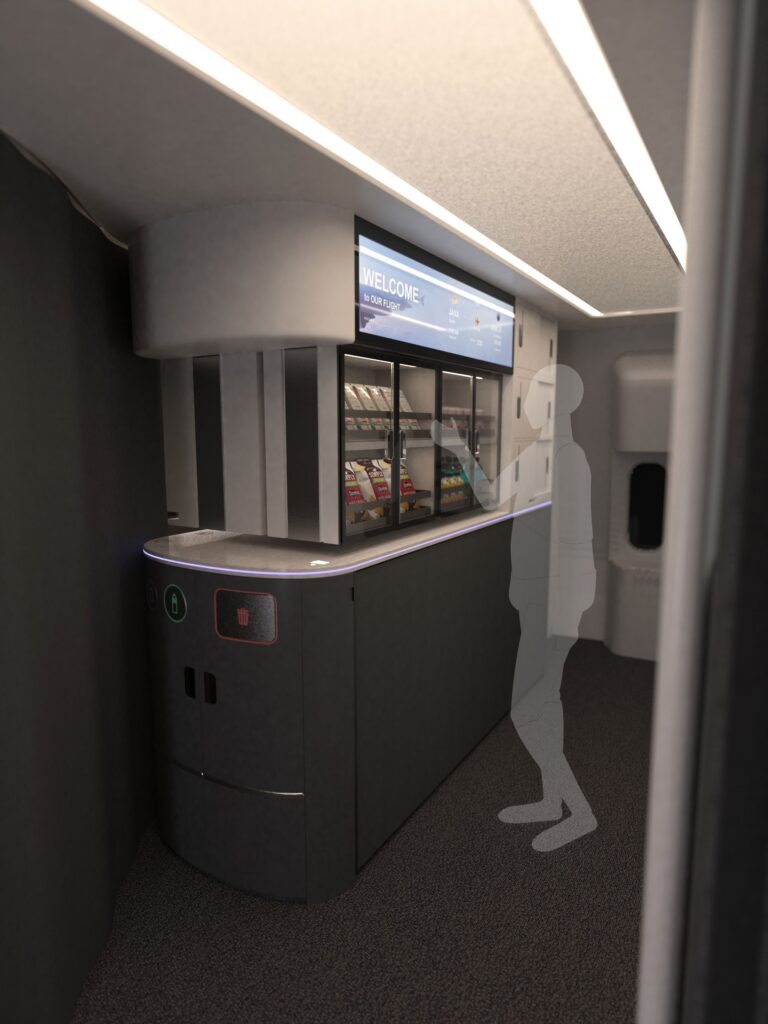
These improvements go beyond workflow. With a more organized layout and smoother service flow, cabin crew spend less time moving around the galley and more time focusing on passengers, which can lead to a better overall experience for travelers. At the same time, a more comfortable workspace reduces physical strain and makes tasks easier, helping improve crew performance, morale, and long-term retention.
The “C”-Galley shows how important behind-the-scenes design is to the passenger experience. While more focus is usually on seats and entertainment, the galley plays a big role in how service works, and improving how crew operate can directly improve the experience for passengers.
As airlines look to improve both operations and passenger satisfaction, the “C”-Galley offers a clear path forward by better aligning what crew need with what passengers expect, creating a smoother and more effective onboard experience.