


Delta and Amazon Partner to Bring Next-Gen LEO Connectivity, Digital Experiences Onboard

Share
Delta Air Lines (Delta) and Amazon have announced a long-term partnership to bring Amazon’s low-Earth orbit (LEO) in-flight connectivity (IFC) to the airline’s fleet, marking a major step in the evolution of connected travel. The agreement will introduce Amazon Leo technology across hundreds of aircraft, starting with 500 installations beginning in 2028. The collaboration builds on Delta’s existing digital ecosystem to deliver faster, more personalized inflight experiences for both passengers and employees.
Advancing IFC with Amazon Leo
Delta Air Lines will deploy Amazon Leo, a next-generation satellite network designed to deliver high-speed, low-latency internet across the globe. The system uses thousands of satellites in low-Earth orbit, positioned approximately 370 miles above the Earth, and connects with ground infrastructure powered by Amazon Web Services to provide consistent and reliable connectivity across both domestic and international routes.
“This agreement […] deepens our work with a global leader that shares our ambition to build what’s next”
– Ed Bastian, Delta Air Lines
The Delta rollout will start with 500 aircraft in 2028, with plans to expand the system across the fleet over time. The upgraded inflight internet will enhance performance, making it easier for passengers to stream content, use cloud-based applications, and stay connected across multiple devices.
The initiative builds on Delta’s existing connectivity strategy, which includes partnerships with Viasat and Hughes Network Systems. By working with multiple providers, Delta can tailor connectivity solutions across different aircraft and routes, ensuring consistent performance across its global network. It also strengthens the Delta Sync platform, allowing the airline to deliver more personalized and timely content directly to seatback screens.
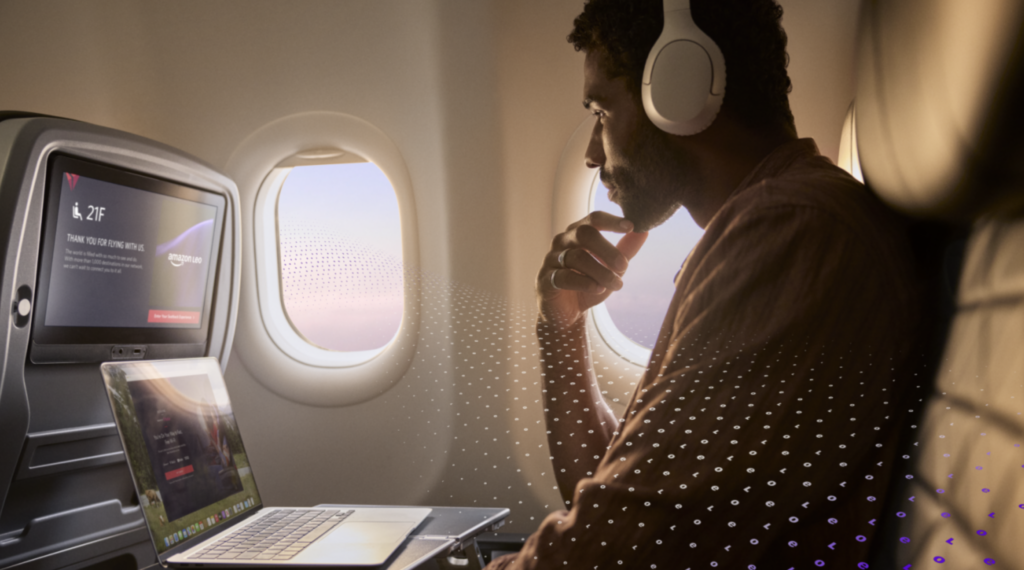
One of the defining advantages of Amazon Leo is its strong upload capability. Each aircraft will be equipped with an aviation-grade antenna based on Leo Ultra, which could deliver download speeds of up to 1 Gbps and upload speeds of up to 400 Mbps. This means passengers will be able to share photos and videos instantly, upload large files, and stay connected to work or personal tasks without waiting until landing.
“This agreement gives us the fastest and most cost-effective technology available to better connect the world today, and it deepens our work with a global leader that shares our ambition to build what’s next, creating even stronger human connection for our people and our customers for years to come,” said Delta Air Lines CEO Ed Bastian.
“We’ve designed Leo to provide high-speed internet to the billions of people on Earth without reliable connectivity, and this agreement with Delta is a great example of the impact and scale of the technology, bringing even faster in-flight Wi-Fi to tens of millions of passengers who fly Delta every year,” said Amazon President and CEO Andy Jassy.
Building a Connected Ecosystem for the Passenger Journey
Beyond connectivity, the partnership reflects a broader effort to create an integrated digital ecosystem across the travel journey. Delta plans to combine Amazon Leo with AWS, artificial intelligence, and its existing Delta Sync platform to deliver more personalized and connected experiences.
The carrier already has a long-standing relationship with AWS, which powers key areas of the airline’s operations, including reservations, operations, and customer applications. Since adopting AWS, Delta has migrated nearly 600 applications to the cloud, enabling faster innovation and improved operational efficiency.
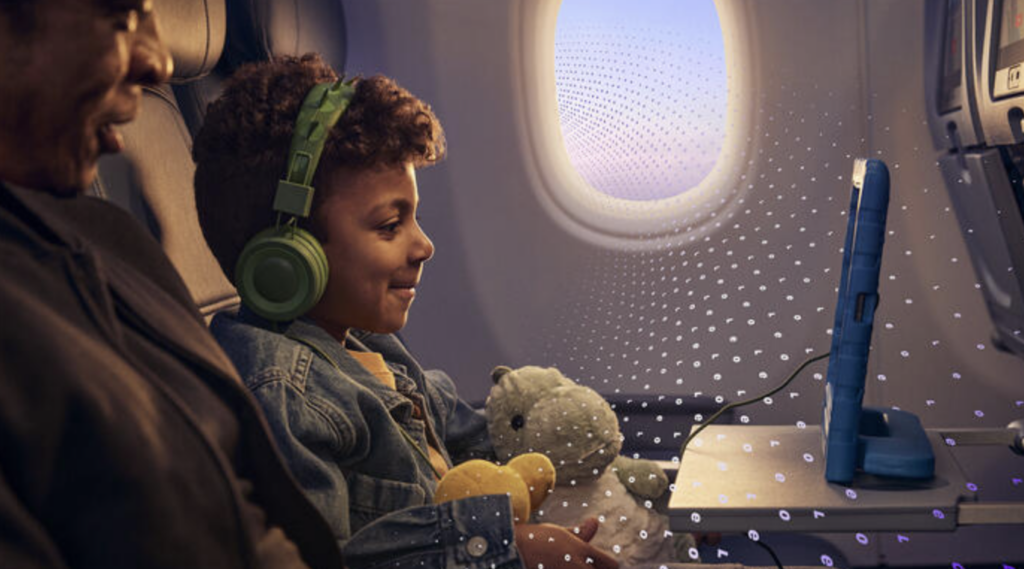
Delta Sync Wi-Fi has already set a new benchmark in the aviation industry. Introduced in 2023 with free access for SkyMiles members, the service has been deployed across more than 1,150 aircraft and has supported over 163 million customer connections. The addition of Amazon Leo is expected to further enhance performance and expand capabilities.
Furthermore, with more than 165,000 seatback screens across its fleet, Delta continues to invest in onboard entertainment and digital features. Faster connectivity will make these systems more dynamic, enabling real-time content, streaming partnerships, and more personalized recommendations.
By combining connectivity, cloud infrastructure, and data analytics, Delta is positioning itself to deliver a more responsive and seamless travel experience.