


APEX FTE EMEA 2026: How Journey Robotics Plans to Support Operational Resilience at Airports with its Autonomous Baggage Handling Robot

Share
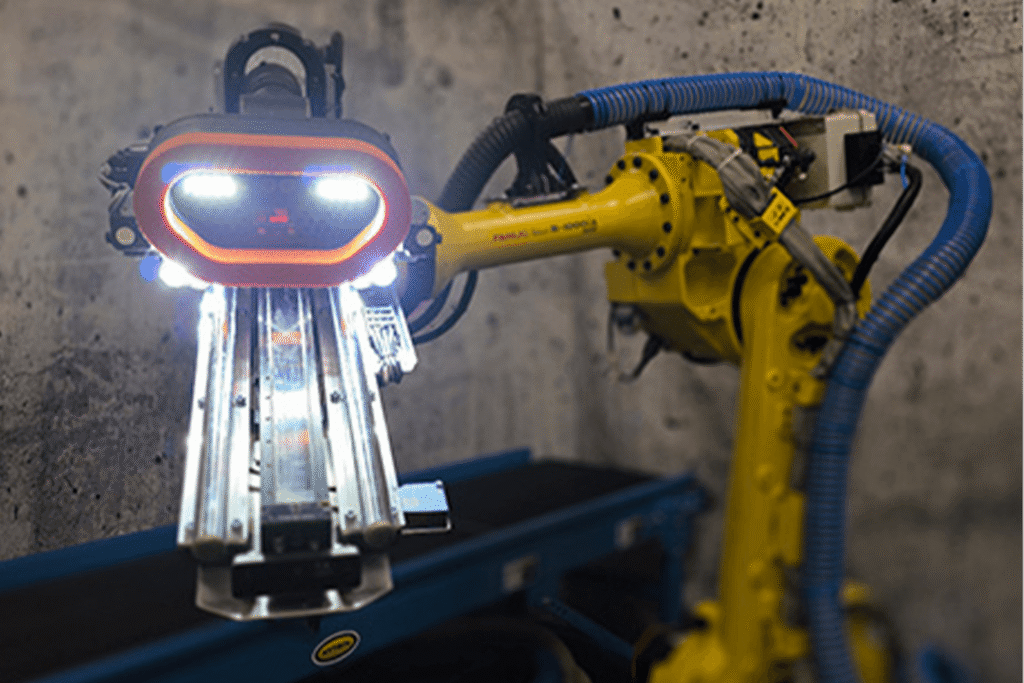
During a tour of Dublin Airport held for Future Travel Experience’s Baggage Innovation Working Group (BIWG) during APEX FTE EMEA, APEX Group CEO Dr. Joe Leader spoke to Journey Robotics CEO Reeg Allen about how robotics can advance baggage handling at airports, both indoors and out at the gate.
Although fairly new on the scene, the company is already making waves in commercial aviation. Formed in 2024 by alumni from RE2 Robotics, Pittsburgh-based Journey Robotics has developed a drop-in robotic baggage handling platform currently being tested as part of Pittsburgh International Airport’s xBridge program.
“You’re going to need people in this operation, but we can make the limited ones you have more effective.”
Last August, it was announced the company had been chosen to partake in the International Airlines Group (IAG) IAGi Accelerator program. Around the same time, Journey Robotics also received $250,000 to expand its prototypes. Then, it won the ‘Best New Transformative Concept award’ at the FTE Americas Innovate Awards 2025 held in Long Beach, California.
Patented ‘Vacuum Like a Hand’ Technology
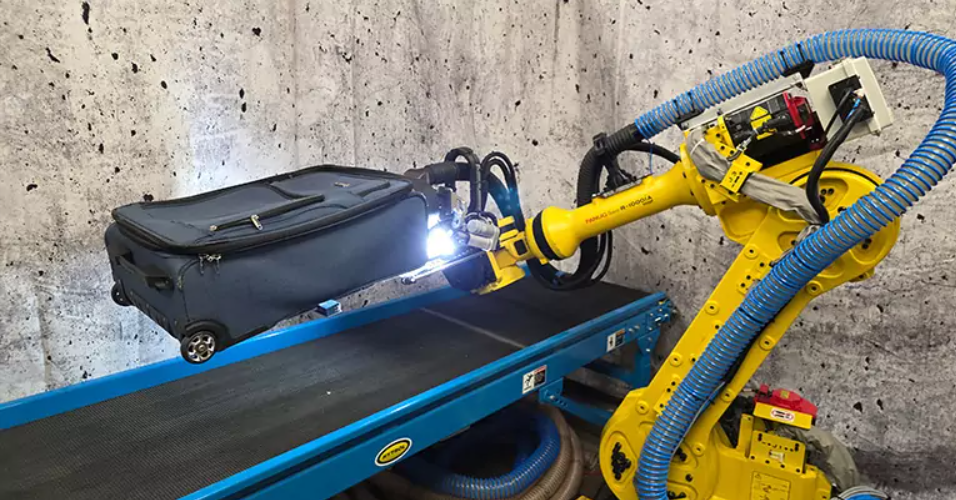
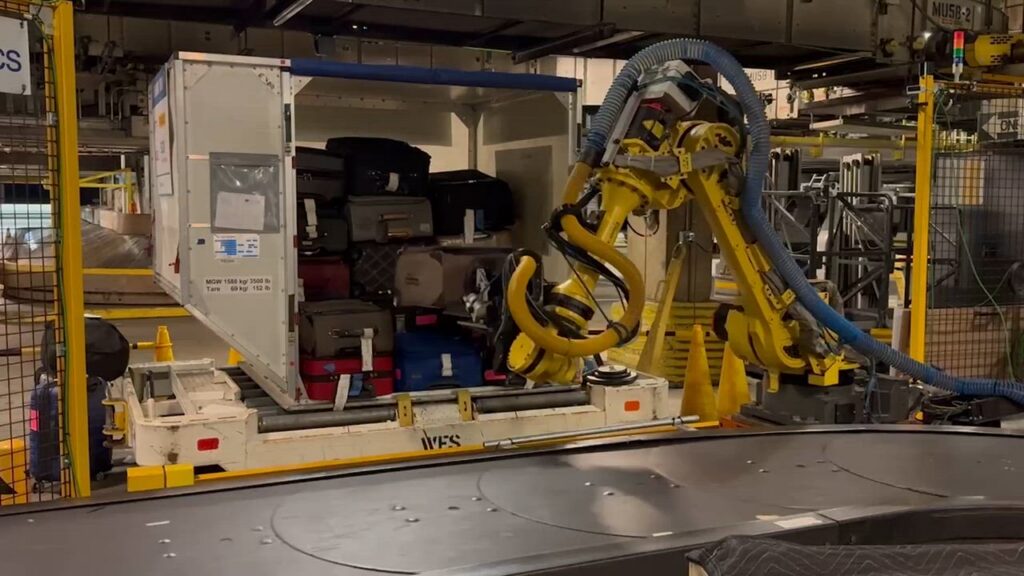
“The first application we went after is unloading,” explained Allen. “We use ‘vacuum like a hand’ technology [which refers to robotic arms that mimic human actions, using vacuum suction to grasp items]. It deals with all shapes and sizes of bag weighing from five pounds up to 80 pounds. Our prototype can currently unload six bags a minute out of Unit Load Devices.”
Journey Robotics adopted the ‘vacuum like a hand’ philosophy because using a ‘vacuum from the top’ approach, as previous company RE2 Robotics had done with the outdoor-based under-wing baggage loading system for narrowbody aircraft it developed for Changi Airport in Singapore, creates too much stress on the seal once the item needs to be moved.
“Our prototype can currently unload six bags a minute out of Unit Load Devices.”
These suction-utilizing appendages allow for both the grabbing action and then the movement of the bag while it is being held. Allen noted, “Our patents are around that whole combination of mechanical and vacuum together.”
As well as its flexibility in terms of grabbing and unloading different items more effectively, Allen highlighted that the “drop-in” nature of the robot means it is appeals to potential customers: “You’re not really changing the airport infrastructure. Instead, you bring in a robot that lives in that three-foot gap between the cart and the belt where the worker stands.”
Improving Operational Efficiency During Labor Shortages
This unloading rate achieved by its prototype is comparable with humans, but the key difference in what Journey Robotics offers lies in its predictability and consistency. Allen acknowledged, “Humans can do short sprints of 12 bags a minute or so, but the problem is when they’re doing that, they are either damaging themselves or the bags. The quality is not there.”
There will of course be exceptions, with some types of bags not able to be handled by its robot. But Reeg emphasized the prototype isn’t about replacing humans completely: “Anybody that’s done robotics knows it’s hard to do anything 100 percent. We’re looking at that 80-90 percent solution that helps with the issues humans face. You’re going to need people in this operation, but we can make the limited ones you have more effective.”
“Our patents are around that whole combination of mechanical and vacuum together.”
The need to reduce strain on baggage and ground handling staff is perhaps more pertinent than ever. There is a well-documented shortage in ground-handling staff post-pandemic, fueled by undesirable working hours and low salaries in spite of the safety risks posed by the job. For example, Allen pointed to metrics from Swissport that suggest 10 per cent of its staff are injured each year to demonstrate the importance of reducing the need for employees to undergo repetitive, physically demanding tasks.
Couple that with the fact that passenger numbers are continuing to increase, with IATA predicting that air travel demand will likely more than double by 2050, and the case for using robotics to bring a smarter approach to baggage handling becomes even more compelling.
The Path to Market for Journey Robotics
Looking ahead, Journey Robotics shared that the company will soon announce its first major pilot with one of the world’s busiest airports.
As part of its core strategy, the company believes that targeting airlines will serve as the best approach rather than airports as its “go-to market” on the basis that airlines operate at multiple different hubs. Airline success translates into larger contracts and deployments. Allen said this would also position the company to use its technology to help airlines in other areas of its operations in the future.
“In three years, Journey Robotics will be ubiquitous across airports worldwide, safeguarding frontline workers, redefining the passenger experience with seamless human-centered journeys, and empowering airports alongside airlines to unlock exponential value from the resources they already have,” Allen concluded.